
Memphis Giza: History, Location, Distance and the Ancient Egyptian Connection
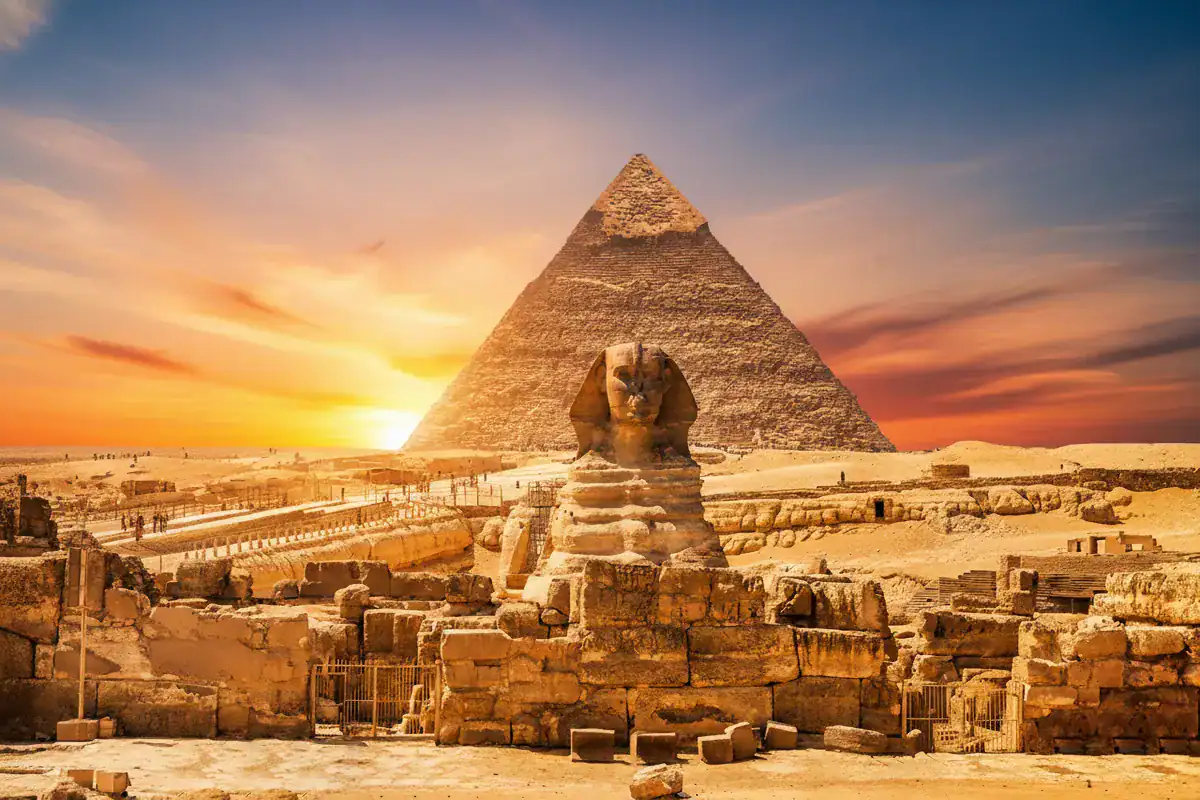
Researching Memphis Giza unlocks the core geographical and political partnership that defined ancient Egypt’s Old Kingdom: ancient Memphis functioned as the sovereign administrative capital in the fertile Nile floodplain, while the elevated limestone plateau of Giza served as its monumental Fourth Dynasty royal necropolis. Rather than existing as two unrelated cities, Memphis and Giza operated as twin halves of one unified sacred landscape along the west bank of the Nile—the capital in the green valley governing the living kingdom, and the pyramid plateau on the western horizon preserving the pharaoh’s eternal solar afterlife.
Many international visitors planning their itinerary assume the Great Pyramids stood isolated in an empty wilderness, or mistakenly confuse the ancient capital at Mit Rahina with the modern city and plateau of Giza. Archaeologically, UNESCO classifies the entire thirty-kilometer desert escarpment stretching from the Giza Plateau southward through Abusir, Saqqara, and Dahshur as Memphis and its Necropolis. Every royal stone quarry expedition, state granary supply boat, and architectural workshop that raised the monuments of Giza was commanded from the royal court and temples of Memphis.
This comprehensive historical and travel guide examines the exact locations of ancient Memphis and Giza, verifies the straight-line and modern driving distances between them, explains how Saqqara bridges the two sites, answers common traveler misconceptions about pyramid construction, and helps you plan the wider journey with our Egypt travel guide. You can also experience all three archaeological zones seamlessly on a private Giza, Saqqara and Memphis tour.
1. Memphis Giza – Where Were These Ancient Egyptian Cities Located?
Where was ancient Memphis located, and how does it relate geographically to Giza? Ancient Memphis stood on the west bank of the Nile River at the strategic southern apex of the Nile Delta, approximately 24 kilometers (15 miles) south of modern downtown Cairo around the rural town of Mit Rahina (Badrashein district, Giza Governorate). The Giza Plateau lies roughly 19 to 20 kilometers (12 miles) north-northwest of ancient Memphis on the elevated limestone shelf of the Western Desert.
The Location of Ancient Memphis and Its Relationship with Modern Mit Rahina
According to ancient historical traditions preserved by the Egyptian priest Manetho and the Greek historian Herodotus, Memphis was founded around 3100–3000 BCE at the start of the First Dynasty when King Menes (widely identified with King Narmer) unified Upper and Lower Egypt. Positioned right where the narrow Nile Valley fans out into the fertile Nile Delta, Memphis commanded river commerce, agricultural taxation, and military roads between northern and southern Egypt. Today, the ancient city’s mudbrick palaces and temple enclosures rest beneath the date-palm groves and fields of Mit Rahina, where travelers visit the open-air museum of the Memphis archaeological site. Visitors staying in the capital can use our Cairo destination guide to plan nearby sightseeing and onward day trips.
The Location of the Giza Plateau and Why the Two Places Are Researched Together
When modern travelers explore the Giza travel destination, they ascend a solid Nummulitic limestone plateau rising about 60 meters (200 feet) above the Nile floodplain on the western edge of Greater Cairo. In ancient Egyptian cosmology, the west bank was the domain of the setting sun and Osiris, Lord of the Underworld. Because the floodplain soil of Memphis was inundated every summer by the Nile flood and needed to be preserved for agriculture and mudbrick residences, the pharaohs ruling in Memphis looked upward to the dry, solid limestone ridges of Saqqara and Giza to construct their eternal stone tombs. For practical visitor information, see our guide to visiting Giza.
Could You See Giza from Memphis in Ancient Times?
Travelers often ask: Could you see Giza from Memphis? Across the flat, unobstructed Nile Valley of the Old Kingdom—long before modern urban apartment towers or industrial haze existed—the answer is yes on clear days. Looking north-northwest from the elevated temple roofs or river embankments of northern Memphis across 19.5 kilometers of flat farmland, the polished white Tura limestone casings and gleaming electrum-capped peaks of Khufu’s Great Pyramid (originally 146.6 meters tall) and Khafre’s Pyramid stood clearly visible along the northern desert horizon.
Explore Giza, Saqqara and Memphis with a Private Egyptologist Guide
Connecting the royal capital at Mit Rahina with the Step Pyramid of Saqqara and the Great Pyramids of Giza is effortless when you travel with a dedicated Egyptologist and private chauffeur. Book our signature private Giza, Saqqara and Memphis tour for a complete chronological journey through Old Kingdom Egypt.
Check Private Tour Availability2. Memphis Giza History – Why Were These Places Important?
Why were Memphis and Giza so important in ancient Egyptian history? Throughout the Old Kingdom (c. 2686–2181 BCE) and across the New Kingdom and Late Period, Memphis served as Egypt’s political heart, royal dockyard, administrative treasury, and the primary sanctuary of the creator god Ptah. Giza, by contrast, represented the engineering peak of Fourth Dynasty royal funerary religion, where monumental geometry united the deceased king with the sun god Ra.
Memphis as an Ancient Political and Religious Center
During the Early Dynastic Period, the capital was known as Inebu-Hedj ("The White Walls"), named after the whitewashed mudbrick fortress of the royal palace. In the Sixth Dynasty (c. 2345–2181 BCE), Pharaoh Pepi I built his pyramid at South Saqqara and named its adjoining pyramid town Men-nefer ("Enduring and Beautiful"). Gradually, Men-nefer became the everyday name for the entire city in the valley below, which Greek writers later transcribed as Memphis.
At the spiritual core of Memphis Egypt history stood Hut-ka-Ptah ("Enclosure of the Ka of Ptah"), the monumental temple complex dedicated to Ptah, patron deity of craftsmen, architects, and creation. In fact, the modern English word "Egypt" (via the Greek Aigyptos) derives directly from the Egyptian name of Memphis’s sanctuary, Hut-ka-Ptah. Even after Thebes (modern Luxor) became the religious capital of the New Kingdom, pharaohs such as Ramses the Great maintained royal palaces at Memphis, endowed colossal granite and limestone statues at the Temple of Ptah, and expanded the sacred Apis bull catacombs at the Serapeum of Saqqara.
Historical Timeline of Memphis and Giza
Foundation of Inebu-Hedj (Memphis) & Earliest Elite Tombs
Following the unification of Upper and Lower Egypt, the royal court establishes its capital at Memphis (Mit Rahina) and constructs monumental mudbrick mastaba tombs along the desert ridge at North Saqqara.
Djoser & Imhotep Build the Step Pyramid at Saqqara
Ruling from Memphis, Pharaoh Djoser commissions his vizier and chief architect Imhotep to construct the Step Pyramid at Saqqara—the earliest large-scale cut-stone monument in human history.
The Monumental Royal Pyramid Complex at Giza
Pharaoh Khufu relocates the primary royal necropolis of Memphis northward to the solid limestone plateau of Giza, followed by Khafre (builder of the second pyramid and the Great Sphinx) and Menkaure.
Abusir Sun Temples, Pyramid Texts & Birth of the Name "Memphis"
Fifth and Sixth Dynasty kings build pyramids at Abusir and Saqqara, carving the earliest Pyramid Texts inside the burial chamber of Unas. Pepi I’s complex gives the capital the name Men-nefer (Memphis).
Imperial Monumentality Under Thutmose IV & Ramses II
Thutmose IV clears the desert sands from the Great Sphinx at Giza; New Kingdom nobles build temple-tombs at Saqqara; Ramses II erects colossal statues at the Temple of Ptah in Memphis; learn more about the story of Ramses the Great.
Shift of Capital to Alexandria and Later Fustat (Cairo)
After Alexander the Great founds Alexandria (331 BCE) and Fustat is established near Babylon Fortress (641 CE), Memphis gradually declines and its surface stonework is reused, while the desert pyramids endure.
3. Memphis Giza and the Pyramids – What Is the Connection?
What is the historical relationship between Memphis and the Pyramids of Giza? The Pyramids of Giza were built as the Fourth Dynasty royal tombs for the pharaohs who ruled Egypt from the capital territory of Memphis. While Memphis was the city of the living—housing the royal treasury, courts of justice, granaries, and workshops—Giza was a specialized state necropolis engineered to house the king’s mummified body and sustain his eternal mortuary cult.
How Memphis, Saqqara, and Giza Formed One Pyramid-Building Tradition
When examining the connection between Giza and Memphis, archaeologists trace a continuous architectural evolution across the Memphite landscape:
- Architectural Experimentation at Saqqara and Dahshur: During the Third Dynasty, Imhotep transformed the flat rectangular mudbrick mastaba into a six-stepped stone pyramid for King Djoser at Saqqara, directly overlooking Memphis. At the start of the Fourth Dynasty, King Sneferu perfected the transition from stepped pyramids to true smooth-sided geometric pyramids at Meidum and Dahshur (the Bent Pyramid and Red Pyramid).
- Engineering Perfection on the Giza Plateau: Sneferu’s son and successor, Khufu (c. 2589–2566 BCE), needed an immense, structurally stable limestone bedrock shelf capable of bearing a 5.75-million-ton monument. He selected the northern promontory of the Memphite necropolis at Giza. His son Khafre (c. 2558–2532 BCE) added the second pyramid, the Valley Temple, and the Great Sphinx, while Menkaure (c. 2532–2504 BCE) completed the triad with his granite-cased third pyramid.
- Where You Can See Their Royal Treasures Today: Many of the finest statues, reliefs, and funerary furnishings excavated from the Giza mastabas and Memphite temples are displayed just two kilometers from the pyramids, which visitors can explore in depth on a Giza Pyramids and Grand Egyptian Museum tour.
4. Memphis Giza Distance – How Far Was Ancient Memphis from Giza?
How far was ancient Memphis from Giza? The straight-line geographical distance between the Great Pyramids of Giza and the ruins of ancient Memphis at Mit Rahina is approximately 19 to 20 kilometers (12 miles). Travelling by modern paved highways, the road distance is 24 to 28 kilometers (15 to 17.5 miles), requiring 35 to 55 minutes of driving time depending on Cairo and Giza traffic conditions.
For travelers researching how far the Giza Pyramids are from Cairo and mapping out driving times between the three stops of the Memphite triad, here are the verified distances:
| Route Connection | Straight-Line Distance | Modern Road Distance | Estimated Driving Time | Main Driving Route |
|---|---|---|---|---|
| Giza Plateau ↔ Ancient Memphis (Mit Rahina) | ~19–20 km (12 miles) | ~24–28 km (15–17.5 miles) | 35–55 minutes | Mariouteya Canal Road or Ring Road to Badrashein / Mit Rahina |
| Giza Plateau ↔ Saqqara Necropolis | ~14–15 km (9 miles) | ~22–26 km (13.5–16 miles) | 30–45 minutes | Mariouteya Canal Road south to Saqqara Tourist Road |
| Saqqara Necropolis ↔ Ancient Memphis (Mit Rahina) | ~4.5–5.5 km (3 miles) | ~6–8 km (3.7–5 miles) | 12–18 minutes | Saqqara Road east through Badrashein palm groves to Mit Rahina |
| Downtown Cairo (Tahrir) ↔ Giza Plateau | ~13–15 km (8.5–9.3 miles) | ~16–20 km (10–12.5 miles) | 25–45 minutes | 6th of October Bridge / Al Haram Street or Ring Road |
5. Memphis Giza Ancient Egypt Map – Understanding the Three Archaeological Sites
How do Giza, Saqqara, and Memphis fit together on a map of ancient Egypt? On any accurate Memphis Giza ancient Egypt map, the three sites form a compact north-to-south archaeological triangle along the west bank of the Nile River just southwest of the modern metropolitan area covered in our Cairo travel guide:
- 1. Giza (Northern Desert Edge): Perched on the high limestone plateau directly west of modern Giza city, overlooking the northern approach to the Nile Valley.
- 2. Saqqara (Central Desert Escarpment): Situated about 14.5 km south of Giza along the same western desert ridge, rising directly above the palm groves of Badrashein.
- 3. Memphis / Mit Rahina (Southern Floodplain Valley): Located on the flat alluvial plain just 5 km east-southeast of Saqqara and roughly 3 km west of the modern Nile River channel.
| Archaeological Site | Map Position & Terrain | Historical Role in Ancient Egypt | Top Attractions for Modern Visitors |
|---|---|---|---|
| Giza Plateau | Northernmost site; elevated limestone desert plateau west of Cairo | 4th Dynasty royal pyramid necropolis and solar cult complex | Great Pyramid of Khufu, Pyramids of Khafre & Menkaure, Great Sphinx, Valley Temple, Panoramic Viewpoint |
| Saqqara | Central site; western desert plateau 15 km south of Giza | Primary long-term necropolis of Memphis (1st Dynasty to Greco-Roman era) | Step Pyramid of Djoser, Pyramid of Unas/Teti (Pyramid Texts), Mastaba of Mereruka/Kagemni, Serapeum, Imhotep Museum |
| Ancient Memphis (Mit Rahina) | Southernmost site; fertile Nile floodplain 5 km east of Saqqara | Administrative capital, royal residence, and Great Temple of Ptah | Memphis Open-Air Museum, Colossus of Ramses II, Alabaster Sphinx, Granite statues of Ramses II, Apis Embalming House |
6. Memphis Giza vs Saqqara – What Makes Each Site Different?
What is the difference between Memphis and Giza, and how does Saqqara compare to both? While all three belong to the same UNESCO World Heritage zone, each site preserves a completely different dimension of pharaonic civilization: Giza showcases monumental Fourth Dynasty royal engineering; Saqqara preserves the step-by-step birth of stone architecture and intricate painted tomb reliefs; and Memphis displays colossal New Kingdom temple sculptures inside the former capital city.
| Site | Main Historical Importance | What Visitors Can See |
|---|---|---|
| Giza | Royal pyramid complex | Great Pyramid, other pyramids and Great Sphinx |
| Saqqara | Major ancient necropolis | Step Pyramid of Djoser and other archaeological monuments |
| Memphis | Ancient capital | Open-air museum, Colossus of Ramses II and archaeological remains |
Why Combining All Three Sites Beats Visiting Giza Alone
When travelers compare different Egypt trips to the pyramids, those who only spend two hours at Giza miss the context of how and why pyramid building began. By contrast, if you pair a focused Giza Pyramids and GEM tour on one day with Saqqara and Memphis—or combine Giza, Saqqara, and Memphis into one full-day itinerary—you see contrasts that no single site offers:
- Uninscribed vs. Inscribed Burial Chambers: Inside the Great Pyramid of Khufu and the Pyramid of Khafre at Giza, the granite burial chambers are completely austere and uninscribed. At Saqqara, inside the Fifth and Sixth Dynasty pyramids of Unas and Teti, the subterranean walls are covered floor-to-ceiling in blue-painted hieroglyphic Pyramid Texts—the oldest corpus of religious scriptures in the world.
- Daily Life Reliefs in Noble Mastabas: Saqqara’s elite mastaba tombs (such as Kagemni, Mereruka, and Ti) preserve vibrant carved scenes of Old Kingdom fishing, hippopotamus hunting, bread baking, jewelry crafting, and agriculture that bring the society of Memphis to life. The underground monuments and galleries of the Serapeum of Saqqara offer another perspective on the necropolis.
- Colossal Royal Portraiture at Mit Rahina: At the Memphis Open-Air Museum, you stand inches away from the 10-meter-long carved limestone Colossus of Ramses II from an elevated indoor gallery, admiring royal artistic perfection that survived inside the capital’s Ptah temple precinct.
7. Memphis Giza Questions – Did Memphis Build the Pyramids?
Did Memphis build the Pyramids of Giza? A city does not physically build monuments by itself; rather, the centralized Old Kingdom state governed by the Pharaoh, the Royal Vizier, and state ministries headquartered at Memphis planned, funded, supplied, and directed the construction of the Pyramids of Giza.
How the State Administration in Memphis Organized Pyramid Construction
Modern archaeological science has thoroughly debunked the classical Greek myth that the pyramids were built by masses of mistreated slaves. Whether you visit the plateau on a comprehensive three-site excursion or a focused Giza Pyramids day tour, you are looking at the result of sophisticated state administration:
- The Royal Vizierate & Overseers of All Works of the King: High royal officials—such as Hemiunu (believed to be the architect of Khufu’s Great Pyramid) and Vizier Ankhhaf—operated under the royal court of Memphis to coordinate national labor, stone quarrying, and logistics. Visitors can explore the monuments themselves on a Giza Pyramids and Grand Egyptian Museum tour.
- The Lost City of the Pyramid Builders (Heit el-Ghurab): Excavations led by Dr. Mark Lehner at the southeastern base of the Giza Plateau uncovered a vast planned settlement complete with barracks-style galleries, industrial bakeries, copper workshops, and cattle slaughterhouses where thousands of skilled artisans and seasonal Egyptian workers were fed high-protein diets of beef, Nile perch, bread, and beer.
- The Diary of Merer (Wadi al-Jarf Papyri): Discovered in 2013, the 4,500-year-old papyrus logbooks of a middle-ranking inspector named Merer document his 200-man boat crew transporting fine white limestone blocks from the Tura quarries across the Nile and through canal networks controlled by the Memphite administration directly to Khufu’s pyramid harbor at Giza.
8. Memphis Giza Pyramid – Is There a Pyramid in Memphis?
Is there a pyramid in Memphis, and is the Memphis Pyramid the same as the pyramids of Giza? No pyramid stands inside the floodplain city ruins of ancient Memphis (Mit Rahina) itself; all ancient Egyptian pyramids in the region were built on the elevated desert plateau west of the city at Saqqara, Abusir, Dahshur, and Giza. Furthermore, when online searchers ask "Is the Memphis pyramid bigger than Giza?" they are confusing the modern 1991 steel pyramid arena in Memphis, Tennessee (USA) with the ancient Great Pyramid of Giza in Egypt.
Why Ancient Memphis Placed Its Pyramids on the Western Desert Ridge
Ancient Memphis sat on low-lying alluvial Nile silt that flooded annually and had a high water table. Constructing a massive stone pyramid inside Mit Rahina would have caused the foundations to sink and subterranean chambers to flood. Instead, the kings who ruled in Memphis built their pyramids along the solid limestone cliffs of the Western Desert overlooking the city. Travelers interested in the royal pharaohs who ruled from Memphis and Thebes can also see their preserved royal bodies on a Giza Pyramids and Royal Mummies tour featuring the National Museum of Egyptian Civilization.
Ancient Giza vs. Saqqara vs. Modern Memphis, Tennessee: Fact Check
| Feature | Great Pyramid of Giza (Egypt) | Step Pyramid of Saqqara (Memphite Necropolis, Egypt) | Memphis Pyramid Arena (Memphis, Tennessee, USA) |
|---|---|---|---|
| Nature of Structure | Ancient 4th Dynasty royal stone tomb of Pharaoh Khufu | Ancient 3rd Dynasty stepped stone tomb of Pharaoh Djoser | Modern 20th-century steel sports arena and retail complex (Bass Pro Shops) |
| Date Built | c. 2560 BCE (~4,580+ years old) | c. 2650 BCE (~4,670+ years old) | 1991 CE |
| Total Height | 146.6 m (481 ft) original; 138.5 m (454 ft) today | 62.5 m (205 ft) | 98 m (321 ft) |
| Base Footprint | 230.3 m × 230.3 m (53,056 sq. meters) | 121 m × 109 m (13,189 sq. meters) | 180 m × 180 m (32,400 sq. meters) |
| Verdict: Which Is Bigger? | The Great Pyramid of Giza is substantially taller and more massive than both the Step Pyramid of Saqqara and the modern Memphis Pyramid in Tennessee. | ||
9. Memphis Giza and Saqqara – Can You Visit All Three in One Day?
Can visitors explore Memphis, Saqqara, and Giza in one day? Yes. Because Giza, Saqqara, and Mit Rahina (Memphis) lie within a 25-kilometer corridor along the western side of the Nile Valley, visiting all three sites in one well-organized 8-hour day trip is completely achievable and ranks among the most popular Egypt day tours for history lovers.
Recommended One-Day Itinerary Sequence & Time Allocation
- 08:00 AM – Pickup from Your Cairo or Giza Hotel: Depart in a private, climate-controlled vehicle with your licensed Egyptologist guide.
- 08:30 AM to 11:15 AM (2.5 to 2.75 Hours) – The Giza Plateau: Arrive early before peak crowds. Explore the Great Pyramid of Khufu, the Pyramid of Khafre, the Pyramid of Menkaure, the high desert panoramic photo point, the Valley Temple of Khafre, and the Great Sphinx.
- 11:15 AM to 12:00 PM (45 Minutes) – Drive South to Saqqara: Travel southward along the Mariouteya Canal corridor into the green countryside of Badrashein and ascend the Saqqara desert plateau.
- 12:00 PM to 02:15 PM (2.25 Hours) – The Saqqara Necropolis: Visit the Imhotep Museum, walk through the colonnaded entrance of Djoser’s Step Pyramid complex, enter a royal pyramid with carved Pyramid Texts (such as Unas or Teti), and explore an Old Kingdom painted noble mastaba.
- 02:15 PM to 03:15 PM (1 Hour) – Traditional Lunch Break: Enjoy freshly grilled Egyptian cuisine set amidst the rural palm groves between Saqqara and Mit Rahina.
- 03:15 PM to 04:15 PM (1 Hour) – Memphis Open-Air Museum (Mit Rahina): View the monumental supine limestone Colossus of Ramses II, the 80-ton Alabaster Sphinx, granite statues of Ptah and Ramses II, and the sacred Apis embalming beds before returning to your hotel around 05:00 PM.
Why Private Transportation and a Licensed Guide Matter
Unlike central Cairo neighborhoods where taxis are plentiful, the rural roads of Mit Rahina and the expansive multi-checkpoint desert plateau of Saqqara cannot be navigated efficiently on foot or via one-way ride-share apps. Booking dedicated transportation options in Egypt with a private driver ensures your vehicle waits for you at every single tomb and museum entrance, reducing walking fatigue and protecting you from midday heat.
10. Memphis Giza Full-Day Tour – Explore Ancient Egypt with Egy Travel Lux
How can you book a verified full-day tour to Giza Pyramids, Memphis, and Saqqara? Our private Full-day tour to Giza Pyramids Memphis and Saqqara is tailored for travelers who want complete flexibility, scholarly historical storytelling from a licensed Egyptologist, and transparent pricing with zero hidden surprises. Travelers comparing other formats can also browse our Egypt trips to the pyramids.
Confirmed Tour Details & Booking Options
- Duration: Approximately 8 hours (Full-Day Private Tour).
- Group Size: 100% Private Tour exclusively for you and your travel party.
- Pickup & Drop-Off: Door-to-door pickup and return from any hotel in Cairo or Giza in a modern, air-conditioned private vehicle.
- Guide Arrangements: Private licensed Egyptologist tour guide fluent in English (or your requested language).
- Inclusions & Flexible Package Tiers: Includes private air-conditioned transfers, hotel pickup/drop-off, bottled water, all service charges and taxes, and your private Egyptologist guide. Depending on the package tier you select on the booking page, you can book with all standard site entrance fees and restaurant lunch included, or choose a guide-and-vehicle option.
- Optional Extras & Exclusions to Verify: Special interior tickets (such as entering the interior burial shaft of the Great Pyramid of Khufu or the Serapeum at Saqqara), drinks during lunch, camel rides, and personal tipping (kitty) are optional unless specified in your chosen tier. To compare package rates across different itineraries, review our detailed guides on Giza Pyramids tour prices in Cairo and Cairo and Giza day trip prices.
Discover the Ancient Capital and Egypt’s Most Famous Pyramids in One Day
Experience the complete UNESCO World Heritage corridor of Memphis, Saqqara, and Giza at your own pace with a private Egyptologist guide and door-to-door chauffeured transport.
Book Your Giza, Saqqara & Memphis Private TourFeatured Cairo, Giza & Memphis Private Tours
The four tour cards below display the selected Egy Travel Lux image files, without relying on a separate image-fetching script:
Giza, Saqqara and Memphis Tour
Explore Egypt’s first capital at the Memphis Open-Air Museum, the pioneering Step Pyramid of Djoser at Saqqara, and the three Great Pyramids and Sphinx of Giza on one private 8-hour excursion.
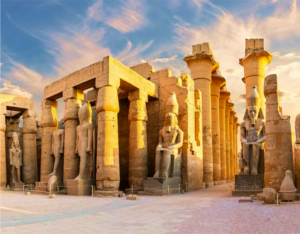
Giza Pyramids & Grand Egyptian Museum Tour
Combine a morning exploration of Khufu, Khafre, Menkaure, and the Great Sphinx with a guided afternoon visit inside the world-famous galleries of the Grand Egyptian Museum (GEM).

Giza Pyramids and Royal Mummies Tour
Stand before the Fourth Dynasty pyramids and Great Sphinx on the Giza Plateau before visiting the Royal Mummies Hall at the National Museum of Egyptian Civilization.
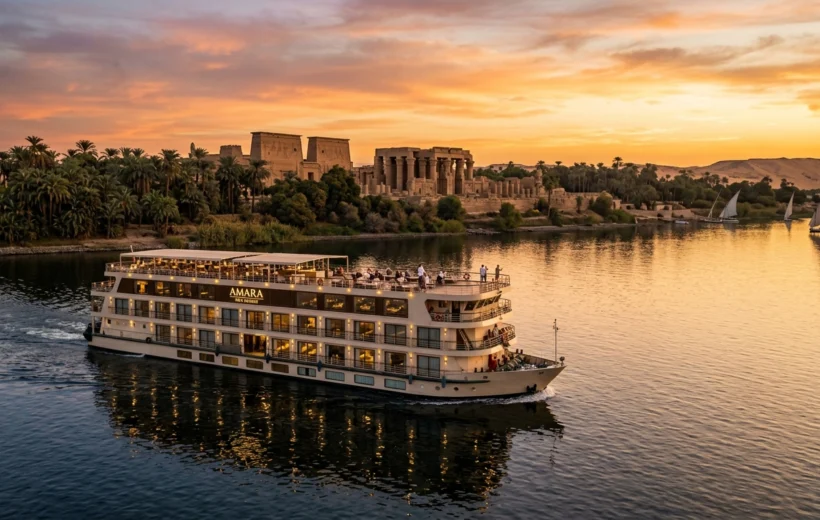
Day Tour to Giza Pyramids
Short on time? Dedicate a focused half-day or full-day private excursion to the Great Pyramids of Khufu, Khafre, and Menkaure, the Valley Temple, and the Great Sphinx.
11. Memphis Giza Travel Tips – When to Visit and What to Expect
When is the best time to visit Memphis and Giza, and how should travelers prepare? The ideal months for comfortable outdoor sightseeing across Giza, Saqqara, and Mit Rahina are October through April, when daytime temperatures hover between 20°C and 26°C (68°F–79°F). In any season, starting your itinerary at 8:00 AM lets you enjoy crisp morning light, cooler desert air, and quieter monument courtyards.
- Seasonal Weather Planning: Read our seasonal breakdown of the best time to visit Egypt to compare winter peak months with quieter shoulder seasons in May, September, and October.
- Comfortable Footwear & Sun Protection: Wear sturdy, closed-toe walking sneakers with good traction for sandy paths, ancient limestone steps, and sloped wooden tomb ramps. Pack sunglasses, high-SPF sunscreen, a wide-brimmed hat, and breathable cotton or linen layers.
- Bank Cards for Ticket Windows: All Ministry of Tourism and Antiquities ticket offices at Giza, Saqqara, and the Memphis Open-Air Museum operate on a cashless system requiring Visa or Mastercard for direct ticket purchases (unless your tickets are pre-included in your tour package). Keep small Egyptian Pound (EGP) notes handy for bottled water, cafes, and tipping site guardians.
- Adding the Grand Egyptian Museum: Because thousands of statues and royal artifacts excavated from Memphis, Saqqara, and Giza are exhibited in Cairo’s newest museum complex, consider booking a dedicated Grand Egyptian Museum tour in Cairo on the following day of your trip.
- Smart Budgeting & Itinerary Planning: Travelers comparing value-packed private options can explore our affordable pyramid tours in Giza, build multi-city schedules with our Egypt tour planning guide, and check visa and packing essentials in our master Egypt travel guide.
12. Conclusion – Why Memphis Giza Belongs on Your Egypt Itinerary
Exploring Giza, Saqqara, and ancient Memphis together transforms your visit from a quick photo stop into a complete narrative of human civilization. At Mit Rahina, you stand inside the palm-shaded sanctuary of Memphis where pharaohs governed a unified land and honored the creator god Ptah; at Saqqara, you witness Imhotep’s bold leap from mudbrick mastabas to the world’s first stone Step Pyramid; and at Giza, you behold the geometric perfection of the Fourth Dynasty pyramids and the Great Sphinx.
By dedicating one full day to the complete Memphis Giza archaeological corridor, you experience both the living heart and the eternal horizon of ancient Egypt’s Old Kingdom in a single unforgettable journey.
Plan Your Private Giza, Saqqara and Memphis Experience
Ready to explore Egypt’s ancient capital at Mit Rahina, the Step Pyramid of Saqqara, and the Great Pyramids of Giza with your own private Egyptologist guide? Customize your departure time and package inclusions today.
Reserve Your Private Giza, Saqqara & Memphis Tour13. Frequently Asked Questions About Memphis Giza
1. What was Memphis in ancient Egypt?
Ancient Memphis (originally named Inebu-Hedj or "White Walls," and later Men-nefer) was the capital of ancient Egypt during the Early Dynastic Period and the Old Kingdom (c. 3100–2181 BCE), and remained one of the country’s most important administrative, military, and religious centers for three millennia. Located near modern Mit Rahina, it was the seat of the royal court that governed the pyramid builders and housed the Great Temple of the creator god Ptah.
2. Where was ancient Memphis located in relation to Giza?
Ancient Memphis was located on the west bank of the Nile River at the southern apex of the Nile Delta around the modern village of Mit Rahina (Badrashein district, Giza Governorate). Geographically, it lies approximately 19 to 20 kilometers (12 miles) south-southeast of the Giza Plateau in a straight line, and about 24 kilometers (15 miles) south of downtown Cairo.
3. How far is Memphis from the Giza Pyramids?
The straight-line distance from the Giza Pyramids to the archaeological site of ancient Memphis at Mit Rahina is 19 to 20 kilometers (12 miles). By modern paved roads (via the Mariouteya Canal road or the Ring Road to Badrashein), the driving distance is 24 to 28 kilometers (15 to 17.5 miles), which takes 35 to 55 minutes by car depending on traffic.
4. Did Memphis build the Pyramids of Giza?
While a city cannot construct monuments on its own, the centralized Egyptian royal government, treasury, and vizierate headquartered at Memphis organized, financed, supplied, and directed the construction of the Pyramids of Giza. Royal administrators based in Memphis coordinated limestone and granite quarry expeditions, managed state agricultural rations, and oversaw the skilled artisans and rotating Egyptian labor teams housed at the Giza pyramid builders' settlement.
5. Is there a pyramid in Memphis, and is the Memphis Pyramid bigger than Giza?
There are no standing pyramids inside the urban floodplain ruins of ancient Memphis at Mit Rahina because ancient Egyptians built their royal pyramids on the elevated desert plateau west of the city (at Saqqara, Abusir, Dahshur, and Giza) safely above the annual Nile flood. When people ask if the "Memphis Pyramid" is bigger than Giza, they are usually referring to the modern 1991 steel pyramid arena in Memphis, Tennessee, USA (98 meters / 321 feet tall), which is much smaller than the ancient Great Pyramid of Giza in Egypt (originally 146.6 meters / 481 feet tall; 138.5 meters / 454 feet today).
6. Is Memphis older than Giza?
Yes. According to historical and archaeological records, Memphis was founded around 3100–3000 BCE at the beginning of the First Dynasty as the capital of unified Egypt, with First Dynasty elite mastaba tombs built immediately overlooking the city at North Saqqara. The monumental royal pyramids of the Giza Plateau were built roughly 500 years later during the Fourth Dynasty (c. 2589–2504 BCE) under Pharaohs Khufu, Khafre, and Menkaure.
7. Can you visit Giza, Saqqara and Memphis in one day?
Yes. Because Giza, Saqqara, and Memphis lie along a continuous 25-kilometer corridor on the west bank of the Nile, travelers can comfortably visit all three sites in a single 8-hour full-day private tour. A well-paced itinerary spends 2.5–3 hours at the Giza Plateau, 2–2.5 hours at Saqqara, and 1 hour at the Memphis Open-Air Museum in Mit Rahina, with a lunch stop in between. Browse more Egypt day-tour ideas when arranging the rest of your stay.
8. What is the difference between Memphis and Saqqara?
Memphis was the living capital city in the fertile Nile floodplain where pharaohs ruled, officials administered the kingdom, and priests served at the Great Temple of Ptah. Saqqara, located on the elevated desert limestone plateau 5 kilometers west of Memphis, was the capital’s principal necropolis (city of the dead) where kings and nobles built the Step Pyramid of Djoser, painted mastaba tombs, and the subterranean Serapeum.
9. What is Memphis famous for today?
Today, the archaeological site of ancient Memphis at Mit Rahina is famous for its Open-Air Museum, which features the monumental 10-meter-long limestone Colossus of Ramses II, the 80-ton Eighteenth Dynasty Alabaster Sphinx, red granite statues of Ramses II and Ptah, royal stelae, and the stone embalming tables of the sacred Apis bulls.
10. What is the best way to explore Memphis Giza in one day?
The best way to explore the Memphis Giza archaeological corridor is on a private full-day tour to Giza, Saqqara, and Memphis with a licensed Egyptologist guide and a private air-conditioned vehicle. Private door-to-door transport eliminates the challenge of finding taxis in rural Mit Rahina and the Saqqara desert while giving you rich historical context across all three UNESCO World Heritage sites.
14. Authoritative Historical & Archaeological References
- UNESCO World Heritage Centre: Memphis and its Necropolis – the Pyramid Fields from Giza to Dahshur (World Heritage List Ref. 86). Official UNESCO World Heritage Documentation.
- Egyptian Ministry of Tourism and Antiquities: Archaeological Sites & Museums Directory — Mit Rahina Open-Air Museum (Memphis), Saqqara Necropolis, and Giza Plateau. Official Ministry of Tourism and Antiquities Portal.
- Harvard University / Museum of Fine Arts, Boston: Digital Giza — The Giza Project (Archaeological Records of the Fourth Dynasty Pyramids, Sphinx, and Cemeteries). Harvard University Digital Giza Archive.
- The Metropolitan Museum of Art (Heilbrunn Timeline of Art History): Egypt in the Old Kingdom (ca. 2649–2150 B.C.) — Memphis, Saqqara, and the Pyramids of Giza. The Met Museum Academic Resource.
- Ancient Egypt Research Associates (AERA): Excavations at Heit el-Ghurab (The Lost City of the Pyramid Builders at Giza), directed by Dr. Mark Lehner. AERA Archaeological Research Archive.
Editorial & Historical Note: Historical dates follow standard Egyptological chronology (Shaw, Oxford History of Ancient Egypt). Driving times and site admission regulations are subject to local traffic conditions and updates by the Egyptian Ministry of Tourism and Antiquities.