
Lake Nasser Nile Cruise: Complete 2026 Guide to Itineraries, Nubian Temples & Prices
What Is a Lake Nasser Nile Cruise?
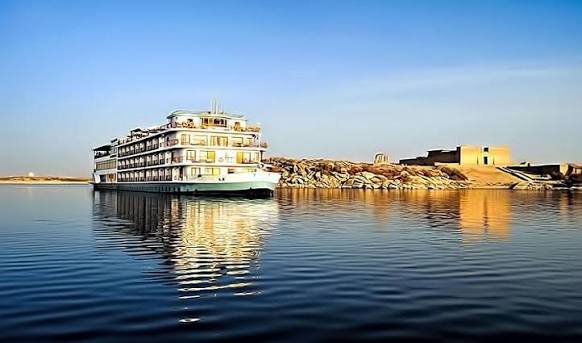
A Lake Nasser Nile Cruise is a multi-day voyage south of the Aswan High Dam across the Egyptian sector of Lake Nasser, connecting Aswan and the colossal rock-cut temples of Abu Simbel through the desert heartland of ancient Lower Nubia. While millions of travelers know the classic Nile River corridor between Luxor and Aswan, fewer than two percent of visitors to Egypt sail southward across Lake Nasser. Those who make the journey experience an entirely different side of Egypt: vast golden desert dunes meeting deep blue water, starlit anchorages completely free of city lights, and guided tender landings at remote UNESCO World Heritage temples — including Kalabsha, Wadi el-Seboua, Amada, and Derr — that are practically unreachable by overland road.
Most importantly, a Lake Nasser Nile Cruise is the only way for travelers to approach the Great Temple of Ramesses II and the Small Temple of Queen Nefertari at Abu Simbel directly across the water. Instead of enduring a six-to-seven-hour round-trip desert highway transfer from Aswan to spend two crowded mid-morning hours at the site, Lake Nasser cruise passengers glide past the 20-meter colossi from the water, moor overnight near the sanctuary, attend the evening Sound and Light Show, and return at dawn before the day-trip buses arrive.
Whether you are returning to Egypt for a second deeper exploration or combining upper and lower river voyages into a grand two-week itinerary through our curated luxury Egypt Nile cruises, this guide breaks down verified 2026 itineraries, real cost ranges, archaeological highlights, and operational rules you need to know before booking.

Lake Nasser Nile Cruise Quick Facts (At a Glance)
Before comparing specific ships and departure days, review the core operational facts that define every Lake Nasser Cruise between Aswan and Abu Simbel:
| Planning Feature | Verified Lake Nasser Nile Cruise Specification |
|---|---|
| Primary Route & Distance | Between the Aswan High Dam (New Kalabsha port) and Abu Simbel across approximately 280–300 kilometers (175–186 miles) of open desert reservoir, crossing the Tropic of Cancer. |
| Standard Cruise Durations | 4 Days / 3 Nights (Southbound: Aswan to Abu Simbel) or 5 Days / 4 Nights (Northbound: Abu Simbel to Aswan). An 8-Day / 7-Night round-trip combines both legs. |
| Typical Departure Days | Southbound 4-day sailings typically depart on Mondays or Fridays; Northbound 5-day sailings typically depart on Thursdays or Mondays (exact rotation depends on the specific vessel and season). |
| Principal Archaeological Stops | New Kalabsha Complex (Kalabsha, Beit el-Wali, Qertassi), Wadi el-Seboua Cluster (Wadi el-Seboua, Dakka, Maharraqa), Amada Cluster (Amada, Derr, Tomb of Pennut), Qasr Ibrim (viewed from sundeck), and Abu Simbel. |
| Active Fleet Size | Only 5 to 8 licensed passenger ships operate across the entire lake (compared to 200+ ships between Luxor and Aswan), guaranteeing quiet temple landings. |
| 2026 Price Benchmark (Per Person) | Low-season baseline rates have historically started around $665 (4-day) and $935 (5-day) in standard double cabins; realistic 2026 peak winter rates (Oct–Apr) range from $950 to $2,200+ per person depending on vessel tier and inclusions. |
| Navigation & Swimming Rules | Daylight sailing only (vessels anchor in sheltered desert coves before sunset). No swimming in Lake Nasser due to wild Nile crocodiles; all ships feature an onboard sundeck pool. |
| Peak Seasonal Events | Biannual Abu Simbel Solar Alignment on February 22 and October 22 (requires booking 8 to 12 months in advance). |
Planning a Lake Nasser Nile Cruise for 2026 or 2027?
Because fewer than eight passenger vessels sail Lake Nasser and departure days are strictly fixed by each ship's weekly rotation, coordinating your cabin with domestic flights and Aswan hotel stays requires careful scheduling. Share your preferred travel dates and style with our specialists at Egy Travel Lux to check confirmed sailing dates and itinerary options.
Request Available Sailing Dates & Custom ItinerariesLake Nasser vs. Traditional Nile River Cruise: Key Differences
Travelers researching an Egypt voyage often ask whether they should book a classic Luxor–Aswan Nile cruise, a Lake Nasser Nile Cruise, or both. Although both take place on the waters of the Nile, they are separated by the Aswan High Dam and offer fundamentally different landscapes, archaeological eras, and onboard atmospheres.
| Comparison Factor | Lake Nasser Nile Cruise (Aswan ↔ Abu Simbel) | Traditional Nile River Cruise (Luxor ↔ Aswan) |
|---|---|---|
| Geographic Setting | South of the Aswan High Dam across ancient Lower Nubia; wide open desert reservoir framed by golden sand dunes, sandstone cliffs, and volcanic hills. | North of the Aswan High Dam through Upper Egypt; narrow river channel lined with green date-palm groves, agricultural fields, and bustling towns. |
| Crowd Levels & Ship Traffic | Exceptionally quiet: Fewer than 8 passenger vessels on the entire lake; often only 1 or 2 ships moored at a temple site at one time. | Busy & lively: Over 200 active cruise ships; vessels frequently moor 4 to 8 abreast at docks in Luxor, Edfu, Kom Ombo, and Aswan. |
| Monuments Visited | 14+ UNESCO-rescued Nubian temples and tombs (Kalabsha, Beit el-Wali, Wadi el-Seboua, Dakka, Amada, Derr, Pennut, Qasr Ibrim, and Abu Simbel). | Iconic Upper Egyptian state temples and royal necropolises (Karnak, Luxor Temple, Valley of the Kings, Hatshepsut, Edfu, Kom Ombo, and Philae). |
| How You Reach the Sites | Small motorized tender boats transfer guests directly from the ship's stern to desert temple beaches with zero road traffic or street vendors. | Horse carriages, tour buses, or walking from urban riverside piers through lively bazaar walkways. |
| Nighttime Atmosphere | Ships anchor in silent, unlit desert bays before dusk; world-class stargazing over the Tropic of Cancer. | Ships dock at illuminated town quays or sail through the Esna Lock with lively evening entertainment. |
| Ideal Traveler Profile | Repeat visitors to Egypt, couples seeking serenity, serious history lovers, photographers, and travelers with 10–14+ days combining both waterways. | First-time visitors to Egypt who want to see the world-famous pharaonic capitals of Thebes (Luxor) and Aswan within a 7-to-10-day trip. |
Geography, Nubian Heritage & the UNESCO Rescue Campaign
To appreciate what you see from the sundeck of a Lake Nasser Nile Cruise, it helps to understand the dramatic twentieth-century transformation of this region. Stretching approximately 480 to 550 kilometers (300 to 340 miles) in total reservoir length at peak water level — with roughly 350 kilometers inside southern Egypt (named Lake Nasser) and the southern section extending into northern Sudan (where it is known as Lake Nubia) — the lake is one of the largest man-made reservoirs in the world, covering up to 5,250 square kilometers.
Ancient Lower Nubia (Wawat) and the Human Cost of the High Dam
Before the construction of the Aswan High Dam between 1960 and 1970, this stretch of the Nile Valley was the historic homeland of Lower Nubia (known to ancient Egyptians as Wawat). For more than 5,000 years, Nubia served as the vital corridor linking Mediterranean Egypt with sub-Saharan Africa, prized for its gold mines, incense routes, and distinctive Nubian civilization. During the Eighteenth and Nineteenth Dynasties (c. 1550–1186 BCE), pharaohs such as Thutmose III, Amenhotep II, and Ramesses II built magnificent sandstone and rock-cut temples along these riverbanks both to honor Egyptian and Nubian gods and to project royal power southward. Later, Kushite, Ptolemaic, Roman, Christian Nubian (Nobatia), and Ottoman rulers left their own architectural strata across the valley.
While the completion of the Aswan High Dam protected Egypt from devastating Nile floods, expanded arable farmland, and generated vital hydroelectric power, the rising reservoir permanently submerged the ancestral Nile valley of Lower Nubia. More than 100,000 Nubian residents in Egypt and Sudan were displaced from their palm-lined river villages and relocated to newly built settlements such as New Nubia near Kom Ombo and Khashm el-Girba — a profound cultural rupture that shapes modern Nubian identity, music, and memory in Aswan today.
The 1960–1980 UNESCO International Rescue Campaign
Facing the imminent flooding of dozens of irreplaceable ancient sanctuaries beneath 60 meters of water, the governments of Egypt and Sudan appealed to UNESCO in 1959. The resulting twenty-year effort — the International Campaign to Save the Monuments of Nubia (1960–1980) — mobilized archaeologists, structural engineers, and financial contributions from nearly 50 nations. Working against rising water levels, international teams dismantled, transported, and re-erected 22 major temples and architectural monuments onto higher desert ground above the new shoreline, while donating four smaller temples (including Dendur in New York and Debod in Madrid) to partner nations. In 1979, the rescued sanctuaries in Egypt were inscribed together on the UNESCO World Heritage List as the Nubian Monuments from Abu Simbel to Philae World Heritage Site.
Available Lake Nasser Cruise Durations & Route Options
Unlike Luxor–Aswan cruises that offer varied stop combinations, every licensed Lake Nasser Nile Cruise visits the exact same five archaeological zones along the lake. Your choice of duration simply determines which direction you sail and whether you spend three, four, or seven nights onboard:
| Cruise Option | Duration | Sailing Direction | Typical Embarkation Day | Principal Archaeological Stops | Best Suited For |
|---|---|---|---|---|---|
| 4-Day Lake Nasser Nile Cruise | 4 Days / 3 Nights | Southbound: Aswan → Abu Simbel | Monday or Friday (Confirm by vessel) | New Kalabsha Complex, Wadi el-Seboua, Dakka, Maharraqa, Amada, Derr, Tomb of Pennut, Qasr Ibrim (sundeck), and Abu Simbel. | Travelers who want the cinematic crescendo of arriving at Abu Simbel by water on Day 3 and flying back to Aswan/Cairo on Day 4. |
| 5-Day Lake Nasser Nile Cruise | 5 Days / 4 Nights | Northbound: Abu Simbel → Aswan | Thursday or Monday (Confirm by vessel) | Abu Simbel, Qasr Ibrim (sundeck), Amada, Derr, Tomb of Pennut, Wadi el-Seboua, Dakka, Maharraqa, and New Kalabsha Complex. | Travelers flying or driving to Abu Simbel first who prefer an extra night onboard and a slightly more relaxed sailing rhythm back to Aswan. |
| 8-Day Round-Trip Lake Nasser Cruise | 8 Days / 7 Nights | Round-Trip: Aswan → Abu Simbel → Aswan | Monday or Friday | Visits all sites in both directions (or allows extended deck relaxation on the return leg). | Slow-travel enthusiasts who wish to avoid one-way domestic flights or desert highway transfers between Aswan and Abu Simbel. |
4-Day, 3-Night Lake Nasser Nile Cruise Itinerary (Aswan to Abu Simbel)
The 4-Day Lake Nasser Nile Cruise is the most popular itinerary for international travelers because it builds chronologically and visually toward the grand arrival at the Temples of Abu Simbel on the third afternoon. Below is the standard day-by-day sequence (exact departure days and morning/afternoon timings are confirmed according to your chosen ship's seasonal schedule):
| Day & Route | Principal Monuments Visited | Daily Schedule & Onboard Experience |
|---|---|---|
| Day 1 Embarkation at Aswan High Dam Pier (Mooring near New Kalabsha) | New Kalabsha Complex: • Temple of Kalabsha • Rock-Cut Temple of Beit el-Wali • Kiosk of Qertassi | Private transfer from your Aswan hotel or airport to the Lake Nasser dock south of the High Dam around midday. After check-in and lunch onboard, ride the ship's motor tender to New Kalabsha Island to explore the Roman-era Temple of Mandulis, Ramesses II's painted reliefs at Beit el-Wali, and the graceful Kiosk of Qertassi. Welcome reception and dinner onboard; overnight moored near Kalabsha/As-Sadd. |
| Day 2 Kalabsha → Tropic of Cancer → Wadi el-Seboua | Wadi el-Seboua Cluster: • Temple of Wadi el-Seboua • Greco-Roman Temple of Dakka • Temple of Maharraqa | Morning sailing southward across the widest expanse of Lake Nasser, crossing the Tropic of Cancer with cocktails or fresh juice on the sundeck. After lunch, disembark by tender at Wadi el-Seboua ("Valley of the Lions") to walk its avenue of sphinxes, climb the towering pylon of the Temple of Dakka, and inspect the spiral staircase of Maharraqa. Dinner and overnight anchored at Wadi el-Seboua. |
| Day 3 Wadi el-Seboua → Amada → Qasr Ibrim → Abu Simbel | Amada Cluster, Qasr Ibrim & Abu Simbel: • Temple of Amada & Temple of Derr • Tomb of Pennut • Citadel of Qasr Ibrim (from deck) • Great & Small Temples of Abu Simbel | Early morning sailing to Amada to visit Lake Nasser's oldest Eighteenth Dynasty temple, Ramesses II's rock-cut Temple of Derr, and the Twentieth Dynasty Tomb of Pennut. Midday sailing to the island fortress of Qasr Ibrim for an Egyptologist lecture from the sundeck. In the late afternoon, sail into Abu Simbel bay as the four 20-meter colossi of Ramesses II appear over the water. Disembark to visit the temples and attend the optional evening Sound and Light Show. Overnight moored at Abu Simbel. |
| Day 4 Disembarkation at Abu Simbel | Optional sunrise viewing of Abu Simbel from the ship's deck or early sanctuary revisit | Early buffet breakfast onboard looking directly toward the Abu Simbel cliffs. Disembark by 8:30–9:00 AM for your private transfer to Abu Simbel Airport (for flights to Aswan or Cairo) or your private air-conditioned vehicle back to Aswan. |
5-Day, 4-Night Lake Nasser Nile Cruise Itinerary (Abu Simbel to Aswan)
If your international arrival or Upper Egypt tour places you in Abu Simbel on a Thursday or Monday, the 5-Day Lake Nasser Nile Cruise reverses the route, starting at Abu Simbel and sailing north to Aswan over four nights. Because the upstream return spreads the same distance across an extra day, you enjoy more unhurried hours on the sundeck:
| Day & Route | Principal Monuments Visited | Daily Schedule & Onboard Experience |
|---|---|---|
| Day 1 Embarkation at Abu Simbel | Abu Simbel Complex: • Great Temple of Ramesses II • Small Temple of Hathor & Nefertari | Arrive at Abu Simbel by domestic flight or private road transfer from Aswan and board your Lake Nasser vessel around midday. After lunch, walk or tender to the Great and Small Temples of Abu Simbel in the quiet afternoon hours after the day-trip buses have departed. Optional evening Sound and Light Show; overnight moored at Abu Simbel. |
| Day 2 Abu Simbel → Qasr Ibrim → Amada | Qasr Ibrim & Amada Cluster: • Citadel of Qasr Ibrim (from deck) • Eighteenth Dynasty Temple of Amada • Rock-Cut Temple of Derr • Tomb of Pennut | Optional early-morning walk to see sunrise over the facade of Abu Simbel before breakfast. Set sail northbound toward the island citadel of Qasr Ibrim, pausing offshore for commentary and photographs from the sundeck. Continue to Amada for afternoon guided visits to the Temple of Amada, the rock-cut sanctuary of Derr, and the Tomb of Pennut. Overnight anchored at Amada. |
| Day 3 Amada → Wadi el-Seboua | Wadi el-Seboua Cluster: • Temple of Wadi el-Seboua • Temple of Dakka • Roman Temple of Maharraqa | Morning sailing to Wadi el-Seboua. Disembark by tender to explore Ramesses II's sphinx-lined temple (including its early Christian apse paintings of St. Peter), the Meroitic-Ptolemaic Temple of Dakka dedicated to Thoth, and the Roman Temple of Maharraqa. Afternoon leisure sailing northward across the desert lake; dinner and Nubian cultural evening onboard. |
| Day 4 Wadi el-Seboua → Tropic of Cancer → Aswan (New Kalabsha) | New Kalabsha Complex: • Temple of Kalabsha • Beit el-Wali • Kiosk of Qertassi | Relaxed morning sailing across the Tropic of Cancer toward the northern basin of Lake Nasser near the Aswan High Dam. In the afternoon, visit New Kalabsha Island to explore the monumental Temple of Kalabsha, Beit el-Wali, and the Kiosk of Qertassi. Farewell gala dinner and overnight moored near Aswan. |
| Day 5 Disembarkation at Aswan High Dam Port | Optional connection to Philae Temple & the Aswan High Dam | Breakfast onboard followed by disembarkation around 8:30–9:00 AM. Private transfer to Aswan Airport, Aswan Railway Station, your Aswan luxury hotel, or directly to embark a classic Aswan-to-Luxor Nile River cruise. |
Main Temples and Archaeological Sites on a Lake Nasser Cruise
What makes a Lake Nasser Nile Cruise so rewarding for history lovers is that its temples were rescued intact and re-erected on shared desert promontories above the water. Rather than isolated ruins surrounded by modern apartment blocks, you step off your ship's tender boat onto quiet desert shores where three distinct ancient monuments sit within walking distance of one another. For deeper context on the deities worshiped inside these sanctuaries, see our guide to ancient Egyptian gods and religious symbolism.
1. The New Kalabsha Island Complex (Kalabsha, Beit el-Wali & Qertassi)
Located just south of the Aswan High Dam, the New Kalabsha promontory brings together three rescued monuments spanning more than 1,300 years of pharaonic and Graeco-Roman history:
- The Temple of Kalabsha (Temple of Mandulis): The largest freestanding relocated temple in Egyptian Nubia. Built during the reign of the first Roman Emperor Augustus (after 30 BCE) over an earlier sanctuary of Amenhotep II and Ptolemy IX, it was dedicated to Mandulis (Merwel), a Lower Nubian solar deity depicted as a human-headed falcon crowned with ram horns and cobras, alongside Isis and Osiris. Between 1961 and 1963, a German-Egyptian engineering team dismantled the temple into approximately 13,000 sandstone blocks weighing up to 20 tons each and reconstructed it here. Look for the Historical Inscription of the Nubian Blemmyes and King Silko of Nobatia carved on the forecourt wall.
- The Rock-Cut Temple of Beit el-Wali ("House of the Holy Man"): Carved into the sandstone cliff early in the reign of Ramesses II and relocated by a Polish-Egyptian archaeological mission, this intimate speos (rock temple) preserves vividly colored narrative reliefs in its forecourt depicting the young pharaoh's military campaigns in Kush, Libya, and Syria-Palestine, alongside detailed tribute processions of Nubian gold rings, ivory tusks, ebony logs, panther skins, monkeys, and a live giraffe presented to the king.
- The Kiosk of Qertassi: A delicate Graeco-Roman pavilion framed by four surviving columns — two topped with carved faces of the goddess Hathor and two with floral papyrus capitals — that originally guarded the ancient sandstone quarries of Qertassi where stone for Philae Temple was cut.
2. The Wadi el-Seboua Site Cluster (Wadi el-Seboua, Dakka & Maharraqa)
Approximately 150 kilometers south of Aswan lies the second great archaeological zone, relocated between 1961 and 1965 roughly 4 kilometers west of its original Nile riverbank:
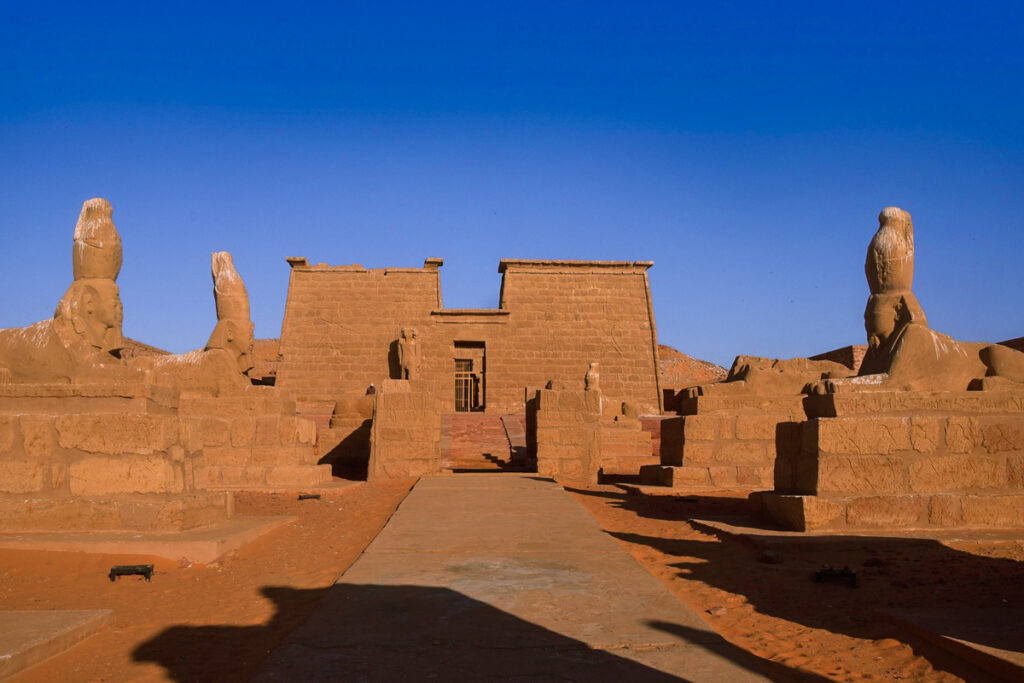
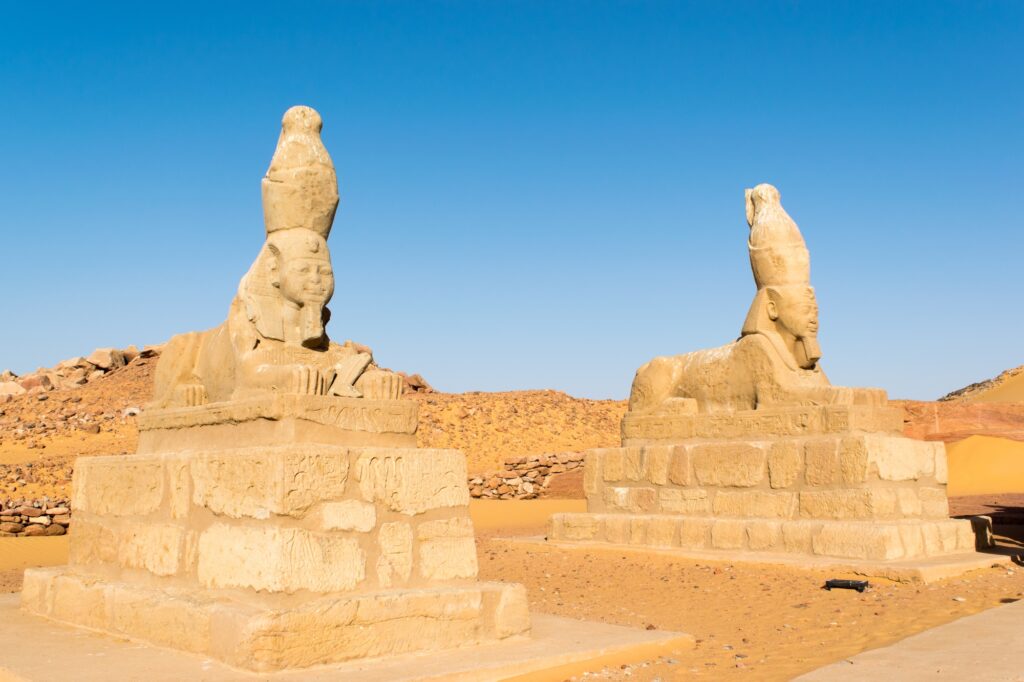
- The Temple of Wadi el-Seboua ("Valley of the Lions"): Built by Ramesses II and dedicated to Amun-Ra and Ra-Horakhty, this hemispeos (half-freestanding, half-rock-cut temple) takes its Arabic name from the dramatic avenue (dromos) of human-headed and falcon-headed sandstone sphinxes guarding its approach. During the Christian Nubian period, monks converted the inner sanctuary into a church, plastering over the pharaonic wall reliefs and painting an icon of St. Peter holding a massive key directly between the carved figures of Ramesses II — creating the surreal visual of an Egyptian pharaoh offering lotus bouquets to the Christian apostle.
- The Temple of Dakka (Ancient Pselchis): Originally begun in the third century BCE by the Meroitic Kushite King Arkamani (Ergamenes) in peaceful cooperation with Ptolemy IV Philopator, and later expanded under Ptolemy VIII and the Roman emperors Augustus and Tiberius. Dedicated to Thoth of Pnubs ("Lord of the Sycamore Fig"), Dakka boasts a remarkably intact 12-meter-high stone pylon that visitors can ascend via an internal staircase for sweeping views across Lake Nasser.
- The Temple of Maharraqa (Ancient Hierasykaminos): Marking the southernmost border of the Roman Empire in Egypt, this uninscribed Roman-era sanctuary dedicated to Isis and Serapis features a columned courtyard and the only architectural spiral staircase surviving from any ancient Egyptian temple.
3. The Amada Site Cluster (Amada, Derr & the Tomb of Pennut)
Roughly 200 kilometers south of Aswan, the Amada site brings together the oldest surviving monuments on Lake Nasser:
- The Temple of Amada: Founded in the Eighteenth Dynasty by Warrior Pharaoh Thutmose III and his son Amenhotep II, with a pillared hypostyle hall added by Thutmose IV, Amada is the oldest temple on the shores of Lake Nasser. Because its fragile mudbrick-and-gypsum-plaster interior walls preserved exquisite painted reliefs that would have shattered if sawed into blocks, French and Egyptian engineers executed an extraordinary feat in 1964–1965: they encased the entire 800-ton sanctuary in a concrete cradle and winched it intact on three parallel railway tracks for 2.6 kilometers up a 65-meter incline. Inside stands Amenhotep II's famous Year 3 military stela and Merneptah's Libyan campaign inscription.
- The Rock-Cut Temple of Derr: The only rock-cut temple built by Ramesses II on the eastern bank of the Nile in Nubia, dedicated to the solar god Ra-Horakhty. Though its outer forecourt lost its roof in antiquity, its inner pillared halls retain bright painted reliefs of Ramesses II accompanied by his pet lion and royal princes.
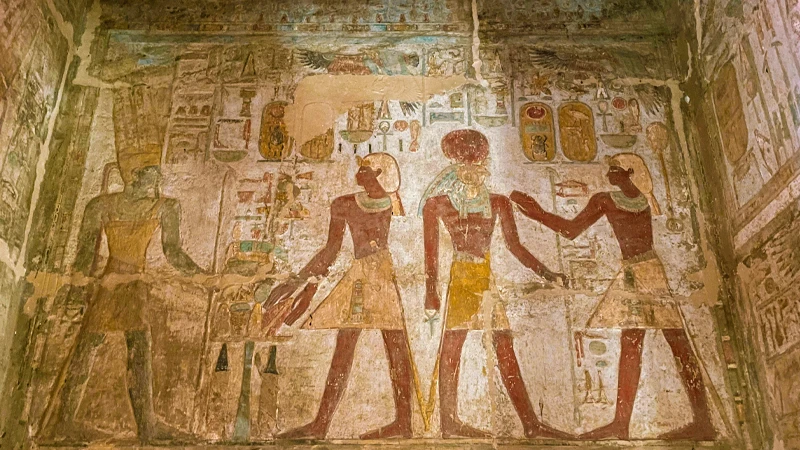
- The Tomb of Pennut (Relocated from Aniba): The rock-cut burial chapel of Pennut, Deputy Governor of Wawat (Lower Nubia) during the reign of Ramesses VI (Twentieth Dynasty, c. 1145–1137 BCE). Cut from the cliff at Aniba and reassembled here, its walls preserve sharp sunk-relief scenes of the Weighing of the Heart before Osiris, mourning rituals, and a royal legal decree recording plots of land endowed by Pennut to maintain a statue of the king.
4. The Island Citadel of Qasr Ibrim (Sundeck Viewing Only)
As your cruise ship sails between Amada and Abu Simbel, it approaches a steep, fortified stone outcrop rising directly out of the water: Qasr Ibrim. Travelers should understand an important factual distinction before booking: Qasr Ibrim is the only major monument on Lake Nasser still standing in its original geographical location, and visitors are strictly prohibited from stepping ashore. What was once a 70-meter cliff towering above the Nile riverbed is now an island fortress surrounded by the reservoir.
Because its sun-dried mudbrick ramparts, cathedral ruins, and residential strata are fragile, the Egyptian Ministry of Tourism and Antiquities restricts access to licensed archaeological teams. Your ship pauses directly beside the island for 20 to 30 minutes while your onboard Egyptologist narrates Qasr Ibrim's 3,000-year history over the sundeck speakers — tracing its evolution from New Kingdom Egyptian shrines and King Taharqa's Kushite mudbrick temple to the Roman garrison of Prefect Gaius Petronius (23 BCE), the great Cathedral of St. Mary in Christian Nobatia, and an Ottoman Bosniak stronghold occupied until 1811. Decades of rescue excavations here by the Egypt Exploration Society (EES) recovered thousands of preserved manuscripts in nine languages, thanks to Qasr Ibrim's hyper-arid elevation above the old river.
5. The Great and Small Temples of Abu Simbel
The crowning achievement of any Aswan to Abu Simbel Cruise is arriving by water before the twin rock-cut temples of Abu Simbel, excavated into the sacred sandstone cliffs of Meha and Ibshek during the reign of Ramesses II (c. 1264–1244 BCE) and relocated between 1964 and 1968 in 1,036 numbered blocks inside two artificial concrete domes:
- The Great Temple of Ramesses II: Fronted by four 20-meter-high (65-foot) seated colossi of Ramesses II wearing the Double Crown of Upper and Lower Egypt, the Great Temple extends 60 meters into the mountain. Its grand hypostyle hall is supported by eight Osiride pillars of the king, while its walls preserve the monumental relief cycle of the Battle of Kadesh (1274 BCE) against the Hittite Empire.
- The Small Temple of Hathor and Queen Nefertari: Standing just north of the Great Temple, this sanctuary is dedicated to the goddess Hathor and Ramesses II's beloved Great Royal Wife, Nefertari ("For Whom the Sun Shines"). On its facade, four standing statues of the king and two of the queen each rise 10 meters high — a rare instance in pharaonic art where the queen is sculpted at the exact same monumental scale as the pharaoh.
2026 Lake Nasser Cruise Prices: What Affects the Cost & How to Compare Quotes
Older travel guides and unverified booking pages often repeat flat historical starting figures such as $665 per person for a 4-day cruise and $935 per person for a 5-day cruise without explaining what those numbers actually represent. To budget accurately for 2026 and 2027, travelers should understand that those baseline figures reflect low-season (summer) promotional cabin-only or basic double-occupancy rates from earlier tariff cycles, whereas peak winter voyages (October through April) and comprehensive guided packages carry higher rates.
Below is a transparent breakdown of realistic 2026 price tiers and a side-by-side comparison of package inclusions versus exclusions. For broader context on how a Lake Nasser voyage fits into an overall Egypt budget, review our complete 2026 Egypt trip cost breakdown.
| Cruise Duration & Season | Historical / Low-Season Baseline (May – Sept) | Peak Winter Season (Oct – April) | Solar Alignment / Holiday Peak (Feb 22, Oct 22, Dec 20–Jan 5) | Key Pricing Drivers |
|---|---|---|---|---|
| 4-Day / 3-Night Cruise (Aswan → Abu Simbel) | ~$665 – $890 per person (Shared standard cabin) | ~$950 – $1,550 per person (5-star standard to deluxe) | ~$1,450 – $2,100+ per person (Subject to early sell-out) | Vessel category (classic 5-star vs. boutique/suite ships), single occupancy supplement (+50% to +75%), and whether temple tickets & flights are bundled. |
| 5-Day / 4-Night Cruise (Abu Simbel → Aswan) | ~$935 – $1,150 per person (Shared standard cabin) | ~$1,200 – $1,950 per person (5-star standard to deluxe) | ~$1,750 – $2,500+ per person (Subject to early sell-out) | Includes an additional night of full-board dining and onboard accommodation; often requires one-way domestic flight or private vehicle transfer to/from Abu Simbel. |
What Is Included vs. Excluded in a Typical Lake Nasser Cruise Package?
When comparing quotes between cruise-only port tariffs and full-service tour packages arranged through Egy Travel Lux, always verify which column each item falls under:
| Standard Package Inclusions | Typical Exclusions (Paid Onboard or Separately) | Items Requiring Written Confirmation Before Booking |
|---|---|---|
|
• 3 or 4 nights onboard accommodation in an air-conditioned lake-view cabin with private en-suite bathroom. • Full-board dining: Daily breakfast, lunch, afternoon tea on the sundeck, and dinner (starting with lunch on Day 1 and ending with breakfast on the final day). • Motorized tender boat transfers from the ship to all remote desert temple landings. • Guided shore excursions led by a licensed English-speaking Egyptologist. • Welcome drink, Nubian cultural show, and onboard evening entertainment. |
• Alcoholic beverages, bottled wine/beer, espresso drinks, and canned soft drinks outside breakfast. • Crew and guide gratuities (tipping is customary in Egypt; budget ~$15–$25 per passenger per day for ship crew plus your Egyptologist). • Laundry, spa/massage services, and satellite Wi-Fi packages (note: cellular signal is intermittent across central Lake Nasser). • International airfare and Egyptian entry visa fees. |
• Monument Entrance Tickets: Full tour packages usually bundle all Nubian temple and Abu Simbel tickets, whereas "cruise-only" cabin rates sometimes charge a separate sightseeing supplement. • Abu Simbel Sound & Light Show Ticket: Included in many deluxe packages, or offered as an optional evening add-on (~$30–$45 per person). • One-Way Domestic Flight or Private Road Transfer: Whether your return from Abu Simbel to Aswan/Cairo is included in the quote. |
Compare 4-Day and 5-Day Lake Nasser Cruise Quotes with Full Transparency
Avoid surprise sightseeing supplements or mismatched transfer timings between Aswan and Abu Simbel. Ask the travel specialists at Egy Travel Lux for an itemized 2026/2027 quote that confirms your specific vessel, cabin category, temple admission tickets, private port transfers, and domestic flight connections before you commit.
Compare Lake Nasser & Luxury Nile Cruise OptionsCabins, Dining, Onboard Facilities & Important Lake Nasser Rules
Because Lake Nasser has no commercial towns or supply ports between the Aswan High Dam and Abu Simbel, the passenger ships built for this waterway are larger, higher-freeboard vessels engineered for self-contained desert cruising. While facilities vary between individual ships — such as heritage Belle Époque-inspired steamers and modern 5-star deluxe vessels — travelers can expect the following onboard standards:
- Lake-View Cabins and Royal Suites: Standard cabins typically measure 18 to 22 square meters (195 to 235 sq ft) with large panoramic windows or French balconies, individual climate control, minibar, safe, satellite TV, and private bathrooms. Junior, Presidential, and Royal Suites offer expanded living areas and private forward-facing terraces.
- Full-Board Dining & Afternoon Tea: Main dining rooms serve buffet breakfasts and lunches alongside multi-course sit-down dinners featuring international, Mediterranean, and traditional Egyptian/Nubian dishes. Every afternoon during sailing or after Qasr Ibrim, complimentary tea, coffee, and pastries are served on the shaded sundeck.
- Sundeck, Pool & Evening Atmosphere: Unlike the high-energy party atmosphere common on some budget Luxor–Aswan boats, evenings on Lake Nasser are intentionally tranquil. Guests gather for sunset cocktails by the sundeck swimming pool, attend an Egyptology briefing or a traditional Nubian folkloric music performance, or stargaze under crystal-clear desert skies.
Three Mandatory Operational Rules Every Traveler Should Know
- Rule 1 — Daylight Navigation Only (No Nighttime Sailing): Because Lake Nasser is an unlit desert reservoir with submerged rocky outcrops and shifting water levels, Egyptian maritime authorities prohibit passenger vessels from sailing after dark. Every afternoon before sunset, your captain anchors or moors the ship near the next morning's temple cluster, guaranteeing dead-silent, vibration-free sleep at night.
- Rule 2 — No Swimming in Lake Nasser (Use the Ship Pool Only): While the deep blue water looks inviting against the desert sand, Lake Nasser is the natural sanctuary of the wild Nile crocodile (Crocodylus niloticus), which thrives south of the Aswan High Dam. Entering the lake water is strictly prohibited at all times; all swimming takes place safely in the vessel's treated sundeck pool.
- Rule 3 — Expect Digital Detox Zones in Central Nubia: While 4G/5G mobile coverage and ship Wi-Fi function reliably near Aswan (New Kalabsha) and at Abu Simbel, cellular signals drop out across remote stretches around Wadi el-Seboua and Amada. Download offline maps, books, and flight documents before departing Aswan.
Best Time for a Lake Nasser Nile Cruise & the Abu Simbel Solar Alignment
Lake Nasser crosses the Tropic of Cancer in one of the sunniest, driest desert climates on earth, receiving virtually zero rainfall year-round. Choosing the right month affects both daytime walking comfort at exposed sandstone temples and cabin pricing. For a country-wide monthly weather comparison, consult our guide to the best time to visit Egypt.
| Season & Months | Average Daytime Highs (Lake Nasser / Abu Simbel) | Average Nighttime Lows | Sailing Conditions & Booking Advice |
|---|---|---|---|
| Peak Winter Season (November – February) | 23°C – 28°C (73°F – 82°F) | 10°C – 14°C (50°F – 57°F) | Ideal weather for temple walks: Crisp, sunny days and cool desert evenings (pack a warm fleece or light jacket for morning tender rides and evening sundeck stargazing). Highest cabin demand; book 4–8 months ahead. |
| Shoulder Seasons (October, March & April) | 31°C – 36°C (88°F – 97°F) | 16°C – 21°C (61°F – 70°F) | Warm days & balmy evenings: Great pool weather on the sundeck; morning shore excursions are scheduled early to beat midday warmth. Excellent balance of availability and weather. |
| Summer Low Season (May – September) | 39°C – 44°C+ (102°F – 111°F+) | 24°C – 28°C (75°F – 82°F) | Intense desert heat: Lowest cabin prices of the year and almost private temple visits, but midday heat is extreme. Shore excursions take place shortly after dawn (6:30–9:30 AM), with afternoons spent inside air-conditioned lounges. |
Attending the Abu Simbel Solar Alignment (February 22 & October 22)
Twice every year — on February 22 and October 22 (dates widely associated by Egyptologists with the anniversary of Ramesses II's coronation and birthday; occurring one day later than the original ancient dates of February 21 and October 21 due to the 1964–1968 relocation onto higher ground) — the rising sun aligns precisely with the eastern entrance axis of the Great Temple of Abu Simbel.
For approximately 20 minutes at dawn, a concentrated beam of golden sunlight pierces 60 meters through the dark hypostyle halls into the innermost sanctuary, illuminating the seated cult statues of Amun-Ra, the deified Ramesses II, and the solar god Ra-Horakhty, while intentionally leaving the fourth statue on the far left — Ptah, lord of creative darkness and the underworld — untouched by the sun's rays. Taking a Lake Nasser Nile Cruise timed to arrive at Abu Simbel on February 21 or October 21 puts you moored right at the temple doorstep the night before the festival, avoiding the 3:00 AM overland desert convoy from Aswan.
How to Reach Aswan and Coordinate Your Cruise with Other Egypt Destinations
Because a standard 4-Day or 5-Day Lake Nasser Nile Cruise is a one-way journey between Aswan and Abu Simbel, smart transport planning is essential so you do not lose vacation hours in transit. You can explore regional transit options in detail in our Egypt transportation guide, or use the three proven connection blueprints below:
- Connecting Cairo, Aswan & Abu Simbel by Air (Fastest & Most Comfortable): Fly directly from Cairo International Airport (CAI) to Aswan Airport (ASW) (1 hour 25 minutes) to embark your southbound 4-day Lake Nasser cruise. On Day 4, after disembarking at Abu Simbel, take the short 45-minute domestic flight from Abu Simbel Airport (ABS) back to Aswan to connect onward to Cairo or Luxor.
- Private Air-Conditioned Vehicle Transfer Between Aswan and Abu Simbel: If domestic flight schedules do not match your preferred departure time, a private modern vehicle or minibus covers the 285-kilometer paved desert highway between Aswan and Abu Simbel in approximately 3 to 3.5 hours each way, allowing flexible door-to-door departure times.
- The Ultimate 8-to-10-Day "Two Cruises" Combination (Luxor + Lake Nasser): Many discerning travelers link a 4-Night Luxor-to-Aswan Nile River Cruise directly with a 3-Night Aswan-to-Abu Simbel Lake Nasser Cruise (or vice versa). You disembark your river ship in Aswan in the morning, tour the High Dam and Philae Temple, and step directly onto your Lake Nasser ship south of the dam at lunchtime — covering every major temple from Karnak to Abu Simbel in one seamless journey.
If your schedule allows an extra day or two in Aswan before embarkation, pairing your cruise with private Egypt day tours in Aswan lets you visit the Unfinished Obelisk, the Nubian Museum, and Elephantine Island, which are located north of the High Dam and are not included in the Lake Nasser sailing itinerary itself.
Who Is a Lake Nasser Nile Cruise Best Suited For?
Is a Lake Nasser Nile Cruise the right choice for your trip, or would you be happier on a classic Luxor–Aswan voyage or a quick flight to Abu Simbel? Use this honest comparison to decide:
Who Will Love a Lake Nasser Cruise
- Repeat visitors to Egypt: If you have already seen the Pyramids of Giza, Luxor, and Aswan, Lake Nasser reveals a completely new chapter of pharaonic, Kushite, and Roman Nubian archaeology.
- Travelers who dislike crowds and touts: Stepping off a tender boat onto an empty desert beach at Amada or Wadi el-Seboua with zero souvenir stalls is a rare privilege in Egypt.
- Couples & slow-travel luxury seekers: Unbroken desert horizons, quiet sundeck afternoons, and silent starlit anchorages make it the most peaceful cruise waterway in the region.
- Travelers with 10 to 14+ days in Egypt: Pairing a 4-night Luxor–Aswan cruise with a 3-night Aswan–Abu Simbel cruise creates the definitive Upper Egypt and Nubia expedition.
Who May Prefer a Different Itinerary
- First-time visitors with only 7 to 8 days total: If this is your first trip to Egypt and time is tight, prioritize Cairo, Luxor's Valley of the Kings, and a classic Luxor–Aswan cruise first, and visit Abu Simbel on a half-day flight or private car excursion.
- Travelers seeking bustling nightlife or shopping ports: There are no cities, bazaars, or shore-side cafes between the Aswan High Dam and Abu Simbel; evenings are quiet and self-contained onboard.
- Families with very young children needing constant activity: While older children and teenagers fascinated by history enjoy the tender boats and sundeck pool, younger children may find four days of quiet desert cruising and archaeological lectures slow-paced.
Practical Booking Advice & Pre-Booking Checklist
Before paying a deposit on any Lake Nasser Nile Cruise, run through these five essential verification checks:
- Confirm the exact weekly embarkation day before buying flights: Lake Nasser ships do not depart daily. Always lock in your Monday/Friday (4-day) or Thursday/Monday (5-day) ship cabin first, then issue your domestic Aswan and Abu Simbel flights around that confirmed berth.
- Verify that temple tickets and the Abu Simbel Sound & Light Show are itemized: Ask whether your quote includes all Nubian monument entrance fees and the evening Sound and Light Show at Abu Simbel so you are not surprised by onboard cash-or-card surcharges.
- Pack appropriate footwear for desert sand and stone steps: Reaching temples like Wadi el-Seboua, Amada, and Kalabsha involves stepping off a tender landing stage onto desert sand paths and climbing uneven sandstone steps. Bring sturdy closed-toe walking shoes, polarized sunglasses, high-SPF sunscreen, and a windproof hat.
- Bring Egyptian Pounds (EGP) and small USD notes for onboard tipping: Because there are no ATMs anywhere between Aswan and Abu Simbel, withdraw cash in Cairo or Aswan before boarding your ship.
- Book 6 to 12 months ahead for peak winter or Solar Alignment sailings: With fewer than eight active passenger ships on the entire lake, cabins for February 22, October 22, and December holidays frequently sell out nearly a year in advance.
Frequently Asked Questions About a Lake Nasser Nile Cruise
What is a Lake Nasser Nile Cruise?
A Lake Nasser Nile Cruise is a 4-day or 5-day voyage south of the Aswan High Dam across the Egyptian portion of Lake Nasser between Aswan and Abu Simbel. Unlike standard Nile River cruises between Luxor and Aswan, it sails through remote desert landscapes in ancient Lower Nubia and visits UNESCO-relocated pharaonic and Graeco-Roman temples that are virtually inaccessible by road.
How many days do you need for a Lake Nasser cruise?
Lake Nasser cruises operate on two standard one-way schedules: a 4-day, 3-night cruise sailing southbound from Aswan to Abu Simbel, and a 5-day, 4-night cruise sailing northbound from Abu Simbel to Aswan. Both itineraries visit the exact same temples and archaeological sites, though the 5-day route offers a slightly more unhurried sailing pace. Travelers can also combine both directions into an 8-day, 7-night round-trip voyage.
What is the difference between a Lake Nasser cruise and a traditional Nile River cruise?
A traditional Nile River cruise sails north of the Aswan High Dam between Luxor and Aswan along a busy, fertile agricultural valley shared by more than 200 cruise ships. A Lake Nasser Nile Cruise sails south of the High Dam across a vast, tranquil desert reservoir shared by fewer than 8 active passenger vessels, offering complete solitude, zero ship crowding at temple docks, and exclusive waterborne arrival at Abu Simbel.
How much does a Lake Nasser Nile Cruise cost in 2026?
While historical promotional low-season rates have started around $665 per person for a 4-day cruise and $935 per person for a 5-day cruise in shared standard cabins, realistic 2026 peak-season rates (October through April) typically range from $950 to $1,650+ per person for 4 days and $1,200 to $2,200+ per person for 5 days, depending on vessel tier, suite selection, temple ticket inclusions, and domestic flights.
What temples and archaeological sites do you visit on a Lake Nasser cruise?
Every standard Lake Nasser itinerary visits five major monument groups: the New Kalabsha Complex (Temple of Kalabsha, Beit el-Wali, and Kiosk of Qertassi), the Wadi el-Seboua Cluster (Temples of Wadi el-Seboua, Dakka, and Maharraqa), the Amada Cluster (Temple of Amada, Rock-Cut Temple of Derr, and Tomb of Pennut), an offshore sundeck viewing of the island fortress of Qasr Ibrim, and the Great and Small Temples of Abu Simbel.
Does a Lake Nasser cruise include Abu Simbel?
Yes. Abu Simbel is either the grand finale (on southbound Aswan-to-Abu Simbel cruises) or the opening highlight (on northbound Abu Simbel-to-Aswan cruises). Passengers view the colossal facades directly from the water and spend a full night moored near the temples, allowing visits at sunset, the evening Sound and Light Show, and early morning before overland tour buses arrive.
Can visitors enter the fortress of Qasr Ibrim?
No. Qasr Ibrim is the only monument on Lake Nasser still standing in its original location, transformed by the rising reservoir from a cliffside citadel into a hilltop island. To protect its fragile mudbrick and stone architecture, landing and foot access are strictly prohibited. Cruise ships pause directly offshore while the onboard Egyptologist explains its 3,000-year history from the sundeck.
What is the best month for a Lake Nasser Nile Cruise?
The best months to sail are November through February, when daytime highs across Lower Nubia average a comfortable 23°C to 28°C (73°F to 82°F). October and March/April are also excellent shoulder months, with October 22 and February 22 offering the bonus of the Abu Simbel solar alignment.
What happens at Abu Simbel during the solar alignment?
Twice a year, on February 22 and October 22, the rising sun aligns directly with the entrance axis of the Great Temple of Ramesses II, sending a beam of light 60 meters into the inner sanctuary to illuminate the seated statues of Amun-Ra, Ramesses II, and Ra-Horakhty for roughly 20 minutes, while leaving Ptah, god of creative darkness and the underworld, in perpetual shadow.
Can you swim in Lake Nasser during the cruise?
No. Swimming in Lake Nasser is strictly forbidden because the reservoir is the natural habitat of wild Nile crocodiles (Crocodylus niloticus). All passenger vessels operating on Lake Nasser feature an onboard sundeck swimming pool where guests can swim safely.
Do Lake Nasser cruise ships sail at night?
No. Because Lake Nasser is an unlit desert waterway with shifting submerged contours, maritime safety regulations require passenger ships to navigate only during daylight hours. Each evening before dusk, the vessel anchors or moors in a calm desert bay near the next morning's temple complex.
Are meals, drinks, and temple entrance fees included in Lake Nasser cruise packages?
Full-board meals (breakfast, lunch, afternoon tea, and dinner) are included on all Lake Nasser cruises. When booked as a comprehensive tour package through Egy Travel Lux, guided shore excursions, motorboat tenders, and temple entrance fees are included, whereas alcoholic beverages, soft drinks outside breakfast, crew gratuities, and optional laundry/spa services are billed separately.
Should you book the 4-day or 5-day Lake Nasser cruise?
Choose the 4-day Aswan-to-Abu Simbel cruise if you want the dramatic reveal of approaching Abu Simbel across the water on your third afternoon and have tighter vacation dates. Choose the 5-day Abu Simbel-to-Aswan cruise if your flight schedule aligns better with a Thursday or Monday departure or if you want an extra afternoon of relaxed sundeck cruising.
Is a Lake Nasser Nile Cruise suitable for families, couples, and first-time visitors?
A Lake Nasser cruise is exceptionally well suited for couples, history enthusiasts, photographers, and repeat travelers to Egypt seeking peace and off-the-beaten-path archaeology. First-time visitors with only 7 to 8 days in Egypt usually prioritize Cairo and a Luxor-to-Aswan cruise first, whereas travelers with 10 to 14 days frequently combine both cruises.
How far in advance should you book a Lake Nasser Nile Cruise?
Because fewer than 8 passenger vessels operate on Lake Nasser compared to over 200 between Luxor and Aswan, cabin availability is tightly constrained. Book 4 to 6 months in advance for standard winter departures (November–March), and 8 to 12 months in advance for Christmas, New Year, or the February 22 and October 22 Abu Simbel solar alignment weeks.
Conclusion: Why Sailing Lake Nasser Remains Egypt's Most Exclusive Voyage
Where a classic Upper Egypt river cruise immerses you in the vibrant daily life of the Nile Valley, a Lake Nasser Nile Cruise transports you across a silent desert sea into the rescued heart of ancient Nubia. From standing before the painted battle reliefs of Beit el-Wali and the Eighteenth Dynasty sanctuary of Amada to watching the late-afternoon sun turn the four colossi of Abu Simbel into warm gold from the bow of your ship, sailing between Aswan and Abu Simbel offers a level of serenity and archaeological intimacy that few journeys in the Mediterranean or Middle East can match.
Ready to Plan Your Tailor-Made Lake Nasser Nile Cruise?
Whether you want to reserve a standalone 4-day or 5-day Lake Nasser Nile Cruise with private Aswan and Abu Simbel transfers, or combine Lake Nasser with a luxury Luxor–Aswan voyage and private guided tours in Cairo, our specialists at Egy Travel Lux have crafted bespoke Egypt journeys since 1983. Contact our team today to verify live ship schedules and receive a customized proposal.
Design Your Custom Lake Nasser & Egypt ItineraryOfficial Archaeological, Institutional & Historical Sources
Monument histories, UNESCO relocation engineering records, seasonal climate figures, and 2026 visitor regulations in this guide were verified against the following primary institutional and Egyptological sources:
- UNESCO World Heritage Centre — Nubian Monuments from Abu Simbel to Philae (World Heritage List Reference 88) & Records of the International Campaign to Save the Monuments of Nubia (1960–1980).
- Egyptian Ministry of Tourism and Antiquities — Official Archaeological Site Profiles for Aswan and Nubia: Abu Simbel, Temple of Kalabsha, Beit el-Wali, Wadi el-Seboua, Dakka, Amada, Derr, and Qasr Ibrim (accessed October 2026).
- Egypt Exploration Society (EES) — Qasr Ibrim Excavation Archives and Survey Reports on Lower Nubia.
- Säve-Söderbergh, Torgny (1987) — Temples and Tombs of Ancient Nubia: The International Rescue Campaign at Abu Simbel, Philae and Other Sites, Paris/London: UNESCO & Thames & Hudson.
- Baines, John & Malek, Jaromir (2000) — Cultural Atlas of Ancient Egypt (Revised Edition, Section on Nubia: Philae to Abu Simbel), Oxford: Andromeda.
- Wilkinson, Richard H. (2000) — The Complete Temples of Ancient Egypt (Lower Nubia and Lake Nasser Sanctuaries, pp. 216–229), London: Thames & Hudson.