Egypt Vacation Packages 2026: All-Inclusive Options Compared
Egypt Vacation Packages 2026: Tier-by-Tier Price Comparison
Egypt in 2026 is genuinely one of the world’s best-value premium destinations. The EGP devaluations of recent years mean that international travelers — paying in USD, EUR, or GBP — get extraordinary buying power. A five-star Luxor hotel that would cost $500/night in a comparable European city runs $120–180 here. That dynamic runs through every tier.
Budget Tier: $800 – $1,400 per person (7–10 days)
Budget Egypt vacation packages in 2026 deliver far more than the price tag suggests. You are staying in comfortable 3-star hotels, traveling in shared group minibuses with a guide who may not be a specialist Egyptologist, but will competently navigate the major sites. You will see the pyramids, the Sphinx, Karnak Temple, the Valley of the Kings, and possibly take a short Nile felucca ride. Entrance fees are often not included — check before booking.
The trade-off is time efficiency and group size. Shared tours run to a fixed schedule that can feel rushed at sites like the Valley of the Kings, where an hour is genuinely not enough. The social element is a genuine plus for solo travelers, though — budget group tours from companies like Intrepid and G Adventures reliably produce the “travel friends for life” outcome.
| BUDGET PACKAGE — WHAT TO EXPECT |
| Duration: 7–10 days |
| Accommodation: 3-star hotels in Cairo, Luxor, Aswan; shared cabin on standard Nile cruise |
| Guide: English-speaking group guide (not always a licensed Egyptologist) |
| Group size: 12–16 people typical |
| Meals: Breakfast usually included; lunch/dinner at local restaurants (extra) |
| Entrance fees: Often NOT included — budget an extra $80–120 USD for major sites |
| Internal transport: Group minibus + Nile cruise included; domestic flights extra |
| Typical inclusions: Cairo tour, Giza, Luxor, Aswan, short Nile cruise segment |
| Price range: $800–$1,400 per person (land only, ex-Cairo) |
Mid-Range Tier: $1,400 – $2,500 per person (8–12 days)
This is the sweet spot for most international travelers. Mid-range Egypt packages in 2026 typically include 4-star accommodation, a licensed guide, all entrance fees, domestic flights between Cairo and Aswan, a proper 5-night Nile cruise (rather than a 2-night budget option), and most meals. The Nile cruise alone accounts for much of the price jump — and it’s worth every cent.
The mid-range experience lets you move at a human pace. You get two full days in the Valley of the Kings rather than a rushed morning. You sit on the sun deck of a properly appointed cruise ship at 5:30 PM as the temples of Edfu appear around a river bend in the last light, and the sound is just water against hull. That is not available at the budget tier, and it is the heart of why people come to Egypt.
| MID-RANGE PACKAGE — WHAT TO EXPECT |
| Duration: 8–12 days |
| Accommodation: 4-star hotels; standard 5-night Nile cruise included |
| Guide: Licensed Egyptologist (shared group, typically 8–12 people max) |
| Meals: Breakfast + lunch included; dinners mostly on cruise ship |
| Entrance fees: Included for all major sites (Giza, Karnak, Valley of the Kings, Abu Simbel sometimes extra) |
| Internal transport: Domestic flight Cairo–Aswan or Luxor included |
| Typical itinerary: Cairo (2 nights) + Nile cruise Luxor–Aswan (5 nights) + Hurghada optional (2 nights) |
| Grand Egyptian Museum: Included as standard from November 2025 onwards |
| Price range: $1,400–$2,500 per person (land + domestic flights; international flights separate) |
Luxury Tier: $2,500 – $6,000+ per person (8–14 days)
Luxury Egypt vacations in 2026 operate in an entirely different register. Private vehicle, private Egyptologist (often PhD-level), priority access at sites, luxury Nile cruise or private dahabiya sailing vessel, five-star hotels throughout — including the legendary Marriott Mena House with its unobstructed pyramid view from the garden — and curated dining experiences that include rooftop Nile dinners and private lunches at Luxor temple sites.
The defining difference is not comfort — it’s access and pace. A luxury Egypt vacation means arriving at Karnak Temple when it opens and standing in the hypostyle hall with 134 towering columns and almost no other visitors, while an Egyptologist who has spent fifteen years studying this site walks you through the inscriptions. Two hours later, the general public arrives. You are already on your private cruise, watching the river from a sundeck.
| LUXURY PACKAGE — WHAT TO EXPECT (egytravellux Premium) |
| Duration: 8–14 days (fully customizable) |
| Accommodation: 5-star throughout — Marriott Mena House (Cairo), Winter Palace (Luxor), Old Cataract (Aswan) |
| Cruise: Private dahabiya (2–4 cabins) or Sanctuary Sun Boat IV / Amoura luxury cruise |
| Guide: Private PhD Egyptologist throughout — exclusive to your party only |
| Meals: All meals included; private chef dinner options; Nile sundowner service |
| Entrance fees: All included, plus optional interior pyramid access (pre-booked) |
| Internal transport: Domestic charter flight available; private luxury vehicle |
| Extras: Hot air balloon over Luxor, Sound & Light VIP seating, GEM early-entry |
| Abu Simbel: Private day trip by charter flight from Aswan |
| Price range: $2,500–$6,000+ per person (all-inclusive land; international flights extra or arrangeable) |
The Ultimate Egypt Vacation Itinerary: What to Include
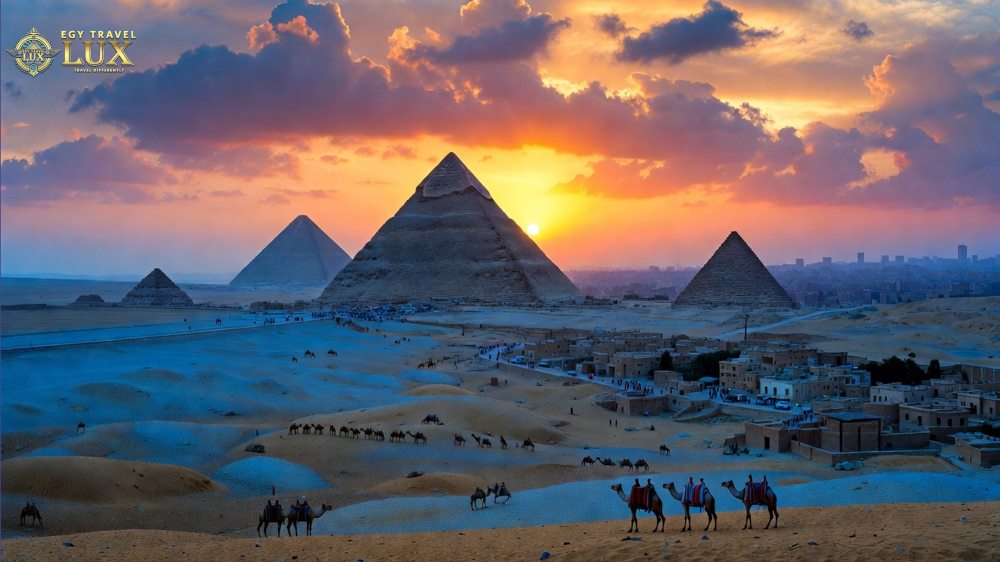
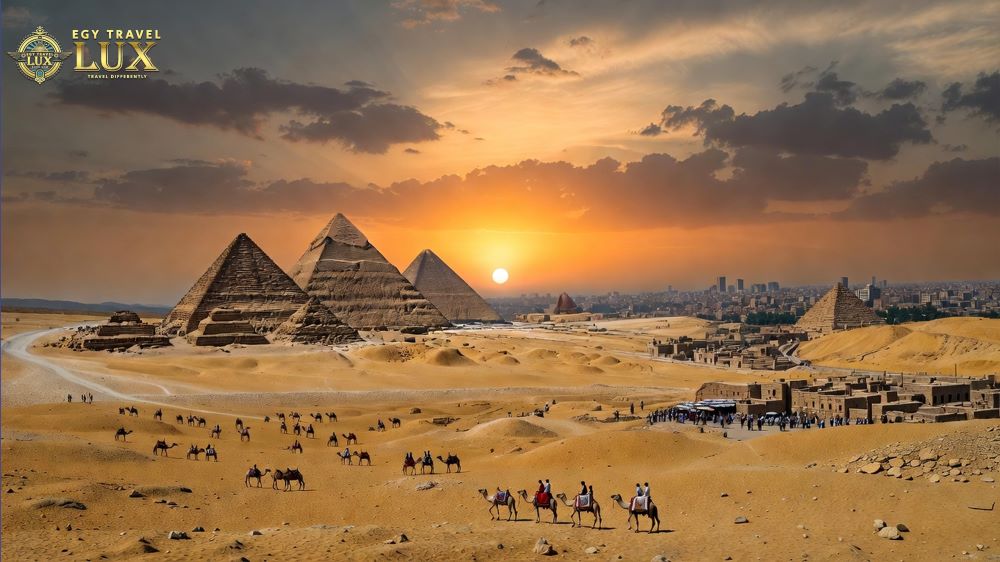
A well-built Egypt vacation package in 2026 covers three distinct geographic zones: Cairo and the Giza Plateau, the Nile Valley corridor from Luxor to Aswan, and optionally the Red Sea coast. Each zone is its own world. Cairo is ancient and modern layered in one city. The Nile Valley is the spiritual spine of Egyptian civilization. The Red Sea is where the world comes to decompress.
Zone 1: Cairo — 2–3 Nights
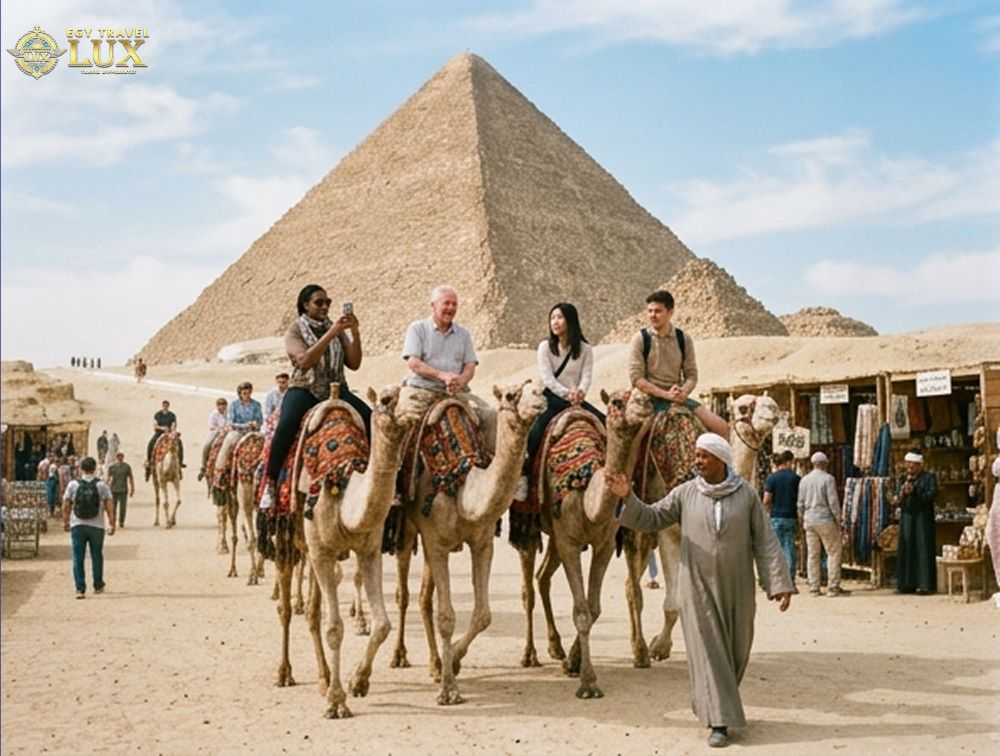
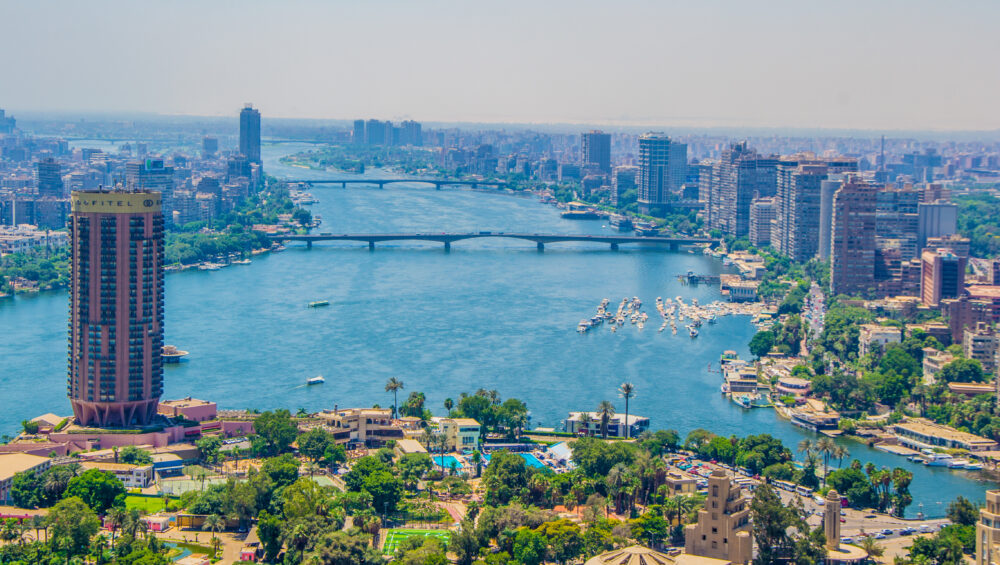
Cairo is overwhelming in the best possible way — 23 million people, 5,000 years of continuous habitation, the call to prayer from a thousand minarets echoing off limestone walls at 5 AM. The non-negotiables are the Giza Plateau (arrive at opening, before 9 AM), the Grand Egyptian Museum (allow 3–4 hours minimum for the Tutankhamun treasury alone), and a wander through Islamic Cairo’s al-Muizz Street at dusk. Khan el-Khalili bazaar at night, with a mint tea at Fishawi’s Coffeehouse (continuously open since 1797), is the cultural dessert.
Hidden gem for cultural explorers: the Coptic Cairo neighborhood. The Hanging Church (Al-Muallaqah), built in the 4th century AD on top of a Roman fortress gate, is one of the oldest Christian churches in existence and is virtually empty on weekday mornings. Most Cairo tour packages skip it entirely. egytravellux always includes it.
Zone 2: The Nile Valley — Luxor to Aswan (5–7 Nights)
This is the irreplaceable core of any Egypt vacation. The distance from Luxor to Aswan by Nile cruise is approximately 225 km, and it is the most historically dense stretch of river on the planet. Luxor alone contains roughly 30% of the world’s ancient monuments — the Karnak Temple complex (the largest religious building ever constructed), the Valley of the Kings with its 63 identified royal tombs, and Luxor Temple glowing orange under floodlights at 9 PM. Aswan is quieter, warmer, and dominated by the great water: the Aswan High Dam, the granite quarries where ancient Egyptians cut the obelisks, and the Temple of Philae on its island.
The Nile cruise between these two cities is not transport — it is the experience itself. Watching the Edfu Temple appear between date palms as you round a river bend at 7 AM, the engine barely audible, a cup of coffee in hand: this is what people mean when they say Egypt changed them. The cruise stops at Edfu and Kom Ombo temples, and the best operators — egytravellux included — time arrivals at dawn when crowds are absent.
| NILE CRUISE OPTIONS — 2026 COMPARISON |
| STANDARD CRUISE (3–4 nights, Luxor–Aswan): |
| Price: $400–$700 per person | Vessel: 60–100 cabin ship | Meals: Full board | Guide: Shared group |
| PREMIUM CRUISE (5–7 nights, full route): |
| Price: $800–$1,500 per person | Vessel: Boutique 20–40 cabin ship | Private deck access | Egyptologist guide |
| LUXURY DAHABIYA (4–7 nights, private sailing vessel): |
| Price: $1,800–$3,500 per person | 2–4 cabins only | Private chef | Full butler service | Zero crowds |
| Recommended vessels: Amoura, Sonesta Moon Goddess, Sanctuary Sun Boat IV |
| HOT AIR BALLOON (Luxor, sunrise): |
| Price: ~$90–$150 per person | Must be pre-booked | Minimum 2 passengers | Best Nov–Mar |
Zone 3: Abu Simbel — The Non-Negotiable Day Trip
No Egypt vacation is complete without Abu Simbel. Ramesses II built these two rock-cut temples at the far southern edge of his empire around 1264 BC, and had them decorated with reliefs of his own divine status so that conquered Nubian peoples would be left in no doubt about who ruled the world. The four colossal seated figures of Ramesses — 20 metres tall each — watching the sunrise over Lake Nasser are the most audacious piece of architectural arrogance in human history, and they are magnificent.
The UNESCO-led relocation of Abu Simbel in the 1960s (the entire temples were cut into blocks and reassembled 65 metres higher to save them from the rising waters of the Aswan High Dam) is itself a staggering achievement. Fly from Aswan — 55 minutes — or take a 3 AM convoy drive if budget is the priority. The Sun Festival on February 22nd and October 22nd, when the sun aligns to illuminate the inner sanctuary, is a once-in-a-lifetime calendar event.
Zone 4: The Red Sea Coast — Optional but Outstanding
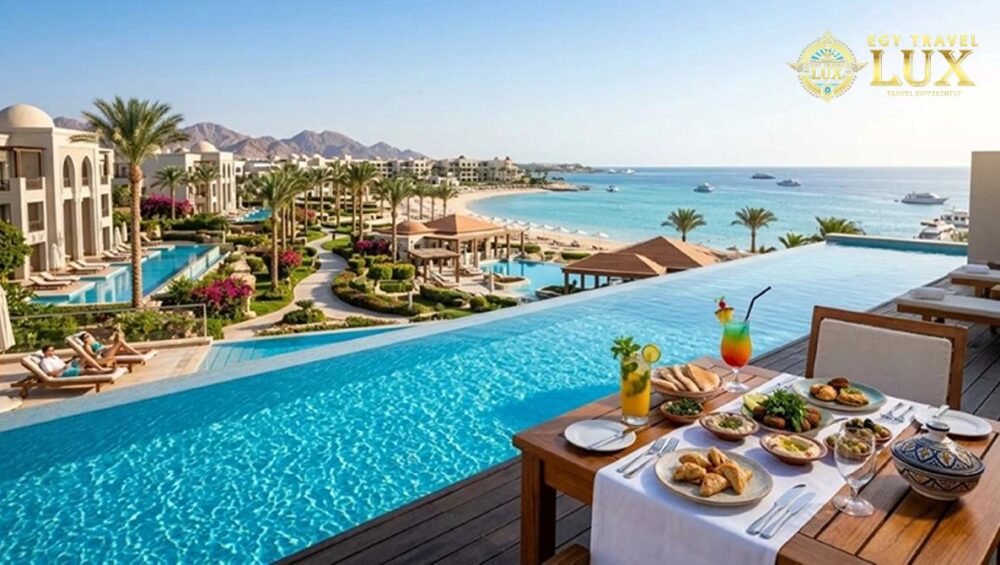
Adding 2–3 nights at Hurghada or Sharm El-Sheikh after the Nile Valley segment is the format that works best for mixed groups: partners who want temples and others who want coral reefs get both. Hurghada is better for diving (the marine biodiversity of the Brothers Islands reef system is world-class); Sharm El-Sheikh has better resort infrastructure and easier connections back to international airports.
The Red Sea coast is where all-inclusive beach resorts operate in the traditional sense. Properties like SUNRISE Arabian Beach Resort and Stella Di Mare Beach Hotel offer the full package: unlimited meals, activities, bars, and entertainment for a fixed nightly rate. These are not sites to rush — plan a minimum of two nights to make the travel worthwhile.
Your Egypt Vacation — Designed for Your Travel Style
🏺 The Cultural Explorer: Depth Over Distance
If you come to Egypt to understand it — not just photograph it — you need an itinerary built around access rather than checkboxes. The single most impactful upgrade you can make to any Egypt vacation package is a licensed Egyptologist as your private guide. Not a driver who has memorized a script. A specialist who can read the hieroglyphic inscriptions at Karnak and explain why the orientation of Ramesses III’s mortuary temple at Medinet Habu tells us something specific about his military campaign in Libya.
Cultural explorers should prioritize: the Tomb of Seti I in the Valley of the Kings (the most elaborately decorated royal tomb ever discovered, only recently restored and reopened to limited visitors), the temple precinct of Dendera with its preserved Zodiac ceiling, and the off-map site of Abydos — home to the Temple of Seti I and the Osireion, a mysterious subterranean structure dedicated to the resurrection god Osiris. These three sites require a dedicated day from Luxor and appear in almost no standard packages.
| 🔍 CULTURAL EXPLORER — HIDDEN GEM SITES FOR 2026 |
| Dendera Temple Complex (2 hrs from Luxor): The Hathor Temple has the best-preserved painted ceilings in Egypt. The famous Dendera Zodiac (the original is in the Louvre, but the carved ceiling here is extraordinary). Visit at 7 AM before the tour buses. |
| Abydos (3 hrs from Luxor): The Osireion and Temple of Seti I — this is where pharaohs came to be declared legitimate rulers before the gods of creation. Almost no mass-market packages include it. |
| Medinet Habu (Luxor, West Bank): The mortuary temple of Ramesses III is better preserved than most Karnak sections, and at 6:30 AM it is almost deserted. The hieroglyphic texts of the Sea Peoples War are here. |
| Siwa Oasis (750km west of Cairo): The Oracle Temple where Alexander the Great was declared a god. No crowds, no tour buses — just palm groves, salt lakes, and 3,000 years of complete silence. |
| egytravellux includes Dendera and Abydos as a standard option on all 10-day+ cultural itineraries. |
💎 The Luxury Seeker: The Private Egypt Nobody Else Sees
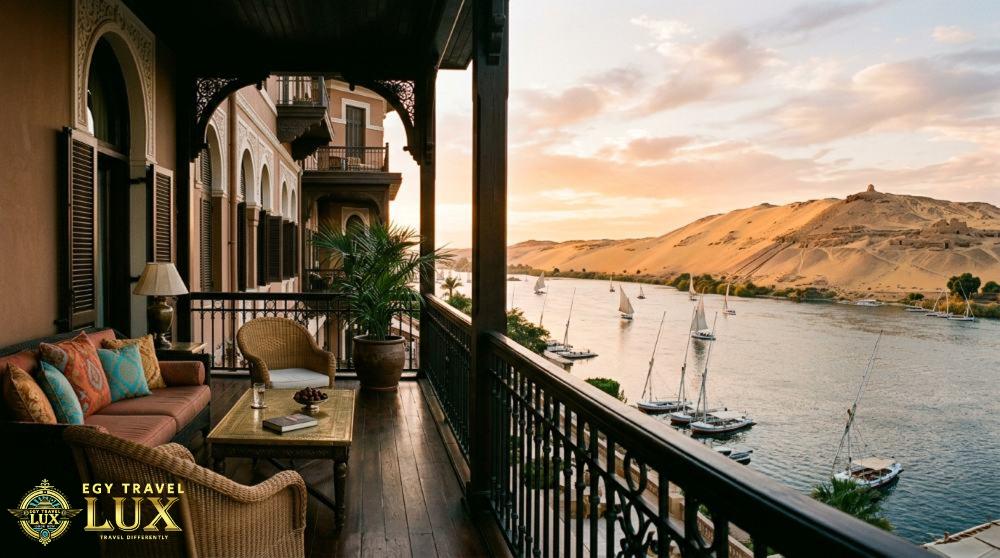
A luxury Egypt vacation in 2026 is not about five-star thread counts (though those are here too). It is about exclusive access and pace. The Old Winter Palace Hotel in Luxor, opened in 1907 and still operated by Sofitel, has a terrace where Agatha Christie wrote “Death on the Nile.” The Old Cataract Hotel in Aswan sits on a granite cliff above the First Cataract, and the view at sunset — the Nile turning from bronze to ink, the feluccas catching the last wind, Elephantine Island in silhouette — is one of the most beautiful panoramas in the world.
egytravellux’s luxury packages include elements that cannot be booked independently: pre-dawn private access to Karnak Temple (a site management arrangement that allows entry 45 minutes before public opening), a private dinner at the base of the Colossi of Memnon, and a full-day charter to Abu Simbel that includes arrival before the tour groups and a private picnic at the lake edge. None of these are advertised online. They are curator-level experiences built on years of relationships with Egyptian authorities.
| 🌟 LUXURY EGYPT VACATION — egytravellux SIGNATURE PACKAGE (10 DAYS) |
| Day 1–2: Cairo — Marriott Mena House; private GEM early-entry; Coptic Cairo; Khan el-Khalili by private car |
| Day 3: Private Giza tour at opening + Solar Boat Museum; interior of Great Pyramid; 5-star lunch |
| Day 4: Fly Aswan; Old Cataract Hotel; Philae Temple by private felucca at sunset |
| Day 5: Private charter Abu Simbel + Lake Nasser picnic; return Aswan for Elephantine Island evening |
| Day 6–10: Board private dahabiya Aswan–Luxor; Edfu (dawn arrival); Kom Ombo; Esna; Valley of Kings (2 days) |
| Day 10: Hot air balloon over Luxor at sunrise; Karnak pre-opening access; fly Cairo/home |
| All-inclusive: Accommodation, all meals, Egyptologist, all transfers, all tickets, balloon, Abu Simbel charter |
| Price: From $4,200 per person | Fully private | Free consultation: www.egytravellux.com/consultation |
👨👩👧 The Family Traveler: Egypt That Works for Everyone
Egypt is better for families than most parents expect — and worse than most travel brochures suggest, for reasons that are entirely manageable with the right preparation. The good news: Egyptian culture loves children with a warmth that is entirely genuine, entrance fees for children under 12 are substantially reduced, and the scale of the monuments creates the kind of authentic, screen-free wonder that parents spend years trying to engineer. The pyramids do not need a presenter.
The logistics are where preparation matters. Young children cannot enter pyramid interiors (under-6 restriction) and may find the Valley of the Kings challenging without a guide who can calibrate the narrative for their age. The GEM is exceptional for families — air-conditioned, well-organized, with a dedicated children’s gallery and a full restaurant. A Nile cruise is phenomenal for families: enclosed, safe, beautiful, and with enough downtime between temple stops for children to use the pool and recover. Plan a maximum of two site visits per day for any child under 10.
| 👨👩👧 FAMILY EGYPT VACATION CHECKLIST — 2026 |
| Best format: Private 10-day package (Cairo + Nile cruise + optional Red Sea) |
| Best months: November, February, March — cool enough for children to handle full-day itineraries |
| Accommodation: Choose cruise ships with a children’s pool; hotels with in-room fridges for baby supplies |
| Meals: All major tourist restaurants cater to Western palates; cruise ships offer child menus |
| Medical: Bring a full first aid kit; ibuprofen and rehydration sachets are essential (heat + new food) |
| Strollers: Useless at Giza and Valley of Kings (sand + uneven stone) — use a carrier for toddlers |
| Night temperature: Cairo in winter drops to 8°C at night — pack a real jacket for children |
| Safety: Egypt is consistently reported as safe for family travel; tourist areas have visible police presence |
| egytravellux family packages include child-paced Egyptologist guides and private transfer throughout |
The Solo Adventurer: Egypt on Your Own Terms
Solo travel in Egypt has a texture that group and family travel simply cannot replicate. You eat when you want, stop when something interests you, and end up in conversations with local archaeologists at Luxor guesthouses that reshape everything you thought you knew about the ancient world. The Luxor west bank guesthouse scene — particularly the Marsam Hotel, favored by excavation teams since the 1920s — operates as an informal salon for solo travelers who actually want to understand where they are.
Safety for solo travelers, including solo women, is manageable with direct preparation. Dress modestly (shoulders and knees covered in non-resort areas), use Uber or Careem rather than unmarked taxis, and stay in well-reviewed accommodation. The solo premium on private packages is real — you pay more per person because the vehicle and guide cost is fixed — but joining a small-group tour of maximum eight people splits that cost and adds the social element without the cattle-herd experience of a 16-seat bus.
| SOLO ADVENTURER — OFF-THE-BEATEN-PATH EGYPT 2026 |
| Dahshur at sunset (solo, no guide needed): The Bent Pyramid and Red Pyramid with almost zero tourists. Take an Uber from Giza (~$6). Budget 2 hours. The Red Pyramid interior is open and extraordinary. |
| Luxor west bank by bicycle: Rent a bike from the ferry landing (EGP 50/day) and ride to Medinet Habu at 6 AM — the muezzin call echoing off 3,200-year-old walls with no other tourist in sight. |
| Siwa Oasis 3-day solo trip: Bus from Cairo or charter jeep. Stay at Adrere Amellal eco-lodge (no electricity, no Wi-Fi, absolute silence). Visit the Oracle Temple of Amun where Alexander asked about his destiny. |
| Coworking + culture: Cairo’s Workshop Coworking in Maadi (day pass ~$10); 4G SIM card 30GB for $3. 40Mbps average speed in Cairo. Drops inside tombs — bring downloaded offline maps. |
| Social scene: Sequoia restaurant on the Nile (Cairo) for meeting other travelers; Sofra restaurant (Luxor) for the best local food with a genuinely mixed crowd. |
| egytravellux builds solo-optimized itineraries that combine group morning temple tours with solo afternoon freedom. |
Egypt Vacation Packages 2026: Complete Price Comparison
Use this master table to match your budget, travel style, and preferred duration to the right package type. All prices are land-only (excluding international flights) and are quoted per person based on double occupancy unless otherwise noted.
| Package Type | Duration | Price/Person | Best For |
| Budget group tour | 7–10 days | $800–$1,400 | Solo travelers, young couples, first-timers on budget |
| Mid-range group (incl. Nile cruise) | 8–12 days | $1,400–$2,000 | Couples, small groups, balanced culture + comfort |
| Mid-range private (2 pax) | 8–12 days | $1,800–$2,500 | Couples wanting private guide without luxury price |
| Luxury private (2 pax) | 10–14 days | $2,500–$4,500 | Honeymoons, milestone trips, luxury seekers |
| egytravellux ultra-private | 8–14 days | $4,200–$6,500+ | VIP, exclusive access, dahabiya, PhD Egyptologist |
| Beach all-inclusive (Red Sea) | 7 nights | $700–$1,800 | Beach lovers, family relaxation, post-tour decompression |
| Cairo-only weekend (3 nights) | 3–4 days | $400–$900 | City-break travelers, transit stopover maximizers |
| Cairo + Nile cruise (no Red Sea) | 9–11 days | $1,200–$3,500 | Culture-focused, no beach needed, maximum history |
Note: Exchange rates fluctuate. USD 1 ≈ EGP 50 as of early 2026. Packages priced in USD by international operators are stable; packages priced in EGP locally offer even better value as the rate moves. Always confirm inclusions of: entrance fees, domestic flights, GEM ticket, tipping, and visa assistance before booking.
The Questions You Didn’t Know to Ask — Answered
Do I Need a Visa for Egypt in 2026?
Citizens of most Western nations (USA, UK, EU, Australia, Canada) can obtain an Egypt e-Visa online at visa2egypt.gov.eg for approximately $25 USD. Apply at least 72 hours before travel. Visas on arrival are also available at Cairo International Airport for $25 USD cash (USD, EUR, or GBP accepted). Some nationalities qualify for a free visa on arrival — check your specific country on the official portal before departure.
egytravellux’s all-inclusive packages include visa application assistance as standard. You supply the passport scan and payment; we handle the submission and follow up on your behalf. It takes 15 minutes and eliminates the single most common pre-departure anxiety for first-time Egypt visitors.
How Do I Handle Street Vendors Without Conflict?
Vendors at major sites — Giza, Luxor, Karnak — are persistent, skilled conversationalists, and entirely manageable once you know the approach. One clear, friendly “La, shukran” (No, thank you) in Arabic, said with brief eye contact and then continued walking, signals cultural awareness and firm disinterest simultaneously. Do not smile apologetically while declining — it reads as hesitation. Do not begin a price negotiation unless you intend to buy.
If you have a private guide, this problem effectively disappears — they run interference continuously and their presence signals to vendors that you are in a managed party. On solo or group tours without a dedicated guide at the gate, the skill is learned within 30 minutes of your first site. It becomes genuinely stress-free. The vendors are not aggressive; they are entrepreneurial.
2026 Tipping Guide for Egypt Vacation Packages
| Service | Recommended Amount (2026) |
| Private Egyptologist guide (full day) | EGP 400–700 / $8–14 USD per person |
| Shared group guide (full day) | EGP 200–400 / $4–8 USD per person |
| Private driver (full day) | EGP 150–250 / $3–5 USD |
| Nile cruise cabin steward (per night) | EGP 50–100 / $1–2 USD |
| Hotel porter (per bag) | EGP 20–50 / $0.40–1 USD |
| Restaurant (tourist areas) | 12–15% of bill |
| Felucca captain (half-day) | EGP 100–200 / $2–4 USD |
| Temple attendant who opens gate/shows detail | EGP 20–50 / $0.40–1 USD |
| Toilet attendant at sites | EGP 5–10 / $0.10–0.20 USD |
Is Egypt Safe for International Tourists in 2026?
Egypt is consistently rated as one of the safer destinations in the MENA region for international tourists. The 2026 travel advisories from the UK FCDO and US State Department both classify tourist areas (Cairo, Luxor, Aswan, Red Sea resorts) as standard travel risk — the same category as many Southern European cities. Tourist police are visibly present at all major sites. The practical concerns are petty theft (keep bags in front of you at bazaars), vendor pressure (entirely manageable), and sun-related illness (preventable with water and sunscreen).
North Sinai is categorized differently and should be avoided — this does not affect any standard tourist itinerary. The Sinai Peninsula’s resort areas (Sharm El-Sheikh, Dahab, Taba) are in South Sinai and are safe, as confirmed by the continued operation of major international hotel chains throughout the region.
Is Wi-Fi and 4G Reliable Enough for Remote Workers?
Cairo and Giza: strong 4G throughout (Vodafone Egypt or Orange Egypt SIM, 30GB for EGP 150 / ~$3 USD). Luxor and Aswan: reliable 4G in all major hotels and tourist areas. Nile cruise ships at 4-star and above: satellite Wi-Fi standard, download speeds of 10–20 Mbps typical. Dead zones: inside pyramid chambers and deep in Valley of the Kings tombs — download offline maps before entering. Siwa and desert areas: patchy to none; plan accordingly.
What to Pack for an Egypt Vacation: Season-by-Season
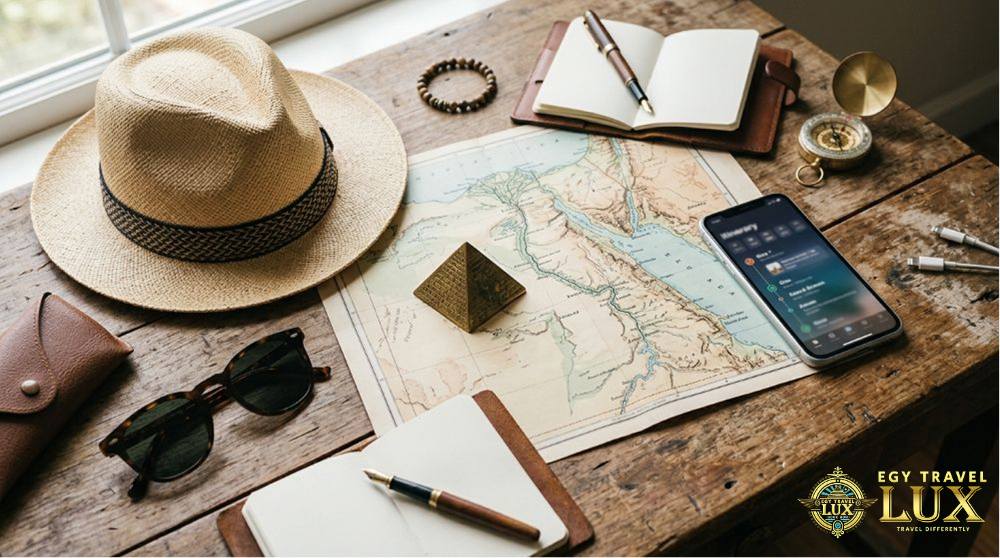
Peak Season (November – February)
- Layers are essential: Cairo nights drop to 8–10°C — bring a real jacket, not just a light cardigan
- Comfortable closed-toe walking shoes for temple floors (uneven limestone; no sandals at Karnak)
- Scarf or shawl: required for women at mosques and Islamic sites; doubles as sun protection on desert sites
- Sunscreen SPF 50+: winter sun reflects off pale limestone with surprising intensity
- Light cotton or linen layers for daytime — even winter Aswan reaches 26°C in the afternoon
- Portable power bank: full-day tours drain phones rapidly between navigation, photography, and translation apps
- Small daypack with a secure zip pocket for tickets, passport copy, and cash
Shoulder Season (March – April, October)
- Same as peak season, plus electrolyte packets — April heat in Upper Egypt builds fast
- Wide-brim hat and UV-protection clothing for extended open-air sites like Giza and Saqqara
- Check Ramadan dates for 2026 — site hours and restaurant availability shift during the holy month
Summer Season (May – September)
- Electrolytes are non-negotiable: dehydration in 40°C+ heat is a real risk
- Loose, long-sleeved UV-protection shirts: counterintuitively cooler than tank tops in direct desert sun
- 2L+ refillable water bottle — bring from home to reduce plastic waste at sites
- Cooling towel and small handheld fan for open-air temple sections
- Plan all temple visits for 6–9 AM and 4–6 PM only; use midday for GEM (air-conditioned) or hotel pool
FAQ — Egypt Vacation Packages 2026
Q1: How much does an all-inclusive Egypt vacation cost in 2026?
The average cost of a 10-day tour is approximately $1,800 per solo traveler or $2,300 per couple for a mid-range all-inclusive land package (EgyptToursPlus, 2025). Budget packages start around $800 per person for a 7-day trip. Luxury private packages begin at $2,500 per person and can reach $6,000+ for fully curated, dahabiya-based itineraries. International flights are typically additional; round-trip tickets from US East Coast cities range from $700–$1,200 when booked 2–3 months in advance.
Q2: Is it worth booking an all-inclusive Egypt package vs. traveling independently?
For first-time visitors: yes, an all-inclusive package adds enormous value. Egypt’s logistical complexity — navigating domestic flights, negotiating taxi fares, managing entrance ticket queues, and understanding which sites are worth visiting in what order — is genuinely overwhelming without local expertise. The cost premium over independent travel is typically $200–500 per person for a 10-day trip, and in return you get a guide who transforms the monuments from impressive stones into living history. That trade-off is worth it for the vast majority of travelers.
Q3: What is the best Egypt vacation package for families?
A private 10-day package combining Cairo (2 nights) with a Nile cruise (5 nights) and optional Red Sea (2 nights) is the established best format for families. Private packages allow child-paced itineraries, flexible meal times, and guides who adjust their narrative depth for different ages. November through February is the best window for families: temperatures are manageable and the school holiday timing in most markets coincides with peak season quality.
Q4: Which Egypt vacation package is best for a honeymoon?
A luxury private dahabiya cruise from Aswan to Luxor (4–5 nights) combined with 2 nights at the Old Cataract Hotel in Aswan and the Old Winter Palace in Luxor is the definitive honeymoon Egypt experience. The dahabiya — a traditional wooden sailing vessel with 2–4 cabins maximum — offers complete privacy, sundowner cocktails on the upper deck, and dawn arrivals at Edfu and Kom Ombo temples before any other vessel has docked. Add a private hot air balloon over Luxor at sunrise and the experience is complete.
Q5: When is the best time to book an Egypt vacation in 2026?
For peak season travel (November–February), book at least 3–4 months in advance. Luxury Nile cruises and private dahabiyas sell out in February 6+ months ahead. The Grand Egyptian Museum now requires advance timed-entry tickets during peak season, which can also sell out. For shoulder season (March–April, October), 6–8 weeks is sufficient for most packages. egytravellux recommends booking any December or January trip by September at the latest.
Q6: Do I need vaccinations for Egypt?
There are no mandatory vaccinations for most travelers visiting Egypt from the US, UK, EU, or Australia. The recommended vaccinations (hepatitis A, typhoid, standard travel vaccines) are worth discussing with a travel medicine physician at least 4–6 weeks before departure. No malaria prophylaxis is required for standard tourist itineraries (Cairo, Luxor, Aswan, Red Sea). Bring all personal medications in original packaging with a doctor’s letter for prescription items.
Q7: Can I combine Egypt with another country in one trip?
Egypt pairs exceptionally well with Jordan (Petra, Wadi Rum) as a 14–16-day combined itinerary, operated by most major tour companies including egytravellux. The Egypt-Morocco combination is growing in popularity for travelers wanting a broader North African cultural experience. Greece or Turkey as a pre- or post-Egypt extension works well given the direct flight connections. egytravellux builds multi-country custom itineraries on request — the free consultation is the right starting point for these conversations.
The Right Egypt Vacation Package Is the One Built for You
Egypt in 2026 is the most visit-ready it has been in a generation. The infrastructure is exceptional, the Grand Egyptian Museum has reshaped what a Cairo day looks like, and the Nile Valley operates with a maturity of tourism service that rewards travellers who show up prepared. The choice between budget and luxury, between beach and Nile, between group and private is not about which is better — it is about which is better for you, specifically.
The biggest mistake most travelers make is booking an Egypt vacation package that was designed for someone else. A family needs a different guide pace, a different accommodation type, and a different daily structure than a solo adventurer or a luxury honeymoon couple. Getting that match right is what turns a good trip into the trip that people talk about for the rest of their lives.
| Design Your Egypt Vacation with egytravellux |
Tailor-made packages for families, solo travelers, luxury seekers & cultural explorers. |
egytravellux builds every Egypt vacation package around your travel style, your budget, and your specific travel party — not a template that was built for the median tourist. Whether that means a private dahabiya with a PhD Egyptologist, a family-paced Nile cruise with a child-friendly guide, or a solo cultural itinerary that visits Abydos at dawn with nobody else in the site, we have built that experience before and we will build it again for you.