Blog

Cairo travel guide

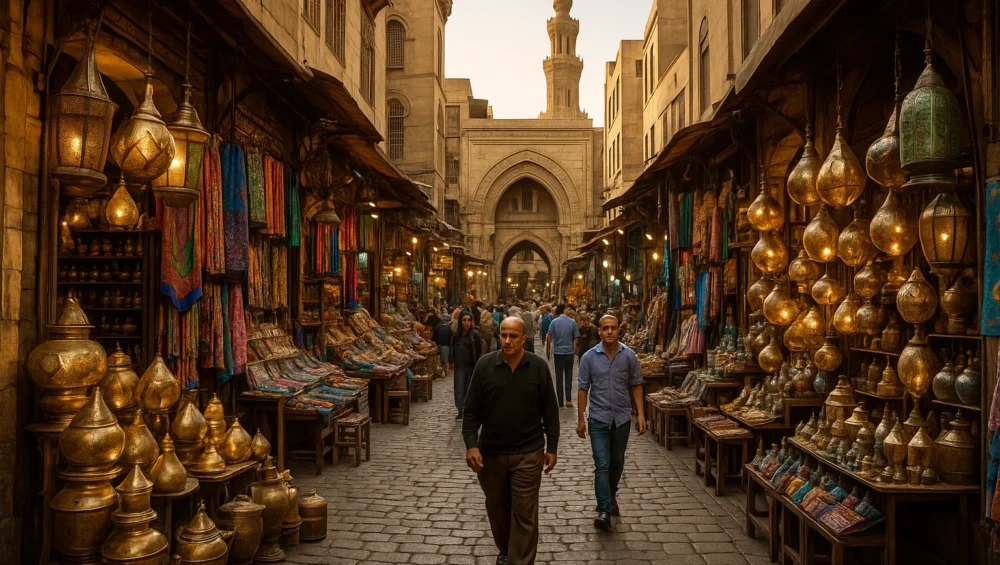
Things to do in cairo Islamic Cairo's minarets, stone madrasas, and the historic Khan el-Khalili marketplace showcase over a thousand years of urban craftsmanship.

Things to Do in Cairo, Egypt: The Ultimate 2026 Guide | Egy Travel Lux

Things to Do in Cairo, Egypt: The Ultimate 2026 Guide | Egy Travel Lux

The Ultimate List of Things to Do in Cairo, Egypt (2026 Edition)

A practical, honest guide to Cairo's pyramids, museums, medieval streets, Nile evenings and neighborhood secrets — with 2026 ticket prices, timing advice, day-trip pairings and itineraries for one to four days.
Last Updated: October 2026

Introduction: What Kind of City Are You Visiting?

Cairo is the largest city in the Arab world, the gateway to the last surviving wonder of the ancient world, and a place where you can eat breakfast next to a 4,500-year-old pyramid and watch Sufi dancers spin in a 14th-century courtyard the same evening. It is also loud, dusty, endlessly alive, and far more layered than most itineraries give it credit for. Deciding what to do in Cairo is less about finding enough attractions and more about choosing between them, because this is a city of more than twenty million people where distances, traffic and heat shape what you can realistically fit into a day.

This guide covers the full range: the monuments everyone comes for, the museums worth arguing over, the medieval Islamic quarter that UNESCO compares to no other city on earth, the neighborhoods where actual daily life happens, and the food, river evenings and cultural performances that give a Cairo trip its texture. Along the way you will find 2026 ticket prices from official sources, honest notes about crowds and logistics, and suggested combinations that keep your days efficient instead of exhausting.

A note on who is writing: Egy Travel Lux is an Egyptian tour operator with decades of experience arranging private tours and multi-city itineraries for international visitors. The recommendations here are written for independent-minded travelers first — you do not need to buy anything to use this guide — but where a guided option genuinely makes a visit easier, it is flagged as such.

Cairo Trip Planning: Quick Answers to the Big Questions

Before getting into the attraction list, here are direct answers to the questions travelers ask most often when they start planning. Each one is expanded on later in the guide, but these are the decisions that shape everything else.

How many days do you need in Cairo?

Short answer: two full days for the essentials, three to four for a satisfying visit. With one day, you can see the Pyramids of Giza and one major museum, then finish with an evening in Islamic Cairo. With two days, you add Coptic Cairo and a proper walk through the medieval quarter. A third day opens up Saqqara, Dahshur and Memphis — the older pyramid fields that many travelers end up preferring to Giza itself. Four or five days lets you add Alexandria or Fayoum, or simply slow the pace down, which in this city is a luxury worth buying.

What should first-time visitors prioritize?

If you have never been, five experiences define the city: the Pyramids of Giza and the Sphinx, the Grand Egyptian Museum, a walk through Islamic Cairo ending at Khan el-Khalili, the churches of Coptic Cairo, and an evening on the Nile. Everything else in this guide builds on or around those five. If you must cut something, travelers consistently report that the museums and the medieval quarter give more lasting value than a second trip to any single monument.

Is Cairo safe to visit?

Millions of international visitors travel to Cairo every year, and violent crime against tourists is rare. The realistic challenges are not that kind of danger: chaotic traffic that demands real attention when crossing streets, persistent sellers at major monuments, and occasional unwanted attention directed at women traveling alone. Most visits pass without any serious incident. That said, no responsible guide will call any megacity "completely safe" — check your own government's current travel advice before booking, take normal precautions with belongings in crowds, and consider how you will handle evenings (ride-hailing apps solve most of it). Solo female travelers will find specific, practical notes in the practical tips section below.

What is the best time of year to visit Cairo?

October through April is prime season, with daytime temperatures usually between 20°C and 30°C and cool evenings. Summer months regularly push past 35°C, which turns exposed sites like the Giza Plateau into a test of endurance — visits there become early-morning affairs. Ramadan changes the city's rhythm: hours shift, daytime streets quiet down, and evenings turn festive. The month-by-month details are covered in our guide to the best time to visit Egypt, including how Upper Egypt compares with Cairo seasonally.

What about visas and entry requirements?

Most nationalities need a visa, available on arrival for around USD 25 or in advance through Egypt's official e-visa portal. Rules vary by passport, and the details trip up enough travelers that it deserves its own checklist — our explanation of Egypt's visa requirements for American travelers walks through the process step by step and applies to many other nationalities with minor variations.

How much does a Cairo trip cost?

Cairo can be done on almost any budget, but it helps to know where the money actually goes. Attractions are inexpensive by international standards, guided days and private transport are the main variable costs, and accommodation ranges from $20 hostels to grand riverfront hotels. The table below shows 2026 foreign-adult ticket prices from official sources; for flights, hotels and full itineraries, our 2026 Egypt trip cost breakdown goes line by line.

Attraction (Foreign Adult, 2026)Approx. Ticket PriceTime NeededNotes
Giza Plateau (Pyramids & Sphinx)EGP 700 (interior of the Great Pyramid extra, around EGP 1,500)Half dayStudent tickets around half price; prices set by the Ministry of Tourism and Antiquities
Grand Egyptian Museum (GEM)From ~USD 303–5 hoursGalleries 9 AM–6 PM; until 9 PM Wednesdays & Saturdays
Egyptian Museum, TahrirEGP 5502–3 hoursTutankhamun collection has moved to the GEM; still holds major masterpieces
Citadel of SaladinEGP 5502–3 hoursIncludes the Mosque of Muhammad Ali; best combined with Sultan Hassan Mosque
Saqqara area~EGP 600 (Step Pyramid complex ticketed separately, ~EGP 280)Half dayMemphis and Dahshur are separate tickets, usually combined in one day
Al-Azhar Park~EGP 35–501–2 hoursBest in the last two hours of daylight

Prices verified from official and current sources as of October 2026. Egypt adjusts monument fees periodically, so treat these as planning figures and confirm shortly before travel.

Can you explore Cairo independently, or do you need a guided tour?

Honestly, both work, and most good trips mix them. Cairo's ride-hailing apps, cheap metro and walkable old-city core make independent sightseeing more practical than first-time visitors expect. What guides genuinely add is context that transforms mute stones into stories, and insulation from the sales pitches that can wear you down at Giza. Here is the balanced picture:

Guided tours work best for

  • First-time visitors who want historical context at museums and monuments
  • Travelers short on time who need efficient routing between distant sites
  • Anyone who would rather not negotiate with sellers and camel touts
  • Families and older travelers who value door-to-door logistics

Independent exploring works best for

  • Budget travelers comfortable with the metro and ride-hailing apps
  • Second visits and slow travelers revisiting favorite corners
  • Neighborhood wandering in Downtown, Zamalek and the old city, where a guide adds little
  • Photographers who want to linger without a schedule

Want Your Cairo Days Pre-Planned?

If you would rather land with the logistics already handled, browse our Cairo day tours — private, guided days covering the pyramids, museums, Islamic Cairo and the city's hidden corners, with hotel pickup and licensed Egyptologist guides included.

Browse Egypt Travel Lux Day Tours

Best Things to Do in Cairo

Cairo rewards travelers who match experiences to interests rather than ticking boxes, because its attractions are wildly different from one another — a desert plateau, a modern museum the size of an airport terminal, a medieval city of mosques and caravanserais, and a river that cuts through all of it. The ten recommendations below are ordered roughly the way a first-time visitor should prioritize them, and each one explains what you are actually getting into, how long it takes, and which other sights pair well with it geographically.

1. Stand Before the Pyramids of Giza and the Great Sphinx

What it is and why it matters: The Giza necropolis holds the Great Pyramid of Khufu, the last surviving monument of the Seven Wonders of the ancient world. Built around 2560 BC from more than 2.3 million blocks and standing 146.5 meters at completion, it remained the tallest human structure on earth for nearly 4,000 years. The Sphinx — carved from a single limestone outcrop — guards the valley below, and the desert-edge setting is part of the experience: the pyramids rise directly from the sand where the metropolis simply stops.

What to expect: The plateau is bigger than most visitors anticipate — the three pyramids sit along a ridge roughly two kilometers long, so plan to cover ground by vehicle between stops. The iconic panorama where all three pyramids line up is at the southern end of the site. Expect sellers offering camel and horse rides, photo "help" and souvenirs from the moment you arrive; a polite but firm la, shukran (no, thank you) works, and agreeing on any ride price in writing before mounting avoids disputes later. Going inside the Great Pyramid costs extra (around EGP 1,500 on top of the EGP 700 area ticket as of 2026) and involves a crouched climb up a steep passage — memorable, claustrophobic, and honestly not for everyone; the empty chamber rewards the engineering story more than the view.

Timing and practical advice: Arrive at the 8 AM opening to beat both tour buses and midday heat, and allow half a day including transport. The plateau sits on Giza's western edge — closer to downtown than many people assume, roughly 45 minutes outside rush hour, and our guide to the distance from Cairo and how to get there compares every transport option. If you want the site with a licensed Egyptologist and pre-arranged tickets, current Cairo and Giza pyramid tour prices show what different levels of guiding and transport actually cost, while budget-friendly pyramid tour options exist for travelers watching their spend. Pairing Giza with the Grand Egyptian Museum the same day is the classic combination — the museum sits minutes away (see the next section). And if the pyramids capture you the way they capture most people, our Egypt pyramid tours extend the theme to Saqqara, Dahshur and the great temples of Upper Egypt.
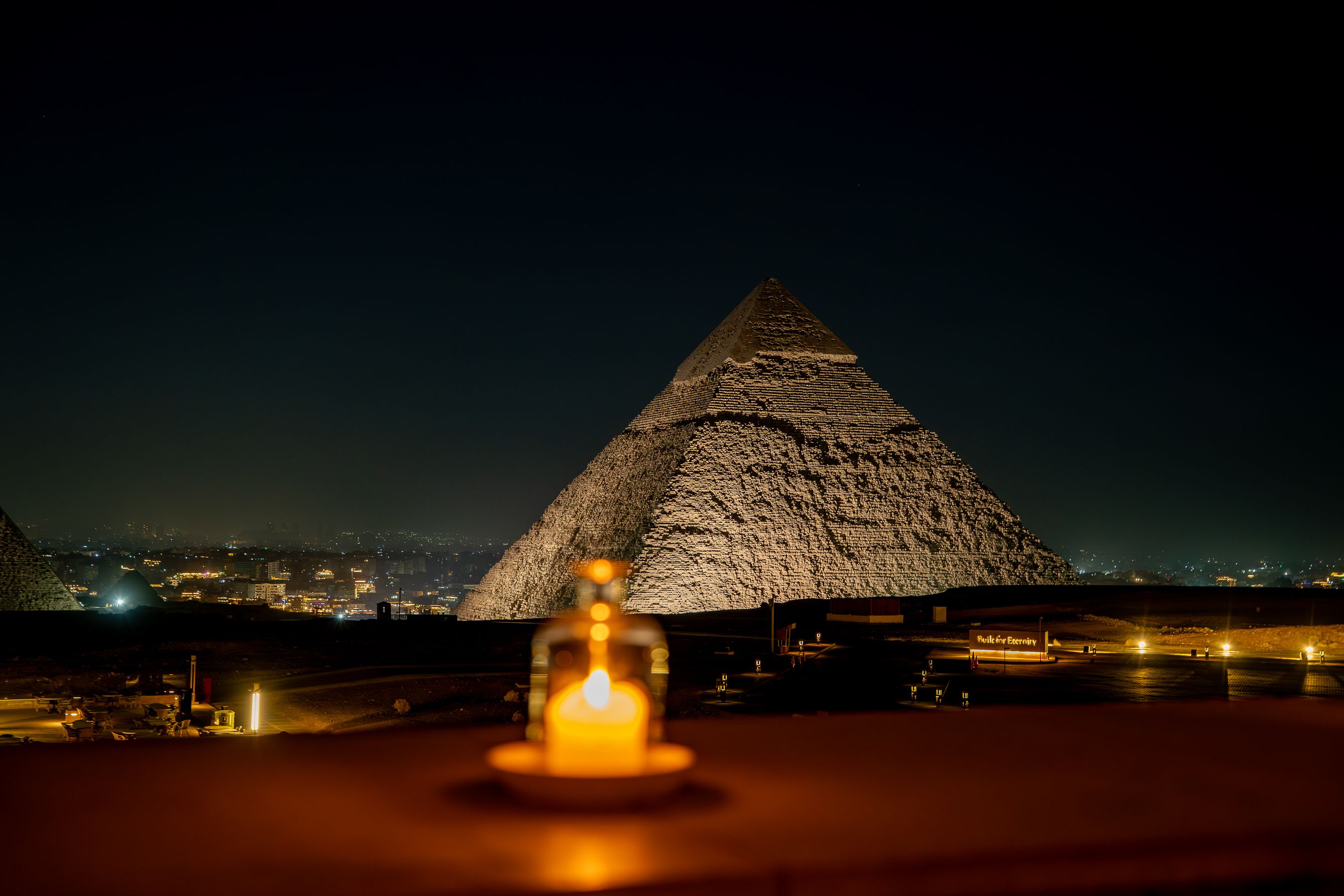
The Pyramids of Giza and the Great Sphinx at golden hour on Cairo's desert edge
The Great Pyramid of Khufu and the Sphinx at Giza — the last surviving Wonder of the ancient world, an easy half-day from central Cairo.

2. Spend Half a Day at the Grand Egyptian Museum

What it is and why it matters: The GEM is the largest museum in the world dedicated to a single civilization, and after its full opening in November 2025 it finally houses what it was built for: the complete contents of Tutankhamun's tomb — more than 5,000 objects, including the golden burial mask — displayed together for the first time since Howard Carter opened the tomb in 1922. The building itself is part of the experience: a translucent triangular facade aligned with the pyramids, a monumental staircase lined with royal statuary, and the colossal statue of Ramses II greeting visitors in the atrium.

What to see and do: Give the Tutankhamun galleries at least ninety minutes, save time for the Grand Staircase's sculpture parade, and do not miss Khufu's reconstructed solar boat — a 4,500-year-old cedar vessel — in its own wing. The museum is airy and uncrowded by Cairo standards, with excellent signage, and its Wednesday and Saturday late openings (galleries run until 9 PM those days) make it a great evening activity. Tickets start from around USD 30 for foreign adults as of 2026, rising to $35 from November 2026 — check the official GEM ticketing site for current prices and hours before your visit.

Practical advice: The museum sits between Giza and downtown, so combining it with a morning at the pyramids is the most efficient route — one hour there, five here, lunch in between. A self-guided visit works fine thanks to the labeling, but if context is what you are after, our guided Grand Egyptian Museum tour covers the highlights in a structured half-day with an Egyptologist. Budget half a day minimum; museum-fatigue is real and the café is decent enough to plan a break around it.
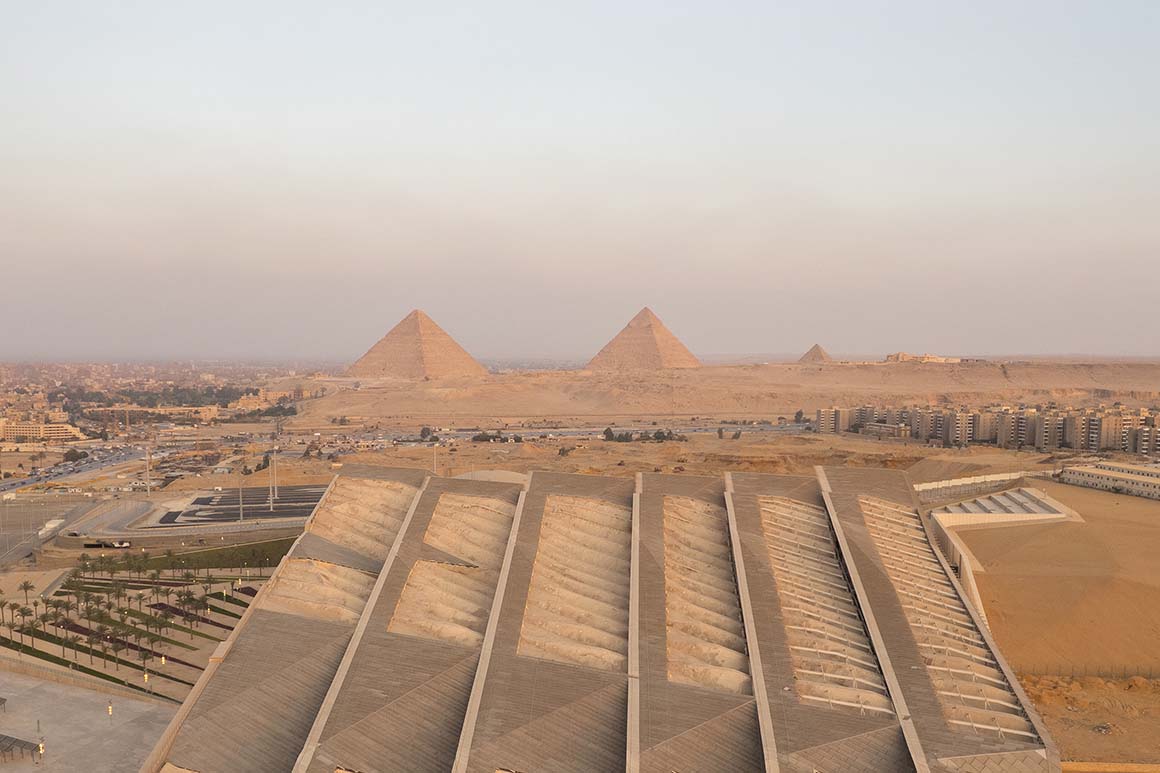
Exterior of the Grand Egyptian Museum in Giza with its triangular facade near the pyramids
The Grand Egyptian Museum near Giza — home to the complete Tutankhamun collection and the reconstructed solar boat of Khufu since its full opening in November 2025.

3. Decide Between the Egyptian Museum in Tahrir — or Add It Anyway

The century-old pink palace on Tahrir Square is no longer the headliner — Tutankhamun's golden mask and his tomb's treasures moved to the GEM in the 2025 transfer — but the Egyptian Museum remains worth understanding rather than dismissing. It still holds tens of thousands of artifacts in gloriously old-school display cases, including the unbroken silver funerary masks and gold coffins from the royal tombs at Tanis, Old Kingdom statues that rival anything in Giza, and the famous Gebelein "screaming" mummy. Entry costs EGP 550, it sits steps from Downtown and the metro, and two focused hours here feel like walking through the history of Egyptian archaeology itself.

The practical decision for most first-time visitors: choose the GEM for Tutankhamun and modern presentation, keep Tahrir for a second museum day or a quick Central Cairo stop. There is a third option too — the National Museum of Egyptian Civilization in Fustat, which pairs beautifully with Coptic Cairo (they are neighbors) and whose Royal Mummies Hall displays the actual mummified kings and queens of the New Kingdom in a dramatically lit underground gallery; admission runs EGP 550. Whichever museum you choose, the exhibits make far more sense with some background first — our guide to ancient Egyptian civilization, gods and burial beliefs explains the mythology behind the artifacts in plain language.

4. Walk Islamic Cairo from Al-Muizz Street to the Great Mosques

Why it matters: The medieval core of the city is inscribed by UNESCO as Historic Cairo, a World Heritage Site — one of the world's oldest Islamic cities, founded in the 10th century, with a concentration of mosques, madrasas, hammams and fountains that has no real parallel. This is the Cairo most tourists photograph least and remember most.

What to see and do: Start at Bab el-Futuh, the northern crusader-era gate, and walk south down Al-Muizz li-Din Allah Street, the spine of Fatimid Cairo, where restored Mamluk mosques, Quran schools, palaces and water fountains stand shoulder to shoulder. Detour into Bayt Al-Suhaymi, a perfectly restored Ottoman merchant house with shaded courtyards and mashrabiya screens. Continue to Bab Zuweila — climb its minarets for rooftop views — and, if your feet allow, push on to the Mosque of Ibn Tulun, Cairo's oldest surviving mosque in its original form, with its spiral minaret and vast brick courtyard. Near the Citadel, the Mosque-Madrassa of Sultan Hassan is the masterpiece of Mamluk architecture, a vast cruciform college carved from stone.

What to know: Active mosques ask visitors to remove shoes, cover shoulders and knees, and avoid prayer times (especially Friday midday); women should carry a light scarf. Entry is free or a small donation, and student guides often offer themselves at the door — agree terms clearly if you accept. Allow three to four unhurried hours, and time the walk for morning light or the golden hour before sunset, when the district is at its most photogenic and least sweltering.

5. End Your Walk at Khan el-Khalili and El-Fishawy Café

Khan el-Khalili has been the city's bazaar since the 1380s, and it makes no pretense of being a hidden gem — it is the commercial heart of Islamic Cairo, half tourist market, half genuine trade quarter where locals still buy kitchenware beside the souvenir stalls. The brass lantern shops and spice pyramids are the postcard; the real pleasure is the café ritual. El-Fishawy, pouring mint tea and shisha continuously since 1797, is the classic stop, its mirrors and decades of patina unchanged in spirit even as the crowds have grown. Haggling is expected and friendly: open around half of the asking price, stay good-humored, and walk away without guilt if the deal stalls — half the game is the conversation. The Khan sits directly off Al-Muizz Street, so the two belong to the same outing; arrive as the light softens, when the lanterns switch on and the lane under the ornate gateway feels like the 14th century with electricity.

6. Explore Coptic Cairo's Ancient Churches

Long before the mosques, Cairo was a Christian capital, and the district Egyptians still call Coptic Cairo preserves that layer inside the walls of the Roman fortress of Babylon. The Hanging Church (El Muallaqa) earns its name by hovering above a fortress gateway, its nave reached up a staircase and its ceiling shaped like Noah's ark. Down the lane, Church of St. Sergius (Abu Serga) claims the crypt where the Holy Family sheltered during their flight into Egypt — a pilgrimage site for sixteen centuries — and the small but excellent Coptic Museum displays the woven textiles and iconography that bridged pharaonic and Islamic art. The Ben Ezra Synagogue, where the medieval Geniza documents were discovered, completes a story of three faiths within a five-minute walk.

The practical appeal is efficiency: the district sits at Mar Girgis metro station, twenty minutes from Downtown, and pairs naturally with the National Museum of Egyptian Civilization in neighboring Fustat. Come in the morning before tour groups fill the narrow lanes, dress as you would for a mosque (covered shoulders, nothing too short), and allow two hours. It is compact, shaded, calm — and one of the few major sights in Cairo where nobody will try to sell you a papyrus.

7. Climb to the Citadel of Saladin and the Alabaster Mosque

Saladin began this hilltop fortress in 1176 to defend the city against Crusaders, and Egypt ruled from inside its walls for seven centuries. Today the Citadel's centerpiece is the Mosque of Muhammad Ali (1830–1848), the Ottoman-style "Alabaster Mosque" whose twin minarets and vast dome define Cairo's skyline. Inside, alabaster panels climb toward a domed ceiling hung with enormous chandeliers, and the polished floor reflects light in a way that surprises everyone expecting a somber interior. The terraces outside deliver the best panoramic view in the city — on clear days you can pick out the pyramids beyond the urban haze.

Admission runs EGP 550 for foreign adults (2026), the complex opens 8 AM to 5 PM, and three to four hours covers the mosque, the smaller Mamluk-era Mosque of al-Nasir Muhammad with its distinctive enameled minarets, and a couple of the interior museums if they are open (they rotate renovations, so treat them as bonuses). Geographically the Citadel belongs with Islamic Cairo: visit the mosque-madrassa of Sultan Hassan directly below it, then descend to Al-Azhar Park for sunset — an ideal single afternoon. Midday summer heat is brutal up here with little shade, and Friday prayer times bring crowds; mornings are calmer.

8. Watch the Sunset from Al-Azhar Park

Where a 500-year mound of rubble once separated the old city from its eastern edge, the Aga Khan Trust spent decades creating a 30-hectare garden — and Cairo responded like it had been waiting for one. Al-Azhar Park is where local families picnic, couples take wedding photos, and travelers discover that the best skyline view of the minarets and domes of Historic Cairo comes from a lakeside lawn. Entry is a token EGP 35–50, the paths are level and stroller-friendly, and the hilltop café terrace frames the Citadel across the valley. Time your visit for the last two hours of daylight: the park fills with golden light, the call to prayer rolls over the old city, and the lanterns come on along the water channel. It pairs perfectly after a Citadel visit (they face each other across the valley) and works for every kind of traveler — families, couples, and anyone needing an hour of green after tomb-hopping.

9. Take in the View from Cairo Tower

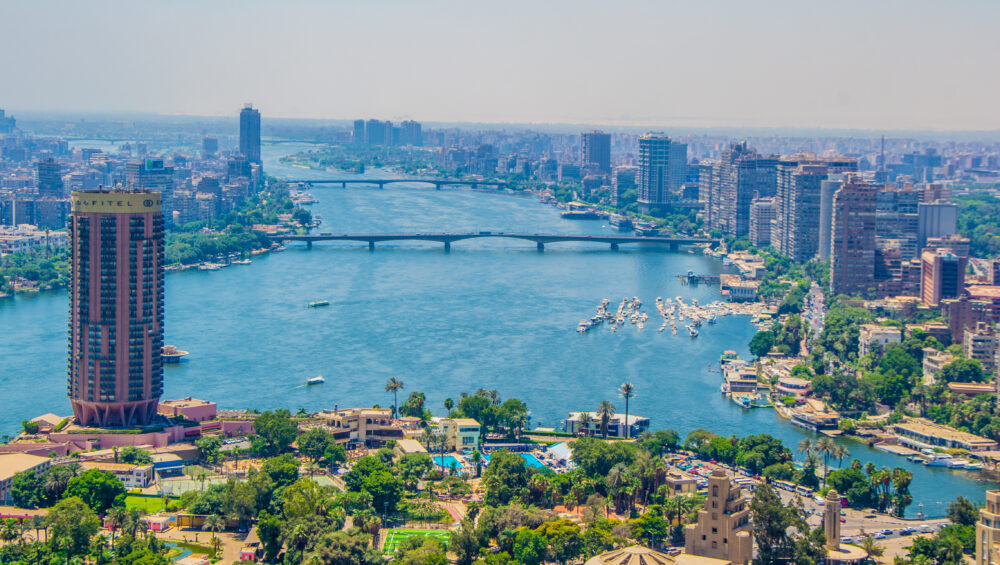
Built in 1961 and faced with eight million mosaic tiles in a latticework pattern said to evoke the lotus flower, the 187-meter Cairo Tower on Gezira Island remains the best place to understand the city's sheer scale. The observation deck circles the top, a glass-fronted elevator makes the ascent part of the fun, and a slowly revolving restaurant turns a drink into a full panorama. Sunset is the magic window — the city shifts from sand-colored to glittering, the Nile catches the last light, and on clear evenings the tower's own lights make it a landmark for the rest of your trip. Admission runs around EGP 350 for foreign adults (2026), it stays open late, and it combines naturally with a Zamalek dinner or a corniche walk afterwards. Photographers take note: the deck's mesh railing is shootable-through with a phone pressed close, and blue hour beats full dark for cityscape shots.

10. Day-Trip to Saqqara, Dahshur and Memphis

Why it matters: Giza gets the fame, but the pyramid story starts earlier and ends more quietly about 40 minutes south. Saqqara is Egypt's vast royal necropolis, home to the Step Pyramid of Djoser (c. 2670 BC) — the world's oldest monumental stone building, designed by the architect Imhotep — plus painted nobles' tombs whose carved daily-life scenes outclass anything you can photograph at Giza. Nearby Dahshur holds the Bent Pyramid and the Red Pyramid, the experimental and successful ancestors of Giza's perfection; the Red Pyramid is usually enterable at no extra charge, with a gloriously empty interior corridor. Memphis, the Old Kingdom capital, adds an open-air museum built around a colossal recumbent statue of Ramses II.

What to expect: The Saqqara area ticket runs about EGP 600 with the Djoser enclosure ticketed separately (~EGP 280), crowds are a fraction of Giza's, and sellers are gentler. It is a full or three-quarter day from central Cairo — sites are spread across desert roads where transport between them matters — which is why the day is almost always run as a circuit; our Giza, Saqqara and Memphis day tour shows how the route is structured with an Egyptologist. Travelers with a strong interest in archaeology consistently rank this day above everything else in Cairo; travelers with less patience for heat and driving should choose either Saqqara+Memphis or Dahshur, not all three, in July or August.

One Day, Both Icons: Pyramids + Grand Egyptian Museum

Short on days? Our Giza Pyramids and Grand Egyptian Museum tour combines the plateau and the complete Tutankhamun collection into a single well-paced day — private transport, licensed Egyptologist, and tickets handled, so you spend your energy on the sites instead of the logistics.

See the Giza + Grand Egyptian Museum Day Tour

Beyond the Tourist Trail: Neighborhoods Worth Exploring

Once the headline sights are covered, Cairo's neighborhoods become the attraction. These three areas are established on the city's cultural map rather than secret — locals know them well — but they sit well outside the standard tour-bus circuit, and each shows a different face of how the city actually lives. They suit second-day visitors, slow travelers, and anyone whose interest runs more toward contemporary Egypt than ancient Egypt.

City of the Dead (Qarafa): History and Life Among the Tombs

The belt of Mamluk and Ottoman cemeteries beneath the Citadel cliffs is one of the most misunderstood places in Egypt. Western media long reduced it to a sensational label — "a city where people live in graves" — while the reality is more layered: a four-kilometer necropolis of monumental mausoleums where generations of cemetery caretakers and urban migrants built real neighborhoods among the tomb enclosures, complete with cafés and workshops. Architecturally it holds some of Cairo's finest Mamluk funerary complexes; socially it is a working district that deserves the same respect you would give any neighborhood. Go with a guide who is known there — our City of the Dead explainer covers its history and complexities, and the City of the Dead walking tour supports local residents while taking you through complexes most visitors never find. Greet people, ask before photographing, and this becomes one of the most memorable mornings Cairo offers. Budget half a day.

Garbage City and the Cave Church of St. Simon

On the eastern slopes of the Mokattam hills, the district of Manshiyat Naser — universally known as Garbage City — hosts the Zabbaleen community, Coptic Christian recyclers who built one of the world's most effective informal recycling economies, recovering the large majority of the waste they collect by hand. Two things draw visitors: the extraordinary scale of the recycling workshops themselves, and the Cave Church of St. Simon, a cathedral carved directly into the rock quarry above the district, seating thousands beneath a carved cliff facade — often described as one of the largest churches in the Middle East. It is an intense, eye-opening visit rather than a comfortable one; go with a guide, ideally on one of the organized community visits such as our Garbage City tour, dress modestly, and be prepared for a landscape of commerce and dust rather than postcard scenery. Photographers and travelers interested in social realities rate it among their most valuable Cairo experiences; it is not for everyone, and that is fine.

Downtown Cairo, Zamalek and the Corniche

Cairo's 19th and early-20th century core — the district Egyptians simply call "Downtown" (Wust el-Balad) — is a warren of Belle Époque apartment blocks with wrought-iron balconies, colonial-era arcades and a rediscovering-in-real-time creative scene around Emad Eddin Street's old theaters and Tahrir's painted walls. The pleasure here is aimless: coffee at a marble-table café, bookshops, vinyl stores, and the contrast of this faded Europe against the medieval city a mile east. Across the river, leafy Zamalek island is the city's quiet quarter — art galleries around the Gezira grounds, the Cairo Opera House, embassies, and riverside terraces where afternoon light on the Nile does the entertainment. Neither district needs a guide or a ticket; they need two or three unstructured hours. Combine Downtown with the Egyptian Museum, or pair Zamalek with the Cairo Tower and a corniche dinner — geography does the planning for you.

Unique Things to Do in Cairo

These are the experiences that give a Cairo trip its stories — the evenings, rituals and tastes you remember after the monuments blur together. None requires a full day, and most slot naturally into gaps in your itinerary.

Watch the Tanoura Dancers at Wekalet El Ghouri

In a 15th-century Mamluk caravanserai in the heart of Islamic Cairo, the tanoura troupe performs Egypt's mesmerizing take on Sufi whirling: musicians drum and chant as dancers in layered skirts spin — and spin, and spin — their colored panels opening like flowers, for a show that is folk art and devotional trance at once. Performances traditionally run on Monday, Wednesday and Saturday evenings around 8 PM in the open-air courtyard of Wekalet El Ghouri, with entry historically free or for a nominal ticket collected at the door. Because schedules and arrangements do change, confirm the current details before building an evening around the tanoura show at Wekalet El Ghouri. Arrive by 7:30 for a seat, and let the final ten minutes — a dozen spinning dancers in simultaneous orbit — justify the whole trip. It combines perfectly with an Al-Muizz Street afternoon and a Khan el-Khalili dinner, since the wikala sits just off the bazaar's edge.

Sail the Nile on a Felucca at Golden Hour

The lateen-sailed wooden felucca is the Nile's original vessel, and an hour aboard one as the day cools is Cairo at its most peaceful. Boats depart from the corniche gardens (the most reliable access is near Garden City and Zamalek's eastern shore), pilots charge per boat rather than per person, and everything — departure time, route, duration — is negotiable before you step aboard; agree the price and length first and there will be no surprises. Bring a layer: the river breeze turns cool even in summer, and in winter it is genuinely cold after sunset. Sunrise sails are quieter, but the classic is the last hour of daylight, when the city slides gold behind the bridges.

Eat Your Way Through Old Cairo on a Food Walk

Cairo's street food rewards the curious: ful medames slow-stewed since dawn, ta'ameya (Egyptian falafel, green with herbs) fried to order, hawawshi blistering in bakery ovens, and the national dish koshary — rice, lentils, pasta, chickpeas and tomato sauce under a shell of crisp fried onions — at marble counters that have fed the same recipe for generations. Guided food walks through Downtown and the old city exist and are excellent for first-timers who want the hygiene logic and the history explained; independent eaters should simply follow the queues, since turnover is the best food-safety indicator. Our favorite combination for visitors: a Downtown lunch crawl around Tahrir, then mint tea at El-Fishawy as the bazaar lights come on. Details and specific stops are in the food section below.

See the Pyramids After Dark at the Sound & Light Show

Each evening the Giza Plateau hosts a projected narration-and-light program across the Sphinx and the pyramids — theatrical, a little dated in that charming way, and genuinely atmospheric once the lasers start tracing the monument silhouettes against the stars. Shows run in multiple languages on different nights (check the current schedule when booking), seats are open-air so bring a jacket in winter, and families with young children tend to love it even when parents find it campy. Is it essential? No. Is it an easy, low-energy evening that fits the night before a long flight? Often, yes — and it lets you see the pyramids twice for the price of one drive out to Giza.

Things to Do in Cairo at Night

Cairo genuinely starts its second shift after dark. The heat drops, the corniche fills with families, and the monuments and streets take on a different character. If you structure your days well, one or two of these evenings will do more for your trip than any additional daytime stop.

  • Dinner cruise on the Nile: The fixed menu is rarely the point — it is the floating front row on a glittering corniche, usually with live music aboard. Quality varies between operators, so treat it as scenery-plus-dinner rather than fine dining, and skip the ones that feel like coach-group cattle runs.
  • Islamic Cairo after the lanterns come on: Al-Muizz Street and the Khan are calmer and dramatically lit in the evening; pair with the tanoura show (Mondays, Wednesdays, Saturdays) and a late dinner nearby.
  • A structured Cairo by night route: If you want the evening highlights — illuminated landmarks, the corniche, a felucca or cruise, and safe door-to-door logistics — our Cairo by night tour strings them together in one relaxed loop.
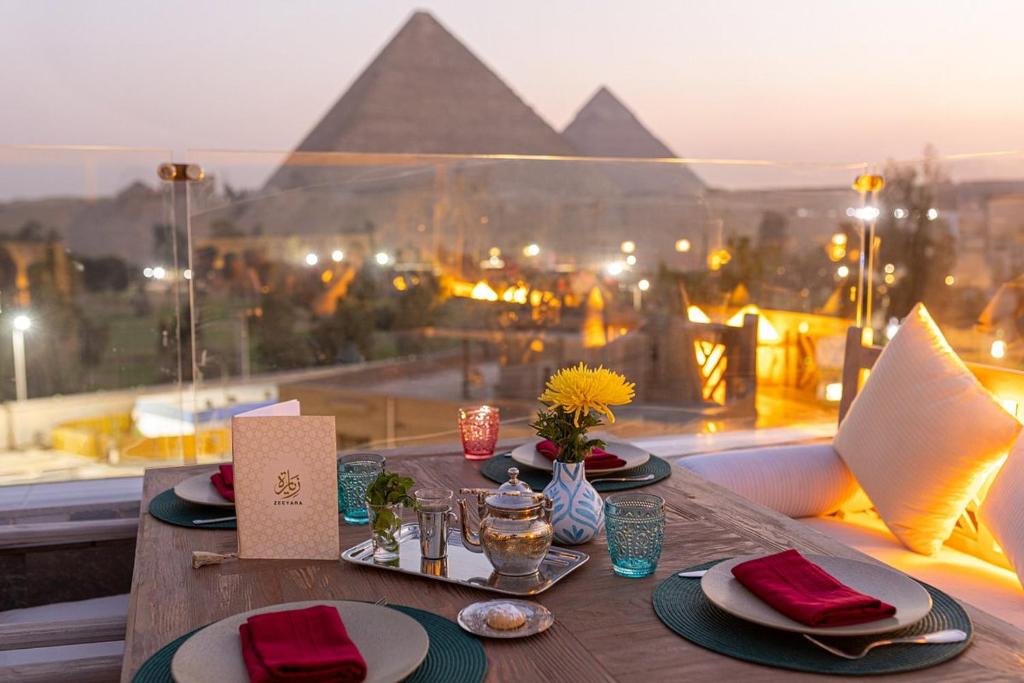
  • Rooftop and riverside drinks: Zamalek and Garden City hotel terraces put you at eye level with the skyline; the Cairo Tower's revolving restaurant is the classic splurge.
  • Sound & Light at Giza: Covered in the unique experiences section — an easy add-on for a free evening.

One honest note on getting back: the metro thins out early and street taxis after midnight mean negotiation in the dark. Use Uber or Careem, which is how most Cairenes get around at night anyway, and you remove the only real friction from Cairo evenings.

What and Where to Eat in Cairo

Egyptian food is built on generosity and starch, and eating well in Cairo costs almost nothing. Start with breakfast the local way: ful medames (fava beans stewed overnight, dressed with cumin, lemon and olive oil) and ta'ameya — Egypt's herb-flecked falafel — scooped into baladi bread from any street cart before 10 AM. Lunch belongs to koshary, the beloved rice-lentil-pasta mountain that is Egypt's national dish; the marble-counter koshary houses around Downtown serve a bowl for pocket change and feed hundreds an hour, which is exactly the turnover you want. In the evening, order hawawshi (spiced minced beef baked inside bread until the crust shatters), molokhia (the deep-green jute-leaf stew visitors either adopt for life or politely decline), mahshi (vegetables stuffed with herbed rice), and finish with om ali, the milk-soaked pastry pudding that outclasses its pudding-in-a-cup appearance.

Where to eat: follow the queues at street stalls — high turnover means fresh food — sit down to grills and mezze in the old-city restaurants around Al-Hussein and the Khan, and treat El-Fishawy in Khan el-Khalili as your tea-and-shisha salon rather than a meal. A few practical notes: most classic street dishes are vegetarian-friendly, spice levels are mild by regional standards, tap water is best skipped in favor of bottled, and the busiest-looking place with laminated menus and tourists-only seating is usually the one to walk past. A food walk with a local guide (see the unique experiences section) compresses a week of trial-and-error into an afternoon if you are short on days.

Day Trips from Cairo

Cairo anchors plenty of itineraries that stretch beyond the city, and three destinations earn the early alarm clock. Note that the Saqqara–Dahshur–Memphis circuit, covered as attraction #10 above, is itself the most popular day trip — everything below assumes you have that covered or are choosing between them.

Alexandria

Egypt's Mediterranean second city sits about 220 km northwest — call it three hours each way on the desert highway — and offers a completely different atmosphere: sea wind, 19th-century corniche architecture, the striking modern Bibliotheca Alexandrina, and the Qaitbay Citadel on the harbor's thumb where the ancient Lighthouse once stood. A long day trip works, but Alexandria rewards an overnight if your schedule stretches; our Cairo and Alexandria tour packages show how the two cities combine across two to six days. Visit October–April for the sea at its best; summer brings the crowds and the humidity.

Fayoum and Wadi El-Rayan

About two hours southwest, the Fayoum oasis is where Cairenes go to breathe: waterwheels still turning in the provincial town, the salt lake of Qarun, the cascades of Wadi El-Rayan, and — for the committed — the UNESCO-listed Wadi Al-Hitan, the Valley of the Whales, where 40-million-year-old whale skeletons lie exposed in the desert. It is a rougher, more adventurous day than Alexandria, usually run with 4x4 transfers, and pairs beautifully with a night in an eco-lodge if you want to go slower.

Luxor and Aswan (the classic extension)

If you have three extra days rather than one, the classic Egyptian move is flying south. A one-hour flight from Cairo puts you among Karnak, the Valley of the Kings and the riverside temples of Upper Egypt, and the traditional way to experience them is by river — our Cairo and Nile cruise package explains how the two halves of Egypt connect by air. Day-tripping Luxor from Cairo is technically possible but exhausting; treat it as an overnight minimum.

Suggested Cairo Itineraries for 1 to 4 Days

The table below strings the recommendations above into realistic days, ordered to minimize backtracking. The logic: pyramids and museums live in the west, medieval Cairo in the east, and the river runs between them — so anchor each day to one side.

DayMorningAfternoonEvening
Day 1
The icons
Pyramids of Giza & Sphinx (8 AM arrival)Grand Egyptian MuseumFelucca at golden hour; corniche dinner
Day 2
Medieval Cairo
Islamic Cairo walk: Bab el-Futuh → Al-Muizz → Bayt Al-SuhaymiKhan el-Khalili + El-Fishawy; Coptic Cairo (or swap with the Citadel)Tanoura show at Wekalet El Ghouri (Mon/Wed/Sat)
Day 3
Older pyramids
Saqqara & the Step PyramidDahshur (Red Pyramid interior) and MemphisCairo Tower at sunset; Zamalek dinner
Day 4
Depth day
Citadel & Muhammad Ali Mosque; Sultan Hassan belowAl-Azhar Park; Downtown & Zamalek wanderingSound & Light at Giza, or City of the Dead morning on Day 3's swap

Two honest calibrations: in summer, days 1 and 3 should start earlier than this table implies, and any single day that includes both Giza and a museum is a full day even when a tour company promises otherwise. If a one-day visit is all you have, the efficient solo day is Giza + GEM with a Khan evening — pricing for that classic single day is broken down on our Cairo and Giza day trip price guide.

And when Cairo grows into a longer Egypt trip, the natural progressions are already mapped: a relaxed six days split between Cairo and Alexandria, a 7-day Egypt itinerary that adds Luxor and Aswan by air, or a fully guided 7-day Egypt tour that handles every transfer for you. Pick based on whether you want depth (two cities), breadth (four), or a hands-off week.

Getting Around Cairo

Cairo's geography is simple — the Nile splits the city, the pyramids anchor the west, medieval Cairo the east — but its traffic is genuinely among the most intense on the planet, and every itinerary above assumes you budget transport time honestly. Here is what actually works:

  • Ride-hailing (Uber, Careem, inDrive): The default choice for visitors — cheap by Western standards, cash-free, with a route you can show a driver. Surge pricing at rush hour is real; 20 minutes of misjudged timing can double a fare and cost you an hour.
  • The metro: Two useful lines for visitors — Line 1 stops at Mar Girgis (Coptic Cairo) and Line 2 serves Giza and the Egyptian Museum side of Downtown. It is fast, extremely cheap, and the first two carriages of each train are reserved for women, a detail solo female travelers appreciate. It gets crowded at rush hour but never inefficient.
  • Private car with driver: For full sightseeing days, especially with family or in summer heat, a dedicated vehicle removes every transport decision; our private car and driver service in Egypt prices it by day rather than by ride.
  • White taxis: Street-hail taxis exist but run no meters you can trust; agree the fare before entering or skip them in favor of the apps.
  • Walking: Rewards come in Islamic Cairo, Downtown and Zamalek — but crossing major roads is a skill (move steadily, commit, and locals will flow around you), and summer midday walks are best kept short.

For how all of this fits into travel between cities — trains, domestic flights, and the red-eye bus options — our guide to getting around Egypt covers the whole country, and the same principles apply inside the capital.

Practical Tips Before You Visit

The details below come up on nearly every first visit. None is complicated, and knowing them in advance is the difference between friction and flow:

  • Dress with the heat and the culture in mind: loose, breathable clothing that covers shoulders and knees works everywhere; mosques additionally ask women for a headscarf and everyone for shoes off. A light scarf in your day bag solves it on the spot.
  • Cash and cards both matter: carry small Egyptian pound notes for entry tickets, tips and cafés; the GEM and major museums take cards, but many gates and markets remain cash-first. ATMs are everywhere.
  • Learn the rhythm of baksheesh: small tips oil daily life — a few pounds for the museum cloakroom, the bathroom attendant, the person who helps you at the felucca dock. Keep a stash of EGP 10–20 notes and hand them over without stress.
  • Friday afternoons shift everything: midday prayer closes many mosques to visitors and slows the old city; it is a fine museum or park day. During Ramadan, expect adjusted hours everywhere and gloriously busy nights.
  • Book the two big timed experiences early: GEM tickets and any guided Giza morning sell through in peak season (October–April), and December–January needs weeks of lead time.
  • Water and sun are the real health risks: two liters of bottled water per person per day in warm months, a hat for the plateau, and sunscreen even on hazy days — the desert sun does not negotiate.
  • Solo women travelers: thousands visit Cairo independently every year. Modest dress, ride-hailing at night, and a confident "no thank you" handle most situations; many travelers also choose to start with a female tour guide in Cairo or join a women-only Cairo tour for the first day or two before venturing out alone.
  • Photography: bring your camera everywhere, but ask before photographing people — especially women, and especially in the City of the Dead and Garbage City — and expect guards to prohibit tripods at some monuments.

Frequently Asked Questions About Visiting Cairo

How many days do you need in Cairo?

Two full days cover the essential Cairo experiences: the Giza Pyramids with the Grand Egyptian Museum on day one, and Islamic and Coptic Cairo on day two. A third day adds Saqqara, Dahshur and Memphis, while four or five days leave room for Alexandria or Fayoum at a calmer pace.

Is Cairo safe for tourists?

Millions of international travelers visit Cairo each year, and violent crime against visitors is rare. The realistic challenges are heavy traffic, persistent sellers at major sites, and occasional petty harassment, especially of women traveling alone. Check your government's current travel advice before booking and take normal city precautions.

What is the best time of year to visit Cairo?

October through April offers the most comfortable sightseeing weather, with daytime temperatures usually between 20°C and 30°C. Summer often exceeds 35°C, which makes exposed sites like the Giza Plateau demanding. Ramadan changes opening hours and rhythms, though its evenings are atmospheric.

How much do Cairo's main attractions cost in 2026?

As of October 2026, foreign adult tickets cost around EGP 700 for the Giza Plateau, EGP 550 for the Egyptian Museum and the Citadel, roughly USD 30 for the Grand Egyptian Museum, and about EGP 600 for the Saqqara area. Fees change periodically, so confirm current prices on official channels shortly before your visit.

Is the Grand Egyptian Museum open, and where is Tutankhamun's mask now?

The Grand Egyptian Museum opened fully in November 2025 and now displays the complete contents of Tutankhamun's tomb, including the golden burial mask, together for the first time. Galleries are open daily from 9 AM to 6 PM, with extended hours on Wednesdays and Saturdays. A guided GEM museum tour helps first-time visitors focus the visit.

Do I need a guide for the Pyramids of Giza?

You can visit independently using ride-hailing apps, but a licensed Egyptologist guide adds historical context, handles ticketing and logistics, and manages approaches from camel and horse touts. The plateau has little signage, so most first-time visitors find a guided or semi-guided visit more rewarding.

What should I wear in Cairo?

Lightweight, loose clothing that covers shoulders and knees works well year-round and is respectful in local neighborhoods. Mosques require shoes to be removed, and women need a headscarf inside active mosques. Bring a warm layer for winter evenings and sturdy shoes for uneven archaeological sites.

What is the best way to get around Cairo?

Uber and Careem are inexpensive and widely used, and the metro is fast for trips along its two main lines, including stations for Coptic Cairo and Giza. Traffic is heavy at rush hours, so plan around it. A private car with driver is a comfortable option for full sightseeing days.

Is Cairo a good destination for families with children?

Yes, with realistic pacing. Children tend to enjoy the pyramids, camel rides, felucca sails, Al-Azhar Park and the GEM Children's Museum. Heat, traffic and long museum galleries are the main challenges, so plan one major activity per day and keep afternoons light.

What are the best day trips from Cairo?

Saqqara, Dahshur and Memphis combine easily into one day of Old Kingdom history. Alexandria works as a long day trip of roughly three hours each way, and Fayoum offers lakes, waterfalls and desert scenery about two hours away. Longer extensions add Luxor and Aswan, usually by short domestic flight.

Conclusion: How to Prioritize Your Cairo Trip

Cairo asks you to choose. The pyramids, the museums, the medieval quarter, the river, the neighborhoods — all of them are excellent, and none of them are next door to each other. The travelers who love this city are the ones who pick a theme per day, start early, and accept that twenty million people cannot be hurried. Two days will show you the icons; four will show you the city; five or more will start to feel like understanding it.

Wherever you land, come hungry, come early, and leave room for the Cairo that never makes the itinerary — the mint tea, the river breeze, and the call to prayer rolling over a city that has been doing this for a very long time.

Let Us Shape Cairo Around Your Dates and Budget

If the planning feels heavier than the trip deserves — distances, tickets, heat, timing — that is precisely the work we do every day. Our team can turn the recommendations in this guide into a seamless private itinerary, whether that means two focused Cairo days or a full journey on to Alexandria, Luxor and the Nile.

Start a Tailor-Made Egypt Itinerary

Sources

Factual and time-sensitive details in this guide — ticket prices, opening hours, museum collections and heritage listings — were verified against the following official and current sources (accessed October 2026):

Cairo Travel Guide 2026 showcasing the Pyramids of Giza, the Great Sphinx, the Nile River, and Cairo skyline, highlighting the best places to visit and top attractions in Cairo, Egypt.

Cairo Travel Guide: 5,000 Years of Wonders and Majesty in One Capital City


Cairo Travel Guide 2026:
5,000 Years of Wonders in Cairo, Egypt

Your complete Cairo travel guide to Egypt’s timeless capital — from the Pyramids of Giza to the winding alleys of Khan el-Khalili in Cairo.

📍 Cairo, Egypt
⏱ 15 min read
🗓 Updated August 2026


⚡ Quick Answer: What Is Cairo?

Cairo is the capital of Egypt and the largest city in Africa and the Arab world. Founded in 969 CE by the Fatimid dynasty, this sprawling metropolis sits where the Nile Valley meets the Delta. Today, Cairo is home to over 22 million people and stands as one of the few places on Earth where ancient pyramids, medieval mosques, and modern boulevards coexist in daily life. For travelers planning a Cairo adventure, this Cairo travel guide covers everything you need to know about visiting Cairo.

Cairo Quick Facts

ItemDetails
CountryEgypt
Population~22 million (Greater Cairo)
LanguageArabic (English widely spoken in tourist areas of Cairo)
CurrencyEgyptian Pound (EGP)
AirportCairo International Airport (CAI)
Time ZoneGMT+2 (EET)
Best Time to Visit CairoOctober through April
Minimum Stay in Cairo3–4 days
Cairo Famous ForPyramids of Giza, the Nile, Islamic architecture, Cairo museums

Why Visit Cairo?

Cairo is not just another capital city. Cairo is a living museum where 5,000 years of human history remain visible on every corner of Cairo. From standing before the last surviving Wonder of the Ancient World in Cairo to sipping mint tea in a 14th-century Cairo bazaar, Cairo delivers experiences that no other destination can replicate.

Unlike cities where history is sealed behind glass, Cairo weaves its past into the present. You can explore the Giza Pyramids in Cairo in the morning, walk medieval alleys in Cairo in the afternoon, and cruise the Nile in Cairo by sunset — all in a single day in Cairo. This Cairo travel guide will show you exactly how to explore Cairo.

Cairo Pyramids of Giza and Great Sphinx ancient wonders

The iconic Pyramids of Giza in Cairo — the crown jewels of any Cairo travel guide

Cairo at a Glance

  • Ancient Cairo: The Pyramids of Giza and Sphinx sit on Cairo’s western edge.
  • Medieval Cairo: Historic Islamic Cairo holds nearly 600 monuments and is a UNESCO World Heritage Site in Cairo.
  • Modern Cairo: Downtown Cairo features European-style boulevards, luxury hotels, and world-class dining in Cairo.
  • Spiritual Cairo: Coptic Cairo preserves some of Christianity’s oldest churches in Cairo.
  • Vibrant Cairo: The Nile Corniche, Zamalek Island, and Khan el-Khalili bazaar pulse with energy across Cairo day and night.

Interactive Map of Cairo

[Embed Google Map of Cairo Here]

The map above centers on Greater Cairo, showing key zones including the Giza Plateau to the west of Cairo, the Citadel and Islamic Cairo to the east, Coptic Cairo to the south, and Zamalek Island in the middle of the Nile in Cairo. Major Cairo hubs like Tahrir Square, Ramses Station, and Cairo International Airport connect these Cairo districts.

The Location and Geography of Cairo

Cairo sits in northern Egypt, roughly 165 kilometers south of the Mediterranean Sea and about 120 kilometers west of the Gulf of Suez. The city of Cairo occupies the exact point where the narrow Nile Valley widens into the fan-shaped Nile Delta. This strategic position has made Cairo Egypt’s political and commercial heart for centuries.

At only about 23 meters above sea level, Cairo is bordered by open desert to the east and west of Cairo. The Nile’s green corridor forms the only real break in the surrounding sand around Cairo. The city proper of Cairo covers about 453 square kilometers along the eastern bank of the Nile and its two Cairo islands, Zamalek and Roda. Greater Cairo, which includes Giza and New Cairo, sprawls far beyond that Cairo footprint.

The Origins of the Name Cairo

Cairo’s Arabic name, al-Qahirah, means “the Vanquisher” or “the Conqueror.” According to historical accounts about Cairo, the name honors the planet Mars, called “the Conquering Star” in Arabic, which was said to be rising as the Fatimids laid out the city of Cairo in 969 CE.

The city of Cairo was not named this immediately. Construction of Cairo began under the working name al-Mansuriyyah, and al-Qahirah was adopted once Cairo was complete. Egyptians today rarely use either Cairo name in daily speech, instead calling their capital simply Masr — the same Arabic word used for Egypt as a whole. The city of Cairo has also long carried the honorific Umm al-Dunya, “Mother of the World.”

A Brief History of Cairo

Before Cairo: Memphis, Babylon, and Fustat

Long before Cairo existed, the Nile’s west bank near Cairo held Memphis, capital of unified ancient Egypt roughly five thousand years ago. The city that would become Cairo took shape several kilometers to the northeast of ancient Memphis. In 641 CE, the Arab general Amr ibn al-As founded Fustat beside the Roman fortress of Babylon after the Muslim conquest of Egypt, laying the early foundations of what would become Cairo.

The Fatimid Founding of Cairo, 969 CE

Cairo as a distinct city was founded in 969 CE, when the Fatimid Caliph al-Mu’izz ordered his general Jawhar al-Siqilli to build a new fortified capital north of Fustat. Construction of Cairo took four years, and the city of Cairo quickly became the center of Fatimid power in Egypt and the Islamic world.

Ayyubid, Mamluk, and Ottoman Cairo

Under Saladin, the Cairo Citadel was begun in 1176, serving as Egypt’s government seat for nearly 700 years in Cairo. Cairo reached its medieval peak under the Mamluks (1250–1517), who filled Cairo with mosques, madrasas, and mausoleums. The Ottomans governed Cairo as a provincial capital until Muhammad Ali’s dynasty and British occupation from 1882 reshaped Cairo with European-style infrastructure.

Historic Cairo and UNESCO Recognition

In 1979, UNESCO inscribed Historic Islamic Cairo as a World Heritage Site, covering roughly 524 hectares of Cairo. The listing recognizes Cairo as one of the world’s oldest Islamic cities, preserving close to 600 monuments representing Fatimid, Ayyubid, Mamluk, and Ottoman dynasties in Cairo.

Learn more about UNESCO’s Historic Cairo World Heritage Site →

Cairo Al Azhar Mosque historic Islamic architecture and minarets in Cairo Egypt

Al-Azhar Mosque in Cairo — a cornerstone of Cairo’s Islamic heritage and one of the world’s oldest universities

The Neighborhoods and Districts of Cairo

Modern Cairo is not one city center but several Cairo districts, each shaped by a different era in Cairo history.

Islamic Cairo: The UNESCO-listed core of Cairo where the Fatimid, Ayyubid, and Mamluk city survives almost intact — narrow lanes, stone gates, and a skyline that earned Cairo its nickname, the “City of a Thousand Minarets.”

Coptic Cairo: Also called Old Cairo, this district sits on the site of the Roman fortress of Babylon in Cairo. It holds the Hanging Church, the Church of Saints Sergius and Bacchus, and the Ben Ezra Synagogue in Cairo.

Downtown Cairo: Laid out under Khedive Isma’il Pasha between 1863 and 1879 in a deliberately European style, with wide boulevards radiating from Tahrir Square in the heart of Cairo.

Zamalek & Garden City: Leafy, villa-lined districts on Gezira Island and along the Nile that remain among Cairo’s most desirable Cairo addresses.

Heliopolis & New Cairo: Modern satellite cities extending the metropolis of Cairo further into the desert.

For an off-the-beaten-path Cairo experience, consider exploring the lesser-known side of Cairo with a Garbage City Cairo Tour that reveals the resilience and community spirit of Cairo’s most unique Cairo neighborhoods.

The Top Attractions of Cairo

The Pyramids of Giza and the Sphinx in Cairo

No Cairo travel guide begins anywhere else. The Giza Plateau in Cairo holds the Great Pyramid of Khufu — the only surviving Wonder of the Ancient World — alongside the pyramids of Khafre and Menkaure and the Great Sphinx in Cairo. Visiting the Pyramids of Giza early in the morning, before Cairo tour buses arrive, remains the best way to experience the Cairo site’s scale without crowds.

Book a private Giza Pyramids and Royal Mummies Tour in Cairo to explore these ancient Cairo wonders with an expert Egyptologist who brings 5,000 years of Cairo history to life.

The Grand Egyptian Museum in Cairo

Decades in the making, the Grand Egyptian Museum (GEM) officially opened on November 1, 2025, near the Giza Plateau in Cairo. It is billed as the largest museum in the world dedicated to a single civilization. Its Cairo galleries hold the complete Tutankhamun collection shown together for the first time in Cairo, plus the reconstructed solar boats of Khufu in Cairo.

Check official tickets at the Grand Egyptian Museum in Cairo →

The Egyptian Museum, Tahrir Square in Cairo

Opened in 1902 in Cairo, this museum holds more than 170,000 artifacts. While many treasures have moved to GEM in Cairo, the Tahrir Square location retains significant Pharaonic pieces and remains essential for any Cairo itinerary.

Cairo Citadel and the Mosque of Muhammad Ali

Perched above the city of Cairo since 1176, the Cairo Citadel offers panoramic views of Cairo. Its most recognizable structure in Cairo, the 19th-century Mosque of Muhammad Ali, features alabaster cladding that gives it the nickname “the Alabaster Mosque” of Cairo.

Khan el-Khalili Bazaar in Cairo

Founded in the 14th century, Khan el-Khalili is one of the oldest working bazaars in the Middle East and a must-see Cairo attraction. It is a maze of narrow alleys in Cairo selling spices, brassware, jewelry, and textiles, wrapped around cafés that have served customers for generations in Cairo.

Al-Azhar Mosque and Ibn Tulun Mosque in Cairo

Al-Azhar Mosque in Cairo, founded in 970, anchors one of the oldest universities on Earth in Cairo. Nearby in Cairo, the Mosque of Ibn Tulun (876–879 CE) is one of the largest and best-preserved mosques from Cairo’s earliest Islamic period.

Old Cairo’s Coptic Churches

The churches of Coptic Cairo trace Egypt’s history as one of the earliest centers of Christianity. A walk through this Cairo district connects directly to the Roman and early Islamic layers beneath modern Cairo.

Ready to witness the wonders of ancient Cairo?

Discover Our Cairo Day Tours

The Best Things to Do in Cairo

Seeing Cairo’s monuments is one layer of a Cairo visit; the following Cairo experiences turn sightseeing into lifelong memories in Cairo.

Sail a Felucca on the Nile in Cairo

A felucca sail along the Corniche in Cairo remains one of the simplest ways to see Cairo from the water. Traditional feluccas in Cairo run on wind alone and offer a quieter pace than larger dinner-cruise boats in Cairo, which pair the Cairo ride with a buffet and live music.

Watch the Sound and Light Show at Giza in Cairo

Held nightly at the Giza Plateau in Cairo, this roughly 45-minute presentation narrates the history of the Cairo pyramids through music, projection, and lighting effects in up to ten languages in Cairo.

Shop and Sip Tea in Khan El-Khalili in Cairo

El-Fishawy Café in Cairo, open since 1797, sits in the heart of Khan el-Khalili in Cairo. Stopping for mint tea or shisha there is as much a Cairo tradition as the shopping itself in Cairo.

Take a Day Trip to Saqqara and Memphis from Cairo

A half-day trip beyond Cairo reaches Saqqara, home to the Step Pyramid of Djoser (c. 2667–2648 BCE), considered the world’s oldest large-scale stone structure near Cairo. Nearby Cairo, the Memphis Museum displays a colossal fallen statue of Ramesses II.

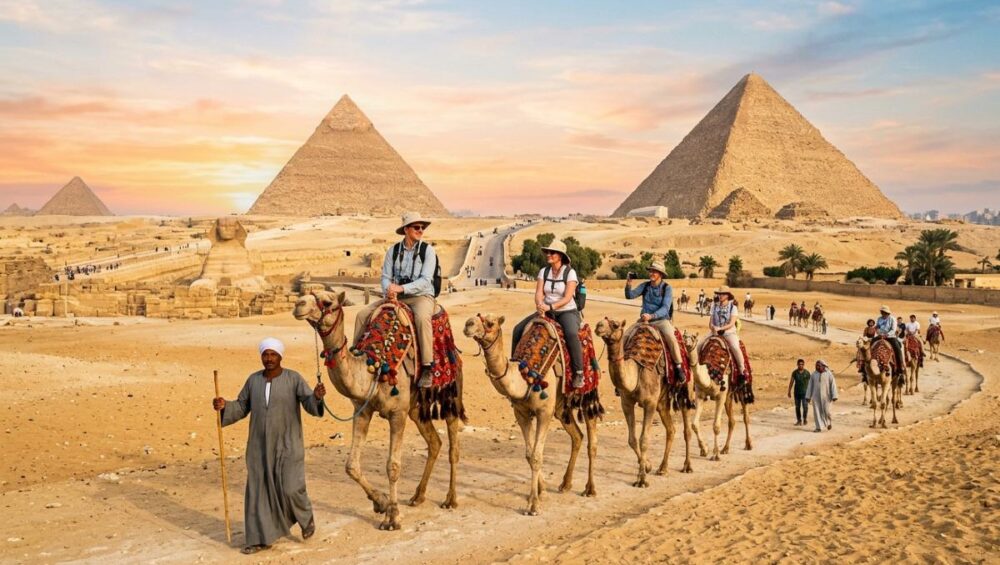
Ride a Camel Near the Pyramids in Cairo

Guided camel and horse rides around the Giza Plateau in Cairo remain popular Cairo activities, especially at sunrise or sunset when the desert light softens the Cairo scene.

Walk Al-Muizz Street in Cairo After Dark

Al-Muizz Street in Cairo, the spine of Islamic Cairo, is lined with mosques and mausoleums in Cairo. It comes alive after sunset in Cairo, when lanterns light the old stone facades of Cairo.

Experience Cairo by Night

When the sun sets over Cairo, Cairo transforms. The city of Cairo glows under a canopy of lights, and the streets of Cairo fill with locals enjoying the cooler evening air in Cairo. A Cairo by Night Tour lets you experience Cairo’s magical atmosphere, from illuminated mosques in Cairo to lively Cairo markets and riverside Cairo cafés.

Cairo Nile River felucca boat sailing at sunset with Cairo skyline

A traditional felucca sailing the Nile in Cairo at sunset — one of the most enchanting Cairo experiences

Best Areas to Visit in Cairo

Cairo AreaBest ForTime Needed in CairoMust-See Cairo Attraction
Giza, CairoAncient Cairo historyHalf to full day in CairoCairo Pyramids & Sphinx
Islamic CairoCairo culture & architectureFull day in CairoCairo Khan el-Khalili & Al-Azhar
Coptic CairoCairo religious historyHalf day in CairoCairo Hanging Church
Zamalek, CairoCairo dining & relaxationHalf day in CairoCairo Tower views
Downtown CairoCairo shopping & museumsHalf day in CairoCairo Tahrir Square & Egyptian Museum
New CairoModern Cairo luxuryFlexible in CairoPremium Cairo malls & dining

Suggested Cairo Itineraries

Cairo in 1 Day

  • Morning in Cairo: Giza Pyramids, Sphinx, and GEM in Cairo
  • Afternoon in Cairo: Egyptian Museum (Tahrir) in Cairo
  • Evening in Cairo: Nile dinner cruise in Cairo

Cairo in 2 Days

  • Day 1 in Cairo: Giza Plateau, GEM, Sound and Light Show in Cairo
  • Day 2 in Cairo: Citadel, Islamic Cairo, Khan el-Khalili, Al-Muizz Street in Cairo

Cairo in 3 Days

  • Add to your Cairo trip: Coptic Cairo, Saqqara & Memphis day trip from Cairo, Zamalek Island in Cairo

Cairo in 5 Days

  • Add to your Cairo itinerary: Deep exploration of all Cairo districts, local Cairo cooking class, Garbage City Cairo experience, and a Cairo Stopover Tour for transit travelers wanting maximum value from limited time in Cairo.

Cost of Visiting Cairo

Cairo ExpenseCairo Budget TravelerCairo Mid-RangeCairo Luxury
Cairo Accommodation (per night)$15–$40$60–$150$200+
Cairo Food (per day)$5–$15$20–$50$80+
Cairo Transportation (per day)$2–$5$10–$30$50+
Cairo Attractions (per day)$10–$30$40–$80$100+

Cairo is generally affordable by international standards. Street food in Cairo, public transport in Cairo, and many Cairo museum tickets remain inexpensive, though major Cairo sites like GEM charge higher rates for foreign visitors to Cairo.

Best Time to Visit Cairo

Month in CairoCairo WeatherCairo CrowdsCairo Recommendation
January in CairoCool Cairo (14–19°C)Moderate in CairoExcellent for Cairo
February in CairoMild Cairo (15–21°C)Moderate in CairoExcellent for Cairo
March in CairoPleasant Cairo (17–24°C)Moderate in CairoExcellent for Cairo
April in CairoWarm Cairo (20–29°C)High in CairoVery Good for Cairo
May in CairoHot Cairo (24–33°C)Low in CairoGood for Cairo
June in CairoVery Hot Cairo (27–35°C)Low in CairoAvoid midday in Cairo
July in CairoVery Hot Cairo (28–36°C)Low in CairoAvoid Cairo
August in CairoVery Hot Cairo (28–36°C)Low in CairoAvoid Cairo
September in CairoHot Cairo (26–33°C)Low in CairoGood for Cairo
October in CairoPleasant Cairo (22–30°C)Moderate in CairoExcellent for Cairo
November in CairoMild Cairo (18–25°C)Moderate in CairoExcellent for Cairo
December in CairoCool Cairo (15–20°C)High in CairoExcellent for Cairo

The ideal time to explore Cairo is October through April. Late October, November, February, and March consistently rank as the sweet spot for visiting Cairo: cool enough to sightsee in Cairo, warm enough to enjoy the Nile in Cairo, and just ahead of or behind the busiest holiday crowds in Cairo.

Cairo Khan el Khalili bazaar colorful lanterns and traditional market in Cairo Egypt

The vibrant lantern stalls of Khan el-Khalili in Cairo — Cairo’s most famous bazaar, alive for over 600 years

Cairo Transportation Comparison

Cairo Transport ModeCost in CairoComfort in CairoBest For in Cairo
Cairo Metro~5 EGP in CairoModerate in CairoCrossing Cairo quickly
Uber/Careem in Cairo30–150 EGP in CairoHigh in CairoDoor-to-door Cairo convenience
Cairo TaxiNegotiable in CairoVariable in CairoShort Cairo hops
Private Driver in Cairo$50–$100/day in CairoVery High in CairoCustom Cairo itineraries
Walking in CairoFree in CairoHigh in CairoIslamic Cairo, Downtown Cairo, Coptic Cairo

The Cairo Metro is the oldest in Africa and the busiest in the Middle East, carrying over a billion passenger rides annually across three Cairo lines. It is the fastest way to skip Cairo’s notorious traffic.

Plan your Cairo route on the Cairo Metro official website →

Cairo vs Other Egyptian Cities

FactorCairoLuxorAswanAlexandria
Best ForAll-in-one Cairo history & urban energyAncient templesNubian cultureMediterranean vibe
Length of Stay3–5 days in Cairo2–3 days2 days1–2 days
Top HighlightCairo Pyramids of GizaValley of the KingsAbu SimbelQaitbay Citadel
AtmosphereBustling Cairo metropolisOpen-air museumTranquil riversideCoastal cosmopolitan

Is Cairo Safe?

Cairo is visited by millions of tourists annually and is generally safe for travelers who follow standard Cairo precautions.

  • Solo travelers in Cairo: Stick to licensed Cairo transport and avoid isolated Cairo areas after midnight.
  • Families in Cairo: Cairo is family-friendly at major Cairo attractions; keep children close in crowded Cairo markets.
  • Women in Cairo: Dress modestly in Cairo; loose clothing and a scarf for religious Cairo sites are advisable.
  • Night safety in Cairo: Downtown Cairo and Zamalek in Cairo are well-lit and busy; use Uber after dark in Cairo instead of street Cairo taxis.
  • Cairo tourist scams: Agree on Cairo taxi fares beforehand, ignore unsolicited “guides” at the Cairo pyramids, and count your change in Cairo.

Don’t miss the magic of Cairo after dark!

Book a Cairo by Night Tour

Common Mistakes Tourists Make in Cairo

  1. Trying to see everything in Cairo in one day — Cairo rewards patience; spread major Cairo sites across multiple Cairo days.
  2. Visiting the Cairo pyramids at noon — The midday heat in Cairo is intense; go at sunrise in Cairo.
  3. Wearing revealing clothing at Cairo mosques — Shoulders and knees must be covered in Cairo.
  4. Drinking tap water in Cairo — Stick to bottled water in Cairo.
  5. Accepting the first price in Cairo’s Khan el-Khalili — Haggling is expected in Cairo.
  6. Skipping the Cairo Citadel at sunset — The golden-hour views of Cairo are unmatched.
  7. Not validating GEM tickets online for Cairo — Book ahead to avoid sold-out Cairo entry.
  8. Ignoring Coptic Cairo — Some of Cairo’s oldest treasures are in Coptic Cairo.
  9. Taking unlicensed taxis in Cairo — Use Uber, Careem, or pre-arranged Cairo transfers.
  10. Forgetting cash in Cairo — Many small Cairo vendors and Cairo cafés do not take cards.

Cairo Family Travel Guide

Is Cairo suitable for families? Absolutely. Children are welcomed everywhere in Egyptian culture, and Cairo offers unforgettable educational Cairo experiences.

Best Cairo activities for kids:

  • Camel rides at Giza in Cairo (supervised, short distances)
  • The Grand Egyptian Museum’s interactive displays in Cairo
  • Felucca rides on the Nile in Cairo
  • The Cairo Tower observation deck
  • Al-Azhar Park in Cairo for open space and picnics

Cairo for American Travelers

  • Currency in Cairo: Egyptian Pound (EGP). Exchange at Cairo banks or use Cairo ATMs.
  • Credit cards in Cairo: Accepted at Cairo hotels and major Cairo restaurants; carry cash for Cairo bazaars and tips.
  • Tips in Cairo: Tipping (baksheesh) is customary in Cairo — 10–15% at Cairo restaurants, small bills for Cairo guides and drivers.
  • SIM cards in Cairo: Purchase at Cairo International Airport (Orange, Vodafone, Etisalat) for reliable Cairo data.
  • Uber in Cairo: Widely available in Cairo and safer than street Cairo taxis.
  • Power adapters for Cairo: Egypt uses 220V, Type C and F plugs for Cairo (European standard).
  • Dress code in Cairo: Modest at religious Cairo sites; casual elsewhere in Cairo.
  • Visa for Cairo: Americans need an eVisa or visa on arrival at Cairo International Airport.

Cairo Accessibility

  • Wheelchairs in Cairo: Major Cairo sites like GEM and the Egyptian Museum offer wheelchair access in Cairo; the Cairo pyramids have limited accessibility due to sand.
  • Families in Cairo: Stroller-friendly paths exist at Al-Azhar Park in Cairo and Zamalek in Cairo.
  • Senior travelers in Cairo: Private Cairo drivers and shorter walking Cairo itineraries are recommended. Avoid the Cairo Metro during rush hour.

Cairo Packing Checklist

  • Lightweight, breathable clothing for Cairo
  • Modest cover-up for Cairo mosques and Cairo churches
  • Comfortable walking shoes for Cairo
  • Sunscreen, sunglasses, and wide-brim hat for Cairo sun
  • Reusable water bottle for Cairo
  • Power adapter (Type C/F) for Cairo
  • Small backpack for Cairo day trips
  • Hand sanitizer and tissues for Cairo
  • Copies of passport and visa for Cairo
  • Cash in small denominations for Cairo tipping

Cairo Local Etiquette

✓ Do in Cairo

  • Greet with “As-salamu alaykum” in Cairo
  • Remove shoes before entering Cairo mosques
  • Accept tea offers in Cairo shops
  • Dress modestly at religious Cairo sites
  • Learn a few Arabic phrases for Cairo

✗ Don’t in Cairo

  • Show public displays of affection in Cairo
  • Point the soles of your feet at people in Cairo
  • Photograph Cairo locals without permission
  • Drink alcohol in public non-tourist Cairo areas
  • Rush through historical Cairo explanations

Cairo Citadel and Muhammad Ali Mosque panoramic view of Cairo city

The Cairo Citadel overlooking Cairo — a medieval fortress with the best panoramic views of Cairo

Practical Travel Tips for Visiting Cairo

Three to four days is enough to cover Cairo’s core highlights: Giza in Cairo, the Grand Egyptian Museum in Cairo, Islamic and Coptic Cairo, and Khan el-Khalili in Cairo. A full week in Cairo allows time to add Saqqara from Cairo, Memphis near Cairo, and leisurely walks through Downtown Cairo and Zamalek in Cairo.

Lightweight, breathable clothing works best for Cairo. Modest dress covering shoulders and knees is expected at Cairo mosques and Cairo churches. Many female visitors find loose tops acceptable in general Cairo tourist areas but bring a light scarf for religious Cairo sites.

Planning a short layover in Cairo? Maximize every Cairo hour!

Book a Cairo Stopover Tour

Frequently Asked Questions About Cairo

1. How is Cairo pronounced in Arabic versus English?

In English, “Cairo” is pronounced KY-roh. In Arabic, Cairo’s actual name, al-Qahirah, is pronounced al-KAH-hi-rah, with a guttural “q” sound that does not carry over into the anglicized Cairo version most travelers use.

2. Is Cairo the same as Giza?

No. Giza is technically its own city on the west bank of the Nile in Greater Cairo, home to the Pyramids and GEM. However, it is fully connected to Cairo within Greater Cairo, and most visitors treat Giza and Cairo as one Cairo destination.

3. How old is Cairo compared to Egypt itself?

Cairo as a named city dates to 969 CE, but the wider Cairo area has been inhabited far longer. Ancient Memphis stood nearby Cairo roughly 5,000 years ago.

4. Can I visit GEM and the old Egyptian Museum in one Cairo trip?

Yes, and many Cairo visitors do. GEM in Cairo displays the complete Tutankhamun collection, while the Tahrir Square museum in Cairo retains other Pharaonic masterpieces. Seeing both Cairo museums provides the fullest Cairo picture.

5. What is Cairo’s nickname?

Cairo is often called the “City of a Thousand Minarets” for its dense concentration of historic Cairo mosques. Egyptians also refer to Cairo simply as Masr, the Arabic name for Egypt.

6. What is the best area to stay in Cairo?

Zamalek and Garden City in Cairo offer upscale Nile-side comfort. Downtown Cairo provides budget-friendly central Cairo access. Giza in Cairo is ideal if you want pyramid views from your Cairo hotel balcony.

7. Do I need a visa to visit Cairo?

Most nationalities, including Americans, Europeans, and Canadians traveling to Cairo, require a visa. An eVisa is available online for Cairo, or you can obtain one on arrival at Cairo International Airport.

8. Is the tap water in Cairo safe to drink?

No. Always drink bottled or filtered water in Cairo. Even Cairo locals typically avoid Cairo tap water.

9. Can I use US dollars in Cairo?

Major Cairo hotels and some Cairo tourist shops accept USD, but Egyptian Pounds are preferred everywhere else in Cairo. Exchange money at Cairo banks or authorized Cairo exchange offices.

10. What should I wear when visiting mosques in Cairo?

Men and women should cover shoulders and knees in Cairo mosques. Women should also cover their hair with a scarf inside active Cairo mosques.

11. How much does a taxi cost from Cairo Airport to downtown Cairo?

A metered taxi or Uber in Cairo typically costs between 150–300 EGP ($3–$6 USD) depending on Cairo traffic and time of day. The Cairo journey takes 30–60 minutes.

12. Are credit cards widely accepted in Cairo?

Cairo hotels, upscale Cairo restaurants, and major Cairo attractions accept cards. Street Cairo vendors, small Cairo cafés, and Cairo bazaars operate on cash only.

13. What is the best way to see the Pyramids of Giza in Cairo?

Arrive at 8:00 AM when the Cairo gates open. Hire a licensed Cairo guide or book a private Cairo tour to avoid Cairo scams and gain historical Cairo context.

14. Is Cairo safe for solo female travelers?

Yes, with standard Cairo precautions. Dress modestly in Cairo, use Uber after dark in Cairo, and stay in well-reviewed Cairo accommodations in Zamalek or Downtown Cairo.

15. How many days do I need in Cairo?

A minimum of 3–4 days is recommended to see the Cairo pyramids, Cairo museums, Islamic Cairo, and Coptic Cairo sites without rushing your Cairo trip.

Cherish Every Moment in the Golden City of Cairo

Cairo does not reveal itself in a single Cairo visit, and Cairo is not meant to. Every era that has passed through Cairo — Pharaonic, Roman, Fatimid, Mamluk, Ottoman, and modern — left something standing in Cairo, and the city of Cairo simply built its next chapter around it.

Between the pyramids at Cairo’s edge, the minarets at Cairo’s center, and the Nile running through all of Cairo, Cairo remains one of the few places where 5,000 years of history are still part of daily Cairo life rather than sealed behind glass in Cairo.

Ready to explore Cairo with a private Egyptologist?

Discover Our Cairo Day Tours

Why Book Your Cairo Trip With Egy Travel Lux?

  • Private Certified Egyptologists in Cairo: Handpicked expert Cairo guides who act as storytellers, not just Cairo tour leaders.
  • Tailor-Made Cairo Itineraries: Every Cairo trip is customized to your pace and Cairo interests.
  • Seamless Cairo Logistics: 24/7 support with dedicated Cairo trip coordinators.
  • Flexible Cancellation for Cairo: Book your Cairo trip with confidence knowing your Cairo plans can adapt.
  • 39+ Years of Cairo Expertise: Trusted by thousands of Cairo travelers worldwide.

Don’t just see Cairo. Experience Cairo. From private sunrise viewings at the Giza Pyramids in Cairo to dining with local families along the Nile in Cairo, unlock an extraordinary Cairo journey crafted entirely around you.


Cairo Giza Day Trip Price Guide 2026 showing the Great Pyramids, Sphinx, and private tour experience

Cairo Giza Day Trip Price Guide 2026: Compare the Best Deals Before You Book

Cairo Giza Day Trip Price Guide: What You’ll Actually Pay in 2026

A Cairo Giza day trip in 2026 typically costs between $35 for a shared tour and $600+ for a luxury private experience. Most travelers spend $120–$200 per person for a private full-day tour that includes transportation, a licensed Egyptologist, and the Grand Egyptian Museum. This Cairo Giza Day Trip Price Guide compares every option, explains hidden costs, and helps you choose the best value before booking.

The first time you see the Great Pyramid of Khufu in person, scale is the thing that disorients you. It is not a photograph. It is not a documentary. It is 481 feet of limestone rising from the desert floor, and it has been standing there for 4,500 years.

The question most travelers ask after that initial shock wears off is simple: what is the real Cairo Giza day trip price in 2026? We cut through the noise. We break down real 2026 prices for shared tours, private Cairo tours, and luxury pyramid experiences, plus the hidden costs that can derail your budget before you even reach the Sphinx. By understanding the average cost, you can choose the right experience without overpaying or facing unexpected costs.

Tourists exploring the Great Pyramid during a Cairo Giza day trip
WhatsApp Image 2026-07-01 at 3.28.37 PM (1)
WhatsApp Image 2026-07-01 at 3.28.37 PM
WhatsApp Image 2026-07-01 at 3.28.38 PM (1)
WhatsApp Image 2026-07-01 at 3.28.38 PM
WhatsApp Image 2026-07-01 at 3.29.27 PM (1)
WhatsApp Image 2026-07-01 at 3.29.27 PM (2)
Family visiting the Sphinx on a full-day Cairo Giza tour
WhatsApp Image 2026-07-01 at 3.29.27 PM (3)
WhatsApp Image 2026-07-01 at 3.29.27 PM
WhatsApp Image 2026-07-01 at 3.29.28 PM (1)
WhatsApp Image 2026-07-01 at 3.29.28 PM (2)
WhatsApp Image 2026-07-01 at 3.29.28 PM (3)
WhatsApp Image 2026-07-01 at 3.29.28 PM (4)
WhatsApp Image 2026-07-01 at 3.29.28 PM (5)
WhatsApp Image 2026-07-01 at 3.29.28 PM (6)
WhatsApp Image 2026-07-01 at 3.29.28 PM
WhatsApp Image 2026-07-01 at 3.29.29 PM (1)
Travelers taking photos at the Giza Plateau during a guided tour
WhatsApp Image 2026-07-01 at 3.29.29 PM (2)
WhatsApp Image 2026-07-01 at 3.29.29 PM
WhatsApp Image 2026-07-01 at 4.03.05 PM (1)
WhatsApp Image 2026-07-01 at 4.03.05 PM (2)
WhatsApp Image 2026-07-01 at 4.03.05 PM (3)
WhatsApp Image 2026-07-01 at 4.03.05 PM (4)
WhatsApp Image 2026-07-01 at 4.03.05 PM
WhatsApp Image 2026-07-01 at 4.03.06 PM (1)
WhatsApp Image 2026-07-01 at 4.03.06 PM (2)
WhatsApp Image 2026-07-01 at 4.03.06 PM (3)
WhatsApp Image 2026-07-01 at 4.03.06 PM (4)
WhatsApp Image 2026-07-01 at 4.03.06 PM (5)
Luxury Cairo Giza day trip with private Egyptologist guide
WhatsApp Image 2026-07-01 at 4.03.06 PM

How Much Is a Cairo Giza Day Trip Price in 2026?

A Cairo Giza day trip Price between $35 for a shared group tour and $600+ for a luxury private experience. Mid-range private tours with a licensed Egyptologist, vehicle, and museum entry typically run $120–$200 per person.

Tour pricing in Cairo is not standardized. A “Cairo pyramids tour” can mean a 15-person minibus with a driver who speaks functional English, or it can mean a climate-controlled Mercedes with a licensed Egyptologist who holds a PhD in archaeology. This is why costs can range from budget-friendly options to fully customized luxury experiences.

The gap between those two experiences is several hundred dollars, and the gap in what you learn is even wider.


Understanding Cairo Giza day trip price structures starts with knowing the components. Every tour has three layers: official site fees, transportation, and guiding. Some operators bundle everything. Others advertise a low base rate and expect you to pay entry fees, tips, and lunch out of pocket.

The cheapest advertised price is rarely the cheapest total cost.

Official Site Entry Fees

The Egyptian Ministry of Tourism and Antiquities sets these fees. They are non-negotiable at the gate and typically require card payment. As of 2026, foreign adults pay approximately 700 EGP (~$14 USD) for general Giza Plateau entry. That covers the three pyramids’ exteriors, the Sphinx, and the Valley Temple. It does not include going inside any pyramid. These official fees are a key part of the Cairo Giza day trip price.

Understanding these mandatory costs helps you calculate the real Cairo Giza day trip price before comparing different tour packages, especially if you’re considering budget tours that exclude entrance tickets.

Entering the Great Pyramid of Khufu costs an additional ~1,500 EGP (~$30 USD). The smaller pyramids of Khafre and Menkaure run ~280 EGP and ~200 EGP respectively. If you add the Grand Egyptian Museum to your day, budget another ~1,300 EGP (~$25 USD) for the complete experience ticket that includes the full Tutankhamun galleries. Students with valid ISIC cards receive 50% discounts at all sites. Children under six enter free.

Ticket TypePrice (EGP)Approx. USD
Giza Plateau general entry700~$14
Inside Great Pyramid (Khufu)1,500~$30
Inside Pyramid of Khafre280~$5.60
Inside Pyramid of Menkaure200~$4
Grand Egyptian Museum (Complete)1,300~$25
Saqqara Plateau450~$9
Dahshur Necropolis60~$1.20
Sound & Light Show450~$9

Source: Egypt Ministry of Tourism and Antiquities and verified operator data. EGP rates are volatile; confirm current conversion before travel.

Cairo Giza Day Trip: Tour Package Ranges

Once you factor in transport and guiding, Cairo tour prices fall into clear tiers, making it easier to compare the overall Cairo Giza day trip price across different travel styles. Shared group tours keep costs low by filling a minibus with 8 to 15 travelers. Private tours absorb the full vehicle and guide cost across your party, which benefits groups of three or more. Solo travelers pay the highest per-person rate for private tours, though small-group options (capped at six) offer a middle path. Comparing the Cairo Giza day trip price between shared and private tours helps travelers choose the best value for their budget.

Tour TypeWhat’s IncludedPrice Per Person (2026)
Shared group half-dayMinibus, guide, plateau entry NOT included$35–$50
Shared group full-day + GEMMinibus, Egyptologist, lunch, tickets sometimes included$65–$100
Private half-day (2 pax)Private vehicle, licensed guide, plateau tickets included$90–$140
Private full-day + GEM (2 pax)Private vehicle, Egyptologist, all tickets, lunch$150–$250
Private multi-site (Giza+Saqqara+GEM)10-hr day, all tickets, lunch, camel ride$200–$320
Luxury VIP private dayLuxury vehicle, PhD Egyptologist, 5-star lunch, GEM priority$350–$600+

These ranges reflect the current market for egypt day tours in 2026. For exact current pricing, see our pyramids Cairo tour prices page, where we list real-time rates with no hidden fees.

Still unsure which Cairo day trip offers the best value?

Our local Egyptologists can recommend the ideal itinerary based on your budget, interests, and available time—before you book.

Plan My Trip

Which Tour Fits Your Travel Style?

Not every traveler needs the same experience. Your group size, interests, and physical stamina should dictate which cairo sightseeing tour you book.

TravelerBest TourWhy It Works
SoloShared or small-group tourLowest cost, opportunity to meet other travelers
CouplePrivate half-day or full-dayIntimate pace, flexible timing, better guide access
Family with kidsGiza + GEM full-dayEducational, air-conditioned breaks, manageable walking
History enthusiastsGiza, Saqqara & MemphisThree sites spanning 3,000 years of pyramid evolution
Luxury travelersVIP private tourPhD guide, premium vehicle, exclusive access options
Transit / layoverCairo Airport layover tourDirect pickup from Cairo Airport, optimized for tight schedules

Sample Budgets for a Cairo Giza Day Trip

These are realistic total outlays—including tour price, entry fees, lunch, and tips—for different traveler profiles in 2026.

Traveler TypeTour TypeEstimated Total
SoloShared group + tickets + tips~$65
CouplePrivate half-day, all included~$220 total
Family (4 people)Private full-day + GEM + lunch~$430 total
Luxury coupleVIP all-inclusive experience~$820 total

These figures assume you book through an operator that bundles tickets. If you book a budget tour that excludes entry fees, add $14–$45 per person depending on which pyramids you enter. Check our pyramids Cairo tour prices for fully inclusive packages.

Shared vs. Private Tours: A Side-by-Side Comparison

The Cairo Giza day trip price ranges from $35–$100 per person for shared tours, which exclude entry fees and offer fixed schedules, while private tours run $90–$250 per person, include licensed Egyptologists, and let you control the pace. For groups of three or more, the Cairo Giza day trip price for private tours is often nearly the same per person as shared tours.

The choice between a shared and a private Cairo tour is not just about money. It is about pace, depth, and how much control you want over your day, not simply the Cairo Giza day trip price.

Shared tours work well for travelers on tight budgets or those who do not mind moving at the group’s speed. Private tours suit families with young children, photographers chasing specific light, or anyone who has waited decades to stand at the Sphinx and wants to do it without a flag-waving guide herding fifteen people toward the souvenir stalls. Comparing the Cairo Giza day trip price alongside inclusions usually leads to a better booking decision.

FactorShared Group TourPrivate Tour
Group size8–15 peopleYou + guide only
Guide qualityDriver-guide; English variesLicensed Egyptologist
Pickup timeFixed (often 8:00–9:00 AM)Flexible (can start at 7:00 AM)
Time at each siteScheduled; limited flexibilityAdjustable on the spot
Entry ticketsOften NOT includedUsually included
VehicleShared minibusPrivate A/C car or van
LunchNot included or basicIncluded at restaurant (full-day)
Camel rideNegotiated on-site (risk of upselling)Pre-arranged, price locked
Typical cost per person$35–$100$90–$600+

One detail most travelers miss: shared tours rarely include the Giza Plateau entry fee in the advertised price. That $45 “bargain” becomes $65 once you pay 700 EGP at the gate. Private operators typically bundle tickets, so the price you see is the price you pay.

When comparing the Cairo Giza day trip price, always check whether entrance fees are included before making your decision.

Luxury Cairo Pyramids Tours: When Price Meets Exclusivity


For travelers combining Cairo with a broader Egyptian itinerary, Egypt vacation packages that include multiple cities often deliver better per-day value than booking standalone luxury days. A 8-day Cairo, Luxor, Aswan & Nile Cruise bundles domestic flights, five-star hotels, and private guiding across the entire country. Browse our full range of Egypt vacation packages for bundled savings.

Hidden Costs Most Travelers Overlook

Beyond the tour price, expect to spend an extra $30–$60 per person on tips, photography passes, water, and camel ride fees. These are not optional in practice; they are part of the Cairo tourism economy.

The advertised giza tour cost is only the beginning. Cairo’s tourism economy runs on a layer of optional but expected payments that can add $30–$60 to your day if you are unprepared.

Tips (baksheesh) are customary and appreciated. For a full-day private tour, budget EGP 400–700 ($8–$14) for your Egyptologist and EGP 150–250 ($3–$5) for your driver. Camel handlers expect EGP 50–100 ($1–$2) after the ride, not before. If a site guard opens a restricted area for you, EGP 20–50 is standard. Restaurant tipping in tourist areas runs 12–15%.

Photography passes at the GEM cost EGP 50 (~$1) for non-flash mobile and camera use. Some galleries restrict photography entirely. Toilet attendants at sites charge a small fee or expect a EGP 5–10 tip. Bottled water inside the plateau costs triple what it does in the city. Your guide should provide water, but confirm this when booking.

Camel ride upselling is the most common friction point. If you want the experience, agree on the full round-trip price before mounting. Specify: “This price is for the complete ride, both ways, back to this exact spot.” A reputable guide handles this negotiation for you, which is one reason private egypt tours often feel less expensive in practice than they appear on paper.

What’s Included (and What’s Not)

Most private tours include hotel pickup, a licensed Egyptologist, private transport, and Giza Plateau entry. Budget shared tours often exclude the ~$14 entry fee and lunch. Always verify whether the Great Pyramid interior ticket (~$30) is bundled before booking, as it directly affects the Cairo Giza day trip price.

Read the inclusions list carefully. “Hotel pickup” can mean a 6:00 AM departure from your hotel in Downtown Cairo, or it can mean a 9:30 AM scramble to find the minibus in a parking lot. Every inclusion influences the final Cairo Giza day trip price.

“Guide” can mean a licensed Egyptologist with ten years of field experience, or it can mean a driver who memorized a script. The advertised Cairo Giza day trip price may seem attractive, but it does not always include the same level of service or convenience.

Always compare what is included before judging the Cairo Giza day trip price, as transportation, entry tickets, and guide quality can significantly affect the overall Cairo Giza day trip price.

Most legitimate cairo pyramids tour packages include round-trip transport from your Cairo or Giza hotel. What varies is whether entrance fees, lunch, and camel rides are bundled. Premium operators include everything except personal shopping and discretionary tips. Budget operators often exclude entry tickets, which adds ~$14–$45 per person depending on how many pyramids you enter.

At Egy Travel Lux, our Giza, Saqqara & Memphis Tour includes private transport, a licensed Egyptologist, all tickets, lunch, and even bottled water. There are no surprise line items at the gate.

One-Day Cairo Giza Itinerary by Budget

A full-day Cairo Giza itinerary runs 8–10 hours and typically covers the Giza Plateau, the Sphinx, and the Grand Egyptian Museum. Budget itineraries skip the museum; mid-range and luxury itineraries include it with a pyramid-view lunch.

How you structure your day depends on your budget and your stamina. Here is a realistic timeline, followed by three itinerary options optimized for different price points.

TimeActivityLocation
7:00 AMHotel pickupYour hotel (Downtown Cairo, Zamalek, Giza, or New Cairo)
7:30 AMGiza Plateau entryPyramids of Giza
9:30 AMGreat Pyramid interior (optional)Pyramid of Khufu
10:30 AMSphinx & Valley TempleGiza Plateau
12:00 PMLunch with pyramid viewsMena House or similar
2:00 PMGrand Egyptian MuseumGEM
4:30 PMTutankhamun galleriesGEM
5:30 PMReturn to hotelCairo / Giza

Budget Day ($45–$80 Per Person)

Start at 8:00 AM with a shared group tour. You will visit the Giza Plateau, the Sphinx, and the panoramic viewpoint. The guide provides a general overview. You pay your own entry fees (~$14 for the plateau, ~$30 extra if you enter the Great Pyramid). Lunch is not included; eat koshary at a local spot for under $3. You are back at your hotel by 1:00 PM.

This option offers the lowest Cairo Giza day trip price, with a total outlay of $45–$80 depending on optional add-ons. If your priority is finding the most affordable Cairo Giza day trip price, a shared tour provides the best balance between cost and the essential Giza experience.

This works for travelers who want the photo and the memory without the depth. It does not work for anyone who expects to understand what they are looking at, regardless of the Cairo Giza day trip price.

Luxury Cairo Giza day trip with private Egyptologist guide

Mid-Range Day ($120–$200 Per Person)

Book a private Cairo tour for two. Start at 7:00 AM to beat the heat and the crowds. Your Egyptologist meets you at the hotel in a private vehicle. You spend three hours at Giza, enter the Great Pyramid, and photograph the Sphinx without jostling for position. Lunch follows at a Nile-view restaurant. In the afternoon, you visit the Grand Egyptian Museum for a guided walk through the Tutankhamun galleries. Return to your hotel by 5:00 PM. All tickets, lunch, and transport are included.

For many couples, the rate of $150–$200 per person offers the best balance between comfort, flexibility, and expert guiding. Compared with booking each service separately, an all-inclusive private tour often delivers better overall value.

This is the sweet spot for most travelers. You get context, comfort, and efficiency without the luxury premium.

Luxury Day ($300–$600+ Per Person)

Your vehicle arrives at 6:45 AM. You enter the Giza Plateau before the general public through pre-arranged access. The morning light hits the limestone casing stones at an angle that makes them glow.

Your guide is a PhD Egyptologist who has worked excavation sites at Saqqara. After Giza, you have a late breakfast at Mena House with pyramid views from the garden. The GEM follows, with priority entry to the Tutankhamun treasury before the standard groups arrive. You add Saqqara and Dahshur in the afternoon, ending with sunset at the Red Pyramid where you are likely the only foreign visitors. Optional Sound & Light Show VIP seating closes the evening. Total: $420–$600+ per person, all-inclusive.

For travelers seeking the ultimate experience, the Cairo Giza day trip price includes exclusive access, luxury transportation, and a highly qualified Egyptologist. At this level, the Cairo Giza day trip price reflects exclusive access, expert guiding, and premium service throughout the day. While the Cairo Giza day trip price is significantly higher than standard tours, many travelers consider the personalized experience and seamless logistics well worth the investment.

When comparing premium operators, evaluate the Cairo Giza day trip price alongside the guide’s expertise, itinerary, and included experiences rather than the price alone.

For travelers who want the definitive Egyptian day, this is it. Luxury car rental with driver options are also available if you prefer to self-direct with professional support.

Want us to build your perfect day?

Tell us your hotel, your interests, and your budget. We will reply with a custom itinerary and exact pricing within 2 hours.

Plan My Trip

When to Book for the Best Cairo Tour Prices

Book Cairo tours 2–4 weeks ahead for peak season (November–February). Prices rise 15–25% during these months due to demand. Low season (May–September) offers 10–20% discounts, though temperatures exceed 100°F. June and September offer the best balance of moderate pricing and manageable heat.

Timing affects both availability and the Cairo Giza day trip price. Peak season in Cairo runs from October through April, with the highest demand between November and February. During these months, daily visitor numbers at Giza can exceed 15,000. The Cairo Giza day trip price for private tours rises 15–25% compared to summer. The trade-off is weather: daytime temperatures hover between 67–80°F (19–27°C), which is ideal for walking the plateau.

Low season (May through September) brings discounts of 10–20% on many tours. The downside is heat. July and August temperatures regularly hit 104–110°F (40–43°C). If you can tolerate early starts and frequent water breaks, you will have thinner crowds and a lower Cairo Giza day trip price. June and September are the compromise months: still warm, but manageable, with moderate pricing.

For peak season travel, book 2 to 4 weeks in advance. The GEM uses timed entry slots, and the Tutankhamun galleries sell out regularly. For the Sound & Light Show, reserve at least a week ahead. Last-minute bookings in January are possible, but you sacrifice choice on guide quality and start times, and often pay a higher Cairo Giza day trip price.

Check our best time to visit Egypt guide for a month-by-month breakdown of weather, crowds, and pricing across the country.

Tourists walking beside the Great Pyramid of Khufu in Giza

Money-Saving Tips That Actually Work

Save money on your Cairo Giza day trip by booking a small-group tour instead of a large bus, skipping the Great Pyramid interior if you are claustrophobic, combining the GEM and Giza into one full day, and using a valid student ID for 50% entry discounts.

Paying less does not have to mean experiencing less. These strategies reduce your cairo day trip price without cutting the moments that matter.

1. Book a small-group tour instead of a large bus. Six-person groups cost marginally more than 15-person buses but deliver a guide-to-guest ratio that actually allows questions. The value per dollar is higher.

2. Skip the Great Pyramid interior if you are claustrophobic. The passage is narrow, hot, and crowded. The exterior experience is free with your plateau ticket and visually more impressive. Save the $30.

3. Visit the GEM in the afternoon. Morning slots are packed with tour groups. After 2:00 PM, the galleries thin out. You do not need a premium ticket for this; you just need timing.

4. Combine sites into one full day. Doing Giza on Monday and the GEM on Tuesday means two separate transport costs. A combined full-day private tour is cheaper per site than two half-days.

5. Bring a valid student ID. The 50% discount applies to foreign students with ISIC cards at every state-run site. Over a full day, that saves $20–$30.

6. Use Uber or Careem for solo transport. If you are genuinely on a shoestring, the Metro Line 2 to Giza Station plus a 10-minute Uber to the plateau costs under $5 total. Add the $14 plateau entry and a $20 shared guide, and you have seen the pyramids for under $40. You will miss depth, but you will not miss the view.

Private vs. Group: Which Delivers Better Value?

Private tours deliver better value for couples, families, and groups of three or more because entry fees and lunch are bundled. A family of four often pays only slightly more for a private tour than a shared tour once all extras are added, while gaining a licensed Egyptologist and flexible timing.

Explore our full range of 7-day Egypt tours with Nile Cruise if you are planning beyond Cairo.

Smiling travelers enjoying their Cairo Giza day trip with pyramid views

Egy Travel Lux Tour Comparison

These are our most-booked cairo giza day trip prices experiences for 2026, selected for value, guide quality, and itinerary balance. Every tour is customizable. Want to start at 6:30 AM for sunrise photography? Need a vegetarian lunch or a wheelchair-accessible vehicle? Those details are standard for us, not upgrades.

TourDurationBest ForStarting Price
Giza Pyramids & GEM8 HoursFirst-time visitorsFrom $125
Giza, Saqqara & Memphis10 HoursHistory enthusiastsFrom $140
Cairo Layover Tour6–8 HoursCairo Airport transitFrom $290
7-Day Egypt & Nile Cruise7 DaysFull country immersionFrom $1,895
8-Day Cairo, Luxor, Aswan & Nile Cruise8 DaysComprehensive luxuryFrom $2,150

Ready to see real-time availability?

All prices include taxes, tickets, and hotel pickup. No hidden fees. No surprise charges at the gate.

Plan My Trip

Local Expert Tips for First-Time Visitors

These insights come from years of guiding travelers through the Giza Plateau, not from guidebooks.

Local Expert Tip

We recommend arriving before 7:30 AM, not because of the temperature alone, but because tour buses from Red Sea resorts typically reach the Giza Plateau after 9:00 AM. Visiting earlier gives you noticeably quieter viewpoints and shorter ticket lines.

Local Expert Tip

Bring small-denomination EGP notes (10s, 20s, 50s) for tips and toilet attendants. Site guards and camel handlers rarely have change for large bills, and this small preparation prevents awkward negotiations at the pyramid gates.

Local Expert Tip

If you are staying in Downtown Cairo or Zamalek, the drive to Giza takes 30–45 minutes in morning traffic. Travelers in New Cairo or near Cairo Airport should add an extra 15–20 minutes to their pickup time. We adjust all pickups based on your location.

For more practical advice, read our complete Cairo travel guide.

Tourists watching sunrise over the Pyramids of Giza

People Also Compare

Travelers researching a cairo giza day trip often weigh these alternatives before booking.

Cairo vs. Luxor: Cairo delivers pyramids, museums, and urban energy. Luxor offers the Valley of the Kings, Karnak Temple, and a more relaxed Nile-side atmosphere. Most travelers visit both. Cairo works as a 1–2 day stop; Luxor deserves 2–3 days. If you are deciding between the two, our advice is simple: do not choose. A complete Egypt vacation package connects both cities by flight or Nile cruise.

Giza vs. Saqqara: Giza has the iconic three pyramids and the Sphinx. Saqqara has the Step Pyramid of Djoser, the oldest stone monument on earth, and significantly fewer crowds. Giza is non-negotiable for a first visit. Saqqara is essential for anyone who wants to understand how pyramid architecture evolved. The best full-day vs. half-day strategy is to combine both.

Half-Day vs. Full-Day: A half-day covers Giza only. A full-day adds the Grand Egyptian Museum or Saqqara. Full-day tours offer better value per hour because you pay transport once and see exponentially more. If you are flying out the same evening, a half-day is sufficient. If you have one full day in Cairo, the full-day option is the better investment, especially when comparing the overall cost against the number of attractions and inclusions you receive.

Frequently Asked Questions (FAQ)

How much does a Cairo Giza day trip cost in 2026?

A shared group half-day tour runs $35–$50 per person, while a private full-day tour with the Grand Egyptian Museum costs $150–$250 per person. Luxury VIP experiences start at $350 per person. Entry fees to the Giza Plateau are ~$14 extra on most budget tours.

Is it cheaper to book a Cairo pyramids tour in advance?

Yes. Booking 2–4 weeks ahead for peak season (November–February) secures better guide availability and sometimes early-bird rates. Last-minute bookings in high season often limit you to larger group tours or less desirable start times.

What is the best time of day to visit the Giza Pyramids?

Arrive at 7:00–8:00 AM when the site opens. The light is softer, temperatures are lower, and the crowds have not yet arrived. Late afternoon (after 3:00 PM) is the second-best option for photography and fewer people.

Are entry tickets to the pyramids included in tour prices?

Sometimes. Budget shared tours often exclude the ~$14 Giza Plateau entry fee. Mid-range and private tours usually include it. Always check the inclusions list before booking. The Great Pyramid interior ticket (~$30) is rarely included unless specified.

How much should I tip my guide and driver in Cairo?

For a full-day private tour, tip your Egyptologist EGP 400–700 ($8–$14) and your driver EGP 150–250 ($3–$5). Camel handlers expect EGP 50–100 ($1–$2) after the ride. Tips are not mandatory but are deeply appreciated and culturally expected.

Can I visit the Giza Pyramids and the Grand Egyptian Museum in one day?

Absolutely. A full-day itinerary combining both sites takes 8–10 hours and is the most efficient use of your time and transport budget. The GEM is only 2 km from the Giza Plateau. Most premium operators, including Egy Travel Lux, offer this as a standard package.

What is the cheapest way to see the Pyramids of Giza?

Take Metro Line 2 to Giza Station, then an Uber to the plateau (~$5 total). Pay the ~$14 entry fee and explore independently. Add a $20 shared guide on-site if you want context. Total cost: under $40. You sacrifice comfort and depth, but the view costs nothing extra.

Is a private Cairo tour worth the extra cost?

For most travelers, yes. Private tours include licensed Egyptologists, flexible timing, and door-to-door service. The value increases with group size: a family of three or four often pays only slightly more per person than a shared tour while gaining significantly more comfort and context.

What should I wear for a Cairo Giza day trip?

Comfortable, modest clothing covering shoulders and knees. Sturdy walking shoes are essential—the plateau is sand, gravel, and uneven stone. Bring sunscreen, a hat, and sunglasses year-round. In summer, light breathable fabrics and extra water are critical.

Are there hidden fees I should watch out for?

Yes. Common add-ons include photography passes at the GEM (EGP 50), toilet fees at sites, overpriced water inside the plateau, and camel ride upselling. A reputable operator discloses these upfront. Budget operators often do not.

How much cash should I bring for a day trip to Giza?

Budget $50–$80 per person in cash (EGP) for tips, water, snacks, toilet fees, and small purchases. Official site tickets must be paid by card, but everything else runs on cash. Bring small bills; vendors rarely have change for 200 EGP notes.

Can I pay by credit card at the pyramids?

Yes, at the official ticket booths. The Ministry of Tourism and Antiquities requires card payment for entry fees. However, tips, camel rides, water, and souvenirs are cash-only. Bring a mix of both.

Are children discounted at Giza and the GEM?

Yes. Children under 6 enter free at all state-run sites. Ages 6–12 receive a 50% discount with proof of age. The GEM follows the same policy. Student discounts (50%) require a valid ISIC card.

How much walking is involved in a Cairo Giza day trip?

Expect 3–4 kilometers of walking on uneven sand, gravel, and stone. The Giza Plateau is mostly flat but soft. The GEM involves significant walking on polished floors. Comfortable, broken-in shoes are non-negotiable.

Can seniors visit the Giza Pyramids comfortably?

Yes, with the right tour. Private tours allow slower pacing, vehicle access closer to the sites, and rest breaks. The Great Pyramid interior is not recommended for seniors with mobility or breathing issues due to steep, narrow passages. The exterior viewpoints are fully accessible.

Is Uber cheaper than booking a tour to Giza?

For a solo traveler, yes—Uber plus independent entry costs under $40 total. For two or more people, a private tour becomes competitive once you factor in the guide, included tickets, and lunch. A tour also eliminates language barriers and vendor negotiations.

Can I visit Saqqara and Giza in the same day?

Yes, and it is one of the best full-day itineraries in Egypt. Saqqara is 30 km south of Giza. With private transport, you can cover both sites plus Memphis in 10 hours. The Giza, Saqqara & Memphis Tour is built exactly for this.

Is entering the Great Pyramid worth the extra cost?

It depends on your tolerance for tight spaces. The passage is narrow, hot, and crowded. The interior chamber is empty and unadorned. The exterior experience is visually more impressive and costs nothing beyond the plateau entry. If you are claustrophobic, skip it and save the $30.

What is the most accurate Cairo Giza Day Trip Price Guide for 2026?

This guide provides current 2026 pricing verified against the Egyptian Ministry of Tourism and Antiquities fee structure and live operator rates. For real-time Egy Travel Lux pricing, see our pyramids Cairo tour prices page, which updates as seasonal rates change.

Final Thoughts: Getting Real Value from Your Cairo Giza Day Trip

The pyramids do not care how much you paid to see them. They have outlasted empires, currencies, and every travel trend that has come and gone. But how you experience them—whether you understand the engineering, the history, and the context—depends entirely on how you allocate your budget.

This Cairo Giza Day Trip Price Guide was built to give you that clarity. The cheapest tour is not always the best deal. The most expensive tour is not always necessary. The right tour is the one that matches your budget, your travel style, and the depth of experience you want to carry home.

At Egy Travel Lux, we do not sell tours. We build days. Whether you want a $125 half-day introduction or a $600 fully custom luxury experience, the Cairo Giza day trip price we quote is the price you pay. No hidden gate fees. No surprise tips. No scripted commentary. Pickup is available from hotels in Downtown Cairo, Zamalek, New Cairo, Giza, and directly from Cairo Airport for layover travelers. Our transparent Cairo Giza day trip price includes exactly what we promise, with no unexpected costs.

Compare our current pyramids tour prices and availability, or reach out for a free consultation. The stones have been waiting 4,500 years. A few more minutes of planning will not hurt. For the best seasons and weather windows, check our best time to visit Egypt guide. And if you need ground support beyond tours, our Cairo travel guide covers everything from currency to customs.


External references: Egypt Ministry of Tourism and Antiquities | Egypt Tourism Authority | UNESCO World Heritage


Cairo Egypt Pyramids Tours

Best Cairo Egypt Pyramids Tours 2026 | Full Day vs Half Day Guide

Before Cairo Wakes Up, the Pyramids Are Already Waiting

It is 7:52 AM and the Giza Plateau is still amber-quiet. The Great Pyramid of Khufu stands impossibly precise, completed around 2560 BC and still the most visited ancient structure on earth. By 10:00 AM this place will be loud and full. Right now, it belongs to you.

The only question is how you plan your Cairo Egypt Pyramids Tours so you get that version — not the rushed, crowded one too many first-timers unknowingly book. This guide by egytravellux gives you the complete 2026 comparison: half-day versus full-day Cairo Egypt Pyramids Tours, honest prices, insider logistics, and the specific experience each format delivers.

📊 Cairo Egypt Pyramids Tours: Key Statistics 2026

  • Egypt welcomed ~19 million tourists in 2025 — a 21% increase (Egypt Ministry of Tourism)
  • Giza Plateau: Africa’s most visited archaeological site, 15,000+ daily visitors in peak season
  • The Grand Egyptian Museum (GEM) opened November 2025, housing 100,000+ artefacts
  • Giza Plateau entry: 700 EGP (~$14) | Great Pyramid interior: 1,500 EGP (~$30) as of Jan 2026
  • Guided Cairo Egypt Pyramids Tours range from $45 to $450+ (2026 prices)
  • Tourism contributed EGP 1.4 trillion (8.5% of GDP) in 2024 — WTTC

⏰ Half Day vs Full Day Cairo Egypt Pyramids Tour: The Real Difference

Most searches treat “half-day” and “full-day” as budget categories. They are not. Cairo Egypt Pyramids Tours in each format deliver fundamentally different experiences. A half-day covers Giza Plateau: the three pyramids’ exterior, Sphinx, Valley Temple of Khafre, and the western panoramic viewpoint. A full-day adds the Grand Egyptian Museum, Saqqara, or both. The difference is depth, not duration.

⏰ HALF-DAY (4–5 hrs)🗓️ FULL-DAY (8–10 hrs)
Sites: Giza Plateau + Sphinx onlySites: Giza + GEM and/or Saqqara
Best for: Tight schedules, families with toddlersBest for: First-timers, culture seekers, luxury travellers
Guide depth: Site overview & key factsGuide depth: Full narrative across 5,000 years
Pyramid interior: Optional extra ($5–30 pp)Pyramid interior: Usually pre-booked in package
Lunch: Not includedLunch: Included at Nile-view or hotel restaurant
GEM access: Not includedGEM access: Included (3–4 hour visit)
Cost: $45–95 per personCost: $120–$350 per person
Energy: Low–moderateEnergy: Moderate–high

When the Half-Day Tour Is Right

Choose half-day Cairo Egypt Pyramids Tours for one-night Cairo stopovers, return visits, or with children under six. Book for 7:30 AM, arrive before 9:00 AM, and finish before the resort tour buses deploy. By 12:30 PM you’re back at your hotel with the afternoon free.

When the Full-Day Tour Is Right

The full-day Cairo Egypt Pyramids Tours is for first-timers who want to understand what they see. The GEM, opened November 2025, changes every itinerary. In Cairo Egypt Pyramids Tours Seeing Khufu in the morning and Tutankhamun’s golden mask three hours later creates historical depth neither delivers alone. Adding Saqqara (15 km south, Step Pyramid of Djoser, 2650 BC) requires energy — extraordinary if you have it, exhausting if you don’t.

Cairo Egypt Pyramids Tours

🏛️ What to Actually See on a Cairo Egypt Pyramids Tour

Non-Negotiable

  • Western panoramic viewpoint: All three pyramids in one frame, no Cairo visible. Arrive before 9 AM.
  • Great Sphinx & Valley Temple: Eye-level Sphinx angle; Valley Temple of Khafre (100-tonne granite blocks, ~2500 BC) — finest Old Kingdom architecture, consistently underexplained.
  • Interior of at least one pyramid: Cairo Egypt Pyramids Tours Khufu for drama; Menkaure for claustrophobics. The descending corridor, antechamber, and granite sarcophagus are worth the premium.

Highly Recommended

  • Grand Egyptian Museum: 3–4 hours minimum. Tutankhamun Treasury (5,000+ artefacts), Royal Mummies Hall, Great Pyramid scale model. Fully air-conditioned.
  • Saqqara: Step Pyramid of Djoser — world’s first stone building. Mastaba of Mereruka (32 painted rooms). Arrive 7:30 AM for solitude.
  • Memphis Open-Air Museum: Fallen colossus of Ramesses II — ten metres of absolute calm authority. Most skip it.

Manage Expectations

  • Camel ride: 15 minutes of fun, stressful negotiation unless your guide handles it. Agree round-trip price before mounting.
  • Khan el-Khalili same-day: Most are too depleted after a full pyramid day. Better as a separate evening excursion.
  • Sound and Light Show: Impressive with VIP English seating. Standard seats feel dated. Not on the same day as a full tour.

🔍 Hidden Gems Most Cairo Egypt Pyramids Tours Skip

  • Solar Boat Museum (south face of Great Pyramid): 4,600-year-old cedar boat of Khufu — oldest intact vessel on earth, reassembled from 1,224 pieces. Most half-day tours walk past it.
  • Tomb of Qar: Eastern cemetery of Giza. Old Kingdom official’s tomb with vivid painted reliefs after 4,000 years. Almost never mentioned.
  • Tombs of the Pyramid Builders (Heit el-Ghorab): Discovered 1990. Tombs of skilled workers — not slaves — buried with honour. The ancient-slaves myth was disproved here.
  • Dahshur Necropolis: 30 minutes south. Bent Pyramid and Red Pyramid — evolutionary steps between Step Pyramid and Giza perfection. Entry: 60 EGP (~$1.20). Almost nobody there.

egytravellux includes the Solar Boat Museum and Pyramid Builders’ tombs on all standard private Cairo Egypt Pyramids Tours.

💰 Cairo Egypt Pyramids Tours: 2026 Prices Breakdown

Prices accurate as of early 2026. 50 EGP = $1 USD (verify at XE.com; EGP has been volatile since 2024). Fees set by Egypt’s Ministry of Tourism and Antiquities, non-negotiable at the gate.

Official Entry Fees

Ticket / SitePrice (EGP / USD)
Giza Plateau general entry700 EGP ≈ $14
Inside Great Pyramid of Khufu1,500 EGP ≈ $30
Inside Pyramid of Khafre280 EGP ≈ $5.60
Inside Pyramid of Menkaure200 EGP ≈ $4
GEM entry1,200 EGP ≈ $25
Saqqara Plateau450 EGP ≈ $9
Dahshur Necropolis60 EGP ≈ $1.20
Sound & Light Show450 EGP ≈ $9
Student discount (ISIC)50% off all sites
Children under 6Free

Tour Package Prices

Tour TypeDurationIncludedPrice/Person
Shared half-day4–5 hrsMinibus + guide. Plateau entry usually extra$35–55
Shared full-day+GEM8–10 hrsMinibus + Egyptologist + lunch. Tickets often extra$65–100
Private half-day (2 pax)4–5 hrsPrivate vehicle + guide + plateau tickets$90–140
Private full-day+GEM8–10 hrsPrivate vehicle + Egyptologist + all tickets + lunch$150–250
Private Giza+Saqqara10–12 hrsPrivate vehicle + Egyptologist + all tickets + lunch + camel$200–320
Luxury VIP private8–10 hrsLuxury vehicle + PhD Egyptologist + 5-star lunch + GEM priority$350–550
egytravellux customAnyFully tailor-madeFrom $180

Solo travellers pay higher per-person rates on private tours. The workaround: small-group tours capped at 6 passengers — better guide ratio than 15-seat buses at 30–40% less than fully private.

🎯 Cairo Egypt Pyramids Tours Built Around You

📚 The Cultural Explorer

The depth of Cairo Egypt Pyramids Tours depends entirely on guide quality. A licensed Egyptologist with active Giza research engagement delivers a fundamentally different experience from a driver-guide with a memorised script. egytravellux’s Egyptologists hold academic qualifications and visit the plateau regularly.

Maximum cultural depth in one day: Giza at 8:00 AM with private Egyptologist, 3.5 hours including Solar Boat Museum and Pyramid Builders’ tombs, then GEM for a private session on Giza artefacts. A coherent 5,000-year narrative impossible to replicate from a textbook.

💎 The Luxury Seeker

The essential luxury upgrade is timing. Cairo Egypt Pyramids Tours Arriving at Giza before 8:00 AM through private early-access arrangements puts you there during the 30–45 minutes before the public wave arrives. The silence and scale are absolute.

Lunch at Marriott Mena House — garden terrace looking directly at the Great Pyramid with nothing in between — is the natural midpoint. The view at noon with Egyptian mezze and the pyramid filling your entire vision has no parallel anywhere. egytravellux includes this on all premium Cairo Egypt Pyramids Tours.

Signature Luxury Day: 7:00 AM hotel pickup → 7:30 AM near-private plateau access → 9:30 AM Great Pyramid interior + Sphinx + Valley Temple → 12:30 PM Mena House lunch → 2:30 PM GEM private guide → 5:30 PM optional Sound & Light VIP or Dahshur sunset. From $380/person, fully private.

👨‍👩‍👧 The Family Traveler

The Giza Plateau is one of the world’s great family sites because the scale does the work. A ten-year-old at the base of the Great Pyramid, craning back at 138 metres of limestone, needs no explanation. Egypt’s children-welcoming culture means kids receive unexpected warmth from locals.

Family Checklist 2026: Best format: private half-day Giza (7:30–12:30) + GEM afternoon (1:00–5:00). Best months: November, February, March. Camel rides: fun for 5+, agree round-trip price BEFORE mounting (EGP 200–400). Pyramid interior: ages 8+ recommended, under 6 not permitted. Bring 1.5L water per person — vendors charge 3x. GEM children’s gallery: interactive space for ages 6–12. Strollers not practical on plateau — use carriers for toddlers.

🏞️ The Solo Adventurer

Giza independently costs under $30 total: Metro Line 2 to Giza Station, 10-minute Uber to the gate, entry by card or cash. Google Maps offline handles navigation. What you miss is context — the alignment to Orion’s Belt, what the hieroglyphs above Khufu’s burial chamber actually say.

egytravellux’s small-group morning Cairo Egypt Pyramids Tours (max 6) regularly include solo travellers from multiple countries. The post-tour dynamic — shared lunch, afternoon at GEM — reliably produces travel friends.

Solo pro tip: Skip Giza afternoon crowds and Uber to Dahshur (~$6). The Bent and Red Pyramid complex at 3:00 PM in October has perhaps fifty visitors. The Red Pyramid’s interior — accessible, dramatic, longer corridor than Khufu — in near-total solitude. This is the experience that makes Cairo regulars smug at dinner parties.

🎒 Practical Guide: Everything You Need

Best Time to Visit

Plateau opens 8:00 AM. Optimal arrival: 7:30 AM for private tours, 8:00 AM sharp for independents. Resort tour buses arrive 9:30–10:30 AM. By 11:00 AM the plateau is at full capacity in peak season. The 12 PM–2 PM summer window is the least comfortable and most crowded simultaneously. Late afternoon (4:00–5:00 PM) is the second-best window — crowds thin, limestone turns orange-gold, temperature drops. Plateau closes at 5:00 PM.

Handling Street Vendors

One firm, friendly “La, shukran” (No, thank you) in Arabic, with brief eye contact then continued walking, signals cultural awareness and clear disinterest. Do not smile apologetically while declining. Do not inspect merchandise unless buying. For camel rides: agree round-trip price BEFORE mounting. Confirm: “This price is for both ways, back to this exact spot?” A private guide handles all negotiation.

2026 Tipping Guide

ServiceTip (2026)
Private Egyptologist (full day)EGP 400–700 / $8–14
Shared group guide (per person)EGP 200–400 / $4–8
Private driver (full day)EGP 150–250 / $3–5
Camel/horse handlerEGP 50–100 / $1–2
Guard opening specific tombEGP 20–50 / $0.40–1
Restaurant (sit-down)12–15% of bill
Hotel porter (per bag)EGP 20–50 / $0.40–1
Toilet attendantEGP 5–10 / $0.10–0.20

What to Pack

  • Sunscreen SPF 50+: Desert reflectivity from limestone is severe even in November
  • Closed-toe walking shoes: No sandals. Plateau paths and pyramid interiors are uneven limestone
  • Water: 1.5L minimum per person. On-site vendors charge 3–4x city price
  • Winter layers: Cairo nights drop to 8–10°C. Even November benefits from a light jacket at 7:30 AM
  • Secure zip bag: For tickets, passport copy, phone, cash
  • Small EGP bills: EGP 20s and 50s for tips, toilet attendants, tea vendors
  • Portable charger: Photography, Google Maps, and translation apps drain batteries fast
  • Light scarf: For women entering religious/historic interiors; also sun protection

❓ FAQ — Cairo Egypt Pyramids Tours

Q1: How long does a Cairo Egypt pyramids tour take?

Half-day Giza Plateau: 4–5 hours. Full-day Giza + GEM: 8–10 hours. Adding Saqqara: 10–12 hours. Most experienced travellers recommend splitting GEM into a dedicated half-day — it alone deserves 3–4 hours.

Q2: Is a private pyramid tour worth it versus a group tour?

For first-timers with genuine cultural interest: yes, clearly. A licensed Egyptologist one-on-one covers three times the material of a group guide managing twelve people. The pace is yours. For budget travellers, a small-group tour (max 6) is the best middle ground — better ratio than 15-seat buses at 30–40% less than fully private.

Q3: Can I visit the pyramids without a guide?

Yes. The main circuit — three pyramids, Sphinx, panoramic viewpoint — is navigable with Google Maps offline. The GEM has a free audio guide. What you trade is historical context: the monument is impressive at any knowledge level, but genuinely profound when someone who has studied it for a decade tells you what you’re looking at.

Q4: Do I need to book Cairo Egypt pyramids tours in advance?

In peak season (November–February), private tours book 2–3 weeks ahead. GEM timed-entry can sell out — book via the official website or your tour operator. Giza Plateau tickets available at the gate. Great Pyramid interior tickets (limited daily) can run out by mid-morning in peak season; buy immediately on arrival at the secondary ticket office.

Q5: How much does a Cairo Egypt pyramids tour cost in 2026?

Shared half-day: $35–55 per person (plateau entry usually extra). Private full-day Giza+GEM: $150–250 per person (2 pax). Luxury with PhD Egyptologist: $350–550. Independent: ~$70 all-in (plateau $14 + interior $30 + GEM $25), no guide. See our full price guide.

Q6: What is the best time of year for Cairo Egypt pyramids tours?

November is the single best month: 18–24°C, manageable crowds, exceptional light. February is a close second. October is also excellent. Avoid June–August (40°C+ is genuinely difficult for outdoor sightseeing), though the GEM is air-conditioned year-round. Check AccuWeather or Weather.com before travelling.

Q7: Is the Grand Egyptian Museum worth visiting?

Yes — emphatically. The GEM holds the complete Tutankhamun treasury (5,000+ artefacts together for the first time since 1323 BC), the Royal Mummies Hall, and Giza-specific artefacts providing direct context for the plateau. Seeing GEM before the pyramids produces better cultural integration — you stand at Khufu’s base knowing what was inside.

Q8: Do I need a visa to visit Egypt?

Most nationalities require a visa. Obtain an e-visa in advance via the official Egyptian e-Visa portal, or purchase on arrival at Cairo Airport for $25. The e-visa is recommended. Passport must be valid for six months beyond your stay.

Q9: Are the pyramids a UNESCO World Heritage Site?

Yes. Memphis and its Necropolis — the Pyramid Fields from Giza to Dahshur were inscribed in 1979. This covers Giza, Saqqara, and Dahshur, recognizing their extraordinary universal value.

Q10: What currency should I bring?

Egyptian Pound (EGP) is official. While hotels and some operators accept USD/EUR, entrance fees, tips, and small purchases need EGP cash. ATMs are widely available in Cairo. Check XE.com for rates. Credit cards accepted at GEM and major hotels but not at most Giza vendors.

Q11: Can I fly directly to Cairo for a pyramids tour?

Yes. EgyptAir and international carriers fly into Cairo International Airport (CAI), ~45 minutes from Giza. Many combine Cairo Egypt Pyramids Tours with Nile cruises or Red Sea resorts. See our vacation packages.

Q12: What is the official tourism website for Egypt?

The Egyptian Ministry of Tourism and Antiquities and Experience Egypt are official government resources. For GEM tickets, use the museum’s official website.

Q13: Are there other UNESCO sites near Cairo?

Beyond Giza, Egypt has several UNESCO sites accessible from Cairo: Ancient Thebes with its Necropolis (Luxor), Nubian Monuments from Abu Simbel to Philae (Aswan), and Historic Cairo itself.

Q14: How do I check the weather before my tour?

Cairo weather varies significantly. Summer (June–August) exceeds 40°C — early morning tours essential. Winter (December–February) has pleasant days (18–24°C) but cold mornings. Always check AccuWeather or Weather.com before visiting.

Q15: Where can I find official exchange rates?

The Central Bank of Egypt publishes official rates. For real-time conversions, XE.com is most reliable. The EGP has been volatile since 2024 — verify rates close to your travel date.

✨ The Right Cairo Egypt Pyramids Tour Is the One Built for You

Half-day versus full-day is the wrong question. The right question is: what version of the Giza Plateau do you want, and which format delivers it? A first-timer who wants to understand needs the full day. A traveller on a tight connection who wants the moment — the scale, the silence, the photograph — needs the half-day, structured well. Both are right. Both require the right guide.

The pyramids have drawn travellers for 4,500 years. The difference between a photograph-and-leave experience and a genuinely life-changing one is almost never the monument itself. It is the preparation, the timing, the guide, and the small logistical decisions that someone who knows this plateau handles before you arrive. That is exactly what egytravellux is built to do.

Plan Your Cairo Egypt Pyramids Tour with egytravellux

Tailor-made experiences for cultural explorers, families, solo adventurers & luxury seekers.

Book a FREE 30-Minute Consultation

Cairo Giza Day Trip Prices
Explore Pyramid Trips

cairo travel guide

Best Cairo Travel Guide 2026 | Top Attractions, Tours & Travel Tips


Cairo Travel Guide

Complete Guide to Must-See Attractions, Things to Do & Local Tips for Your Egypt Vacation

Cairo, the bustling capital of Egypt, is a city where ancient history meets modern life. Known as the “City of a Thousand Minarets,” Cairo offers travelers a unique blend of historical wonders, vibrant markets, delicious cuisine, and an energetic urban lifestyle. Whether you are a history enthusiast, a foodie, or an adventurer, this comprehensive Cairo Travel Guide promises an unforgettable experience that will leave you eager to return.

🌟 Ready to explore Cairo? Discover our curated Cairo Travel Guide and plan your perfect Egypt vacation today!

Browse Egypt Vacation Packages

Grand Egyptian Museum near the Giza Pyramids in Cairo, Egypt

A Glimpse into Cairo’s History

Founded over a thousand years ago, Cairo has grown from a small settlement into the largest city in the Arab world and a major tourist destination. According to our Cairo Travel Guide, the city sits along the Nile River, offering breathtaking river views and a connection to the life-giving waters that have sustained civilizations for millennia. The city is home to a rich cultural heritage, from the medieval Islamic architecture of the Citadel and mosques to the bustling streets lined with contemporary cafés and shops.

Cairo is also the gateway to Egypt’s most famous ancient sites, including the Great Pyramids of Giza and the Sphinx. While these iconic structures lie on the outskirts of the city, their proximity makes Cairo an ideal base for exploring the wonders of ancient Egypt. This Cairo Travel Guide emphasizes that understanding Cairo’s layered history is essential to appreciating the city’s significance in world civilization.

The transformation of Cairo from a medieval Islamic city to a modern metropolitan hub is fascinating. The city has maintained its historical charm while embracing contemporary developments, making it a unique destination where ancient wonders coexist with modern amenities. Visitors exploring this Cairo Travel Guide will find that the city’s neighborhoods tell different stories, from the ancient Coptic sections to the Ottoman-era bazaars.

Cairo Travel Guide: Must-See Attractions

When planning your Cairo vacation, knowing the key attractions is essential. This Cairo Travel Guide section highlights the must-see destinations that define the Cairo experience. From world-class museums to ancient monuments, Cairo’s attractions span thousands of years of human achievement.

The Grand Egyptian Museum

The Grand Egyptian Museum (GEM), located just a few kilometers from the Giza Pyramids, is one of the largest archaeological museums in the world and a cornerstone of any Cairo Travel Guide. This modern marvel houses over 100,000 artifacts, including the complete collection of Tutankhamun’s treasures, offering visitors a unique journey through Egypt’s pharaonic history. With state-of-the-art exhibition halls, interactive displays, and spacious galleries, the museum provides an immersive experience that brings ancient Egypt to life.

The Grand Egyptian Museum represents a revolutionary approach to preserving and presenting Egypt’s heritage. Whether you are fascinated by mummies, statues, or everyday objects from the past, the GEM promises a comprehensive and unforgettable insight into the world of the Pharaohs. The museum’s architecture itself is impressive, designed to complement the nearby pyramids while incorporating modern sustainable practices.

According to our Cairo Travel Guide, visitors should allocate at least 3-4 hours for the museum, as trying to see everything in one visit is nearly impossible. The museum offers audio guides in multiple languages, making it accessible to all visitors. Special exhibitions rotate regularly, so even repeat visitors will find new treasures to discover.

Visit Grand Egyptian Museum Official Website

The Great Pyramids and Sphinx

No trip to Cairo is complete without visiting the Pyramids of Giza, the most iconic attractions covered in any Cairo Travel Guide. These monumental structures, built over 4,500 years ago, are a testament to the ingenuity of ancient Egyptian civilization. The Great Pyramid of Khufu stands as the only surviving wonder of the ancient world, a remarkable achievement that continues to astound architects and engineers.

The nearby Sphinx, with its mysterious gaze and enigmatic smile, continues to intrigue historians and travelers alike. This limestone colossus, with the body of a lion and the head of a pharaoh, has guarded the Giza Plateau for over 4,500 years. Visitors can explore the pyramids, take camel rides around the plateau, and capture breathtaking photos of the desert landscape that has inspired artists and writers throughout history.

This Cairo Travel Guide recommends visiting the pyramids early in the morning to avoid crowds and experience the site in optimal lighting for photography. The sunset views from the Giza Plateau are equally spectacular, offering a different perspective of these ancient wonders. Consider hiring a knowledgeable guide to better understand the construction methods, historical significance, and astronomical alignments of these magnificent structures.

Book Your Pyramid Tour

Islamic Cairo and the Citadel

Islamic Cairo is a UNESCO World Heritage site, known for its stunning mosques, medieval streets, and bustling bazaars. This section of the Cairo Travel Guide focuses on the rich Islamic architectural heritage found in this historic district. The Citadel of Saladin, perched atop Mokattam Hill, offers panoramic views of the city and houses several important historical structures.

The impressive Muhammad Ali Mosque, known for its Ottoman-style architecture with its distinctive alabaster walls and grand dome, is one of Cairo’s most recognizable landmarks. This mosque was built in the 19th century and represents a pinnacle of Ottoman architectural achievement. The historic Al-Nasir Muhammad Mosque, built in the 14th century, showcases stunning Gothic-inspired arches and intricate decorative elements.

According to this Cairo Travel Guide, exploring Islamic Cairo should include visits to other significant mosques such as the Al-Azhar Mosque, one of the oldest universities in the world, and the Sultan Hassan Mosque. The narrow medieval streets are perfect for walking tours, where you can discover hidden courtyards, traditional workshops, and local shops selling traditional crafts and souvenirs.

Khan El Khalili Bazaar

For a taste of local life, head to Khan El Khalili, one of Cairo’s oldest and most famous markets and a highlight of every Cairo Travel Guide. This sprawling bazaar, established in the 14th century, is a sensory experience that immerses you in authentic Egyptian culture. Here, you can browse through a maze of shops selling spices, jewelry, carpets, textiles, leather goods, and souvenirs.

The market is also dotted with charming cafés and restaurants where you can enjoy traditional Egyptian tea or coffee while soaking in the vibrant atmosphere. Street vendors offer fresh juices, pastries, and traditional sweets that reflect Cairo’s culinary traditions. The energy and vibrancy of Khan El Khalili capture the essence of Cairo’s street life and commercial heritage.

This Cairo Travel Guide suggests visiting Khan El Khalili in the afternoon or evening when local crowds arrive, creating an authentic market experience. Arrive with patience and an open mind—the market is crowded and requires some navigation, but the rewards are memorable interactions with locals and the discovery of unique treasures. Haggling is expected and part of the cultural experience, so don’t be shy about negotiating prices.

Coptic Cairo

Coptic Cairo offers a different perspective on the city’s history, showcasing Egypt’s Christian heritage and religious diversity. This section of the Cairo Travel Guide highlights sites that reflect the long history of Christianity in Egypt, dating back to the first century CE. Key sites include the Hanging Church (Saint Virgin Mary’s Coptic Orthodox Church), one of the oldest churches in the world, perched above the Roman fortress of Babylon.

The Coptic Museum houses an impressive collection of Coptic art, manuscripts, textiles, and religious artifacts spanning several centuries. The Ben Ezra Synagogue, associated with Jewish history in Cairo, stands as a testament to the city’s religious pluralism. This area reflects the religious diversity and long-standing traditions that have shaped Cairo over the centuries.

According to our Cairo Travel Guide, Coptic Cairo provides insight into a side of Egypt’s history often overlooked in tourist narratives. The narrow lanes, ancient walls, and peaceful courtyards create a contemplative atmosphere distinct from the bustling Khan El Khalili. Many visitors find Coptic Cairo to be one of the most spiritually enriching parts of their Cairo experience.

Additional Cairo Attractions Worth Visiting

Beyond the major attractions, this comprehensive Cairo Travel Guide includes several other notable sites deserving your attention. The Egyptian Museum, located in Tahrir Square, is undergoing renovation but historically contains an invaluable collection of pharaonic artifacts. The Cairo Tower offers 360-degree panoramic views of the city, particularly stunning at sunset.

The Manyal Palace Museum showcases the personal collection of Prince Muhammad Ali, featuring Islamic art, furniture, and architectural elements. Al-Fustat, often considered one of the oldest Islamic cities, preserves archaeological remains and traditional pottery workshops. Each of these attractions adds depth to your understanding of Cairo’s multifaceted character.

Things to Do in Cairo

Beyond visiting historical monuments, this Cairo Travel Guide emphasizes the numerous activities and experiences that make Cairo a dynamic destination. The city offers something for every type of traveler, from adventure seekers to cultural enthusiasts.

Nile River Cruises and Water Activities

A Nile cruise in Cairo is a serene escape from the busy streets and a must-include activity in any Cairo Travel Guide itinerary. Evening dinner cruises feature traditional music, belly dance performances, and authentic local cuisine, offering a magical view of the city lights reflecting on the river. The Nile has been the lifeblood of Egyptian civilization for millennia, and experiencing it by water provides a unique perspective of modern Cairo.

Daytime cruises offer a different experience, allowing you to observe the city’s architecture, local life along the riverbanks, and the natural landscape. Some cruises include felucca sailboats, the traditional wooden sailing vessels used on the Nile for centuries, providing an authentic and peaceful experience on the water.

Explore Local Cuisine and Food Tours

Cairo is a haven for food lovers and should be a central focus of any Cairo Travel Guide. Don’t miss trying koshari, a hearty mix of rice, pasta, lentils, and tomato sauce topped with fried onions—arguably Cairo’s national dish. Falafel sandwiches and freshly baked bread from local bakeries are affordable and delicious street food options.

Street food tours provide a fun and authentic way to experience Cairo’s culinary scene. Sample traditional dishes like ful medames (fava bean stew), ta’ameya (Egyptian falafel), and various types of local cheese. Sweet treats include baklava, konafa, and basboosa, which can be found in traditional bakeries throughout the city. Coffee and tea culture is strong in Cairo, with traditional ahwas (cafés) serving as important social gathering spaces.

Museums and Art Galleries Beyond the Pyramids

Beyond the Egyptian Museum and Grand Egyptian Museum, this Cairo Travel Guide includes other cultural institutions. The Museum of Islamic Art houses one of the world’s finest collections of Islamic artifacts, from ceramics and glass to metalwork and calligraphy. The Cairo Opera House hosts performances ranging from classical ballet to contemporary theater and opera.

Contemporary galleries showcase works from local artists, offering insight into Egypt’s evolving artistic landscape. The Townhouse Gallery, located in a restored 19th-century building, features cutting-edge contemporary art and serves as a hub for Cairo’s alternative art scene. Regular art exhibitions provide windows into contemporary Egyptian society and artistic expression.

Walking Tours and Hidden Gems

Walking tours of Cairo’s historic neighborhoods, guided by knowledgeable locals, reveal hidden gems not typically found in standard Cairo Travel Guide books. Discover centuries-old mosques, traditional hammams (Turkish baths), and artisan workshops where craftspeople continue ancient trades. Exploring areas like Al-Fustat or Zamalek allows travelers to experience Cairo’s authentic rhythm away from the main tourist attractions.

Night walks through Islamic Cairo are particularly atmospheric, with the city’s monuments beautifully illuminated and the streets quieter than during the day. Photography enthusiasts will find endless opportunities to capture Cairo’s architectural details and street life.

Tips for Travelers: Essential Information for Your Cairo Travel Guide

Best Time to Visit Cairo

October to April is the ideal period for visiting Cairo, when the weather is cooler and more comfortable for sightseeing. Summer months (June-August) can be extremely hot, with temperatures exceeding 35°C (95°F). This Cairo Travel Guide strongly recommends visiting during the cooler months to enjoy outdoor activities comfortably.

Getting Around Cairo

Taxis, ride-hailing apps like Uber and Careem, and the metro are convenient transportation options. Always agree on taxi fares in advance if not using an app. The Cairo Metro is an affordable and efficient way to navigate the city, though it can be crowded during peak hours. This Cairo Travel Guide recommends downloading offline maps before your trip for easier navigation.

Safety Considerations

Cairo is generally safe for tourists, but be cautious in crowded areas and always keep your belongings secure. Avoid displaying expensive jewelry, cameras, or large amounts of cash. Stick to well-established tourist areas and use official taxis or ride-sharing apps. This Cairo Travel Guide advises travelers to check current travel advisories and stay informed about local conditions.

Cultural Etiquette

Dress modestly, especially when visiting religious sites—women should cover shoulders and knees, and men should wear long pants. Remove shoes when entering mosques and homes. Respect local customs and traditions. Photography in religious sites may be restricted, so ask permission before taking photos. This Cairo Travel Guide emphasizes that showing respect for local culture enhances your experience and interactions with residents.

Money and Currency

The Egyptian pound (EGP) is the local currency. ATMs are widely available throughout Cairo for withdrawing cash. Credit cards are accepted in hotels and larger establishments, but many smaller vendors prefer cash. This Cairo Travel Guide recommends carrying some Egyptian pounds for street vendors and small shops. Exchange rates can vary, so compare options before exchanging money.

Language and Communication

Arabic is the primary language, with English spoken in tourist areas, hotels, and restaurants. Learning a few basic Arabic phrases enhances interactions and shows respect. Download translation apps for your smartphone. Many tourist establishments have English-speaking staff to assist visitors.

Sample 1-Day Itinerary in Cairo

This Cairo Travel Guide provides a sample itinerary for visitors with limited time. Adjust timing based on your pace and interests:

Morning (6:00 AM – 10:00 AM):

  • Visit the Egyptian Museum or Grand Egyptian Museum
  • Explore Tahrir Square and surrounding area
  • Grab fresh coffee and pastries at a local café

Afternoon (10:00 AM – 4:00 PM):

Evening (4:00 PM onwards):

  • Rest at your hotel (sunset time varies seasonally)
  • Dinner cruise on the Nile River with music and dance performances
  • Stroll through Khan El Khalili Bazaar for evening shopping
  • Optional: Night visit to Cairo Tower for panoramic city views

Check Cairo Giza Day Trip Prices

Frequently Asked Questions About Cairo Travel Guide

This Cairo Travel Guide section addresses common questions travelers ask when planning their Cairo vacation:

❓ How many days should I spend in Cairo?
Most visitors find 3-4 days sufficient to experience Cairo’s major attractions. However, if you want a more in-depth exploration including museum visits, neighborhood walks, and relaxation, 5-6 days is ideal. This Cairo Travel Guide recommends at least 3 days to avoid feeling rushed.
❓ Is it safe to travel to Cairo as a solo traveler?
Yes, Cairo is generally safe for solo travelers who exercise common sense precautions. Stay in well-established tourist areas, use official taxis or ride-sharing apps, avoid displaying valuable items, and be aware of your surroundings. Many solo travelers successfully navigate Cairo and develop meaningful interactions with locals. This Cairo Travel Guide recommends joining group tours for parts of your trip to enhance safety and experience.
❓ Do I need a visa to visit Egypt and Cairo?
Visa requirements depend on your nationality. Many nationalities can obtain a visa on arrival at Cairo Airport, while others need to apply in advance. Check with Egypt’s official visa portal for your specific requirements. This Cairo Travel Guide recommends arranging your visa well in advance to avoid complications.
❓ What is the best way to get from Cairo Airport to my hotel?
The most convenient options are pre-arranged hotel transfers, ride-sharing apps like Uber or Careem, or traditional taxis. Avoid unmarked taxis and agree on fares in advance if using traditional taxis. The airport is located about 20-25 km from downtown Cairo, with travel time depending on traffic. This Cairo Travel Guide recommends pre-arranging transportation for peace of mind.
❓ How much money should I budget for a Cairo vacation?
Budget depends on your travel style. Budget travelers can manage on $30-50 per day, mid-range travelers $60-150 per day, and luxury travelers $200+ per day. This includes accommodation, food, transportation, and attraction fees. This Cairo Travel Guide notes that food and local transportation are inexpensive compared to Western countries.
❓ What should I pack for visiting Cairo?
Pack light, breathable clothing for hot weather, comfortable walking shoes, sunscreen, hat, sunglasses, and light jacket for cooler evenings. Bring modest clothing for visiting religious sites. Include medications, toiletries, and adapter plugs for Egyptian outlets (Type C, F plugs). This Cairo Travel Guide recommends packing light to navigate crowded markets and streets comfortably.
❓ Are guided tours worth booking for my Cairo Travel Guide experience?
Yes, guided tours are highly recommended for first-time visitors. Knowledgeable guides provide context and history that enhance your understanding of Cairo’s attractions. Tours are relatively inexpensive and often include skip-the-line access at major attractions. This Cairo Travel Guide suggests booking tours through reputable operators like Egypt Travel Lux for quality experiences.
❓ Can I visit the Cairo attractions mentioned in this Cairo Travel Guide with children?
Most attractions are family-friendly, though be mindful of hot weather and distances. The Grand Egyptian Museum has interactive exhibits children enjoy. Camel rides at the pyramids are popular with kids. Allow extra time and schedule breaks. This Cairo Travel Guide recommends starting early to avoid midday heat and planning age-appropriate activities.
❓ What is the dress code for visiting mosques in Cairo?
Visitors should dress modestly: women should wear loose clothing covering shoulders, arms, and legs, and consider wearing a headscarf (often provided at the entrance); men should wear long pants and shirt with sleeves. Remove shoes before entering prayer areas. This Cairo Travel Guide emphasizes that respecting these dress codes shows cultural sensitivity and is required for entry.

Ready to Experience Cairo?

This Cairo Travel Guide has provided comprehensive information to plan your Egypt vacation. The best way to experience Cairo is to visit and immerse yourself in its wonders.

Plan Your Cairo Adventure Now

Why Cairo Should Be on Your Bucket List

Cairo is more than a city; it’s an experience that blends history, culture, and modernity in ways few destinations can match. Every corner of the city tells a story—from the ancient stones of the pyramids to the vibrant streets filled with laughter, music, and the aroma of spices. This Cairo Travel Guide emphasizes that for travelers seeking adventure, history, or cultural immersion, Cairo offers a journey like no other.

Exploring Cairo allows you to witness the legacy of one of the world’s oldest civilizations while enjoying the warmth and hospitality of its people. The diversity of experiences available—from standing before the Great Pyramids to haggling in ancient bazaars, from floating on the Nile to exploring medieval mosques—ensures that no two Cairo visits are identical. Whether it’s your first visit or a return trip, the city never ceases to amaze.

The connections you make in Cairo—with locals in cafés, fellow travelers at attractions, and through the physical act of walking streets that have existed for centuries—create memories that last a lifetime. This Cairo Travel Guide has provided you with the information needed to maximize your Cairo experience. Now it’s time to book your flight and begin your Egyptian adventure.

Cairo awaits with its pyramids, mosques, markets, and most importantly, with the spirit of a city that has captivated travelers, scholars, and dreamers for over a thousand years. Come discover why Cairo has earned its place among the world’s greatest travel destinations.

Don’t just read about Cairo—experience it!

Explore Cairo Day Tours and Packages

Last Updated: July 2024 | For the most current information, visit our official tourism links above.


Login

We are a team of professional tour operators who decided to turn our passion for travel and our 10 years of experience into a specialized travel agency in Egypt that helps visitors have the best travel experience in Egypt.

Address

Cairo, Egypt

Phone

Email