Four colossal seated sandstone statues of Egypt Ramses the Great at the entrance of the Great Temple of Abu Simbel in Aswan

Egypt Ramses the Great: 10 Iconic Monuments & History Guide

Egypt Ramses the Great: 10 Iconic Monuments & History Guide

Egypt Ramses the Great: The Life, Legacy, and Monuments of Pharaoh Ramses II

An Egyptologist-verified historical and travel guide to King Ramses II — exploring his 66-year New Kingdom reign, the Battle and Treaty of Kadesh, Queen Nefertari, his royal mummy in Cairo, and how to experience his colossal temples across Luxor, Aswan, and Abu Simbel.
Last Updated: November 2026 | Egyptology & Luxury Travel Research

Why Ramses II Remains the Most Iconic Pharaoh of Ancient Egypt

When travelers and historians picture the zenith of imperial power along the Nile, no ruler commands the landscape quite like Egypt Ramses the Great. Known to Egyptologists as Ramses II (or Ramesses II) and to classical Greek writers as Ozymandias, the third pharaoh of the Nineteenth Dynasty ruled ancient Egypt for an astonishing 66 years and two months (c. 1279–1213 BCE). Who was Ramses the Great? He was a New Kingdom warrior-monarch, master diplomat, and prolific architectural patron who inherited an empire stretching from the Fourth Cataract of the Nile in Nubia to the contested hills of Syria-Palestine — and who spent nearly seven decades chiseling his royal cartouche so deeply into Egypt's sandstone cliffs and granite obelisks that three millennia of desert wind and human history could never erase it.

Unlike rulers whose reputations survive through a single intact tomb or a brief religious upheaval, Pharaoh Ramses II shaped the physical geography of Egypt from the Mediterranean Delta to the Sudanese border. He led four army divisions into the largest documented chariot clash of the Bronze Age at the Battle of Kadesh, subsequently concluded one of human history's earliest surviving international peace treaties with the Hittite Empire, founded the sprawling Delta capital of Pi-Ramesses, and excavated the monumental cliffside sanctuaries of Abu Simbel for himself and his beloved Great Royal Wife, Queen Nefertari.

For modern cultural travelers planning a journey through our comprehensive Egypt travel guide, encountering Ramses II is not confined to a single museum vitrine. You stand beneath his 83-ton red granite colossus in Giza, trace his deeply incised battle narratives across the pylons of Luxor and the Ramesseum, sail across Lake Nasser to watch the rising sun pierce his mountain sanctuary at Abu Simbel, and come face-to-face with the actual preserved features of the ninety-year-old king in Cairo. This guide separates royal propaganda from verified archaeological evidence and shows you exactly how to experience the world of Ramses the Great across Egypt today.

Four colossal seated sandstone statues of Egypt Ramses the Great at the entrance of the Great Temple of Abu Simbel in Aswan
The four 20-meter seated colossi of Pharaoh Ramses II guarding the facade of the Great Temple of Abu Simbel overlooking Lake Nasser in southern Egypt.

Quick Facts About Ramses the Great (Historical Profile)

Because ancient Egyptian chronology is reconstructed from regnal year inscriptions, astronomical records, and comparative Near Eastern archives, reputable Egyptologists use qualified date ranges rather than invented calendar days where ancient sources vary. Below is the verified historical profile of King Ramses II:

Historical AttributeVerified Egyptological Record
Birth Name (Nomen)Ramesses Meryamun (Egyptian: Rꜥ-ms-sw Mry-Jmn) — meaning "Ra Has Fashioned Him, Beloved of Amun."
Throne Name (Prenomen)Usermaatre Setepenre (Wsr-Mꜣꜥt-Rꜥ Stp-n-Rꜥ) — meaning "The Cosmic Order (Maat) of Ra Is Powerful, Chosen of Ra." Transliterated into Greek as Ozymandias.
Dynasty & Historical EraThird Pharaoh of the 19th Dynasty, New Kingdom of Ancient Egypt (the Ramesside Period).
Approximate Birth & Death DatesBorn c. 1303 BCE; died c. 1213 BCE at approximately 90 years of age.
Period & Length of Reignc. 1279–1213 BCE (Standard Low Chronology). Ruled for 66 years and 2 months (entering his 67th regnal year) — the second-longest reign in Egyptian history after Old Kingdom pharaoh Pepi II.
ParentsFather: Pharaoh Seti I; Mother: Great Royal Wife Queen Tuya (also spelled Tuy or Mut-Tuya).
Principal Royal WivesQueen Nefertari (chief consort of his early reign) and Queen Isetnofret (mother of his successor Merneptah); later consorts included his daughters Bintanath and Meritamen, plus the Hittite princess Maathorneferure.
Major Military & Diplomatic MilestonesLed Egyptian forces at the Battle of Kadesh (c. 1274 BCE, Year 5) against Hittite King Muwatalli II; signed the Egyptian-Hittite Peace Treaty (c. 1259 BCE, Year 21) with King Hattusili III.
Most Famous MonumentsAbu Simbel Temples (Aswan/Nubia), The Ramesseum (Luxor West Bank), expansions at Karnak Temple and Luxor Temple, the Delta capital of Pi-Ramesses, the Temple of Ramses II at Abydos, and Nubian temples at Beit el-Wali, Wadi el-Seboua, and Derr.
Original Burial & Secondary CacheOriginally buried in Tomb KV7 in Luxor's Valley of the Kings; relocated by 21st Dynasty priests for protection against tomb robbers to the Deir el-Bahari Royal Cache (TT320), where it was rediscovered in 1881.
Current Location of His MummyDisplayed in the Royal Mummies Hall at the National Museum of Egyptian Civilization (NMEC) in Fustat, Cairo (distinct from his 83-ton granite statue at the Grand Egyptian Museum in Giza).

Walk in the Footsteps of Pharaoh Ramses II Across Egypt

Since 2005, Egy Travel Lux has designed private, Egyptologist-led cultural journeys across Cairo, Luxor, Aswan, and Abu Simbel. Experience the colossal monuments of Ramses the Great at your own pace, away from rushed mass-market bus schedules.

Explore Tailor-Made Private Egypt Tours

Who Was Ramses the Great? Origins, Family & 19th Dynasty Lineage

To understand the relentless ambition of Pharaoh Ramses II, one must look at the political origins of his family. Unlike the blue-blooded Eighteenth Dynasty monarchs who preceded them, the rulers of the Nineteenth Dynasty rose from a family of non-royal military commanders native to Avaris (near modern Tell el-Dab'a and Qantir) in the northeastern Nile Delta. After the religious and diplomatic crisis of Akhenaten's Amarna Period and the death of the child-king Tutankhamun without an heir, the general Horemheb stabilized Egypt and appointed his aging vizier and military deputy, Paramessu, as his successor.

Taking the royal name Ramesses I (c. 1292–1290 BCE), Paramessu founded the Nineteenth Dynasty at a moment when he already had a grown son — the future Seti I — and a young grandson, born around 1303 BCE, named Ramesses in his grandfather's honor. Because the Ramesside family had occupied the throne for less than fifteen years when Seti I ruled (c. 1290–1279 BCE), both father and son understood that dynastic legitimacy had to be earned visibly through military defense of Egypt's borders, monumental building on a scale that recalled Amenhotep III, and public devotion to the supreme triad of traditional deities explored in our Egyptian civilization gods guide — namely Amun-Ra of Thebes, Ra-Horakhty of Heliopolis, and Ptah of Memphis.

Education Under Seti I and Early Military Command

Raised in the royal household by his father Seti I and his influential mother, Queen Tuya, young Ramses received an intensive princely education in chariotry, archery, military logistics, and temple administration. In his monumental dedicatory inscription at Abydos, Ramses II later recalled that his father presented him to the court as crown prince and co-ruler while he was still an adolescent. Seti I brought the young prince along on northern military campaigns into Canaan and western border patrols against Libyan tribes so he could witness frontline strategy firsthand.

Before ascending the throne as sole ruler, Ramses gained independent command experience to the south, leading an expedition into Lower Nubia (Kush) to suppress a localized rebellion accompanied by two of his own young sons, Amun-her-khepeshef and Khaemwaset — a campaign vividly commemorated on the painted sandstone walls of the rock-cut temple at Beit el-Wali. When Seti I died in 1279 BCE after an eleven-to-fifteen-year reign, Ramses II assumed the Double Crown as the earthly incarnation of the falcon god Horus — protected by the sacred royal iconography of the Eye of Horus — at roughly 24 or 25 years of age, fully prepared to confront the superpower rivalry brewing along Egypt's northern frontier.

Ramses II's Rise to Power and His 66-Year Reign

Upon his coronation, King Ramses II inherited a wealthy, confident empire, yet one facing two immediate strategic pressures: maritime instability in the eastern Mediterranean and the southward expansion of the Hittite Empire (based in Hattusa in central Anatolia, modern Turkey) into Syria and northern Canaan. Within his first two regnal years, Ramses demonstrated decisive leadership on both domestic and military fronts.

In his second year on the throne, coastal watchposts in the western Nile Delta faced raids by the Sherden (Shardana) — seafaring warriors associated with the early waves of the "Sea Peoples" who threatened Bronze Age shipping lanes. According to the Tanis Stele, Ramses II stationed concealed naval vessels near the mouths of the Nile, allowed the Sherden warships to approach in battle formation, and ambushed them in a coordinated maritime engagement. Showing pragmatic statecraft, he incorporated the defeated Sherden warriors — easily recognizable in Egyptian temple reliefs by their horned helmets and long triangular swords — directly into his own elite royal bodyguard.

Close-up of the carved limestone colossal statue of Pharaoh Ramses II wearing the Nemes headdress and royal cobra uraeus at Memphis
The finely carved limestone colossus of King Ramses II at the Memphis Open-Air Museum (Mit Rahina), showcasing the idealized royal portraiture of the 19th Dynasty.
Featured Pharaonic Day Tour Giza Pyramids, Saqqara and Memphis Open-Air Museum private tour

Giza Pyramids, Saqqara & Memphis Private Tour

Stand face-to-face with the magnificent 10-meter carved limestone colossus of Pharaoh Ramses II and the Alabaster Sphinx at the ancient capital of Memphis (Mit Rahina), paired with the Step Pyramid of Djoser at Saqqara and the Great Pyramids of Giza with your private Egyptologist guide.

View Giza, Saqqara & Memphis Tour

Moving the Imperial Gravity Northward and Celebrating 14 Sed Festivals

Recognizing that ancient Thebes (modern Luxor) in Upper Egypt lay nearly 800 kilometers too far south to serve as an effective diplomatic and military command center for campaigns in the Levant, Ramses II expanded his father's summer palace in the eastern Nile Delta into a brand-new imperial capital: Pi-Ramesses ("House of Ramesses, Beloved of Amun, Great of Victories"), while also endowing the great Ptah temple precinct at Egypt's traditional administrative capital of Memphis — a site travelers can explore firsthand on a private Giza, Saqqara, and Memphis tour. From these northern strongholds, he oversaw agricultural reclamation, red granite quarrying in Aswan, gold mining in the Eastern Desert and Nubian wadis, and the construction of western coastal fortresses stretching 300 kilometers toward modern El Alamein and Marsa Matruh (such as the fortress of Zawyet Umm el-Rakham) to halt Libyan incursions.

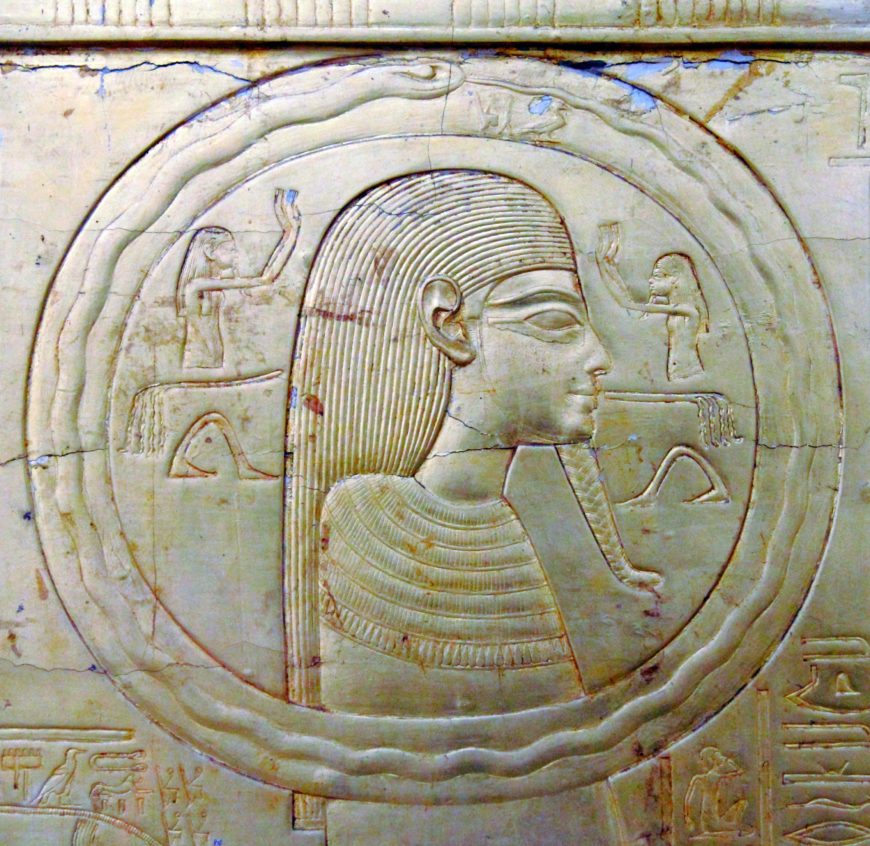
As decades passed, the sheer longevity of Ramses II's rule became a theological phenomenon in its own right. In ancient Egyptian kingship tradition, a pharaoh celebrated his first Heb-Sed (Sed Jubilee Festival) — an elaborate ritual of physical regeneration and cosmic renewal closely tied to New Kingdom solar-eternity concepts like the Ouroboros symbol — after 30 years on the throne, and subsequently every two to three years thereafter. Most pharaohs never survived to reach their thirtieth year; Ramses II celebrated an extraordinary 13 or 14 Sed festivals over his 66-year reign, organized largely during their middle years by his scholarly fourth son, Prince Khaemwaset. By the final decades of his life, almost no living Egyptian could remember a time when anyone other than Ramses II sat upon the Horus Throne.

The Battle of Kadesh: Ramses II Against the Hittites

No military event in ancient Egyptian history was publicized as relentlessly as the Battle of Kadesh, fought in late May of Ramses II's fifth regnal year (c. 1274 BCE). For generations, Egypt and the Hittite Empire had vied for hegemony over the wealthy city-states of the northern Levant — particularly the coastal kingdom of Amurru and the fortified city of Kadesh (modern Tell Nebi Mend in western Syria). Situated on a strategic mound along the Orontes River near the Homs Gap, Kadesh controlled the vital trade and military crossroads connecting the Mediterranean coast with inland Syria and Mesopotamia.

The March of the Four Divisions and the Hittite Ambush

In his fourth regnal year, Ramses II had marched north through Canaan and forced Benteshina, ruler of Amurru, to switch allegiance from Hatti back to Egypt. Determined to crush this Egyptian advance and reclaim Kadesh once and for all, Ramses II mustered an army of roughly 20,000 soldiers in the spring of Year 5, organized into four main corps of approximately 5,000 men each (roughly 4,000 infantry and 1,000 chariot crewmen stationed across 500 two-man light war chariots), named after Egypt's four supreme state deities:

  • The Division of Amun: Commanded personally by Pharaoh Ramses II in the vanguard.
  • The Division of Ra: Marching several kilometers behind the Amun division.
  • The Division of Ptah: Moving further south toward the fords of the Orontes River.
  • The Division of Sutekh (Set): Forming the rear guard along the southern approach road.
  • The Ne'arin Auxiliary Force: An elite task force of Canaanite or Egyptian coastal troops advancing separately from the Mediterranean coast through the land of Amurru toward Kadesh.

As the Egyptian vanguard approached the heights south of Kadesh, Ramses II's scouts captured two local Shasu bedouin nomads who claimed to be defectors from the Hittite army. Under interrogation, the two men assured the pharaoh that the Hittite Great King, Muwatalli II, was terrified of Egypt's advance and had retreated nearly 200 kilometers north to the land of Aleppo. Satisfied by this report, Ramses II raced ahead across the Orontes River with only the Amun division and his household bodyguard, pitching his royal camp northwest of Kadesh while the Ra, Ptah, and Set divisions remained strung out miles to the south.

The Shasu nomads were, in fact, double agents dispatched directly by Muwatalli II. Only when Egyptian scouts captured two actual Hittite reconnaissance soldiers and forced them to confess did Ramses learn the truth: Muwatalli II and a massive coalition army of up to 37,000 infantry and 2,500 to 3,500 heavy three-man war chariots were concealed immediately behind the mound of Old Kadesh, ready to strike.

Ancient Egyptian sunk-relief carving depicting King Ramses II charging in his war chariot during the Battle of Kadesh
Royal war reliefs depicting Pharaoh Ramses II charging in his chariot — a visual motif inscribed across Abu Simbel, the Ramesseum, Luxor, Karnak, and Abydos.

Chariot Warfare, Royal Propaganda vs. Modern Historical Consensus

Before the Egyptian divisions could close ranks, a detachment of 2,500 Hittite chariots forded the Orontes River and smashed into the flank of the marching Ra division, splitting it in two and sending panicked survivors fleeing northward right into Ramses II's unfinished royal camp. Surrounded and facing catastrophic defeat, Ramses II mounted his chariot drawn by his famous warhorses ("Victory in Thebes" and "Mut Is Contented"), rallied his personal Sherden bodyguards, and launched desperate counter-charges against the Hittite chariot wings that had paused to plunder the Egyptian baggage train.

Crucially, two battlefield factors saved the Egyptian king: first, the nimble two-man Egyptian chariots (carrying a driver and an archer armed with a composite bow) proved faster and more maneuverable at close quarters than the heavier three-man Hittite spear chariots; second, the elite Ne'arin auxiliary force arrived unexpectedly from the coast of Amurru at the exact moment the Hittites were disorganized inside the camp, driving Muwatalli's charioteers back toward the Orontes River as the Ptah division finally reached the field from the south.

When evaluating the outcome of the Battle of Kadesh, historians draw a sharp distinction between royal Egyptian inscriptions and objective strategic reality:

  • Ramses II's Royal Account: Upon returning to Egypt, the pharaoh commissioned two complementary literary compositions — the lyrical Poem of Pentaur and the pictorial military report known as the Bulletin — and had them carved across at least eight major temple walls at Abu Simbel, the Ramesseum, Luxor Temple, Karnak, and Abydos. In these texts, Ramses portrays himself abandoned by his fearful army, calling upon his divine father Amun-Ra, and single-handedly routing thousands of Hittite chariots before graciously accepting a truce plea from Muwatalli II.
  • Modern Historical & Hittite Interpretation: Clay tablets excavated from the Hittite royal archives at Hattusa (modern Boğazköy, Turkey) reveal a very different aftermath. While Ramses II achieved a genuine tactical rescue by preventing the total destruction of his army and bringing his divisions home intact, the battle ended in a tactical stalemate and a strategic victory for the Hittites. Ramses II failed to capture Kadesh, retreated southward to Damascus, and watched Muwatalli II immediately march south into the Egyptian province of Upi and re-establish Hittite control over Amurru.

The Treaty of Kadesh: One of History's Earliest Surviving Peace Agreements

The stalemate at Kadesh did not end the conflict immediately. In his seventh through tenth regnal years, Pharaoh Ramses II launched further military campaigns into Moab, Edom, Canaan, and northern Syria — capturing fortresses such as Dapur and Tunip — only to see those distant garrisons revert to Hittite influence once the Egyptian army marched home for the winter. By his twentieth year on the throne, however, the geopolitical chessboard of the Near East had shifted dramatically for both empires.

To the east, the aggressive Middle Assyrian Empire under King Adad-nirari I and Shalmaneser I had conquered the buffers of Mitanni (Hanigalbat), placing Assyrian armies directly on the Euphrates frontier of the Hittite Empire. Simultaneously, inside Hatti, Muwatalli II had died, and his brother Hattusili III had deposed his nephew Mursili III (Urhi-Teshub) to seize the Hittite throne. Because the deposed nephew eventually fled to Ramses II's court in Egypt, Hattusili III urgently needed international recognition of his legitimacy and peace on his southern Syrian border so he could focus on the Assyrian threat.

Terracotta cuneiform tablet of the Treaty of Kadesh signed between Pharaoh Ramses II of Egypt and Hittite King Hattusili III
The Akkadian cuneiform clay tablet of the Treaty of Kadesh (c. 1259 BCE) excavated at the Hittite capital of Hattusa, matching the hieroglyphic inscriptions carved by Ramses II at Karnak.

Why the Egyptian-Hittite Treaty (c. 1259 BCE) Is Historically Unique

In Year 21 of Ramses II's reign (c. 1259 BCE), fifteen years after the Battle of Kadesh, royal envoys from Hatti arrived at the Delta capital of Pi-Ramesses bearing a solid silver tablet inscribed with a formal peace treaty between Ramses II, Great King of Egypt, and Hattusili III, Great King of Hatti. While popular articles frequently call this the "first peace treaty in history" without qualification, historians note that older Mesopotamian diplomatic agreements (such as the 25th-century BCE treaty between Lagash and Umma or the 24th-century BCE Ebla–Abarsal treaty) predate it. What makes the Treaty of Kadesh truly landmark is that it is the earliest surviving international peace treaty in world history where the original texts of both signatory states have been discovered and compared side by side:

  • The Hittite Version: Written in Akkadian (the diplomatic lingua franca of the Bronze Age) using cuneiform script on baked clay tablets discovered in 1906 by Hugo Winckler at the royal archives of Hattusa (Boğazköy) in Turkey; now displayed at the Istanbul Archaeology Museums, with a monumental replica hanging at the United Nations Headquarters in New York.
  • The Egyptian Version: Translated from the Hittite silver tablet into Egyptian hieroglyphs and carved on the walls of the Precinct of Amun-Ra at Karnak Temple and the Ramesseum in Luxor.

Main Provisions and Dynastic Marriage

Aside from a face-saving preamble in which each monarch tells his domestic audience that the rival king sued for peace first, the eighteen clauses of the treaty are strictly symmetrical and egalitarian. The agreement established:

  1. Permanent Cessation of Hostilities: A solemn oath that neither Egypt nor Hatti would ever again invade the other's territory to seize land, implicitly fixing the border along northern Canaan and leaving Kadesh and Amurru within the Hittite sphere.
  2. A Mutual Defense Pact: An explicit military alliance pledging that if a foreign power attacked either Egypt or Hatti — or if internal subjects rebelled against either king — the other monarch would dispatch infantry and chariot forces to aid his "brother."
  3. Extradition with Humanitarian Protections: The first known international extradition clause, requiring both states to return noble political fugitives and skilled runaway artisans, while explicitly stipulating that extradited individuals and their families must not have their homes destroyed, their eyes or ears mutilated, or their lives taken.
  4. Divine Witnesses: The treaty concludes by invoking a thousand gods and goddesses of both Hatti and Egypt as cosmic guarantors of the oath.

The peace held unbroken for the remaining 46 years of Ramses II's reign. In Year 34 (c. 1246 BCE), the alliance was sealed by a grand dynastic marriage when Hattusili III and his powerful queen, Puduhepa, sent their eldest daughter across the snow-covered passes of Anatolia and Syria with a vast dowry to marry Ramses II at Pi-Ramesses, where she received the Egyptian royal name Maathorneferure ("She Who Sees Horus, the Invisible Splendor of Ra").

The Greatest Monuments of Egypt Ramses the Great

Archaeologists estimate that nearly half of all surviving temples in Egypt bear the cartouche of Egypt Ramses the Great. However, a careful traveler and historian must distinguish between three categories of Ramesside monuments: sanctuaries newly founded and constructed by Ramses II (such as Abu Simbel, the Ramesseum, Pi-Ramesses, and his Nubian temples), older dynastic temples that he expanded or completed (such as Karnak and Luxor Temple), and Middle or Eighteenth Dynasty statues that his stonemasons usurped and re-inscribed by carving his cartouches up to several inches deep into the stone so no successor could chisel them out. Below are the six monumental sites that define his architectural legacy.

1. The Abu Simbel Temples – Aswan (Lower Nubia)

Carved directly into two living sandstone cliffs overlooking the western bank of the Nile in Lower Nubia (roughly 280 kilometers south of Aswan) between approximately 1264 and 1244 BCE, the twin rock-cut sanctuaries (speoi) of Abu Simbel represent the ultimate fusion of religious devotion and imperial statecraft. Today, history enthusiasts can approach these cliffside colossi either by air/road or from the water on a multi-day Lake Nasser cruise from Aswan to Abu Simbel, witnessing the exact panoramic vista designed to awe ancient Nubian trade flotillas with the godlike power of the Egyptian pharaoh:

  • The Great Temple of Ramses II: Rising 33 meters high and 38 meters wide, the pylon-shaped cliff facade is dominated by four colossal seated statues of Ramses II, each towering approximately 20 meters (65 feet) high from throne base to the tip of the Double Crown of Upper and Lower Egypt. Smaller statues of his mother Queen Tuya, his Great Royal Wife Nefertari, and his older royal sons and daughters stand beside the king's massive calves. Extending 60 meters deep into the mountain, the First Hypostyle Hall features eight 10-meter Osiride pillars showing Ramses II in the form of Osiris, flanked by sweeping wall reliefs of the Battle of Kadesh (on the north wall) and campaigns in Nubia and Libya (on the south wall). In the innermost sanctuary sit four rock-cut cult statues: Ptah of Memphis, Amun-Ra of Thebes, the deified living Ramses II, and Ra-Horakhty of Heliopolis.
  • The Small Temple of Hathor and Queen Nefertari: Excavated about 100 meters northeast of the Great Temple at the sacred cliff of Ibshek, this temple is dedicated to the goddess Hathor and the deified Queen Nefertari. Its facade features six 10-meter-tall recessed standing statues — four of Ramses II and two of Nefertari wearing the horned solar disk and plumes of Hathor. Remarkably, Nefertari's statues are carved at the exact same monumental height as the pharaoh's, an honor virtually unprecedented for an Egyptian queen consort.
  • The Biannual Solar Alignment Phenomenon: Ancient Egyptian astronomer-architects oriented the eastern axis of the Great Temple so that twice a year — today occurring on February 22 and October 22 (widely interpreted by Egyptologists as marking the season of the king's coronation/agricultural emergence and birthday) — the first rays of the rising sun travel 60 meters through the temple doorways to illuminate the faces of Amun-Ra, Ramses II, and Ra-Horakhty for roughly 20 minutes, while leaving Ptah, god of the underworld and primordial darkness, perpetually in shadow.
  • The 1964–1968 UNESCO Rescue Operation: When the construction of the Aswan High Dam threatened to submerge Abu Simbel beneath the rising waters of Lake Nasser, UNESCO and the Egyptian government led an international salvage campaign costing approximately $40 million. Between 1964 and 1968, an international engineering team cut both sandstone temples into 1,036 numbered blocks weighing 20 to 30 tons each, lifted them 65 meters higher and 200 meters back from the river, and reassembled them inside two immense load-bearing reinforced concrete domes hidden beneath artificial hills — shifting the solar alignment by just one calendar day from February 21/October 21 to February 22/October 22.
Featured Nubian Expedition Lake Nasser Cruise from Aswan to Abu Simbel Temples

Lake Nasser Cruise from Aswan to Abu Simbel

Sail through the tranquil desert waters of Lower Nubia to inspect Ramses II's remote rock-cut sanctuaries — including Beit el-Wali, Wadi el-Seboua, and Derr — before anchoring directly beneath the illuminated twin temples of Abu Simbel.

Explore Lake Nasser Cruise

2. The Ramesseum – Luxor West Bank

Known to the ancient Egyptians as the "House of Millions of Years of Usermaatre Setepenre Which Unites with Thebes in the Domain of Amun," the Ramesseum is the grand mortuary temple built by Ramses II on the edge of the fertile floodplain on the West Bank of Luxor. In New Kingdom theology, a pharaoh's rock-cut tomb in the Valley of the Kings remained sealed and hidden after burial, whereas his mortuary temple served as the active, public center of his eternal royal cult coupled with the worship of Amun-Ra.

Taking more than twenty years to construct, the Ramesseum covered a vast rectangular precinct measuring roughly 270 by 180 meters, enclosed by monumental mudbrick vaulted storerooms, administrative offices, workshops, and a royal scribal school (Per-Ankh, or "House of Life") where thousands of student limestone ostraca have been unearthed. Many travelers first appreciate the monumental layout of these mudbrick vaults and sandstone courts from the sky during a sunrise hot air balloon ride over Luxor before descending to explore the temple's three unforgettable features on foot:

  • The Fallen Colossus of "Ozymandias": In the First Courtyard lies the shattered upper torso, shoulder, and pedestal of what was once the largest monolithic royal statue ever transported in pharaonic Egypt. Quarried from a single piece of Aswan red granite over 200 kilometers away, the enthroned colossus originally stood approximately 17 to 19 meters (56 to 62 feet) tall and weighed an estimated 1,000 tons. In the first century BCE, the Greek historian Diodorus Siculus recorded the monument's paraphrase inscription — "King of Kings am I, Ozymandias. If anyone would know how great I am and where I lie, let him surpass one of my works" — which directly inspired Percy Bysshe Shelley's famous 1818 sonnet "Ozymandias." Another massive granite head from the Ramesseum (known as the "Younger Memnon") was removed by Giovanni Belzoni in 1816 and now stands in the British Museum.
  • The First & Second Pylons: Deeply carved sunk reliefs on the stone pylons preserve some of the clearest surviving depictions of the Egyptian camp at Kadesh, chariot charges, and the siege of the Hittite fortress of Dapur.
  • The 48-Column Hypostyle Hall: Beyond the Osiride pillars of the Second Court stands a forest of 39 surviving sandstone columns (out of an original 48) topped with open papyrus-umbel and closed-bud capitals. Look upward in the central nave to spot sections of the original astronomical ceiling charting the months of the Egyptian calendar and the constellations of the northern sky, while the rear wall preserves scenes of the sacred barque procession and the king's sons.
Osiride pillars and fallen granite colossus at the Ramesseum mortuary temple of Egypt Ramses the Great on Luxor's West Bank
Osiride pillars of the second courtyard and fragments of the fallen "Ozymandias" colossus at the Ramesseum, the mortuary temple of Ramses II on Luxor's West Bank.
Luxor West Bank Aerial Experience Sunrise Hot Air Balloon Ride Over the Ramesseum and Luxor West Bank

Sunrise Hot Air Balloon Ride Over Luxor's West Bank

Float silently above the Ramesseum mortuary temple, its vast mudbrick royal granaries, the Colossi of Memnon, and the Theban necropolis at dawn as golden sunlight illuminates the West Bank of ancient Thebes.

Book Luxor Hot Air Balloon Tour

3. Karnak Temple Complex – Luxor East Bank

At the vast Precinct of Amun-Ra at Karnak — the supreme state sanctuary of the New Kingdom — Ramses II did not found the temple from scratch, as construction had begun more than 700 years earlier in the Middle Kingdom. Instead, his reign left a decisive architectural and epigraphic mark on the heart of the complex:

  • Completing the Great Hypostyle Hall: Spanning 5,000 square meters and supported by 134 towering sandstone columns (including 12 central columns rising 21 meters high with capitals wide enough to hold 50 standing people), the Great Hypostyle Hall was structurally erected by his father, Seti I. When Seti I died, only the northern half of the hall had been decorated. Ramses II completed the decoration of the entire southern wing and the massive central columns. Egyptologists point out a striking stylistic contrast right inside the hall: Seti I's artisans carved delicate, high-precision raised relief in the northern wing, whereas Ramses II ordered his sculptors to switch to rapid, deeply incised sunk relief in the southern wing (and even usurped several of his father's reliefs along the main axis) so the work could be finished quickly and catch dramatic shadows.
  • The Hittite Peace Treaty Wall & Battle Reliefs: On the exterior southern wall of the Great Hypostyle Hall (facing the Cachette Court), visitors can examine the monumental hieroglyphic inscription of the Year 21 Treaty of Kadesh alongside dynamic scenes of Ramses II's Canaanite and Syrian campaigns.
  • Colossi & Eastern Shrine: In front of the Second Pylon stands a famous pink granite colossus of Ramses II with his daughter-wife Princess Bintanath standing gracefully at his knees, while at the far eastern end of the Karnak axis, Ramses built the "Temple of Ramesses-Meryamun Who Hears Prayers" for ordinary citizens who were barred from entering the inner sanctuary of Amun.

4. Luxor Temple – Luxor East Bank

Located three kilometers south of Karnak and linked to it by the ceremonial Avenue of Sphinxes, Luxor Temple (Ipet-Resyt, the "Southern Sanctuary") was originally built in the Eighteenth Dynasty by Amenhotep III and Tutankhamun as the focal point of the annual Opet Festival, which renewed the divine royal ka (vital spirit) of the living pharaoh. Recognizing the political power of the Opet rituals, Ramses II transformed the northern entrance of Luxor Temple into a monumental tribute to his own reign — making a combined Karnak and Luxor Temples East Bank tour one of the richest architectural experiences in Upper Egypt:

  • The Monumental First Pylon & Battle of Kadesh Facade: Ramses II constructed the 24-meter-high entrance pylon and covered its exterior faces with sweeping reliefs of his royal camp and chariot charge at the Battle of Kadesh.
  • Colossal Statues and Twin Granite Obelisks: Before the First Pylon, Ramses placed six colossal statues of himself (two seated and four standing, of which two massive seated black granite colossi and one standing statue remain intact on the facade) and erected two towering pink granite obelisks covered in deep hieroglyphs. The eastern obelisk (25 meters tall) still stands in place today; its western twin (23 meters tall) was gifted by Ottoman ruler Muhammad Ali Pasha to France in the 1830s and has stood in the center of the Place de la Concorde in Paris since 1836.
  • The Peristyle Court of Ramses II: Behind the First Pylon, Ramses added a grand open courtyard surrounded by 74 papyrus-bud columns and 14 colossal standing statues of the king striding between the columns. Experienced guides point out that Ramses II's architects built this courtyard at a noticeable eastward axial bend relative to Amenhotep III's older colonnade — a deliberate engineering choice made both to align the new entrance with the processional avenue from Karnak and to preserve an existing triple barque shrine built earlier by Hatshepsut and Thutmose III, which Ramses renovated and incorporated into the northwestern corner of his court.
Red granite obelisk and colossal seated statues of Pharaoh Ramses II in front of the First Pylon at Luxor Temple
The monumental First Pylon, red granite obelisk, and seated colossi added by Pharaoh Ramses II to the northern entrance of Luxor Temple.
Luxor East Bank Masterpieces Karnak and Luxor Temples Luxor East Bank Private Tour

Karnak & Luxor Temples Private East Bank Tour

Walk beneath the 134 columns of Karnak's Great Hypostyle Hall, inspect the hieroglyphic Treaty of Kadesh wall, and stand before Ramses II's granite obelisk and seated colossi at Luxor Temple with a licensed Egyptologist.

View Luxor East Bank Tour

5. Pi-Ramesses – The Ancient Imperial Capital in the Nile Delta

While the sandstone temples of Upper Egypt survived in the dry southern desert, the political and military nerve center of Ramses II's empire stood in the lush northeastern Nile Delta at Pi-Ramesses, located around the modern village of Qantir (adjacent to Tell el-Dab'a, ancient Avaris) in Egypt's Sharqia Governorate, roughly 100 kilometers northeast of Cairo.

Situated along the Pelusiac branch of the Nile with direct waterways to the Mediterranean Sea and overland access to the "Ways of Horus" military road across northern Sinai, Pi-Ramesses grew into one of the largest metropolises of the ancient world, covering approximately 18 square kilometers (nearly 7 square miles) and housing an estimated 250,000 to 300,000 residents. Long-term German-Egyptian excavations led by Edgar Pusch and Manfred Bietak have revealed that the city contained:

  • Four Massive Temple Precincts: Oriented toward the cardinal directions and dedicated to Amun-Ra (west), Sutekh/Set (south), Wadjet and Astarte (north), and Ra-Horakhty (east).
  • A Military Industrial Complex: Vast multi-furnace bronze foundries capable of casting thousands of arrowheads, spear tips, and khopesh swords simultaneously, alongside chariot assembly workshops, shield manufactories, and royal stables spanning 17,000 square meters that housed up to 460 warhorses at a time.
  • Lavish Royal Palaces & Glazed Faience Studios: Palaces decorated with polychrome glazed faience floor tiles depicting bound foreign captives beneath the pharaoh's sandals, private canals, botanical gardens, and a royal menagerie where bones of lions, elephants, and giraffes have been excavated.

What Remains of Pi-Ramesses Today? Around 1070 BCE, near the close of the Twentieth Dynasty, the Pelusiac branch of the Nile silted up and shifted its course westward, leaving Pi-Ramesses landlocked without fresh water or harbor access. Rather than abandoning its precious stonework in the Delta mud, the pharaohs of the Twenty-First Dynasty dismantled Pi-Ramesses wholesale — hauling its granite obelisks, columns, sphinxes, and colossal statues of Ramses II roughly 20 kilometers north to build their new capital at Tanis (San el-Hagar). Consequently, Qantir today is primarily a subterranean archaeological landscape of cultivated fields (where visitors see only modest granite base fragments), whereas the relocated obelisks and colossi originally carved for Pi-Ramesses lie scattered across the monumental ruins of Tanis and in the Egyptian Museum in Cairo.

6. Abydos and the Other Nubian Temples of Ramses II

Beyond Abu Simbel, Ramses II constructed a strategic chain of five additional rock-cut and half-freestanding (hemispeos) temples across Lower Nubia between the First and Second Cataracts of the Nile to administer Nubian gold production, tax river commerce, and promote the state cult of the living king:

  1. Temple of Beit el-Wali: His earliest Nubian rock temple, relocated to New Kalabsha Island just south of the Aswan High Dam — a site easily paired with a private Aswan High Dam and Philae Temple tour — famous for its painted reliefs of Nubian tribute (ivory, gold, panther skins, and a giraffe).
  2. Temple of Wadi el-Seboua ("Valley of the Lions"): Located 150 kilometers south of Aswan on Lake Nasser, approached by a dramatic avenue of human-headed and falcon-headed sphinxes wearing the Double Crown, later converted in part into a Christian church with a fresco of St. Peter painted between figures of Ramses II.
  3. Rock-Cut Temple of Derr: Built on the eastern bank of the Nile in Nubia (and relocated near Amada during the UNESCO campaign), dedicated to the solar god Ra-Horakhty.
  4. Temple of Gerf Hussein: Dedicated to Ptah, Ptah-Tatenen, and Hathor; its freestanding forecourt and colossal Osiride statues were rescued before Lake Nasser flooded the inner rock cave, and key sections now stand at the New Kalabsha open-air site and the Nubian Museum in Aswan.
  5. Temple of Aksha (Serra West): Built near the modern Sudanese border and dedicated directly to the "Living Image of Ramesses II in Nubia"; key inscribed reliefs were rescued and moved to the Sudan National Museum in Khartoum.

Further north in Upper Egypt at the sacred Osirian city of Abydos (Sohag Governorate), Ramses II both completed the outer courts of his father Seti I's Great Temple (where the famous Abydos King List shows young Prince Ramses standing beside Seti I offering incense to the cartouches of 76 ancestral pharaohs) and constructed his own separate Temple of Ramses II 300 meters to the northwest — a jewel box of fine white limestone carved with vividly preserved polychrome reliefs of the Battle of Kadesh that travelers can visit on a dedicated Dendera and Abydos tour.

Abydos & Dendera Excursion Dendera and Abydos Temple of Ramses II and Seti I Tour

Dendera & Abydos Private Archaeological Tour

Examine the vibrant painted limestone reliefs of the Temple of Ramses II and the famous Abydos King List inside the Great Temple of Seti I, paired with the astronomical ceiling of Dendera.

View Dendera & Abydos Tour
Aswan & UNESCO Heritage Aswan High Dam and Philae Temple Private Tour

Aswan High Dam & Philae Temple Private Tour

Stand atop the engineering marvel of the Aswan High Dam overlooking Lake Nasser — the catalyst for the UNESCO Nubian temple rescue — and sail to the island sanctuary of Philae.

View Aswan & Philae Tour

Ramses the Great and Queen Nefertari: Historical Evidence vs. Romantic Legend

Among all the royal consorts of ancient Egypt, few hold as prominent a place in both archaeological inscriptions and popular imagination as Queen Nefertari (Nefertari Meritmut — "Beautiful Companion, Beloved of Mut"). Married to Ramses before he ascended the throne in 1279 BCE, Nefertari served as his primary Great Royal Wife (Hemet Nesu Weret) throughout the first twenty-four years of his reign. While her exact family origins remain unconfirmed, a knob bearing the cartouche of the Eighteenth Dynasty pharaoh Ay found in her tomb has led several Egyptologists to suggest she may have belonged to the aristocratic Theban elite, helping cement the Delta-born Ramesside dynasty's ties to Upper Egypt.

Diplomatic Status, Royal Titles & the Small Temple at Abu Simbel

Modern documentaries often reduce Ramses II and Nefertari to a simple fairy-tale romance, yet the surviving archaeological record reveals that Nefertari was a highly educated political partner and religious officiant of immense influence. On temple walls across Egypt, she bears an extraordinary sequence of titles: "Lady of the Two Lands," "Mistress of Upper and Lower Egypt," "Great of Praises," "Sweet of Love," and uniquely, on the facade of her temple at Abu Simbel, "She for Whom the Sun Does Shine."

More telling than poetic epithets is hard diplomatic evidence from the Hittite royal archives at Hattusa: after the signing of the Treaty of Kadesh in Year 21, Queen Nefertari (written in Akkadian cuneiform as Naptera) corresponded directly in her own name with the Hittite Queen Puduhepa, exchanging diplomatic letters of peace alongside luxury gifts of golden jewelry and fine royal linen. Shortly after traveling south with Ramses II in Year 24 (c. 1255 BCE) to inaugurate the twin temples of Abu Simbel — where she appears at the same 10-meter colossal height as the king — Nefertari disappears from the historical record, having died around Year 24 or 25 at roughly forty to fifty years of age.

Painted wall relief of Great Royal Wife Queen Nefertari in tomb QV66 in the Valley of the Queens, Luxor
Exquisite polychrome painted reliefs inside Tomb QV66 in the Valley of the Queens, built by Ramses II for his principal consort, Queen Nefertari.

Tomb QV66 in the Valley of the Queens: The "Sistine Chapel" of Ancient Egypt

Ramses II laid Nefertari to rest in Tomb QV66 in the Valley of the Queens (Ta-Set-Neferu, the "Place of Beauty") on the West Bank of Luxor. Discovered in 1904 by the Italian archaeologist Ernesto Schiaparelli and meticulously conserved by the Getty Conservation Institute and Egyptian antiquities authorities, QV66 is universally regarded by art historians as the finest surviving painted tomb of the New Kingdom.

Spanning roughly 520 square meters of plaster-coated limestone walls and ceilings painted with lapis-blue vaults scattered with five-pointed golden stars, the tomb illustrates Chapters 17, 94, 144, 146, and 148 of the Book of the Dead. Rather than showing the pharaoh or scenes of earthly daily life, QV66 focuses exclusively on Nefertari's personal spiritual journey through the gates of the underworld (Duat): she plays the board game Senet in a pleated white linen gown, receives the breath of life from Isis and Hathor, and transforms into a radiant Osiris justified before the tribunal of eternity. Because the gypsum plaster inside QV66 is exceptionally sensitive to human breath and humidity, the Egyptian Ministry of Tourism and Antiquities strictly limits daily visitor numbers (and periodically closes the tomb for microclimate stabilization).

Ramses II's Wives, Children, and Dynastic Succession

In ancient Egyptian statecraft, a large royal family was not merely a symbol of virility; it was a cornerstone of administrative stability, providing loyal royal princes to serve as high priests, army generals, and governors, while cementing diplomatic alliances with foreign powers. Over his ninety-year life, Pharaoh Ramses II maintained two primary queens during his early decades, elevated several royal daughters after their mothers' deaths, and welcomed multiple foreign princesses into the royal harem.

Principal Queens and Consorts

  • Queen Nefertari: Principal Great Royal Wife until her death around Year 24; mother of the firstborn crown prince Amun-her-khepeshef, Prince Pareherwenemef, Prince Meryre, Prince Meryatum (High Priest of Ra at Heliopolis), and the princesses Meritamen and Henuttawy.
  • Queen Isetnofret (Isisnofret): Married to Ramses II before his accession alongside Nefertari, Isetnofret succeeded Nefertari as chief Great Royal Wife until her own death around Year 34. Though less visible on early state monuments than Nefertari, Isetnofret's children shaped the political future of Egypt: she was the mother of Princess-Queen Bintanath, Prince Ramesses (crown prince from Year 25 to Year 50), the revered scholar-prince Khaemwaset, and the thirteenth son, Merneptah, who eventually inherited the throne.
  • Daughter-Queens (Bintanath, Meritamen & Nebettawy): Following the deaths of Nefertari and Isetnofret, Ramses II elevated his eldest daughters — Bintanath, Meritamen (whose magnificent white limestone "White Queen" bust was found by Flinders Petrie in Luxor), and Nebettawy — to the ceremonial liturgical role of Great Royal Wife, alongside Queen Henutmire (likely his younger sister or daughter).
  • Foreign Diplomatic Consorts: Including the Hittite princess Maathorneferure (married in Year 34), a second Hittite princess sent around Year 40, and Babylonian and Syrian noblewomen residing at the palace of Pi-Ramesses and the lakeside royal harem complex of Mer-wer (Gurob) at the entrance to the Fayoum oasis.

80 to 100+ Royal Children, Prince Khaemwaset & Tomb KV5

How many children did Ramses II actually father? Rather than guessing, Egyptologists rely on formal monumental processions of royal princes and princesses carved in strict birth order at the Ramesseum, Luxor Temple, Wadi el-Seboua, and the Temple of Abydos. These lists document by name between 48 and 50 royal sons and between 40 and 53 royal daughters — yielding a historically attested total of roughly 88 to more than 100 children.

Two developments involving Ramses II's sons stand out in archaeological history:

  1. Prince Khaemwaset, the "First Egyptologist": Ramses II's fourth son (and second son by Queen Isetnofret), Khaemwaset served as High Priest of Ptah at Memphis and chief organizer of his father's Sed festivals until his death in Year 55. Deeply fascinated by Egypt's ancient past, Khaemwaset inspected, identified, and restored decaying Old Kingdom pyramids and sun temples at Saqqara, Abusir, and Giza — carving restoration inscriptions on their casing stones that preserved the names of kings who had ruled more than a thousand years before him, while also excavating the monumental subterranean burial galleries for the sacred Apis bulls at the Serapeum of Saqqara.
  2. Tomb KV5 in the Valley of the Kings: Located near the entrance of the Valley of the Kings across from Ramses II's own tomb (KV7), Tomb KV5 was long dismissed by early explorers as a rubble-filled minor shaft. Beginning in 1995, the Theban Mapping Project led by Dr. Kent Weeks excavated past the outer chambers to reveal the largest rock-cut tomb ever discovered in the Valley of the Kings — a sprawling subterranean complex of more than 130 corridors and pillared chambers carved specifically as a collective family mausoleum for the many sons of Ramses II who predeceased their long-lived father (including Amun-her-khepeshef, Ramesses, and Seti).

Because Ramses II lived to approximately age 90, he outlived his first twelve sons one after another. When he finally died in 1213 BCE, the throne passed to his thirteenth son, Merneptah, who was already in his sixties when his own ten-year reign began.

The Mummy of Ramses II: Discovery, Restoration, and Its Current Location

Few rulers from antiquity allow modern visitors to look directly upon their physical face three thousand years after death. The survival of the Ramses II mummy is one of the most extraordinary stories in Egyptian archaeology — involving ancient floods, priestly rescue operations, nineteenth-century tomb hunters, twentieth-century forensic science in Paris, and a twenty-first-century state procession through Cairo.

From Tomb KV7 to the Deir el-Bahari Royal Cache (TT320)

When Ramses II died in his 67th regnal year (c. 1213 BCE), his body was embalmed over seventy days and laid to rest inside a grand eight-chambered rock-cut tomb, KV7, in the main wadi of the Valley of the Kings on Luxor's West Bank. However, KV7 had been excavated in a low-lying geological fault zone of unstable shale; over the centuries, rare desert cloudbursts sent catastrophic flash floods roaring through the tomb, cracking the limestone pillars and filling the burial chamber with compacted mud (modern Franco-Egyptian archaeological missions led by Christian Leblanc have worked for decades to excavate and stabilize KV7, which remains closed to regular tourists).

Even worse than flash floods was the collapse of state security at the end of the Twentieth Dynasty. Around 1090–1070 BCE, organized bands of tomb robbers broke into KV7 and stripped the gold, jewelry, and outer sarcophagi from the king's burial. To save the physical body of their revered ancestor, the High Priests of Amun of the Twenty-First Dynasty intervened. Hieratic dockets written in black ink directly onto the linen wrappings and replacement cedarwood coffin of Ramses II record each stage of his ancient rescue:

  • First, High Priest Herihor and later High Priest Pinedjem I re-wrapped the damaged mummy in fresh linen and moved it into the safer adjacent tomb of his father, Seti I (KV17).
  • Later, in Year 10 of Pharaoh Siamun (c. 969 BCE), High Priest Pinedjem II moved both Ramses II and Seti I out of the Valley of the Kings altogether, carrying them secretly over the Theban cliffs to a hidden family shaft tomb — TT320 (also known as DB320) — tucked into a rocky cleft south of Hatshepsut's temple at Deir el-Bahari, where more than forty royal mummies of the New Kingdom were concealed together.
Cedarwood royal coffin lid carved with the likeness of Pharaoh Ramses II from the Deir el-Bahari cache in Cairo
The re-inscribed royal cedarwood coffin in which 21st Dynasty priests safeguarded the mummy of Pharaoh Ramses II inside the Deir el-Bahari Royal Cache (TT320).

The 1881 Rediscovery, Physical Health & the 1976 Paris Conservation

There Ramses II rested undisturbed for nearly 2,850 years until members of the local Abd el-Rassul family of Qurna stumbled upon the Deir el-Bahari cache in the 1870s. Alerted by royal artifacts appearing on the antiquities market, Egyptian Antiquities Service officials Émile Brugsch and Ahmed Kamal entered TT320 in July 1881 and transported the royal mummies by steamer down the Nile to Cairo. When Gaston Maspero officially unwrapped the mummy of Ramses II in June 1886, the world saw a tall, striking elderly monarch with an aquiline nose, prominent cheekbones, pierced earlobes, and wavy hair.

By 1975, rising humidity and biological deterioration threatened the mummy's preservation. In September 1976, the Egyptian government flew the mummy of Ramses II aboard a French military aircraft to Paris, where a team of over one hundred scientists at the Musée de l'Homme conducted a full eight-month forensic investigation and sterilized the mummy against nearly 80 species of fungi and insects using controlled Cobalt-60 gamma irradiation before returning him to Cairo in May 1977.

Separating Forensic Fact from Popular Myths:

  • The "Egyptian Passport" Myth: A widely shared internet image claims to show an official green 1970s Egyptian passport listing Ramses II's occupation as "King (Deceased)." In reality, that viral image is a modern graphic artist's mock-up created decades later; while French and Egyptian authorities did issue official civil transit and customs documentation to transport human remains legally as cargo/dignitary heritage, no literal photographic passport book was ever printed by the Egyptian government.
  • Physical Stature, Red Hair & Cause of Death: Forensic X-rays and CT scans (including subsequent studies led by Dr. Sahar Saleem and Dr. Zahi Hawass) confirm that Ramses II stood approximately 1.73 meters (5 feet 8 inches) tall in youth — well above average for ancient Egypt. Microscopic hair analysis by Pierre-Fernand Ceccaldi in Paris demonstrated that Ramses was a natural redhead (a leukocyte pigment trait associated in Egyptian religion with the god Set, patron deity of the Ramesside family in the eastern Delta), and that embalming priests had dyed his age-whitened hair with red henna. In his eighties, the king suffered from severe spinal arthritis (ankylosing spondylitis) that forced him to walk with a hunched neck, advanced arteriosclerosis (hardened arteries), and a massive, untreated dental abscess and jaw infection that likely caused fatal sepsis around age 90.

Visiting the Mummy at NMEC vs. the Colossal Statue at GEM

Travelers planning a trip to Cairo must avoid one of the most common points of confusion found in outdated guidebooks: Ramses II's mummy is no longer in the old Egyptian Museum in Tahrir Square, nor is it at the Grand Egyptian Museum (GEM).

On April 3, 2021, the mummy of Ramses II led the globally televised Pharaohs' Golden Parade across Cairo to its permanent, state-of-the-art home at the National Museum of Egyptian Civilization (NMEC) Royal Mummies Hall in historic Fustat. Designed like a subterranean royal tomb in the Valley of the Kings, the climate-controlled NMEC Royal Mummies Gallery displays Ramses II in a nitrogen-regulated capsule alongside his father Seti I, his mother Queen Tuya, and his son Merneptah.

  • Essential Visitor Tips for NMEC Cairo: Entry to the Royal Mummies Hall is included in the standard general admission ticket at the National Museum of Egyptian Civilization (NMEC) (note that NMEC uses cashless bank card ticketing at the gate). All photography and video recording are strictly prohibited inside the lower Royal Mummies Hall to protect the ancient remains, and visitors should be aware that individual mummies are occasionally rotated off display briefly for routine preventive conservation.
  • Where Is the Famous 83-Ton Statue of Ramses II? While his physical mummy rests at NMEC in Fustat, the iconic 83-ton, 11-meter red granite colossal statue of Ramses II — discovered in 1820 at Memphis and displayed for half a century outside Cairo's main train station (Ramses Square) — now greets visitors inside the soaring Grand Atrium on a Giza Pyramids and Grand Egyptian Museum tour.
Most Popular Cairo & Giza Tour Giza Pyramids and Grand Egyptian Museum Private Tour

Giza Pyramids & Grand Egyptian Museum (GEM) Private Tour

Marvel at the 83-ton red granite colossus of Pharaoh Ramses II in the Grand Atrium and the royal statues lining the Grand Staircase of the Grand Egyptian Museum, combined with the Great Pyramids and Sphinx of Giza.

Book Giza Pyramids & GEM Tour

Why Is Ramses II Known as Ramses the Great?

Did the ancient Egyptians themselves use the English title "the Great"? Not in those exact words — the epithet "Ramses the Great" was popularized by nineteenth-century European Egyptologists such as Jean-François Champollion and Karl Richard Lepsius as they marveled at the ubiquity of his monuments. Yet the modern title reflects a genuine ancient reality: generations of Egyptians who lived after him revered Ramses II simply as Pa-Wer-Aa ("The Great Ancestor") and viewed his 66-year reign as the golden benchmark of pharaonic civilization.

A balanced historical assessment shows that Ramses II earned his enduring reputation through five converging achievements:

  1. Unmatched Architectural Output and Visual Branding: As discussed by National Geographic's historical profile of Ramses II, no pharaoh before or after him commissioned as many colossal statues, obelisks, and temple complexes from the Mediterranean coast to the Fourth Cataract. By instructing his sculptors to carve his cartouches in deep, V-shaped sunk relief — and by boldly re-inscribing older monuments of the Twelfth and Eighteenth Dynasties — he ensured that his name dominated every major religious center in Egypt.
  2. Sixty-Six Years of Continuity and Economic Prosperity: In the ancient world, short reigns and succession crises frequently triggered civil unrest or foreign invasion. By occupying the throne for nearly seven decades and celebrating 13 to 14 Sed jubilees, Ramses II gave Egypt two full generations of internal stability, thriving agricultural yields, and uninterrupted trade across the eastern Mediterranean.
  3. Pragmatic Diplomacy Following Military Realism: While his temple walls boasted of superhuman prowess at Kadesh, the historical greatness of Ramses II lay in his willingness to pivot from costly attrition warfare in Syria to the Year 21 Treaty of Kadesh. That peace freed Egypt from forty-six years of exhausting northern military campaigns and allowed resources to flow into monumental construction.
  4. Lifetime Deification: Whereas most Egyptian kings were worshiped as full gods only after death in their mortuary temples, Ramses II systematically promoted the cult of his own living royal divine image (such as "Ramesses-the-God, Great of Victories") alongside Amun-Ra, Ra-Horakhty, and Ptah during his own lifetime, particularly at Abu Simbel and his Nubian sanctuaries.
  5. Dynastic Reverence Across Later Centuries: During the subsequent Twentieth Dynasty, nine consecutive pharaohs (Ramesses III through Ramesses XI) adopted his birth name — and several even adopted variations of his throne name, Usermaatre — in an effort to channel his prestige as the Late Bronze Age world collapsed around Egypt.

Was Ramses II the Pharaoh of the Biblical Exodus?

One of the most frequent questions travelers ask their Egyptologist guides is whether Pharaoh Ramses II was the ruler who confronted Moses in the biblical Book of Exodus. Because classic Hollywood epics such as Cecil B. DeMille's The Ten Commandments (1956), DreamWorks' The Prince of Egypt (1998), and Ridley Scott's Exodus: Gods and Kings (2014) all cast Ramses II in the role, many visitors assume the identification is an established historical fact. In reality, modern Egyptology and biblical scholarship treat this question with careful nuance, separating religious tradition from verifiable archaeological evidence.

Why Ramses II Became Linked to the Exodus Narrative

The Book of Exodus itself never names the reigning pharaoh, referring to the Egyptian monarch simply by the generic title "Pharaoh." The popular association with Ramses II arose in the nineteenth and early twentieth centuries primarily from Exodus 1:11, which states that the Israelites in Egypt were forced to build the royal store-cities of "Pithom and Raamses."

When archaeologists identified "Pithom" with Tell el-Maskhuta (or Tell el-Retaba) in the Wadi Tumilat and "Raamses" with Ramses II's Delta capital of Pi-Ramesses (which functioned as the royal residence only between roughly 1279 and 1070 BCE), scholars who favored a thirteenth-century BCE timeline for the Exodus reasoned that Seti I may have been the pharaoh of the oppression and Ramses II the pharaoh of the Exodus.

What Archaeological and Historical Evidence Actually Shows

Despite the place-name link to Pi-Ramesses, there is no scholarly consensus identifying Ramses II as the pharaoh of the Exodus, and the Egyptian Ministry of Tourism and Antiquities alongside mainstream academic historians emphasize three critical points of evidence:

  • Absence of Egyptian Textual or Archaeological Confirmation: The Nineteenth Dynasty is one of the most heavily documented periods in Egyptian history, preserving thousands of administrative papyri, frontier military journals (such as Papyrus Anastasi III recording border crossings into Sinai), workman's village records from Deir el-Medina, and royal inscriptions. None of these Egyptian sources record ten nationwide plagues, the mass departure of hundreds of thousands of Semitic laborers, or the drowning of a pharaoh and his chariot corps in the sea.
  • The Forensic Evidence of Ramses II's Mummy: Examination of Ramses II's mummy at the Musée de l'Homme and in Cairo confirms that he did not drown in the prime of life; he died of natural old age and dental infection in his palace at roughly 90 years old in 1213 BCE.
  • Chronological Debates and the Merneptah Stele: Scholars who follow a literal reading of 1 Kings 6:1 (which places the Exodus 480 years before King Solomon's temple, around 1446 BCE) look instead to the Eighteenth Dynasty (under Thutmose III or Amenhotep II), nearly two centuries before Ramses II was born. Meanwhile, the earliest confirmed extrabiblical mention of the name "Israel" anywhere in ancient history appears on the Merneptah Stele (also called the "Israel Stele," Cairo Museum JE 31408), erected in Year 5 of Ramses II's son and successor, Merneptah (c. 1208 BCE) — a landmark granite monument visitors can inspect firsthand in Cairo during a Giza Plateau and Egyptian Museum tour. In a single line at the bottom of a hymn celebrating Libyan victories, Merneptah lists a campaign in Canaan and states: "Israel is laid waste, his seed is not" — using the hieroglyphic determinative for a nomadic or semi-settled tribal people already living in the highlands of Canaan by 1208 BCE, rather than a fortified city-state.

For visitors today, understanding this distinction enriches the travel experience: while the biblical tradition remains a foundational pillar of heritage, archaeologists view the reference to "Raamses" in Exodus as a reflection of Iron Age memories of the famous Delta capital of Pi-Ramesses rather than a direct historical biography of Ramses II.

Where Can You See Ramses the Great's Legacy in Egypt Today?

If you are planning a cultural itinerary to trace Ramses II monuments firsthand, his major surviving works are distributed across three primary geographical hubs: Greater Cairo & Giza, Luxor (Ancient Thebes), and Aswan & Lower Nubia (Lake Nasser). Before locking in your travel dates — especially if you hope to witness the February 22 or October 22 solar alignment at Abu Simbel or enjoy mild winter sunshine in Upper Egypt — consult our seasonal guide to the best time to visit Egypt. Below is a verified destination-by-destination breakdown showing what you will see at each site and how they connect logistically:

Destination HubMonument or Museum SiteWhat You Will See of Ramses the GreatHow It Fits Into Your Itinerary
Cairo (Fustat)National Museum of Egyptian Civilization (NMEC)The actual preserved mummy of Pharaoh Ramses II inside the climate-controlled Royal Mummies Hall, alongside the mummies of his father Seti I, mother Queen Tuya, and son Merneptah.Easily combined on a half-day or full-day Cairo museum and historic district itinerary.
Giza (Greater Cairo)Grand Egyptian Museum (GEM)The famous 83-ton, 11-meter red granite colossus of Ramses II standing in the Grand Atrium (formerly in Ramses Square), plus Ramesside statues along the Grand Staircase.Combined directly on the same day with a private visit to the Giza Pyramids and the Great Sphinx.
Cairo (Tahrir) & MemphisEgyptian Museum (Tahrir) & Memphis Open-Air Museum (Mit Rahina)At Tahrir: the masterpiece Tanis statue of young Ramses II protected by the falcon-god Horon and the Merneptah Stele. At Memphis (24 km south of Cairo): the fallen 10-meter limestone colossus of Ramses II in an indoor viewing gallery and the Alabaster Sphinx.Memphis is combined with the Step Pyramid of Saqqara and the Serapeum; Tahrir is combined with the Giza Plateau.
Luxor (West Bank)The Ramesseum & Valley of the Queens (QV66)At the Ramesseum: Ramses II's mortuary temple, 48-column hypostyle hall, Kadesh reliefs, and the shattered 1,000-ton "Ozymandias" granite colossus. At Valley of the Queens: Queen Nefertari's Tomb (QV66) (subject to special ticket/conservation opening status).Combined on a full-day Luxor West Bank tour with the Valley of the Kings, Temple of Hatshepsut, and Colossi of Memnon.
Luxor (East Bank)Karnak Temple & Luxor TempleAt Karnak: the 134 columns of the Great Hypostyle Hall, the Hittite Peace Treaty wall, and pink granite colossi. At Luxor Temple: the First Pylon, single standing red granite obelisk, seated black granite colossi, and Peristyle Court of Ramses II.Visited together in a single half-day or evening tour on Luxor's East Bank.
Aswan & Abu SimbelGreat & Small Temples of Abu SimbelThe crowning achievement of Ramses II's reign: the four 20-meter rock-cut colossi of the Great Temple and the six 10-meter statues of the Temple of Hathor and Nefertari overlooking Lake Nasser.Requires a dedicated half-day excursion from Aswan (via a 45-minute flight or 3-hour private road transfer) or a multi-day cruise across Lake Nasser.
Lower Nubia (Lake Nasser)Beit el-Wali, Wadi el-Seboua & Temple of DerrRelocated UNESCO Nubian rock temples of Ramses II preserving vibrant painted Nubian tribute scenes (Beit el-Wali) and the sphinx-lined "Valley of the Lions" avenue (Wadi el-Seboua).Beit el-Wali (on New Kalabsha Island) can be visited by boat near the Aswan High Dam; Wadi el-Seboua and Derr are visited on a Lake Nasser cruise to Abu Simbel.

Decode Ramses II's Temples with a Private Licensed Egyptologist

Standing before the walls of Karnak, the Ramesseum, or Abu Simbel is infinitely more rewarding when an expert scholar translates the hieroglyphic cartouches, points out where Ramses II re-inscribed older monuments, and paces your visits to avoid peak midday crowds. Discover how our private Egypt tours bring 3,300 years of Ramesside history to life across Cairo, Luxor, and Aswan.

Plan Your Private Egyptologist-Guided Tour

How to Experience Ramses II's Monuments During an Egypt Tour

Because Ramses the Great built along a 1,100-kilometer corridor of the Nile Valley, seeing his most important sites without exhausting overland transit requires thoughtful itinerary sequencing. To compare route durations, domestic flight connections, and seasonal rates, start with our detailed Egypt tours planning guide, itineraries, and prices alongside our updated breakdown of Egypt trip cost in 2026. Whether you are visiting Egypt for eight days or two weeks, our specialists at Egy Travel Lux recommend structuring your journey around these proven travel blueprints:

1. How Many Days Do You Need? (Proven Ramesside Itinerary Blueprints)

  • The 8-Day "Essential Pharaohs & Nile Cruise" Blueprint (Cairo, Luxor, Aswan & Abu Simbel): Ideal for travelers with roughly one week. Follow our 8-days Cairo, Luxor, and Aswan Nile cruise tour by spending 3 days in Cairo & Giza (visiting the Pyramids, the 83-ton Ramses II statue at GEM, the Memphis Open-Air Museum colossus, and the Royal Mummies Hall at NMEC), flying south to board a luxury Nile cruise between Luxor and Aswan (covering Karnak, Luxor Temple, the Valley of the Kings, and the Ramesseum), and adding a morning excursion to Abu Simbel.
  • The 12-Day "Ultimate Pharaonic & Ramesside Expedition" Blueprint: Designed for history connoisseurs who want unhurried depth across Upper and Lower Egypt. By choosing a comprehensive 12-day Egypt tour package, you can combine Cairo, Giza, Memphis, and Saqqara with an extended Upper Egypt exploration that includes a private excursion north from Luxor to the painted Temple of Seti I and Temple of Ramses II at Abydos, a full West Bank day at the Ramesseum and Valley of the Queens, and dedicated time in Aswan and Abu Simbel.
8-Day Classic Nile & Temples 8 Days Cairo Luxor Aswan Nile Cruise Tour

8 Days Cairo, Luxor & Aswan Nile Cruise Tour

Experience the essentials of Ramses the Great in one seamless week: the Grand Egyptian Museum and Giza Pyramids in Cairo, followed by a 5-star Nile cruise covering Karnak, Luxor Temple, the West Bank, Aswan, and Abu Simbel.

View 8-Day Egypt Tour
12-Day In-Depth Expedition 12 Day Egypt Tour Package Cairo Luxor Aswan and Abu Simbel

12-Day Complete Egypt & Nile Cruise Tour Package

Our flagship multi-city cultural itinerary connecting Cairo, Memphis, Saqqara, Luxor's East and West Banks, Abydos, Aswan, and the rock-cut temples of Abu Simbel with private Egyptologist guiding throughout.

View 12-Day Egypt Package

2. Why Private Custom Pacing Matters for History Lovers

One of the biggest frustrations for history-minded travelers on standard group packages is that mass-market itineraries often skip both the Ramesseum on Luxor's West Bank and the Memphis Open-Air Museum near Saqqara in favor of souvenir workshops, while scheduling Abu Simbel only during the crowded mid-morning tour-bus rush. By traveling on a private tailor-made itinerary:

  • Include the Ramesseum Alongside the Valley of the Kings: Your private driver and Egyptologist can add a dedicated 60-to-90-minute stop at the Ramesseum right after your early-morning visit to the Valley of the Kings, when the morning sun rakes across the Battle of Kadesh reliefs on the First Pylon.
  • Time Luxor Temple for Golden Hour & Evening Illumination: Visit Karnak Temple early in the morning to stand beneath the 134 columns of the Great Hypostyle Hall in cool temperatures, and save Luxor Temple for late afternoon so you can watch the sunset and floodlights illuminate Ramses II's granite obelisk and colossi.
  • Coordinate Museum Tickets & Conservation Access Seamlessly: Because ticketing across Egyptian archaeological sites and museums (including GEM, NMEC, Karnak, and Abu Simbel) operates on an electronic card-based system and high-demand tombs like Nefertari's QV66 have strict conservation rules, traveling with a licensed operator ensures all permits, domestic flights, and private climate-controlled vehicles are synchronized in advance.

Frequently Asked Questions About Egypt Ramses the Great

Who was Ramses the Great in ancient Egypt?

Ramses the Great (also spelled Ramesses II) was the third pharaoh of ancient Egypt's 19th Dynasty during the New Kingdom. Ruling from approximately 1279 to 1213 BCE for 66 years and two months, he was the son of Pharaoh Seti I and Queen Tuya and is celebrated for his monumental temple construction, the Battle and Treaty of Kadesh, and his long, prosperous reign.

Why is Ramses II called Ramses the Great?

Historians call Ramses II "the Great" because of the extraordinary length of his 66-year reign, the unprecedented scale of his monument building from the Nile Delta to Nubia, his celebration of 13 or 14 Sed royal jubilee festivals, and the half-century of international stability created by his peace treaty with the Hittite Empire. Later Egyptians revered him as the "Great Ancestor," and nine subsequent pharaohs of the 20th Dynasty took his royal name.

How long did Ramses II rule Egypt?

Based on contemporary Egyptian administrative ostraca and the historical records of Manetho, Ramses II ruled Egypt for 66 years and 2 months (c. 1279–1213 BCE), dying in his 67th regnal year at approximately 90 years of age. This makes his reign the second-longest in ancient Egyptian history after Old Kingdom ruler Pepi II.

What is Ramses II most famous for?

Ramses II is most famous for carving the twin rock-cut temples of Abu Simbel, building the Ramesseum mortuary temple in Luxor, fighting the massive chariot Battle of Kadesh (c. 1274 BCE), and signing the Treaty of Kadesh (c. 1259 BCE) with Hittite King Hattusili III — the earliest surviving international peace treaty preserved by both signatory sides.

Did Ramses II build Abu Simbel?

Yes. Unlike older temples at Karnak or Luxor that Ramses II expanded, the Great and Small Temples of Abu Simbel in Lower Nubia were entirely founded and excavated out of solid sandstone cliffs under Ramses II's reign between approximately 1264 and 1244 BCE to honor Egypt's principal gods, Queen Nefertari, and the deified king himself.

Where is the mummy of Ramses II today?

The actual royal mummy of Ramses II is housed in the Royal Mummies Hall at the National Museum of Egyptian Civilization (NMEC) in the Fustat district of Cairo, where it was transferred from the Egyptian Museum in Tahrir Square during the Pharaohs' Golden Parade in April 2021. It should not be confused with his 83-ton granite statue displayed inside the Grand Egyptian Museum (GEM) in Giza.

Can visitors see Ramses II's mummy in Cairo?

Yes. Visitors to the National Museum of Egyptian Civilization (NMEC) in Cairo can enter the climate-controlled Royal Mummies Hall, which is included in the general museum admission ticket. Note that photography is strictly prohibited inside the mummies gallery, and individual royal mummies occasionally undergo scheduled off-display conservation checks.

Who was Queen Nefertari to Ramses II?

Queen Nefertari (Nefertari Meritmut) was Ramses II's primary Great Royal Wife during the first two decades of his reign. She held prominent religious and diplomatic roles, corresponded directly with the Hittite Queen Puduhepa, was honored with the Small Temple at Abu Simbel where her statues stand equal in height to the pharaoh's, and was buried in the magnificently painted tomb QV66 in Luxor's Valley of the Queens.

How many children did Ramses II have?

While exact totals vary across surviving temple inscriptions, Egyptologists estimate that Ramses II fathered between 80 and more than 100 royal children over his 90-year life — roughly 48 to 50 sons and 40 to 53 daughters — recorded in monumental procession lists at Abydos, Luxor Temple, Wadi el-Seboua, and the Ramesseum.

Did Ramses II win the Battle of Kadesh?

Although Ramses II carved monumental inscriptions across Egypt claiming a sweeping personal triumph at the Battle of Kadesh (c. 1274 BCE), modern historians classify the battle as a tactical recovery for Egypt and a strategic victory for the Hittites. Ramses successfully rallied his ambushed troops and saved his army from annihilation, but Hittite King Muwatalli II retained control of the fortress of Kadesh and northern Syria.

What was the Treaty of Kadesh?

Signed in Year 21 of Ramses II's reign (c. 1259 BCE) between Pharaoh Ramses II and Hittite King Hattusili III, the Treaty of Kadesh is the oldest surviving written international peace agreement verified by copies from both sides. It ended decades of border warfare in the Levant, established a mutual defense pact, and provided for the humane extradition of political fugitives.

Was Ramses II the pharaoh of the Exodus?

There is no definitive historical or archaeological evidence proving that Ramses II was the pharaoh of the biblical Exodus. The popular link stems largely from the reference in Exodus 1:11 to the store-city of "Raamses" (associated with Pi-Ramesses) and Hollywood films, but Egyptian state archives, temple reliefs, and archaeological surveys in Sinai contain no record of the biblical events.

Where are Ramses II's most famous monuments?

Ramses II's greatest monuments are concentrated in three primary regions of Egypt: Aswan and Lower Nubia (the Great and Small Temples of Abu Simbel, Beit el-Wali, Wadi el-Seboua, and Derr), Luxor (the Ramesseum on the West Bank, plus the First Pylon of Luxor Temple and the Great Hypostyle Hall of Karnak on the East Bank), and Greater Cairo (his colossal statues at the Grand Egyptian Museum and Memphis Open-Air Museum).

Is Abu Simbel worth visiting?

Yes. Abu Simbel is widely considered one of the most awe-inspiring archaeological sites in the world. Both the monumental 20-meter rock-cut statues of Ramses II and Nefertari and the 1964–1968 UNESCO engineering feat that relocated the entire cliffside sanctuaries above Lake Nasser make it an essential highlight of any trip to southern Egypt.

Can you visit the Ramesseum in Luxor?

Yes. The Ramesseum is open daily to visitors on the West Bank of Luxor, situated near the Colossi of Memnon and the Tombs of the Nobles. It is significantly quieter than Karnak or the Valley of the Kings, allowing travelers to inspect its hypostyle columns, Battle of Kadesh reliefs, and the shattered 1,000-ton granite statue that inspired Shelley's poem "Ozymandias."

Conclusion: Experiencing the Immortal Legacy of Ramses the Great

More than 3,200 years after his death, Egypt Ramses the Great has achieved the very immortality that ancient Egyptian religion promised its kings. In ancient Egyptian thought, to speak a person's name was to make them live again (senekh ren). By carving his royal titulary deep into the pylons of Luxor and Karnak, raising the fallen giant of the Ramesseum, negotiating a peace treaty that still hangs in the halls of the United Nations, and shaping an entire sandstone mountain into his likeness at Abu Simbel, Pharaoh Ramses II ensured that his name would never fall silent.

Yet reading about the Battle of Kadesh or the UNESCO rescue of Abu Simbel is only half the story. The true measure of Ramses II's ambition can only be felt when you stand beneath the 21-meter columns of Karnak's Great Hypostyle Hall, trace the painted hieroglyphs inside his West Bank mortuary temple, or watch the morning light warm the four colossi of Abu Simbel above the waters of Lake Nasser.

Start Planning Your Personalized Journey Through Ancient Egypt

Established in 2005, Egy Travel Lux specializes in bespoke, private cultural journeys across Cairo, Luxor, Aswan, and Abu Simbel. Whether you want to combine a luxury Nile cruise with a private flight to Abu Simbel or design an in-depth archaeological itinerary led by a seasoned Egyptologist, our team will craft every detail around your interests and travel dates.

Design Your Tailor-Made Egypt Itinerary Today

Official Archaeological, Museum & Academic Sources

Chronological dates, monument histories, royal mummy conservation records, and visitor details in this resource were verified against the following institutional and Egyptological references:

The Great Sphinx of Giza carved from natural limestone bedrock with the Pyramid of Khafre rising behind it on the Giza Plateau

Great Sphinx of Giza: 15 Amazing Secrets & Mysteries (2026)

The Great Sphinx of Giza: History, Facts, Mysteries & How to Visit

The Great Sphinx of Giza carved from natural limestone bedrock on the Giza Plateau in Egypt
The Great Sphinx of Giza stands on the eastern terrace of the Giza Plateau beside the funerary complex of King Khafre.

The Great Sphinx of Giza is a colossal monolithic limestone statue combining the recumbent body of a lion with the head of an ancient Egyptian king wearing a royal headdress. Located on the eastern lower terrace of the Giza Plateau on the west bank of the Nile, just outside modern Cairo, it is the oldest known monumental sculpture from ancient Egypt and one of the most recognizable landmarks in human history. Carved directly from the natural bedrock of the plateau rather than assembled from transported stone blocks, the statue stretches approximately 73 meters (240 feet) in length and rises 20 meters (66 feet) from the floor of its quarry enclosure to the top of its head.

Despite standing in plain sight beside the famous pyramids of Khufu, Khafre, and Menkaure for roughly four and a half millennia, the monument presents historians and archaeologists with enduring challenges. No surviving Old Kingdom text records its original name, its exact construction date, or the name of the pharaoh who commissioned it. While contextual archaeology strongly connects the monument to the Fourth Dynasty complex of King Khafre, scholars continue to examine the details of its geological weathering, phased restoration, and evolving religious role. Whether you are researching ancient history or organizing guided Egypt trips to the pyramids, this comprehensive resource separates verified archaeological evidence from later folklore and explains how to experience the Giza Plateau firsthand.

What Is the Great Sphinx of Giza?

The Great Sphinx of Giza is a monumental rock-cut statue sculpted directly into the limestone bedrock of the Giza necropolis. Rather than standing atop a raised pedestal built on flat ground, the Sphinx sits inside a U-shaped quarry pit—known to archaeologists as the Sphinx Sanctuary or Sphinx Ditch—that ancient workmen excavated around a natural limestone outcrop. As Egypt's Ministry of Tourism and Antiquities states in its official monument record: “It was carved directly out of the bedrock during the 4th Dynasty.” By cutting a deep trench into the plateau floor and removing massive blocks of stone for nearby temple walls, Fourth Dynasty quarrymen isolated a long ridge of living rock and shaped it into a couchant lion with the facial features and regalia of a ruling pharaoh.

Detailed view of the Great Sphinx of Giza showing its royal nemes headdress, missing nose, and limestone bedrock layers
Sculpted directly from the living rock of the plateau, the Great Sphinx combines a pharaoh's head wearing the royal nemes headcloth with a recumbent lion's body.

Architecturally and symbolically, the statue does not stand in isolation. It forms an integral part of the royal funerary landscape on the eastern edge of the Giza Plateau. Directly in front of its outstretched paws lies the Old Kingdom Sphinx Temple, while immediately to its south sits the remarkably preserved Valley Temple of King Khafre. A long, monumental stone causeway runs westward from the side of the Valley Temple and the southern flank of the Sphinx Ditch all the way up the slope to Khafre's mortuary temple and pyramid. Travelers who book a comprehensive Giza, Saqqara, and Memphis historical guide can trace how this lower temple complex evolved from earlier royal enclosures at Saqqara into the solar-aligned necropolis of the Fourth Dynasty.

Great Sphinx of Giza — Quick Facts

Before examining the archaeological debates and conservation history of the monument in detail, the following table summarizes its core physical specifications, historical attribution, and the scholarly level of certainty attached to each feature.

Table 1: Great Sphinx of Giza — Verified Specifications and Historical Context
FactInformationNotes & Level of Certainty
LocationEastern edge of the Giza Plateau, Giza Governorate, Greater Cairo, EgyptConfirmed geographical setting within the Memphis and its Necropolis UNESCO World Heritage area.
Total LengthApprox. 73 meters (240 feet) from paw tip to tail baseConfirmed by modern photogrammetric and archaeological surveys of the bedrock core and masonry casing.
Total HeightApprox. 20 meters (66 feet) from the sanctuary floor to the crown of the headConfirmed physical measurement.
Width of FaceApprox. 4.1 meters (13.5 feet) across the cheekbonesConfirmed physical measurement; the nose alone originally measured roughly 1 meter (3.3 feet) wide.
Material & ConstructionMonolithic natural limestone bedrock (Mokattam Formation) with ancient and modern limestone block casingConfirmed by geological analysis; the core body was sculpted in situ from three distinct natural limestone strata.
Likely Construction PeriodOld Kingdom, Fourth Dynasty (approx. mid-26th century BCE)High archaeological consensus based on quarry stratigraphy, temple architecture, and tool marks; no exact calendar year survives.
Leading Royal AttributionKing Khafre (builder of the second pyramid at Giza)Leading scholarly attribution supported by the contiguous causeway, Valley Temple, and Sphinx Temple; not confirmed by a surviving contemporary inscription.
Alternative Royal ProposalsKing Khufu or King Djedefre (Fourth Dynasty)Minority scholarly interpretations based on stylistic comparisons and plateau development; debated among Egyptologists.
OrientationDue East (facing the rising sun and the Nile Valley)Confirmed alignment corresponding with the east-west axis of the adjacent Sphinx Temple and solar liturgy.
Original Old Kingdom NameUnknownConfirmed historical gap; no surviving Fourth Dynasty text records what its original builders called the statue.
New Kingdom Religious NameHoremakhet (“Horus in the Horizon”)Confirmed by numerous Eighteenth and Nineteenth Dynasty stelae and sanctuary inscriptions found around the monument.
The Dream StelePink granite royal inscription erected between the paws by Pharaoh Thutmose IV (18th Dynasty, c. 1401–1391 BCE)Confirmed artifact standing in situ; records an ancient sand-clearing and restoration campaign.
Planning to stand before the Great Sphinx in person? Explore our private Giza, Saqqara, and Memphis tour to walk the plateau, Khafre's Valley Temple, and the Sphinx viewpoint with a licensed Egyptologist guide.

Who Built the Great Sphinx of Giza?

For travelers standing at the viewing terrace above the Sphinx Sanctuary, the first question is almost always who ordered the statue to be carved. Unlike later New Kingdom temples covered from base to cornice with royal cartouches and dedicatory narratives, the Old Kingdom monuments at Giza are remarkably austere in their surviving surface inscriptions. Neither the bedrock body of the Great Sphinx nor the massive limestone walls of the Sphinx Temple preserve a Fourth Dynasty dedication naming the commissioning pharaoh. Consequently, Egyptologists rely on architectural stratigraphy, quarry geology, and the layout of the surrounding necropolis to determine who built the monument.

The Khafre Theory

The leading attribution among mainstream Egyptologists—and the primary context presented by Egypt's Ministry of Tourism and Antiquities—links the Great Sphinx to King Khafre, the Fourth Dynasty ruler who built the second-largest pyramid at Giza around 2558–2532 BCE. This attribution does not rest on guesswork; it is anchored in physical evidence linking the Sphinx quarry directly to Khafre's building program.

First, the spatial planning of the lower Giza complex treats the Sphinx, the Sphinx Temple, Khafre's Valley Temple, and Khafre's causeway as a unified architectural ensemble. The western end of the southern wall of the Sphinx Ditch runs directly along the northern side of Khafre's monumental causeway. Had the causeway been constructed long after the Sphinx, or vice versa without coordination, their drainage channels, foundation cuts, and enclosure walls would show clear signs of disruption. Instead, archaeological mapping demonstrates that the builders laid out the Valley Temple, the Sphinx Temple, and the Sphinx quarry as adjacent components of the same lower funerary complex.

Second, geological micro-analysis of the massive core blocks used to build both Khafre's Valley Temple and the Sphinx Temple reveals that these multi-ton megaliths were quarried directly from the U-shaped trench excavated around the body of the Sphinx. As workmen cut down into the limestone plateau to extract heavy masonry for Khafre's lower temples, they left the central bedrock outcrop standing and sculpted it into the royal lion. Furthermore, Old Kingdom royal statuary discovered across Giza—much of which travelers can examine by booking a Grand Egyptian Museum tour right beside the plateau—provides an authentic Fourth Dynasty reference point for royal portraiture and headcloth carving techniques.

Even with this strong contextual framework, careful historians note its boundary: architectural association proves that the Sphinx Ditch and Khafre's Valley Temple belonged to the same overarching Fourth Dynasty construction horizon, but the absence of a surviving contemporary dedicatory inscription leaves room for ongoing scholarly discussion about the exact sequence of work.

Could It Represent Khufu or Djedefre?

While Khafre remains the primary candidate, a minority of respected Egyptologists have proposed alternative Fourth Dynasty attributions—most notably Khafre's father, King Khufu (builder of the Great Pyramid), or Khafre's older brother and predecessor, King Djedefre.

The hypothesis attributing the Sphinx to Khufu, developed by the late German Egyptologist Rainer Stadelmann, argues that Khufu originally quarried the eastern plateau during the construction of the Great Pyramid and that Khafre later routed his causeway slightly southward to avoid an already existing Sphinx. Stadelmann also pointed to stylistic features of the Sphinx's face—such as the broad, square jaw, the absence of a relief-carved headband across the brow, and the specific pleating pattern of the nemes headdress—arguing that they resemble early Fourth Dynasty conventions closer to Khufu's reign.

Another scholarly proposal, advanced by Vassil Dobrev, suggests that King Djedefre—whose own pyramid was built northward at Abu Rawash—may have commissioned the Sphinx in the image of his deified father, Khufu, as part of a solar cult homage at Giza. Both the Khufu and Djedefre proposals remain completely within the accepted Fourth Dynasty archaeological timeline, differing from the Khafre consensus by only one or two royal generations. Visitors who combine plateau exploration with museum collections on the Giza Pyramids and GEM tour can compare the facial proportions of Fourth Dynasty rulers side by side to see why the majority of field archaeologists continue to view Khafre as the best-supported candidate.

How Old Is the Great Sphinx?

Based on the archaeological, architectural, and geological evidence from the Giza Plateau, the Great Sphinx of Giza is approximately 4,500 years old, dating to Egypt's Fourth Dynasty during the Old Kingdom (roughly 2613–2494 BCE, with the reigns of Khufu, Djedefre, and Khafre falling in the 26th century BCE). Because ancient Egyptian chronology for the Old Kingdom relies on royal king lists, astronomical alignments, and radiocarbon dating of organic mortar inclusions from the surrounding pyramid complexes, historians express Fourth Dynasty dates as an approximate scholarly range rather than a single immutable year.

Understanding how archaeologists establish this Fourth Dynasty timeframe helps explain why claims placing the Sphinx at 10,000 or 12,000 BCE are rejected by mainstream Egyptology. When archaeologists excavate a rock-cut monument, they do not try to carbon-date the natural limestone itself—which formed from marine sediments millions of years ago during the Eocene epoch. Instead, they date the human activity that shaped the stone. At the Sphinx Sanctuary, pottery shards, copper-chisel marks, pounder stones, quarry levels, and the foundational architecture of the Sphinx Temple and Valley Temple all belong squarely to the material culture of the Fourth Dynasty.

Nowhere on the Giza Plateau—or anywhere else in the Nile Valley—has any archaeological excavation uncovered urban infrastructure, stone-quarrying tools, social organization, or monumental architecture dating to 10,000 BCE capable of excavating multi-ton limestone blocks and carving a 73-meter royal statue wearing a dynastic nemes headdress. Travelers exploring the plateau on guided Cairo and Giza day tours can still see the unfinished Old Kingdom quarry trenches and tool marks cut directly into the bedrock floor around the pyramids and the Sphinx.

15 Fascinating Facts About the Great Sphinx of Giza

To appreciate the engineering, geology, and turbulent post-pharaonic history of the monument, here are 15 distinct, verifiable facts about the Great Sphinx of Giza:

  1. It Is a True Monolith Carved from Living Bedrock: Unlike the pyramids behind it, which were assembled from millions of quarried stone blocks stacked course by course, the core body and head of the Great Sphinx were sculpted directly out of the natural limestone bedrock of the Giza Plateau.
  2. It Is the Oldest Known Monumental Sculpture in Egypt: While small statuettes of lions and rulers existed in the Early Dynastic Period, the Great Sphinx represents the earliest surviving colossal royal sculpture on Earth, measuring roughly 73 meters (240 feet) long and 20 meters (66 feet) tall.
  3. The Statue Was Created by Digging Down, Not Building Up: Only the head and neck originally projected above the natural slope of the plateau as a limestone knoll (known geologically as a yardang). Ancient workmen had to excavate a deep U-shaped ditch into the surrounding bedrock to carve the massive lion body below ground level.
  4. Its Stones Built the Temple Directly in Front of It: Rather than discarding the limestone cut away from around the Sphinx's body, Fourth Dynasty masons extracted it in giant rectangular blocks weighing up to 100 tons or more and used them to construct the adjacent Sphinx Temple and Khafre's Valley Temple.
  5. Three Different Limestone Layers Explain Its Uneven Weathering: Geologists divide the Sphinx's bedrock into three members of the Mokattam Formation. The base belongs to a hard, fossil-rich reefal limestone; the middle body consists of alternating soft, yellow, clay-rich limestone strata that flake easily; and the head was carved from a much harder, dense upper stratum, explaining why the face survived far better than the paws and torso.
  6. The Head Is Proportionately Smaller Than a Natural Lion's Body: Visitors often notice that the head appears slightly small compared to the elongated 73-meter leonine torso (roughly a 1:7 head-to-body ratio rather than the 1:5 typical of later Egyptian sphinxes). Many geologists and Egyptologists note that natural fissures running through the bedrock body forced the ancient sculptors to lengthen the back to avoid structural cracking, or that the upper rock knoll limited the maximum width of the head.
  7. It Wears the Royal Nemes Headdress and Uraeus Cobra: The human head is framed by the pleated nemes cloth, an emblem reserved exclusively for pharaohs and deities representing royal authority. Above the brow sits the carved base and socket of the uraeus—the sacred rearing cobra that protected the king—though the upper hood of the cobra broke away in antiquity.
  8. Its Original Old Kingdom Name Has Never Been Found: No surviving text from the Fourth Dynasty mentions the Sphinx. For roughly a thousand years after its carving, the monument does not appear in known Old or Middle Kingdom written archives, leaving its original title a mystery.
  9. New Kingdom Egyptians Worshipped It as the Solar God Horemakhet: By the Eighteenth Dynasty (c. 1550–1292 BCE), the statue had become the focus of a vibrant pilgrimage cult. New Kingdom worshippers called it Horemakhet—translated by Egypt's Ministry of Tourism and Antiquities as “Horus in the Horizon”—identifying the monument as a living manifestation of the rising sun god. You can learn more about how Horus, Re, and Atum merged in solar theology in our Egyptian civilization gods guide.
  10. The Word “Sphinx” Comes from Classical Greece, Possibly via an Egyptian Phrase: The Greeks applied the name Sphinx (after the winged mythological creature of Thebes in Greek legend) to Egyptian human-headed lions. Many philologists suggest the Greek word may also echo the ancient Egyptian phrase shesep-ankh, meaning “living image.”
  11. The Dream Stele Was Repurposed from an Old Kingdom Stone Threshold: Standing between the front paws, the granite Dream Stele of Pharaoh Thutmose IV (c. 1400 BCE) records how the young prince cleared away desert sand after the Sphinx appeared to him in a dream. Closer archaeological inspection revealed that the granite slab itself was originally a massive lintel or threshold block taken from Khafre's nearby mortuary temple.
  12. The Ceremonial Beard Was Likely a New Kingdom Addition: The bedrock chin of the Sphinx shows no damage scar where a monolithic beard would have been carved during the Fourth Dynasty. Instead, the braided royal beard—fragments of which were excavated between the paws in 1817—was added using fitted limestone blocks, most likely during New Kingdom restoration work when the statue was venerated as Horemakhet. Visitors interested in royal regalia can also book a GEM Museum Cairo tour to see how pharaonic ceremonial beards and headdresses were sculpted across dynasties.
  13. Napoleon's Soldiers Did Not Shoot Off the Nose: One of the most persistent travel myths claims French artillery destroyed the Sphinx's nose during Napoleon Bonaparte's 1798 campaign. In reality, Danish explorer Frederic Louis Norden sketched the Sphinx in 1737—more than sixty years before Napoleon set foot in Egypt—and his drawings clearly show the nose already missing.
  14. Traces of Red, Yellow, and Blue Pigment Still Survive: Although today the Sphinx appears uniform sandy beige, sheltered creases around the face and ears preserve microscopic traces of red ochre pigment, while parts of the nemes headdress and beard fragments retain hints of yellow and blue paint.
  15. It Spent Most of Its 4,500-Year History Buried Up to Its Neck in Sand: Because the Sphinx sits inside a depressed quarry hollow at the edge of the Western Desert, prevailing winds constantly refill the ditch with blown sand. Without human intervention, the Sphinx Sanctuary fills completely within a few decades; it was only fully and permanently cleared down to its bedrock floor between 1925 and 1936 by French engineer Émile Baraize.

Why Does the Sphinx Have a Lion's Body and a Human Head?

In ancient Egyptian art and royal ideology, hybrid forms were never monstrous accidents; they were visual statements combining complementary powers. The lion was the premier desert predator visible along the fringes of the Nile Valley—an animal renowned for physical strength, solar vigilance, and fierce protection of its territory. By uniting the muscular, recumbent body of a lion with the composed human face of the reigning pharaoh wearing the royal nemes headcloth, Fourth Dynasty sculptors created a visual metaphor for kingship itself: brute natural might governed by royal intelligence and divine order (Ma'at).

Archaeological parallels confirm that this fusion was deeply rooted in early dynastic iconography. Even before the Fourth Dynasty, commemorative palettes (such as the Battlefield Palette and Narmer's ideological heirs) depicted the king subduing chaotic forces in the guise of a lion or bull. From the reign of Djedefre and Khafre onward, the royal sphinx became the standard guardian figure placed along temple avenues, thresholds, and funerary causeways. Unlike the female, winged, riddle-posing Sphinx of later Greek mythology—which throttled travelers outside Thebes—the Egyptian royal sphinx was predominantly male, wingless, benevolent toward the cosmic order, and fiercely protective of the sacred necropolis.

It is also important to distinguish this well-documented Egyptian artistic tradition from modern speculative claims that the lion's body was originally carved thousands of years earlier to mirror the astronomical constellation Leo. In ancient Egyptian sky lore, stellar groupings were mapped differently from the later Babylonian and Greco-Roman zodiac, and no Old Kingdom text or astronomical ceiling links the Giza bedrock monument to a prehistoric age of Leo. Walking the plateau with a dedicated female tour guide in Cairo or a licensed Egyptologist helps bring these authentic Old Kingdom artistic traditions to life on site.

The Ancient Name of the Great Sphinx

Because no Fourth Dynasty inscription survives on the monument, we do not know what Khafre's priests or quarry builders called the Great Sphinx when it was first completed. During the Old Kingdom, the statue appears to have functioned silently within the architectural ritual of the royal funerary complex, possibly conceptualized as a colossal shesep-ankh—a “living image” of the divine king merging with the sun god Re as he rose over the eastern horizon.

Roughly a millennium after the Fourth Dynasty, during the New Kingdom (c. 1550–1070 BCE), the monument's identity underwent a profound transformation that is abundantly documented in stone. As royal princes, military charioteers, and pilgrims visited the Giza Plateau from nearby Memphis and Heliopolis, they recognized the towering head rising above the desert sand as an embodiment of the solar deity himself. In numerous New Kingdom stelae erected around the sanctuary, the statue is named Horemakhet (rendered in Greek centuries later as Harmachis). As documented by Egypt's Ministry of Tourism and Antiquities, this title translates to “Horus in the Horizon.”

During this era, Pharaoh Amenhotep II built a mudbrick and limestone temple dedicated specifically to Horemakhet just northeast of the Sphinx's forepaws, where rulers and commoners left votive limestone plaques carved with ears—praying that the great solar guardian would hear their petitions. Later still, in the Late Period and Greco-Roman era, local Aramaic and Arabic speakers knew the monument by names such as Bel-hit or Abu al-Hol (often translated in popular Arabic folklore as “Father of Dread” or “Father of Awe,” and discussed by etymologists as a possible phonetic preservation of an older Egyptian cult title meaning “Place of Horus”). Travelers who enjoy seeing how ancient pharaonic heritage blends into living Egyptian culture often pair their morning plateau visit with a Cairo by Night tour through the historic heart of the capital.

The Dream Stele of Thutmose IV

Nestled directly between the masonry-clad forepaws of the Great Sphinx stands one of the most important historical inscriptions on the Giza Plateau: the Dream Stele of Thutmose IV. Measuring approximately 3.6 meters (nearly 12 feet) tall and carved from rose granite, this freestanding royal monument dates to the Eighteenth Dynasty (c. 1401–1391 BCE)—meaning that when Thutmose IV placed it before the Sphinx's chest, the Great Sphinx was already more than a thousand years old.

The Dream, the Sand, and the Promise of Kingship

The upper lunette of the stele depicts Thutmose IV appearing twice in symmetrical scenes, offering incense and libations to the Great Sphinx, which rests atop a high temple-like pedestal wearing its royal headdress and ceremonial beard. Beneath this relief, a hieroglyphic text recounts a vivid royal narrative. According to the inscription, when Thutmose was still a young prince—and not necessarily the first in line to succeed his father, Pharaoh Amenhotep II—he went hunting and practicing chariotry across the desert near Memphis and Giza. At midday, exhausted by the heat, the young prince lay down to rest in the shadow of the great statue, which was then buried up to its shoulders in encroaching desert sand.

As Prince Thutmose slept, the sun god Horemakhet-Khepri-Re-Atum spoke to him through the statue as a father speaks to a son. The deity complained that the heavy desert sands of the necropolis were pressing against his body and promised that if Thutmose would clear away the sand and restore the sanctuary, the god would grant him the Double Crown of Upper and Lower Egypt. Historians carefully distinguish the theological framing of this text from independently verified political events: while the dream narrative served as a classic piece of royal legitimation explaining why Thutmose IV ascended the throne ahead of older brothers, the physical fact that he excavated the sand from the Sphinx Sanctuary and encased parts of the eroded lion body in protective limestone blocks is confirmed by the archaeology of the site.

Why the Dream Stele Matters

According to Egypt's Ministry of Tourism and Antiquities, the Dream Stele of Thutmose IV is vital not only for documenting the New Kingdom cult of Horemakhet (“Horus in the Horizon”), but also as a landmark record in the history of archaeological conservation. It proves that even 3,400 years ago, ancient Egyptians viewed the Old Kingdom monuments of Giza as sacred antiquities requiring active maintenance against desert erosion. Moreover, as discussed in Smithsonian Magazine's analysis of Sphinx research, the lowest weathered lines of the stele contain a damaged syllable—Khaf—which early Egyptologists recognized as a reference linking the monument's ancient heritage back to King Khafre. Visitors fascinated by Thutmose IV and the Eighteenth Dynasty can trace his royal legacy from the Giza Plateau all the way to the Valley of the Kings on an 8-day Cairo, Luxor, and Aswan Nile Cruise tour.

Why Is the Great Sphinx Missing Its Nose?

The Great Sphinx is missing its nose because the bridge and nostrils were deliberately pried off with metal chisels or rods during the medieval period, centuries before modern European armies arrived in Egypt. Detailed forensic inspection of the statue's face reveals clear tool marks: one chisel or lever was driven downward from the bridge of the nose above, and another was wedged into the side near the right nostril, snapping the meter-wide limestone projection away from the face.

For generations, popular guidebooks and travelers repeated the tale that Napoleon Bonaparte's soldiers blasted the nose off with cannon fire during the French campaign in Egypt in 1798 (or, in variant retellings, British or Mamluk troops). This story is conclusively disproved by the historical archive. In 1737—sixty-one years before Napoleon landed in Alexandria—the Danish naval captain and artist Frederic Louis Norden traveled to Giza and drew detailed sketches of the Great Sphinx, published in 1755 in his work Voyage d'Égypte et de Nubie. Norden's engravings clearly show the Sphinx's nose already missing.

What actually happened to the nose? As highlighted in historical investigations covered by Smithsonian Magazine, the earliest detailed medieval testimony comes from the fifteenth-century Egyptian historian al-Maqrizi (writing around 1400–1440 CE). Al-Maqrizi recorded that in 1378 CE, a pious Sufi ascetic named Muhammad Sa'im al-Dahr from the khanqah of Sa'id al-Su'ada became outraged when he saw local peasants making offerings to the Sphinx in hopes of increasing their agricultural harvest and halting the desert sands. According to al-Maqrizi's account, Sa'im al-Dahr defaced the statue's nose and ears to prove it was merely stone, after which angry locals retaliated against him, and blowing sand buried local fields.

Careful historians distinguish between physical evidence and written testimony here: the chisel marks on the face are an undeniable archaeological fact proving deliberate human defacement rather than wind erosion alone, while al-Maqrizi's account—along with an earlier tenth-century Arab reference suggesting the face already showed damage—provides the strongest medieval historical context for why iconoclastic defacement occurred long before the modern era. Solo travelers and small groups who join a women-only Cairo tour or private historical walk can examine the exact angle of the facial tool marks from the southern Sphinx terrace.

The Sphinx's Missing Beard and Original Colors

Along with its nose, the Great Sphinx is missing its plaited royal beard (false beard), a key symbol of divine kingship. In 1817, the Italian explorer Captain Giovanni Battista Caviglia led the first modern excavation of the Sphinx's chest and paws. Buried in the sand between the forepaws, Caviglia uncovered several large limestone fragments carved with the distinctive braided pattern of a royal ceremonial beard, together with a fragment of the royal uraeus cobra from the forehead.

Today, the largest surviving pieces of the Sphinx's beard are held in Cairo's antiquities collections, while one smaller fragment—measuring roughly 78 centimeters (30 inches) long and representing about one-thirtieth of the beard's original mass—was presented by Caviglia to the British Museum in London. Archaeological examination of the Sphinx's bedrock chin shows no masonry mortise or broken core stone from the Fourth Dynasty. Instead, the braided beard was supported against the chest by a solid stone strut and attached with masonry blocks, leading most Egyptologists to conclude that the beard was added during the Eighteenth Dynasty when Thutmose IV or Amenhotep II restored the statue as the god Horemakhet.

Visitors are also often surprised to learn that the Great Sphinx was not originally left bare limestone. In ancient Egypt, monumental stone sculptures were routinely plastered with a thin layer of gypsum gesso and painted in vivid mineral pigments. Sheltered beneath the ears and along the cheeks of the Sphinx, conservators have documented surviving traces of red ochre pigment—the traditional color used in Egyptian art to depict male skin and solar vitality. Additionally, patches of yellow and blue pigment were observed by early modern excavators on the alternating stripes of the nemes headdress and on the recovered beard fragments. To see well-preserved examples of painted Old Kingdom limestone statues alongside your plateau visit, consider booking a Giza Pyramids and Grand Egyptian Museum tour.

Excavation and Restoration of the Great Sphinx

Because the Great Sphinx sits inside a quarried basin below the surrounding plateau surface, its conservation history is a 3,500-year struggle against two relentless forces: windblown desert sand and salt-driven limestone flaking. Surprisingly, the periods when the Sphinx was buried up to its neck in sand actually protected the soft middle strata of its body from wind abrasion and atmospheric moisture.

Historic 19th-century archival photograph of the Great Sphinx of Giza buried up to its shoulders in desert sand before modern excavation
One of the oldest surviving archival photographs of the Great Sphinx of Giza, capturing the monument buried up to its chest and neck in desert sand before modern clearing.

This remarkable nineteenth-century archival photograph—among the oldest surviving camera images ever taken of the Great Sphinx—vividly illustrates how the monument looked to travelers for most of post-pharaonic history. Taken before twentieth-century engineers permanently cleared the surrounding quarry enclosure, the image shows drifted desert sand completely burying the 73-meter lion body, the outstretched paws, the Dream Stele, and the adjacent Old Kingdom temples, leaving only the weathered chest, neck, and royal head emerging above the dunes. Beyond its immense historical value as early photography, this visual record provides firsthand archaeological proof of how rapidly windblown sand refilled the Sphinx Ditch whenever active human maintenance stopped, confirming the exact desert conditions described millennia earlier on the Dream Stele of Thutmose IV. If you want to avoid seasonal spring sandstorms (the Khamsin winds) when photographing the monument today, read our seasonal guide on the best time to visit Egypt.

  • New Kingdom Restoration (Eighteenth & Nineteenth Dynasties, c. 1400–1250 BCE): Pharaoh Thutmose IV cleared the sand from the Sphinx Sanctuary, erected the Dream Stele, and installed large limestone casing blocks over already-eroded sections of the paws and flank. Later rulers, including Ramesses II, left additional stelae and maintained the sanctuary walls.
  • Saite & Greco-Roman Repairs (c. 664 BCE–200 CE): During the Twenty-Sixth Dynasty and extensively under Ptolemaic and Roman emperors (including Marcus Aurelius and Septimius Severus), engineers cleared the sanctuary floor again, built high mudbrick and stone retaining walls along the edge of the ditch to hold back desert sand, placed a monumental staircase descending into the sanctuary from the east, and clad the paws and tail in small limestone masonry blocks.
  • Nineteenth-Century Clearing Attempts (1817–1886): Following Caviglia's 1817 dig at the chest, French Egyptologist Auguste Mariette cleared portions of the complex in the 1850s and uncovered the nearby Valley Temple of Khafre, while Gaston Maspero conducted further sand removal in the 1880s. In each case, desert winds rapidly refilled the trench.
  • Complete Excavation by Émile Baraize (1925–1936): Working for the Egyptian Antiquities Service, French engineer Émile Baraize spent eleven years completely excavating the Sphinx Ditch down to the bedrock floor, reinforcing the back of the head and neck cheeks where deep fissures threatened stability, and resetting dislodged ancient casing stones.
  • Late Twentieth-Century & Modern Conservation (1980s–Present): In the 1980s, restoration teams mistakenly used Portland cement mortar and incompatible limestone blocks during repairs; the cement trapped subterranean moisture and salts inside the porous bedrock, accelerating flaking. Beginning in the late 1980s and continuing through extensive campaigns led by Egypt's Ministry of Tourism and Antiquities in partnership with international geologists and the Getty Conservation Institute, conservators removed the damaging cement, replaced deteriorated stones with matching high-purity limestone and lime-sand mortar, installed environmental monitoring stations, and introduced modern water-table drainage systems across the lower plateau to stop capillary groundwater from rising into the bedrock.

Great Sphinx Mysteries — Evidence vs. Myths

Few monuments on Earth attract as much popular speculation as the Great Sphinx of Giza. From television specials about lost prehistoric civilizations to claims of vast underground libraries, popular media frequently blurs the line between genuine geological questions and unsupported myth. The comparison table below evaluates the six most common popular claims against peer-reviewed archaeological and geological evidence.

Table 2: Great Sphinx Mysteries — Archaeological Evidence vs. Popular Myths
Popular Claim or QuestionWhat the Available Evidence SupportsWhat Remains Uncertain
Is the Great Sphinx older than the Giza Pyramids (e.g., 10,000 BCE)?Quarried blocks from the Sphinx Ditch directly form the core walls of the adjacent Fourth Dynasty Sphinx Temple and Khafre's Valley Temple. All tool marks, pottery, and architectural stratigraphy date the monument to the Old Kingdom (c. 26th century BCE).The exact year within the Fourth Dynasty when carving began, and whether the natural uncarved rock knoll (yardang) already drew religious attention before Fourth Dynasty masons sculpted it.
The Water-Erosion Hypothesis (Precipitation-Induced Weathering)Mainstream geologists demonstrate that the deep vertical fissures and undulating horizontal recesses in the Sphinx Ditch result from pre-existing Eocene tectonic joints in the limestone combined with salt exfoliation, morning dew condensation, rising groundwater, wind abrasion, and wet-dry flaking of the soft marl-rich Layer II limestone.The exact proportion of weathering caused by brief Old Kingdom rainstorms and historical Nile flood seepage versus ongoing atmospheric salt crystallization.
Orion and Leo Astronomical Alignment ClaimsThe Sphinx faces due east toward the rising sun at the equinoxes, matching the east-west solar axis of the Sphinx Temple directly in front of it and Old Kingdom solar theology.While solar alignment is firmly established by temple architecture, claims that the Sphinx was built in 10,500 BCE to mirror the zodiacal constellation Leo lack any textual or archaeological support in Egyptian astronomy.
The Alleged “Hall of Records” from AtlantisThe “Hall of Records” originated in the 1930s from the trance claims of American mystic Edgar Cayce, not from ancient Egyptian texts or archaeological surveys. Decades of excavations and geophysical tests have found zero evidence of an Atlantean archive.Nothing in the archaeological record supports the existence of an Atlantean library; the concept is purely modern esoteric folklore.
Claims of Hidden Chambers and TunnelsNatural karstic dissolution cavities exist throughout the Eocene limestone of the Giza Plateau, along with a few small, shallow man-made shafts cut into the Sphinx's rump, back, and base by ancient treasure hunters or Roman/nineteenth-century excavators.Whether small, unexcavated natural limestone fissures detected by seismic or radar equipment beneath the plateau floor contain any minor ancient quarry cuts.
Extraterrestrial or Lost High-Technology ConstructionThe quarries at Giza preserve unfinished trenches, copper-tool marks, dolerite pounder stones, lever sockets, and workers' settlements demonstrating exactly how skilled Egyptian craftsmen carved and moved limestone blocks using Old Kingdom engineering.Specific workshop sequences and the exact rigging methods used to maneuver the heaviest 100-ton blocks inside the cramped corridors of the Sphinx Temple.

As this comparison illustrates, identifying a genuine geological feature—such as differential weathering across soft limestone beds or a natural karstic void in porous rock—is entirely different from proving the existence of a lost prehistoric civilization. Scientific archaeology requires converging lines of physical evidence: stratified artifacts, contemporary architecture, and verifiable material culture.

Has a Hidden Chamber Been Found Beneath the Great Sphinx?

No confirmed hidden archaeological chamber containing royal burials, papyrus archives, or secret rooms has ever been discovered beneath the Great Sphinx of Giza. However, to understand why rumors persist, it helps to separate two very different things: small physical shafts that actually exist on the monument's surface, and subsurface geological anomalies detected by remote-sensing instruments.

First, the Sphinx does have three known, physically inspected small openings on or immediately beside its body, none of which lead to secret underground halls:

  • The Crown Hole: A shallow circular cavity at the very top of the head (roughly 1.5 meters wide and deep), which originally served as an anchor socket for an additional sculptural crown or headrest ornament during antiquity and was filled in with protective mortar during twentieth-century conservation.
  • The Dorsal Shaft: A short, dead-end vertical cut behind the head along the back, excavated in the nineteenth century by early explorers and sealed during Émile Baraize's 1920s restoration.
  • The Rump Passage: A narrow crevice at the rear northern haunch of the Sphinx extending a few meters into the bedrock and floor—likely an ancient or medieval treasure-hunter's probe following a natural fissure in the limestone. It terminates in solid rock and contains no chamber or inscriptions.

Second, beginning in the late 1970s and continuing in the 1980s and 1990s, geophysical teams from institutions such as SRI International, Waseda University, and Florida State University conducted ground-penetrating radar (GPR), acoustic, and seismic refraction surveys around the Sphinx Sanctuary. As noted in Smithsonian Magazine's coverage of Sphinx investigations, the limestone bedrock of the Giza Plateau is naturally honeycombed with karstic solution cavities—irregular hollows dissolved into the rock by water millions of years ago. While geophysical scans occasionally register density variations or natural voids under the sanctuary floor, rotary test drillings conducted under the supervision of Egyptian antiquities authorities confirmed that these features are natural geological cavities in the Eocene limestone rather than constructed subterranean rooms. In archaeology, extraordinary claims of secret chambers require direct, independently verifiable physical evidence, not ambiguous radar echoes in porous limestone.

Where Is the Great Sphinx of Giza?

The Great Sphinx of Giza stands at the eastern foot of the Giza Plateau in the Giza Governorate, on the west bank of the Nile River approximately 15 to 20 kilometers (9 to 12.5 miles) southwest of downtown Cairo. Within the layout of the Giza necropolis, the Sphinx occupies a low rocky terrace directly east of the second pyramid (the Pyramid of Khafre) and southeast of the Great Pyramid of Khufu, right beside the secondary eastern entrance gate (commonly called the Sphinx Gate, located across from the Nazlet el-Samman neighborhood). First-time visitors can check our detailed guide on how far the pyramids are from Cairo, including travel time and directions from every major hotel district.

On a broader historical scale, the Giza Plateau is not an isolated site; it is the northern anchor of a vast chain of Old Kingdom royal cemeteries stretching more than 30 kilometers along the desert escarpment overlooking the ancient capital of Memphis. In 1979, this entire archaeological belt was inscribed on the UNESCO World Heritage List as Memphis and its Necropolis – the Pyramid Fields from Giza to Dahshur. Understanding this geographic relationship helps visitors appreciate why the Great Sphinx faces due east: in antiquity, a canal fed by the annual inundation of the Nile brought ceremonial barges right up to a harbor basin in front of Khafre's Valley Temple and the Sphinx Temple, making the towering guardian the first monumental sight greeting royal funeral processions arriving from the river valley.

How to Visit the Great Sphinx of Giza

Visiting the Great Sphinx of Giza requires practical preparation so that logistics do not overshadow the history in front of you. Access to the standard Sphinx viewing terrace is included with the general Giza Plateau admission ticket, which you obtain at either the northern Great Pyramid gate (Fayoum Road entrance) or the eastern Sphinx Gate. To stand directly beside the monument, visitors walk through the atmospheric pink-granite halls of the Valley Temple of Khafre and exit along a paved passage that leads to an elevated viewing platform overlooking the Sphinx's southern flank and profile, with the Pyramid of Khafre rising directly behind it.

When organizing your day, follow a logical route across the plateau:

  1. Start Early at the Upper Plateau: Arrive as close to the morning opening hour as possible to explore the base of the Great Pyramid of Khufu and the Pyramid of Khafre before midday heat and large tour buses peak.
  2. Visit the Western Panoramic Viewpoint: Head out to the high desert ridge southwest of the three main pyramids for wide-angle photographs showing Khufu, Khafre, and Menkaure aligned against the desert horizon.
  3. Descend to the Valley Temple and the Great Sphinx Last: Finish your plateau circuit at the lower eastern terrace. Morning and early-to-midday light illuminates the face and profile of the Sphinx favorably, and ending near the Sphinx Gate makes meeting your driver or walking to nearby lunch spots straightforward.

Before traveling, always confirm current ticket categories, payment rules (Egyptian archaeological sites now operate on card-only electronic ticketing systems at the gates), and seasonal opening hours through official channels. Note that walking down inside the enclosed Sphinx Ditch—directly between the paws in front of the Dream Stele—is closed to regular general-admission ticket holders for conservation reasons and requires special advance permission and high-tier private-access fees issued by the Ministry of Tourism and Antiquities. To estimate your overall sightseeing expenses accurately, review our breakdown of Cairo and Giza pyramids tour prices, consult our guide to planning your 2026 Egypt trip budget, and—if you are flying in from the United States—check whether Americans need a visa for Egypt prior to departure.

Can You Visit the Sphinx and the Giza Pyramids on the Same Tour?

Yes, the Great Sphinx and the three main pyramids of Giza are located within the same fenced archaeological zone and are virtually always visited together on a single excursion. The distance from the base of the Great Pyramid of Khufu down the slope to the Valley Temple and the Great Sphinx is roughly 600 to 800 meters (less than half a mile). While healthy travelers can walk downhill from the pyramids to the Sphinx, navigating the sprawling upper plateau and the high desert viewpoint in the sun is far easier with a dedicated air-conditioned vehicle waiting at each stop.

When comparing Cairo and Giza day-trip costs, make sure your itinerary includes reliable transportation options in Egypt or book a luxury car rental with a driver in Egypt so you can move effortlessly between the upper pyramid checkpoints, the panoramic ridge, and the lower Sphinx Sanctuary.

How Much Time Should You Allow for the Visit?

While there is no official minimum time limit once inside the gates, most visitors find that allowing 3 to 4 hours on the Giza Plateau provides a comfortable, unhurried experience. Of that window, travelers typically spend 45 to 60 minutes exploring the Valley Temple of Khafre and the Great Sphinx viewing terrace—leaving ample time to examine the diorite and granite masonry joints, view the limestone strata and missing nose in detail, and photograph the monument from different angles.

The total duration of your excursion depends heavily on your broader itinerary. If you plan to enter the interior burial chamber of the Great Pyramid of Khufu, ride a camel across the desert ridge, or combine Giza with Saqqara, Memphis, or a major museum in Cairo, you should budget a full 8-hour sightseeing day.

Should You Choose a Private Tour or a Larger Egypt Itinerary?

Choosing between a standalone Cairo/Giza day tour and a multi-day Egypt package comes down to how your international flights and hotel bookings are structured. If you have already booked your Cairo hotel independently or are visiting on a short city break or stopover, a private single-day excursion gives you targeted door-to-door pickup, a dedicated Egyptologist, and complete control over your morning schedule.

Conversely, if you plan to see the Great Sphinx and Giza Pyramids before continuing south to the temples of Luxor and Aswan, sailing on a Nile cruise, or visiting Alexandria and the Red Sea, booking one of our complete Egypt vacation packages or specialized Egypt vacation packages for Americans eliminates the stress of coordinating domestic flights, intercity transfers, and separate guides in every city. Always check individual tour pages to confirm specific ticket, meal, and hotel inclusions before booking.

Want to combine the Great Sphinx and the Pyramids with Egypt's greatest museum treasures? View our Giza Pyramids and Grand Egyptian Museum tour to experience the plateau and the nearby museum complex in one seamless day.

Explore Cairo and the Giza Pyramids with Egy Travel Lux

Whether you want a focused half-day walk through the Giza necropolis, a full day of Old Kingdom pyramid evolution, or a multi-week journey down the Nile, Egy Travel Lux offers curated sightseeing itineraries led by knowledgeable Egyptologist guides. If you are planning a full vacation across Egypt that begins with the Great Sphinx and Giza Pyramids before venturing to Alexandria, Upper Egypt, or the Red Sea, the table below organizes our top multi-day packages from Search Console by duration and regional focus.

Table 3: Featured Cairo, Giza & Multi-Day Egypt Tour Packages
Destination FocusDurationRecommended Egy Travel Lux Itineraries
Giza, Saqqara & MemphisFull-Day ExcursionTrace the evolution of royal burials from Djoser's Step Pyramid to Khafre's Valley Temple and the Great Sphinx on our signature Giza, Saqqara, and Memphis guided tour.
Cairo & AlexandriaMulti-Day Short BreaksCombine the Giza Pyramids and Great Sphinx with Greco-Roman and Mediterranean landmarks through our Cairo and Alexandria Egypt tour packages.
Cairo, Luxor, Aswan & Nile Cruise7 to 8 DaysPair Giza sightseeing with Upper Egypt temples via our Cairo and Nile Cruise package, our popular 7-day Egypt tour and Nile Cruise, or our 8-day Cairo, Luxor, and Aswan Nile Cruise tour.
Grand Egypt Expeditions10 to 12 DaysConnect the Giza Plateau with Upper Egypt, Alexandria, and the Red Sea coast on a 10-day Egypt tour or the Ultimate 12-day Cairo, Alexandria, Nile Cruise, and Hurghada package.

Frequently Asked Questions About the Great Sphinx of Giza

1. What is the Great Sphinx of Giza?

The Great Sphinx of Giza is a colossal monolithic statue carved directly out of the natural limestone bedrock on the Giza Plateau near Cairo, Egypt. Combining the recumbent body of a lion with the head of an ancient Egyptian king wearing a pleated nemes headdress, it is the oldest known monumental royal sculpture from ancient Egypt.

2. Who built the Great Sphinx of Giza?

Although no surviving contemporary Old Kingdom inscription records the builder's name, mainstream Egyptologists attribute the Great Sphinx primarily to Fourth Dynasty Pharaoh Khafre. This attribution is supported by the archaeological integration of the Sphinx Ditch with Khafre's adjacent Valley Temple, the Sphinx Temple, and the causeway leading up to his pyramid, though a few scholars have proposed Khufu or Djedefre as alternative Fourth Dynasty candidates.

3. How old is the Great Sphinx?

Based on archaeological stratigraphy, quarry tool marks, and the surrounding funerary temples, the Great Sphinx dates to Egypt's Fourth Dynasty during the Old Kingdom (roughly the mid-26th century BCE), making it approximately 4,500 years old. Popular claims that it dates back to 10,000 BCE are not supported by archaeological evidence.

4. How tall and long is the Great Sphinx?

The Great Sphinx measures approximately 73 meters (240 feet) in total length from the tips of its outstretched front paws to the base of its tail, and rises about 20 meters (66 feet) from the floor of the Sphinx Sanctuary to the top of its head. Its face alone measures roughly 4.1 meters (13.5 feet) wide across the cheekbones.

5. What does the Great Sphinx symbolize?

In ancient Egyptian royal ideology, the Great Sphinx symbolized the union of supreme physical power and royal wisdom, acting as a sacred solar guardian over the Giza necropolis. By the New Kingdom, it was also revered directly as a manifestation of the sun god rising on the eastern horizon.

6. Why does the Sphinx have a human head and a lion's body?

Ancient Egyptian sculptors combined the lion—the fiercest predator of the desert margin and an emblem of solar vigilance—with the human head of the reigning pharaoh wearing the royal nemes headcloth. This composite form visually expressed that the king possessed the unmatched strength of a lion guided by human intelligence and divine authority.

7. Why is the Great Sphinx missing its nose?

Forensic examination of the face shows chisel and pry-bar marks near the bridge and nostril, demonstrating that the nose was deliberately broken off by human hands during the medieval period. Fifteenth-century Egyptian historian al-Maqrizi attributed the damage to a fourteenth-century Sufi figure named Muhammad Sa'im al-Dahr around 1378 CE, though earlier medieval accounts also mention facial damage.

8. Did Napoleon's soldiers destroy the Sphinx's nose?

No. The widespread rumor blaming Napoleon Bonaparte's artillery during the 1798 French campaign is disproved by historical drawings made in 1737 by Danish explorer Frederic Louis Norden, which clearly depict the Great Sphinx without its nose more than sixty years before Napoleon arrived in Egypt.

9. What is the Dream Stele of Thutmose IV?

The Dream Stele is a 3.6-meter-tall pink granite slab erected between the front paws of the Great Sphinx by Eighteenth Dynasty Pharaoh Thutmose IV (c. 1400 BCE). Its hieroglyphic inscription recounts how the young prince fell asleep in the shade of the sand-buried Sphinx and dreamed that the solar god Horemakhet promised him the Egyptian throne if he cleared the sand away and restored the sanctuary.

10. What was the original name of the Great Sphinx?

The original Fourth Dynasty name of the Great Sphinx is unknown because no Old Kingdom text mentioning the statue has survived. During the New Kingdom, about a thousand years later, Egyptians worshipped the monument under the name Horemakhet (“Horus in the Horizon”), while the word “Sphinx” was introduced later by Greek travelers.

11. Was the Great Sphinx originally painted?

Yes, surviving traces of mineral pigment indicate that at least parts of the Great Sphinx were painted in antiquity. Conservators and early excavators have documented red ochre pigment on sheltered areas of the face and ears, along with traces of yellow and blue paint on the royal nemes headdress and ceremonial beard fragments.

12. Has a hidden chamber been discovered beneath the Sphinx?

No confirmed hidden archaeological chamber, burial room, or archive has ever been found beneath the Great Sphinx. While geophysical surveys have detected natural karstic cavities and solution voids typical of the porous Eocene limestone of the Giza Plateau, test drillings and physical inspections have never revealed an artificial underground room or “Hall of Records.”

13. Is the Great Sphinx older than the pyramids?

No established archaeological evidence indicates that the Great Sphinx is older than the Giza pyramid age. Rather, the Great Pyramid of Khufu was built first, and the megalithic limestone blocks quarried from the trench around the Sphinx's body were used directly to build the adjacent Fourth Dynasty Sphinx Temple and Khafre's Valley Temple.

14. Can visitors get close to the Great Sphinx?

Yes, standard Giza Plateau admission allows visitors to walk through the Valley Temple of Khafre onto an elevated viewing terrace immediately beside the southern flank of the Sphinx. Accessing the lower quarry floor directly between the paws requires a special private-access permit arranged in advance through Egypt's Ministry of Tourism and Antiquities.

15. Can you visit the Great Sphinx and Giza Pyramids on the same tour?

Yes, the Great Sphinx stands inside the same Giza Plateau archaeological complex as the Pyramids of Khufu, Khafre, and Menkaure, less than a kilometer down the slope from the Great Pyramid. Every standard half-day or full-day Giza sightseeing tour includes both the three pyramids and the Great Sphinx.

Discover the Great Sphinx for Yourself

After four and a half millennia of desert winds, shifting sands, royal restorations, and modern conservation, the Great Sphinx of Giza remains an extraordinary testament to Old Kingdom stone-carving and ancient Egyptian solar beliefs. Reading about the bedrock strata of the Sphinx Ditch, the rose-granite columns of Khafre's Valley Temple, and the Dream Stele of Thutmose IV prepares you to look past popular myths—but nothing replaces standing on the eastern terrace of the Giza Plateau and seeing the monument in its true architectural setting beside the pyramids.

Ready to experience the Great Sphinx and the Giza Plateau with an expert Egyptologist? Browse our full collection of guided Egypt tours or check our Cairo and Giza pyramids tour prices to start planning your journey today.
Ouroboros Symbol in ancient Egyptian mythology, depicting a serpent biting its own tail and symbolizing renewal and eternity

7 Fascinating Ouroboros Symbol Secrets from Ancient Egypt –

Ouroboros Symbol: Ancient Egyptian Meaning, Origins & History | Egy Travel Lux

The Ouroboros Symbol: Ancient Egyptian Origins, Meaning & History

The Ouroboros Symbol is one of the most intriguing images in the history of mythology. Usually shown as a serpent biting its own tail, it forms a closed circle with no obvious beginning or end. Today, many people associate the Ouroboros with eternity, renewal, unity, and the repeating cycles of life. Yet the symbol's history is more nuanced than a single modern definition suggests.

One of the earliest known examples of this tail-biting serpent appears in the royal funerary imagery associated with the second shrine of Pharaoh Tutankhamun, dating to the New Kingdom. In that setting, the serpent belongs to a complex religious composition concerned with the underworld and the relationship between solar and Osirian divinity. Later Greek-speaking, Roman, Gnostic, and alchemical traditions gave the image new interpretations, helping it become a familiar emblem of continuity and transformation.

This guide explores the Ouroboros Symbol in ancient Egypt, the evidence from Tutankhamun's shrine, its relationship to the protective serpent Mehen, and the meanings that developed in later cultures. It also explains how to distinguish historical evidence from popular interpretations, so readers can understand the motif without assuming that every culture used it in exactly the same way.

At a glance: The Ouroboros is the image of a serpent biting its tail. Its early Egyptian examples appear within funerary and theological contexts, while ideas such as infinity, cyclical time, and alchemical unity became prominent through later interpretations.

1. What Is the Ouroboros Symbol?

The Ouroboros Symbol depicts a serpent, snake, or dragon consuming its own tail. The creature's body forms a ring, creating an image that appears self-contained and continuous. The word Ouroboros comes from ancient Greek and is commonly translated as “tail-devourer.” The name describes the visual motif, but it does not prove that every society using the image gave it the same meaning.

In popular culture, the circular serpent is often described as a universal emblem of eternal return. That is one influential interpretation, especially in later philosophy and alchemy. In an ancient Egyptian setting, however, a serpent's meaning depended on its role in the scene, the identity of the figures it surrounded, and the religious text accompanying the image.

Serpents had varied roles in Egyptian thought. Some embodied threats that had to be overcome; others acted as protectors of gods, kings, and the dead. A circular serpent surrounding a divine figure therefore cannot be interpreted from its shape alone. Historians consider the surrounding iconography and inscriptions before drawing conclusions about its meaning.

Common interpretationWhat it suggestsHow to treat it historically
EternityA continuous process without a clear endpointA prominent later interpretation; not automatically the only meaning of an Egyptian image
RenewalLife or order returning after a period of darkness or changeUseful when discussing Egyptian solar and funerary beliefs, with context
UnityDifferent parts belonging to one wholeExplicitly important in some later alchemical imagery
ProtectionA guardian enclosing or defending a figureRelevant to Egyptian protective-serpent traditions
TransformationChange that forms part of an ongoing processCommon in modern explanations and later esoteric traditions

2. The Ouroboros Symbol in Ancient Egypt

The early Egyptian history of the Ouroboros Symbol is closely connected with the country's rich traditions of royal funerary art and religious texts. In ancient Egypt, images were not simply decorative. Their placement, accompanying inscriptions, and relationship to particular gods often contributed to a larger statement about kingship, protection, the cosmos, and existence after death.

A well-known early example of a tail-biting serpent appears in imagery associated with Tutankhamun's second gilded shrine. The shrine dates to the fourteenth century BCE and formed part of the elaborate funerary equipment in the king's tomb. The imagery is connected with enigmatic underworld compositions and the theological relationship between the sun god Ra and Osiris, a major god of the dead and regeneration.

John Coleman Darnell's scholarly study, The Enigmatic Netherworld Books of the Solar-Osirian Unity, examines the cryptographic religious compositions associated with Tutankhamun's shrine and other royal tombs. The work provides important context for understanding why the image should be studied as part of a complex theological scene rather than as an isolated sign with a simple one-line definition. See the academic reference at Yale University's publication record.

Serpent imagery in Egypt was not limited to one deity or idea. Mehen could protect the sun god on his journey through the underworld, while Apophis represented a dangerous force opposing the sun's progress. The contrast shows why the same broad animal category could carry different associations depending on context.

For a broader introduction to Egyptian gods and religious figures, readers can continue with our guide to Egyptian civilization, gods, and mythology.

3. Tutankhamun's Shrine and the Serpent Image

Ouroboros Symbol carved around a figure on a shrine associated with Tutankhamun
A circular serpent motif associated with the funerary imagery of Tutankhamun's shrine. Image reference: Smarthistory.

The tomb of Tutankhamun, discovered by Howard Carter in 1922, contained a remarkable collection of funerary objects, including several gilded shrines surrounding the king's sarcophagus. These shrines were decorated with religious scenes and texts that expressed ideas about divine protection and the king's passage into the afterlife.

The circular serpent image is notable because it appears within this wider religious program. In the relevant scene, serpent forms enclose parts of a large mummiform figure, and scholarly interpretation connects the imagery with the solar-Osirian unity. The meaning emerges through the relationship between the serpent, the figures inside the circle, and the accompanying composition.

This context does not make every modern explanation of the Ouroboros historically certain. It does establish that a close visual relative of the familiar tail-biting serpent was used in Egyptian royal funerary art long before the motif became a prominent image in European alchemy. When describing the relief, it is better to say that it belongs to funerary imagery associated with divine renewal than to claim that it proves the symbol always meant mathematical infinity.

The shrine also demonstrates the sophistication of ancient Egyptian religious writing. Some royal compositions used cryptographic signs and unusual arrangements that were not intended to function as ordinary everyday writing. Darnell's work and research on New Kingdom netherworld texts help explain why specialist study is necessary when interpreting them.

Image alt text: Ouroboros Symbol on Tutankhamun's shrine in ancient Egyptian funerary art.

4. Mehen: The Protective Serpent in Egyptian Mythology

Mehen is an important figure for understanding the religious background of the Ouroboros Symbol. His name is often associated with the idea of being coiled. In Egyptian religious imagery, Mehen is a protective serpent connected with Ra during the sun god's nighttime journey through the underworld.

The sun's daily movement gave Egyptian religious thought a powerful model of continuity. At sunset, Ra disappeared from the visible sky and entered the underworld. His nightly journey involved dangers and encounters, and his return at dawn represented the renewal of solar order. A protective serpent surrounding the god was therefore part of a meaningful religious image, not just an ornamental frame.

Mehen should not be treated as exactly synonymous with the Ouroboros. Mehen is a deity with a particular role; Ouroboros is the name used for the motif of a serpent biting its own tail. Some images of Mehen are coiled or encircling without showing the distinct tail-biting arrangement. This difference matters when explaining the symbol's origins accurately.

FeatureMehenOuroboros motif
What it isAn Egyptian protective serpent deityA visual motif of a serpent biting its tail
Main associationProtection of Ra during the underworld journeyMeanings vary by period and culture
Typical shapeOften coiled around or near a protected figureForms a closed ring by connecting mouth and tail
Key cautionNot every depiction shows a tail-biting serpentNot every circular serpent can be assigned one fixed meaning

Mehen also helps place Egyptian serpent imagery within a broader religious system. Serpents could guard sacred spaces or divine figures, but another serpent, Apophis, symbolized a force that threatened the solar journey. Readers interested in seeing more of Egypt's material culture can explore the Grand Egyptian Museum tour and its focus on the objects and artistic traditions of ancient Egypt.

5. The Ouroboros Symbol Meaning: Renewal, Unity, and Cycles

The phrase Ouroboros Symbol meaning is often answered with a list of concepts: eternity, rebirth, infinity, unity, and the cycle of life. These interpretations are useful starting points, but their historical significance changes across traditions. The table below distinguishes the common associations from the Egyptian context in which related imagery first became important.

Renewal and rebirth

Renewal is a useful concept for discussing Egyptian solar and funerary religion. The sun's return each morning and the possibility of continued existence after death were major themes within Egyptian religious life. A serpent in an underworld composition may contribute to a narrative of protection and transformation, but its precise role should be identified from the surrounding scene and texts.

Continuity and cyclical time

The Ouroboros's closed circle makes it easy to read the image as a continuing cycle. Later writers and artists adopted this visual potential to represent processes that repeat, rather than events that move in a straight line from a fixed beginning to a final end. While solar cycles are central to Egyptian religion, it would be an overstatement to claim that every Egyptian image of a serpent explicitly encoded the same abstract theory of time.

Unity and wholeness

Unity became especially clear in later alchemical imagery, where the Ouroboros could accompany language expressing that “the All is One.” In that setting, the image suggests that distinct parts can belong to a single whole. This is a documented later development and should be distinguished from conclusions based only on the shape of an earlier Egyptian relief.

Protection and boundaries

A serpent that surrounds a figure can visually create a protective boundary. This is especially relevant to Egyptian guardian-serpent traditions such as Mehen. The precise significance of an enclosing serpent depends on the identity of the protected figure and the wider religious composition.

Transformation through opposing forces

Some later interpretations use the Ouroboros to discuss creation and destruction, growth and decline, or endings that become beginnings. These are powerful modern and philosophical readings. They are best presented as interpretations that developed through the symbol's reception rather than as a single definition shared by every ancient culture.

6. Ra, Osiris, and the Cycle of Renewal

The relationship between Ra and Osiris provides an important framework for understanding the funerary context associated with the Egyptian Ouroboros Symbol. Ra was associated with the sun's daily journey, while Osiris was a central deity of the dead and the possibility of renewed existence. Egyptian religious compositions could bring their roles together to express a relationship between solar movement and regeneration in the afterlife.

Rather than treating the two gods as identical, it is more accurate to explain that Egyptian theology could connect them in particular contexts. In royal funerary imagery, this association helped express how the deceased king might participate in divine processes that continued beyond bodily death.

The circular serpent on Tutankhamun's shrine belongs to this dense visual and theological setting. It is a reminder that ancient Egyptian symbols were not always standalone icons with concise dictionary definitions. Their meanings depended on the scene as a whole, the accompanying text, and the religious function of the object.

For travelers who want to connect these stories to real places and collections, our Giza Pyramids and Grand Egyptian Museum tour is a relevant next step for exploring Egyptian monuments and artifacts with historical context. If you want to explore beyond Cairo and allow time for several major sites, you can also review our 10-day Egypt tour.

7. The Ouroboros Symbol in Greek and Roman Traditions

The motif continued beyond Egypt and gained new contexts across the Greek-speaking and Roman worlds. The name Ouroboros is Greek, while one of the best-known early images related to the motif belongs to Egyptian royal funerary art. The difference between the image's surviving history and the word used to describe it illustrates how symbols travel across cultures.

Greek-language magical and esoteric texts helped transmit Egyptian and Egyptian-influenced imagery in the Mediterranean. In later traditions, the tail-biting serpent could be used to express continuity, cosmic unity, or a self-contained process. Its precise meaning varied according to the artifact, text, or philosophical setting in which it appeared.

It is best to avoid a simplistic story in which every society adopted the Ouroboros and preserved a single Egyptian definition unchanged. Instead, the symbol's history shows cultural transmission: communities borrowed recognizable forms and reinterpreted them through their own religious beliefs and intellectual interests.

8. The Ouroboros Symbol in Alchemy and Gnosticism

The Ouroboros in alchemy

Alchemy brought together experimentation, natural philosophy, religious thought, and symbolic imagery. The Ouroboros became influential in this tradition because its closed circle could express a process whose stages belonged to a complete whole. An image known as the Chrysopoeia of Cleopatra shows a serpent forming a circle alongside the Greek phrase commonly read as hen to pan, or “the All is One.” This inscription makes the association with unity especially clear.

Later alchemical interpretations connected the serpent with transformation and the integration of different stages of a process. Some traditions also related it to the philosopher's stone. These associations belong to the later history of the symbol and should not automatically be projected onto the Egyptian shrine image.

The Ouroboros in Gnostic and esoteric thought

Gnosticism describes diverse ancient religious movements rather than one uniform system. Some later esoteric settings interpreted the circular serpent in terms of cosmic unity, spiritual boundaries, or the structure of existence. Not every Gnostic group used the image in the same way, so it is more precise to discuss particular texts and traditions than to assign one meaning to all of Gnosticism.

Historical settingCommon use of the motifWhat not to assume
Ancient Egyptian funerary artSerpent imagery within royal and underworld compositionsThat every instance means abstract infinity
Greek-speaking traditionsTransmission and reinterpretation of the imageThat the Greek name proves a Greek visual origin
AlchemyUnity, transformation, and a complete processThat later meanings were already fixed in the New Kingdom
Modern art and popular cultureCycles, identity, continuity, and personal changeThat contemporary uses are direct evidence of ancient beliefs

9. Ouroboros Symbol vs. Other Ancient Egyptian Symbols

The Ouroboros is often discussed alongside the ankh, Eye of Horus, djed pillar, scarab, and uraeus. These symbols should not be confused with one another. Each has its own visual form and a history shaped by different religious, royal, and cultural settings.

SymbolTypical visual formCommon association
OuroborosSerpent biting its own tailContinuity, unity, and renewal in later interpretations
AnkhCross-like form with a loop at the topLife and continued existence
Eye of HorusStylized eye with distinctive markingsProtection, healing, and restoration
Djed pillarColumn-like form with horizontal bandsStability and endurance
ScarabBeetle, sometimes shown with a solar diskTransformation and solar renewal
UraeusUpright cobra, often on a royal crownRoyal protection and divine authority

The comparison highlights what makes the Ouroboros Symbol distinctive: its shape turns the creature into a closed loop. That form lends itself to later ideas of continuity and unity, while other Egyptian signs communicate their associations through different images and mythological backgrounds.

For a wider look at Egypt's archaeological heritage, explore our Giza, Saqqara, and Memphis tour, which introduces travelers to major sites connected with the long history of ancient Egyptian civilization. If you prefer to build in more time for several destinations, compare it with the 12-day Egypt tour package.

10. The Ouroboros Symbol in Modern Culture

Today, the Ouroboros appears in literature, fantasy art, jewelry, tattoos, philosophy, and popular media. Its continued popularity comes from the simple visual idea of a creature forming a circle with its own body. The image can prompt questions about beginnings and endings, the relationship between a part and a whole, or processes that repeatedly renew themselves.

In art, literature, and design

Artists and writers may use the symbol to suggest a recurring history, a self-contained world, an endless conflict, or a transformation that brings an experience back to its starting point. The design can be rendered realistically or reduced to a minimal outline while remaining recognizable.

In tattoos and jewelry

People who choose the Ouroboros for a tattoo or piece of jewelry may associate it with resilience, personal growth, continuity, or the belief that difficult endings can lead to new beginnings. These personal interpretations can be meaningful, but they should not be presented as a universal ancient Egyptian custom.

In philosophy

The Ouroboros can work as a metaphor for systems that generate, consume, or transform their own components. Some interpretations focus on cyclical time, while others emphasize the relationship between apparent opposites. Modern readings are part of the symbol's continuing history—not proof that its meaning remained unchanged for thousands of years.

11. Explore Ancient Egyptian History in Egypt

Egypt offers outstanding opportunities to explore the religious, artistic, and funerary traditions that provide context for symbols such as the Ouroboros. A visit cannot guarantee that every specific artifact will be on display, but museums and archaeological sites help visitors understand the civilization's visual language and beliefs about kingship, gods, and the afterlife.

Cairo and museum collections

Museum collections help visitors compare representations of gods, pharaohs, animals, and funerary objects. Look for collection information and current display details before visiting, because particular objects may be stored, moved, or undergoing conservation. The Grand Egyptian Museum tour is a useful internal resource for planning a visit focused on ancient Egyptian artifacts and royal history.

Giza, Saqqara, and Memphis

The wider Giza and Saqqara area offers context for the long development of Egyptian royal culture, funerary architecture, and artistic traditions. These sites do not all contain the Ouroboros motif specifically, but they help place the image within the broader civilization that produced Egypt's monumental art and religious texts.

Luxor and the Valley of the Kings

Luxor is especially valuable for understanding royal funerary religion. Tombs in the Valley of the Kings contain complex scenes and texts describing the sun's passage through the underworld. Studying these visual narratives with a qualified guide can make the relationship between imagery, divine figures, and afterlife beliefs easier to understand. For an itinerary that combines major historical destinations with a Nile cruise and time on the Red Sea, see the Ultimate 12-day Egypt tour package.

Explore Ancient Egypt with a Guided Tour

Discover Egypt's museums, monumental sites, and royal history with an itinerary shaped around your interests. Explore our Giza Pyramids and Grand Egyptian Museum tour to learn more about Egypt's archaeological heritage.

Explore the Tour

12. Conclusion: The Lasting Legacy of the Ouroboros Symbol

The Ouroboros Symbol links early Egyptian imagery with a much longer history of cultural interpretation. Its appearance in funerary imagery associated with Tutankhamun places the circular serpent within a sophisticated religious setting concerned with divine protection, the underworld, and the relationship between Ra and Osiris.

Mehen is an important part of this context because the protective serpent demonstrates that Egyptian snakes could represent guardianship as well as danger. Later Greek-speaking, Roman, alchemical, and esoteric traditions developed additional meanings, including unity, transformation, and eternity. These interpretations helped make the Ouroboros a lasting presence in art and modern culture.

The most useful way to understand the symbol is to separate its early historical context from the ideas attached to it later. Its circle remains visually powerful, but a careful reading of each image depends on its date, setting, accompanying text, and cultural background. For more about the gods and beliefs behind Egyptian imagery, continue to our guide to Egyptian civilization and its gods. Visitors planning a more comprehensive journey can also explore the 15-day Best of Egypt trip, which gives more time to discover the country's historical highlights.

Plan Your Egypt History Experience

Turn your interest in ancient Egyptian civilization into a real journey. Browse our Egypt trips to the Pyramids and explore options for discovering Egypt's historic sites.

View Egypt Trips

13. Frequently Asked Questions About the Ouroboros Symbol

1. What is the Ouroboros Symbol?

The Ouroboros Symbol depicts a serpent or dragon biting its own tail to form a circle. Its meanings vary by historical context and include unity, renewal, continuity, and eternity in later interpretations.

2. Is the Ouroboros Symbol Egyptian or Greek?

The motif has early surviving Egyptian evidence, including an example associated with Tutankhamun's second shrine. The word Ouroboros is Greek, and Greek-speaking traditions helped shape its later history.

3. What does the Ouroboros Symbol mean in ancient Egypt?

In its early Egyptian context, the circular serpent appears in royal funerary imagery linked with the underworld and divine renewal. Its precise meaning depends on the surrounding figures, inscriptions, and religious composition.

4. How old is the Ouroboros Symbol?

One of the earliest known examples of the tail-biting serpent motif is associated with Tutankhamun's second shrine, dating to the fourteenth century BCE.

5. What is the connection between the Ouroboros and Tutankhamun?

The circular serpent appears in imagery on the second gilded shrine associated with Tutankhamun's tomb. The shrine's decoration forms part of a complex royal funerary composition.

6. Who is Mehen in Egyptian mythology?

Mehen is a protective serpent deity associated with guarding Ra during the sun god's nightly journey through the underworld.

7. Is Mehen the same as the Ouroboros?

No. Mehen is an Egyptian deity, while Ouroboros is the name for a serpent biting its own tail. Some images are visually related, but the terms are not interchangeable.

8. Does the Ouroboros Symbol represent eternity?

Eternity is one of the motif's best-known later interpretations. The circle suggests continuity, but the meaning of an ancient Egyptian example should be interpreted through its specific context.

9. What does the Ouroboros mean in alchemy?

In alchemical traditions, the Ouroboros became associated with unity, transformation, and a process whose stages belong to a complete whole. Some later interpretations also connected it with the philosopher's stone.

10. What does “Hen to Pan” mean?

The Greek phrase hen to pan is commonly translated as “the All is One” or “one is all.” It appears with an Ouroboros in a well-known alchemical image and emphasizes unity.

11. Is the Ouroboros connected to Ra and Osiris?

An important Egyptian example appears within royal funerary imagery associated with solar-Osirian unity, connecting themes related to Ra's solar journey and Osiris's role in death and renewed existence.

12. Is the Ouroboros the same as the infinity symbol?

No. The Ouroboros is a serpent biting its tail, while the mathematical infinity symbol is a sideways figure eight. Modern interpretations may associate both with endlessness, but they are visually distinct.

13. How is the Ouroboros different from the Eye of Horus?

The Ouroboros is a circular serpent motif. The Eye of Horus is a separate Egyptian symbol commonly associated with protection, healing, and restoration.

14. Why do people choose the Ouroboros for tattoos?

Some people use it to express personal growth, resilience, continuity, or the idea that endings can lead to new beginnings. These are modern interpretations rather than one universal ancient Egyptian meaning.

15. Where can I see ancient Egyptian artifacts?

Museums in Egypt display important collections of ancient Egyptian objects, although specific artifacts and displays can change. Check current museum information before planning a visit.

16. Is the Ouroboros always shown as a snake?

The classic form is a serpent biting its tail, but some later versions depict a dragon or another serpent-like creature. The form varies by artistic tradition.

17. Why is the Ouroboros circular?

The serpent's mouth meets its tail, forming a closed ring. This shape lends itself to later interpretations involving continuity, cycles, and unity.

18. Is the Ouroboros a religious symbol today?

It appears in several contemporary spiritual, philosophical, artistic, and popular contexts. Its meaning depends on the individual or group using it.

19. What is the difference between Egyptian and alchemical meanings of the Ouroboros?

Early Egyptian examples appear within specific funerary and theological compositions. Later alchemical images more explicitly associated the motif with unity and transformation, sometimes using inscriptions to explain the idea.

20. What is the best way to learn about ancient Egyptian symbolism?

Use museum collection records, scholarly Egyptology publications, and reliable guides to archaeological sites. Compare the artwork with its inscriptions and original context instead of relying only on modern symbol lists.

Further Reading and Historical References

Editorial note: The interpretation of ancient imagery is context-dependent. This article distinguishes early Egyptian funerary imagery from meanings developed in later Greek and alchemical traditions.

How long is the Nile River? Discover its 6,650 km journey, Nile cruise routes, best travel seasons, Egypt tour prices, and iconic sights in Cairo, Luxor & Aswan.:Nile River in Aswan Egypt with traditional felucca boats and palm trees

Discover the Lifeline of Egypt 2026: How Long is the Nile River?

Discover the Lifeline of Egypt: How Long is the Nile River?

From its mysterious origins deep in the heart of Africa to its majestic delta in the Mediterranean, uncover the facts, figures, and magic behind the world's most famous river — plus the best tours, prices, and seasons to experience it.

Explore Egypt's Ancient Wonders
Home › Egypt Tours › Nile Travel Guides › How Long is the Nile River

When planning a trip to Egypt, one question inevitably comes to mind as you gaze upon the vast, glittering waters flowing through Cairo, Luxor, and Aswan: how long is the nile river? As the lifeblood of ancient and modern Egyptian civilization, the Nile is not just a body of water; it is a sprawling, living monument that has shaped history for millennia.

The exact answer to how long is the nile river is widely accepted by geographers and historians as approximately 6,650 kilometers (4,130 miles), making it the longest river in the world. In this comprehensive guide, we will break down the incredible journey of this mighty river, compare the best seasons and tour prices, and show you exactly how to experience it during your ultimate Egyptian vacation. For additional geographic context, see the U.S. Geological Survey's river-length information .

Tour boat sailing on the Nile River in Luxor Egypt
A traditional Egyptian boat sailing on the Nile River in Luxor, Egypt.

The Geography: How Long is the Nile River Exactly?

To truly understand how long is the nile river, we must trace it back to its roots. The river does not simply start in one place. It is formed by two major tributaries: the White Nile and the Blue Nile.

The White Nile and The Blue Nile

The White Nile is considered the headwaters and primary stream of the Nile itself. It begins in the Great Lakes region of central Africa, with the most distant source located in Rwanda or Burundi. The Blue Nile, on the other hand, is the source of most of the water and fertile soil. It begins at Lake Tana in Ethiopia.

For a closer look at the Nile's complex headwaters and the debate surrounding its most distant source, explore this National Geographic report on the Nile's source .

These two mighty rivers meet in Khartoum, the capital of Sudan, before flowing north through the Egyptian desert and eventually emptying into the Mediterranean Sea. Spanning roughly 6,650 km, this massive waterway provides a lush ribbon of green against the harsh, golden sands of the Sahara — a sight best appreciated from the deck of a ship on our Luxury Egypt Tour Package .

Nile River with boats and palm trees in Aswan Egypt
The Nile River in Aswan, Egypt, with traditional boats and palm-lined riverbanks.
Nile River and Cairo Tower in Cairo Egypt
Cairo Tower overlooking the Nile River in Cairo, Egypt.

Best Time to Cruise the Nile: Weather Comparison by Month

Since the Nile stretches across more than 6,650 km of desert, the weather along the cruise route between Luxor and Aswan swings dramatically between seasons. Use this comparison table to pick the perfect month for your river journey:

MonthCairo (High / Low °C)Luxor (High / Low °C)Aswan (High / Low °C)Best for a Nile Cruise?
January19° / 9°23° / 6°23° / 9°✔ Perfect
February20° / 10°24° / 7°24° / 11°✔ Perfect
March24° / 12°29° / 13°29° / 15°✔ Great
April29° / 15°35° / 17°35° / 20°✔ Great
May33° / 18°39° / 22°39° / 24°✖ Getting hot
June35° / 21°41° / 25°41° / 26°✖ Very hot
July35° / 23°41° / 27°42° / 27°✖ Extreme heat
August35° / 23°41° / 27°41° / 27°✖ Extreme heat
September33° / 22°38° / 25°38° / 25°✖ Still hot
October30° / 19°34° / 20°34° / 22°✔ Perfect
November25° / 15°29° / 15°29° / 16°✔ Perfect
December21° / 11°24° / 7°24° / 11°✔ Great
💡 Insider tip: The golden window for a Nile cruise is October to April, when temple sightseeing is comfortable and the river breeze cools the decks. July and August can exceed 41°C (106°F) in Luxor and Aswan. If you travel in summer, our Cairo + Red Sea + Nile Cruise itinerary balances the heat with sea breezes.
Ancient Egyptian temple beside the Nile River in Luxor Egypt
Ancient Egyptian temple architecture beside the Nile in Luxor, Egypt.

Why the Nile's Length Matters for Your Egypt Tour

Knowing how long is the nile river helps travelers realize the sheer scale of the monuments built along its banks. Because life in ancient Egypt depended entirely on the river's annual flooding, almost all of the country's most spectacular temples and tombs are located right on its shores. This makes sailing the Nile the absolute best way to see the country.

The Nile's importance to ancient Egypt went far beyond transportation. Its annual flooding helped provide fertile agricultural land and strongly influenced daily life, settlement, and agriculture for thousands of years. Learn more in this National Geographic feature on the Nile and ancient Egypt .

  • Epic Adventures: If you want to see how the river connects diverse landscapes—from the Pyramids of Giza to lush oases and the Red Sea—the Ultimate 15-Day Egypt Adventure is the perfect way to experience the full breadth of the country.
  • Comprehensive Cruising: For those looking to combine the history of Cairo with the relaxation of a long sail, booking the Cairo, St. Catherine, Sharm El Sheikh & Nile Cruise (12 Days) offers a perfect balance of river exploration and coastal relaxation.
  • VIP Comfort: Prefer to travel in absolute style? The Luxury Egypt Tour Package (12 Days) allows you to float down the world's longest river while enjoying 5-star amenities, private guides, and gourmet dining.
  • First-Timer Favorite: The 10-Day Egypt Tour covers all the essentials — Cairo, a full Nile cruise, and Abu Simbel — in one seamless package.

Nile River Facts at a Glance

To put the question of how long is the nile river into perspective, let's look at the hard data compared to other global waterways.

FeatureDetails & Measurements
Total Length~6,650 km (4,130 miles)
Primary Sources White Nile (Lake Victoria) & Blue Nile (Lake Tana)
Countries it Flows Through 11 (Egypt, Sudan, South Sudan, Ethiopia, Uganda, Congo, Kenya, Tanzania, Rwanda, Burundi, Eritrea)
Discharge (Average) 2,830 cubic meters per second
Mouth / End Point The Mediterranean Sea (Nile Delta)

Ready to Sail the World's Longest River?

Don't just read about the Nile—experience its magic firsthand. Join our top-rated classic itineraries and uncover the secrets of the Pharaohs.

Book Our 10-Day Egypt Tour Today

Nile Tour Prices: Egypt Travel Lux vs Other Websites

Because we are a local Egyptian operator with our own fleet and guides, we can offer the same — often better — Nile cruise experiences at significantly lower prices than international booking platforms. Here is an honest comparison:

Tour PackageEgyTravelLux PriceOther Websites (avg.)You Save
Best 6-Day Egypt Tour — Pyramids, Sphinx & Nile dinner cruise from $950 $1,290 ~$340
10-Day Egypt Tour — Cairo + full Nile cruise + Abu Simbel from $1,650 $2,150 ~$500
Cairo, St. Catherine, Sharm & Nile Cruise — 12 Days from $1,950 $2,490 ~$540
Luxury Egypt Tour Package — 12 Days (5-star all the way) from $3,450 $4,300 ~$850
Ultimate 15-Day Egypt Adventure — Pyramids, oases, Nile & Red Sea from $2,890 $3,700 ~$810
2-Day Holy Valley & Mount Sinai Sunrise Expedition from $380 $520 ~$140
💡 Why are we cheaper? No middlemen, no international reseller commissions — you book directly with our Cairo-based team. All prices include hotels, domestic transfers, entrance fees and expert guides. "Other websites" figures reflect average market rates for comparable 5-star itineraries. Prices are subject to season and availability.

All of our most popular Nile experiences in one place:

Short on Time? You Can Still See the Nile!

Even if you don't have two weeks to spare, you can still witness the majesty of this historic river. If your schedule is tight, checking out the Best 6-Day Egypt Tour gives you a highly curated, fast-paced overview of the Pyramids, the Sphinx, and a magnificent dinner cruise on the Nile in Cairo.

Alternatively, if you are looking to combine the spirituality of the desert with your river experience, you can pair a short Cairo stay with the incredible 2-Day Holy Valley & Mount Sinai Sunrise Expedition to get a taste of everything Egypt has to offer—from lush riverbanks to majestic mountain peaks. And if you can stretch to ten days, the 10-Day Egypt Tour remains the single most popular way to sail the river and walk among the temples.

Boats sailing on the Nile River in Aswan Egypt
Traditional boats on the Nile River in Aswan, Egypt.

Frequently Asked Questions: How Long is the Nile River?

Exactly how long is the Nile River?

The Nile River is approximately 6,650 kilometers, or 4,130 miles long. This staggering distance makes it the longest river on Earth, though some scientists argue the Amazon may be slightly longer depending on how the starting point is measured.

Is the Nile River longer than the Amazon?

Yes, according to the Guinness World Records and most geographic authorities, the Nile is the longest river. When asking how long is the nile river compared to the Amazon, the Nile usually wins by about 250 kilometers (150 miles).

How long does it take to cruise the Nile in Egypt?

The classic cruise route between Luxor and Aswan covers about 220 km of the Nile's total length and takes 3 to 5 nights. Most travelers combine this with Cairo sightseeing — exactly what our 10-Day Egypt Tour is designed around.

What is the best way to experience the Nile River in Egypt?

The absolute best way is via a multi-day Nile Cruise between Luxor and Aswan. We highly recommend booking comprehensive packages like the Luxury Egypt Tour Package (12 Days) or the 10-Day Egypt Tour to ensure you see all the ancient temples along the riverbanks.

Does the Nile River flow North or South?

Unlike many of the world's famous rivers, the Nile flows from South to North. It starts in the highlands of Central and East Africa and flows downwards (topographically) to empty into the Mediterranean Sea in Northern Egypt.

When is the best time of year for a Nile cruise?

October to April offers ideal conditions, with daytime highs of 21–34°C along the Luxor–Aswan route. From May to September temperatures regularly exceed 40°C, so we recommend our combined Cairo, Red Sea & Nile Cruise itinerary if you travel in summer.

Can I swim in the Nile River?

While the Nile is incredibly beautiful, swimming is generally only recommended in specific, clean sections near Aswan. Most travelers prefer to enjoy the water from the deck of a luxury cruise or a traditional wooden Felucca boat.

Which cities does the Nile pass through in Egypt?

Inside Egypt, the river passes through (or beside) Aswan, Luxor (ancient Thebes), Minya, Beni Suef, and the capital Cairo, before splitting into the famous Nile Delta north of the city. Nearly every stop on our 15-Day Ultimate Adventure sits directly on its banks.

How much does a Nile cruise tour cost in 2026?

Our Nile itineraries start from $950 for 6 days and go up to around $3,450 for a 12-day all-luxury package — typically 20–30% cheaper than equivalent offers on international booking sites. Check the price comparison table above for details.

Is the Nile cruise suitable for families with children?

Absolutely. Cruises are among the most family-friendly ways to explore Egypt — no long bus transfers, pools on board, and a new temple to discover every morning. For maximum comfort, families love the Luxury Egypt Tour Package (12 Days) .