Memphis Giza: 7 Essential Historical Facts, Distance & Ancient Egypt Guide | Egy Travel Lux
Memphis Giza: History, Location, Distance and the Ancient Egyptian Connection
Researching Memphis Giza unlocks the core geographical and political partnership that defined ancient Egypt’s Old Kingdom: ancient Memphis functioned as the sovereign administrative capital in the fertile Nile floodplain, while the elevated limestone plateau of Giza served as its monumental Fourth Dynasty royal necropolis. Rather than existing as two unrelated cities, Memphis and Giza operated as twin halves of one unified sacred landscape along the west bank of the Nile—the capital in the green valley governing the living kingdom, and the pyramid plateau on the western horizon preserving the pharaoh’s eternal solar afterlife.
Many international visitors planning their itinerary assume the Great Pyramids stood isolated in an empty wilderness, or mistakenly confuse the ancient capital at Mit Rahina with the modern city and plateau of Giza. Archaeologically, UNESCO classifies the entire thirty-kilometer desert escarpment stretching from the Giza Plateau southward through Abusir, Saqqara, and Dahshur as Memphis and its Necropolis. Every royal stone quarry expedition, state granary supply boat, and architectural workshop that raised the monuments of Giza was commanded from the royal court and temples of Memphis.
This comprehensive historical and travel guide examines the exact locations of ancient Memphis and Giza, verifies the straight-line and modern driving distances between them, explains how Saqqara bridges the two sites, answers common traveler misconceptions about pyramid construction, and helps you plan the wider journey with our Egypt travel guide. You can also experience all three archaeological zones seamlessly on a private Giza, Saqqara and Memphis tour.
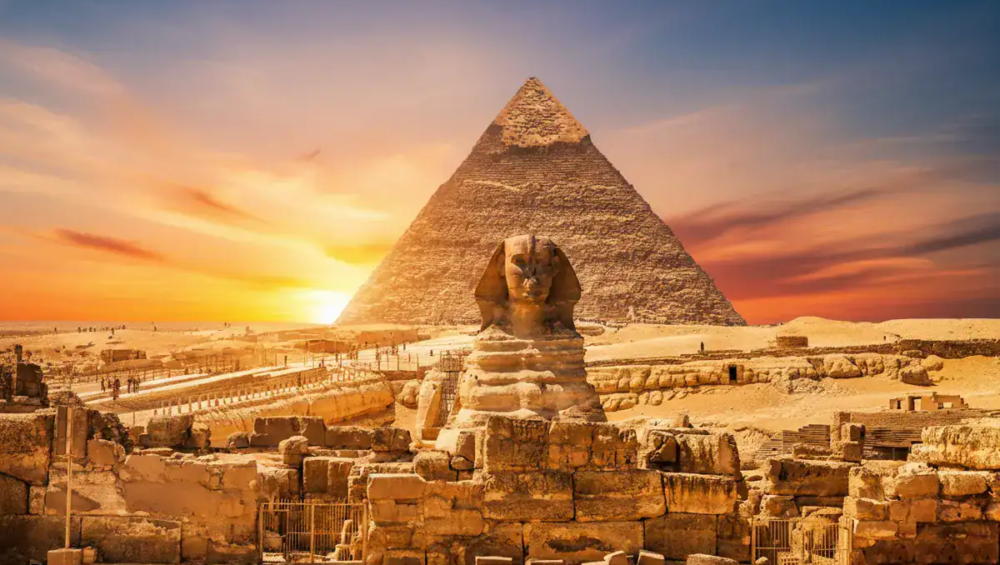
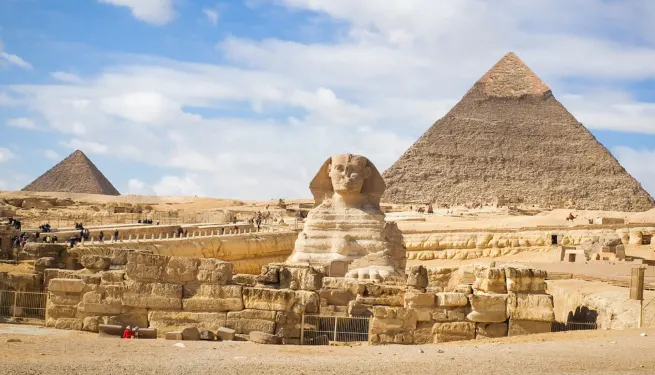
Direct Historical Answer:Ancient Memphis (associated with the archaeological site at modern Mit Rahina, roughly 20 km south of Giza) was the capital of Old Kingdom Egypt and the supreme cult center of the creator god Ptah. Giza (situated on the limestone desert plateau west of modern Cairo) was not a separate capital city, but the northern royal cemetery of Memphis where Fourth Dynasty kings Khufu, Khafre, and Menkaure built their pyramid complexes and the Great Sphinx.
1. Memphis Giza – Where Were These Ancient Egyptian Cities Located?
Where was ancient Memphis located, and how does it relate geographically to Giza? Ancient Memphis stood on the west bank of the Nile River at the strategic southern apex of the Nile Delta, approximately 24 kilometers (15 miles) south of modern downtown Cairo around the rural town of Mit Rahina (Badrashein district, Giza Governorate). The Giza Plateau lies roughly 19 to 20 kilometers (12 miles) north-northwest of ancient Memphis on the elevated limestone shelf of the Western Desert.
The Location of Ancient Memphis and Its Relationship with Modern Mit Rahina
According to ancient historical traditions preserved by the Egyptian priest Manetho and the Greek historian Herodotus, Memphis was founded around 3100–3000 BCE at the start of the First Dynasty when King Menes (widely identified with King Narmer) unified Upper and Lower Egypt. Positioned right where the narrow Nile Valley fans out into the fertile Nile Delta, Memphis commanded river commerce, agricultural taxation, and military roads between northern and southern Egypt. Today, the ancient city’s mudbrick palaces and temple enclosures rest beneath the date-palm groves and fields of Mit Rahina, where travelers visit the open-air museum of the Memphis archaeological site. Visitors staying in the capital can use our Cairo destination guide to plan nearby sightseeing and onward day trips.
The Location of the Giza Plateau and Why the Two Places Are Researched Together
When modern travelers explore the Giza travel destination, they ascend a solid Nummulitic limestone plateau rising about 60 meters (200 feet) above the Nile floodplain on the western edge of Greater Cairo. In ancient Egyptian cosmology, the west bank was the domain of the setting sun and Osiris, Lord of the Underworld. Because the floodplain soil of Memphis was inundated every summer by the Nile flood and needed to be preserved for agriculture and mudbrick residences, the pharaohs ruling in Memphis looked upward to the dry, solid limestone ridges of Saqqara and Giza to construct their eternal stone tombs. For practical visitor information, see our guide to visiting Giza.
Could You See Giza from Memphis in Ancient Times?
Travelers often ask: Could you see Giza from Memphis? Across the flat, unobstructed Nile Valley of the Old Kingdom—long before modern urban apartment towers or industrial haze existed—the answer is yes on clear days. Looking north-northwest from the elevated temple roofs or river embankments of northern Memphis across 19.5 kilometers of flat farmland, the polished white Tura limestone casings and gleaming electrum-capped peaks of Khufu’s Great Pyramid (originally 146.6 meters tall) and Khafre’s Pyramid stood clearly visible along the northern desert horizon.
Explore Giza, Saqqara and Memphis with a Private Egyptologist Guide
Connecting the royal capital at Mit Rahina with the Step Pyramid of Saqqara and the Great Pyramids of Giza is effortless when you travel with a dedicated Egyptologist and private chauffeur. Book our signature private Giza, Saqqara and Memphis tour for a complete chronological journey through Old Kingdom Egypt.
2. Memphis Giza History – Why Were These Places Important?
Why were Memphis and Giza so important in ancient Egyptian history? Throughout the Old Kingdom (c. 2686–2181 BCE) and across the New Kingdom and Late Period, Memphis served as Egypt’s political heart, royal dockyard, administrative treasury, and the primary sanctuary of the creator god Ptah. Giza, by contrast, represented the engineering peak of Fourth Dynasty royal funerary religion, where monumental geometry united the deceased king with the sun god Ra.
Memphis as an Ancient Political and Religious Center
During the Early Dynastic Period, the capital was known as Inebu-Hedj ("The White Walls"), named after the whitewashed mudbrick fortress of the royal palace. In the Sixth Dynasty (c. 2345–2181 BCE), Pharaoh Pepi I built his pyramid at South Saqqara and named its adjoining pyramid town Men-nefer ("Enduring and Beautiful"). Gradually, Men-nefer became the everyday name for the entire city in the valley below, which Greek writers later transcribed as Memphis.
At the spiritual core of Memphis Egypt history stood Hut-ka-Ptah ("Enclosure of the Ka of Ptah"), the monumental temple complex dedicated to Ptah, patron deity of craftsmen, architects, and creation. In fact, the modern English word "Egypt" (via the Greek Aigyptos) derives directly from the Egyptian name of Memphis’s sanctuary, Hut-ka-Ptah. Even after Thebes (modern Luxor) became the religious capital of the New Kingdom, pharaohs such as Ramses the Great maintained royal palaces at Memphis, endowed colossal granite and limestone statues at the Temple of Ptah, and expanded the sacred Apis bull catacombs at the Serapeum of Saqqara.
Historical Timeline of Memphis and Giza
c. 3100–2686 BCE (Early Dynastic Period, 1st–2nd Dynasties)
Foundation of Inebu-Hedj (Memphis) & Earliest Elite Tombs
Following the unification of Upper and Lower Egypt, the royal court establishes its capital at Memphis (Mit Rahina) and constructs monumental mudbrick mastaba tombs along the desert ridge at North Saqqara.
c. 2670–2650 BCE (3rd Dynasty, Old Kingdom)
Djoser & Imhotep Build the Step Pyramid at Saqqara
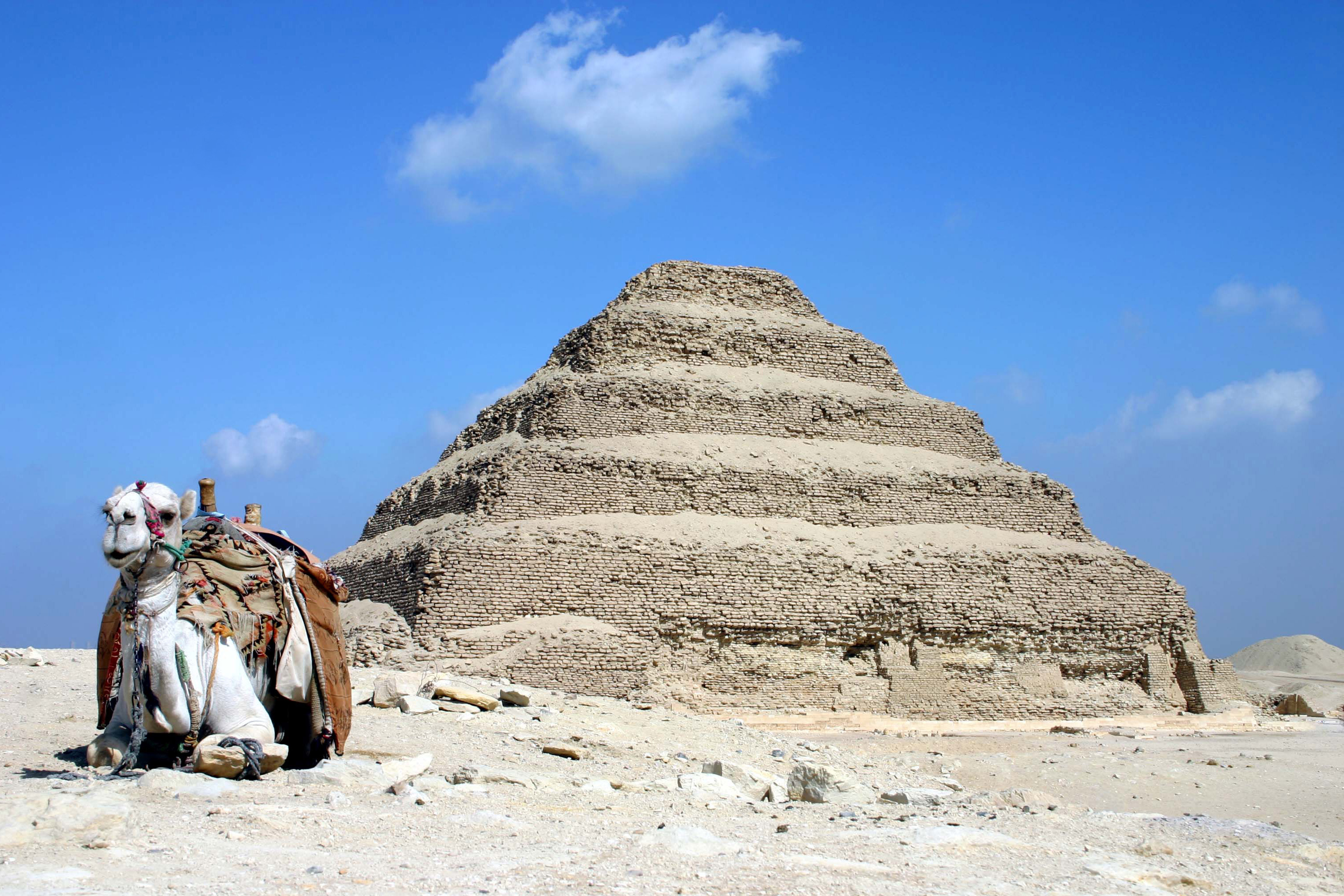
Ruling from Memphis, Pharaoh Djoser commissions his vizier and chief architect Imhotep to construct the Step Pyramid at Saqqara—the earliest large-scale cut-stone monument in human history.
c. 2589–2504 BCE (4th Dynasty, Old Kingdom)
The Monumental Royal Pyramid Complex at Giza
Pharaoh Khufu relocates the primary royal necropolis of Memphis northward to the solid limestone plateau of Giza, followed by Khafre (builder of the second pyramid and the Great Sphinx) and Menkaure.
c. 2494–2181 BCE (5th–6th Dynasties, Old Kingdom)
Abusir Sun Temples, Pyramid Texts & Birth of the Name "Memphis"
Fifth and Sixth Dynasty kings build pyramids at Abusir and Saqqara, carving the earliest Pyramid Texts inside the burial chamber of Unas. Pepi I’s complex gives the capital the name Men-nefer (Memphis).
c. 1550–1070 BCE (New Kingdom, 18th–20th Dynasties)
Imperial Monumentality Under Thutmose IV & Ramses II
Thutmose IV clears the desert sands from the Great Sphinx at Giza; New Kingdom nobles build temple-tombs at Saqqara; Ramses II erects colossal statues at the Temple of Ptah in Memphis; learn more about the story of Ramses the Great.
332 BCE – 7th Century CE (Ptolemaic, Roman & Early Islamic Eras)
Shift of Capital to Alexandria and Later Fustat (Cairo)
After Alexander the Great founds Alexandria (331 BCE) and Fustat is established near Babylon Fortress (641 CE), Memphis gradually declines and its surface stonework is reused, while the desert pyramids endure.
3. Memphis Giza and the Pyramids – What Is the Connection?
What is the historical relationship between Memphis and the Pyramids of Giza? The Pyramids of Giza were built as the Fourth Dynasty royal tombs for the pharaohs who ruled Egypt from the capital territory of Memphis. While Memphis was the city of the living—housing the royal treasury, courts of justice, granaries, and workshops—Giza was a specialized state necropolis engineered to house the king’s mummified body and sustain his eternal mortuary cult.
How Memphis, Saqqara, and Giza Formed One Pyramid-Building Tradition
When examining the connection between Giza and Memphis, archaeologists trace a continuous architectural evolution across the Memphite landscape:
Architectural Experimentation at Saqqara and Dahshur: During the Third Dynasty, Imhotep transformed the flat rectangular mudbrick mastaba into a six-stepped stone pyramid for King Djoser at Saqqara, directly overlooking Memphis. At the start of the Fourth Dynasty, King Sneferu perfected the transition from stepped pyramids to true smooth-sided geometric pyramids at Meidum and Dahshur (the Bent Pyramid and Red Pyramid).
Engineering Perfection on the Giza Plateau: Sneferu’s son and successor, Khufu (c. 2589–2566 BCE), needed an immense, structurally stable limestone bedrock shelf capable of bearing a 5.75-million-ton monument. He selected the northern promontory of the Memphite necropolis at Giza. His son Khafre (c. 2558–2532 BCE) added the second pyramid, the Valley Temple, and the Great Sphinx, while Menkaure (c. 2532–2504 BCE) completed the triad with his granite-cased third pyramid.
Where You Can See Their Royal Treasures Today: Many of the finest statues, reliefs, and funerary furnishings excavated from the Giza mastabas and Memphite temples are displayed just two kilometers from the pyramids, which visitors can explore in depth on a Giza Pyramids and Grand Egyptian Museum tour.
4. Memphis Giza Distance – How Far Was Ancient Memphis from Giza?
How far was ancient Memphis from Giza? The straight-line geographical distance between the Great Pyramids of Giza and the ruins of ancient Memphis at Mit Rahina is approximately 19 to 20 kilometers (12 miles). Travelling by modern paved highways, the road distance is 24 to 28 kilometers (15 to 17.5 miles), requiring 35 to 55 minutes of driving time depending on Cairo and Giza traffic conditions.
For travelers researching how far the Giza Pyramids are from Cairo and mapping out driving times between the three stops of the Memphite triad, here are the verified distances:
Route Connection
Straight-Line Distance
Modern Road Distance
Estimated Driving Time
Main Driving Route
Giza Plateau ↔ Ancient Memphis (Mit Rahina)
~19–20 km (12 miles)
~24–28 km (15–17.5 miles)
35–55 minutes
Mariouteya Canal Road or Ring Road to Badrashein / Mit Rahina
Giza Plateau ↔ Saqqara Necropolis
~14–15 km (9 miles)
~22–26 km (13.5–16 miles)
30–45 minutes
Mariouteya Canal Road south to Saqqara Tourist Road
Saqqara Necropolis ↔ Ancient Memphis (Mit Rahina)
~4.5–5.5 km (3 miles)
~6–8 km (3.7–5 miles)
12–18 minutes
Saqqara Road east through Badrashein palm groves to Mit Rahina
Downtown Cairo (Tahrir) ↔ Giza Plateau
~13–15 km (8.5–9.3 miles)
~16–20 km (10–12.5 miles)
25–45 minutes
6th of October Bridge / Al Haram Street or Ring Road
5. Memphis Giza Ancient Egypt Map – Understanding the Three Archaeological Sites
How do Giza, Saqqara, and Memphis fit together on a map of ancient Egypt? On any accurate Memphis Giza ancient Egypt map, the three sites form a compact north-to-south archaeological triangle along the west bank of the Nile River just southwest of the modern metropolitan area covered in our Cairo travel guide:
1. Giza (Northern Desert Edge): Perched on the high limestone plateau directly west of modern Giza city, overlooking the northern approach to the Nile Valley.
2. Saqqara (Central Desert Escarpment): Situated about 14.5 km south of Giza along the same western desert ridge, rising directly above the palm groves of Badrashein.
3. Memphis / Mit Rahina (Southern Floodplain Valley): Located on the flat alluvial plain just 5 km east-southeast of Saqqara and roughly 3 km west of the modern Nile River channel.
Archaeological Site
Map Position & Terrain
Historical Role in Ancient Egypt
Top Attractions for Modern Visitors
Giza Plateau
Northernmost site; elevated limestone desert plateau west of Cairo
4th Dynasty royal pyramid necropolis and solar cult complex
Great Pyramid of Khufu, Pyramids of Khafre & Menkaure, Great Sphinx, Valley Temple, Panoramic Viewpoint
Saqqara
Central site; western desert plateau 15 km south of Giza
Primary long-term necropolis of Memphis (1st Dynasty to Greco-Roman era)
Step Pyramid of Djoser, Pyramid of Unas/Teti (Pyramid Texts), Mastaba of Mereruka/Kagemni, Serapeum, Imhotep Museum
Ancient Memphis (Mit Rahina)
Southernmost site; fertile Nile floodplain 5 km east of Saqqara
Administrative capital, royal residence, and Great Temple of Ptah
Memphis Open-Air Museum, Colossus of Ramses II, Alabaster Sphinx, Granite statues of Ramses II, Apis Embalming House
6. Memphis Giza vs Saqqara – What Makes Each Site Different?
What is the difference between Memphis and Giza, and how does Saqqara compare to both? While all three belong to the same UNESCO World Heritage zone, each site preserves a completely different dimension of pharaonic civilization: Giza showcases monumental Fourth Dynasty royal engineering; Saqqara preserves the step-by-step birth of stone architecture and intricate painted tomb reliefs; and Memphis displays colossal New Kingdom temple sculptures inside the former capital city.
Site
Main Historical Importance
What Visitors Can See
Giza
Royal pyramid complex
Great Pyramid, other pyramids and Great Sphinx
Saqqara
Major ancient necropolis
Step Pyramid of Djoser and other archaeological monuments
Memphis
Ancient capital
Open-air museum, Colossus of Ramses II and archaeological remains
Why Combining All Three Sites Beats Visiting Giza Alone
When travelers compare different Egypt trips to the pyramids, those who only spend two hours at Giza miss the context of how and why pyramid building began. By contrast, if you pair a focused Giza Pyramids and GEM tour on one day with Saqqara and Memphis—or combine Giza, Saqqara, and Memphis into one full-day itinerary—you see contrasts that no single site offers:
Uninscribed vs. Inscribed Burial Chambers: Inside the Great Pyramid of Khufu and the Pyramid of Khafre at Giza, the granite burial chambers are completely austere and uninscribed. At Saqqara, inside the Fifth and Sixth Dynasty pyramids of Unas and Teti, the subterranean walls are covered floor-to-ceiling in blue-painted hieroglyphic Pyramid Texts—the oldest corpus of religious scriptures in the world.
Daily Life Reliefs in Noble Mastabas: Saqqara’s elite mastaba tombs (such as Kagemni, Mereruka, and Ti) preserve vibrant carved scenes of Old Kingdom fishing, hippopotamus hunting, bread baking, jewelry crafting, and agriculture that bring the society of Memphis to life. The underground monuments and galleries of the Serapeum of Saqqara offer another perspective on the necropolis.
Colossal Royal Portraiture at Mit Rahina: At the Memphis Open-Air Museum, you stand inches away from the 10-meter-long carved limestone Colossus of Ramses II from an elevated indoor gallery, admiring royal artistic perfection that survived inside the capital’s Ptah temple precinct.
7. Memphis Giza Questions – Did Memphis Build the Pyramids?
Did Memphis build the Pyramids of Giza? A city does not physically build monuments by itself; rather, the centralized Old Kingdom state governed by the Pharaoh, the Royal Vizier, and state ministries headquartered at Memphis planned, funded, supplied, and directed the construction of the Pyramids of Giza.
How the State Administration in Memphis Organized Pyramid Construction
Modern archaeological science has thoroughly debunked the classical Greek myth that the pyramids were built by masses of mistreated slaves. Whether you visit the plateau on a comprehensive three-site excursion or a focused Giza Pyramids day tour, you are looking at the result of sophisticated state administration:
The Royal Vizierate & Overseers of All Works of the King: High royal officials—such as Hemiunu (believed to be the architect of Khufu’s Great Pyramid) and Vizier Ankhhaf—operated under the royal court of Memphis to coordinate national labor, stone quarrying, and logistics. Visitors can explore the monuments themselves on a Giza Pyramids and Grand Egyptian Museum tour.
The Lost City of the Pyramid Builders (Heit el-Ghurab): Excavations led by Dr. Mark Lehner at the southeastern base of the Giza Plateau uncovered a vast planned settlement complete with barracks-style galleries, industrial bakeries, copper workshops, and cattle slaughterhouses where thousands of skilled artisans and seasonal Egyptian workers were fed high-protein diets of beef, Nile perch, bread, and beer.
The Diary of Merer (Wadi al-Jarf Papyri): Discovered in 2013, the 4,500-year-old papyrus logbooks of a middle-ranking inspector named Merer document his 200-man boat crew transporting fine white limestone blocks from the Tura quarries across the Nile and through canal networks controlled by the Memphite administration directly to Khufu’s pyramid harbor at Giza.
8. Memphis Giza Pyramid – Is There a Pyramid in Memphis?
Is there a pyramid in Memphis, and is the Memphis Pyramid the same as the pyramids of Giza? No pyramid stands inside the floodplain city ruins of ancient Memphis (Mit Rahina) itself; all ancient Egyptian pyramids in the region were built on the elevated desert plateau west of the city at Saqqara, Abusir, Dahshur, and Giza. Furthermore, when online searchers ask "Is the Memphis pyramid bigger than Giza?" they are confusing the modern 1991 steel pyramid arena in Memphis, Tennessee (USA) with the ancient Great Pyramid of Giza in Egypt.
Why Ancient Memphis Placed Its Pyramids on the Western Desert Ridge
Ancient Memphis sat on low-lying alluvial Nile silt that flooded annually and had a high water table. Constructing a massive stone pyramid inside Mit Rahina would have caused the foundations to sink and subterranean chambers to flood. Instead, the kings who ruled in Memphis built their pyramids along the solid limestone cliffs of the Western Desert overlooking the city. Travelers interested in the royal pharaohs who ruled from Memphis and Thebes can also see their preserved royal bodies on a Giza Pyramids and Royal Mummies tour featuring the National Museum of Egyptian Civilization.
Ancient Giza vs. Saqqara vs. Modern Memphis, Tennessee: Fact Check
Feature
Great Pyramid of Giza (Egypt)
Step Pyramid of Saqqara (Memphite Necropolis, Egypt)
Memphis Pyramid Arena (Memphis, Tennessee, USA)
Nature of Structure
Ancient 4th Dynasty royal stone tomb of Pharaoh Khufu
Ancient 3rd Dynasty stepped stone tomb of Pharaoh Djoser
Modern 20th-century steel sports arena and retail complex (Bass Pro Shops)
Date Built
c. 2560 BCE (~4,580+ years old)
c. 2650 BCE (~4,670+ years old)
1991 CE
Total Height
146.6 m (481 ft) original; 138.5 m (454 ft) today
62.5 m (205 ft)
98 m (321 ft)
Base Footprint
230.3 m × 230.3 m (53,056 sq. meters)
121 m × 109 m (13,189 sq. meters)
180 m × 180 m (32,400 sq. meters)
Verdict: Which Is Bigger?
The Great Pyramid of Giza is substantially taller and more massive than both the Step Pyramid of Saqqara and the modern Memphis Pyramid in Tennessee.
9. Memphis Giza and Saqqara – Can You Visit All Three in One Day?
Can visitors explore Memphis, Saqqara, and Giza in one day? Yes. Because Giza, Saqqara, and Mit Rahina (Memphis) lie within a 25-kilometer corridor along the western side of the Nile Valley, visiting all three sites in one well-organized 8-hour day trip is completely achievable and ranks among the most popular Egypt day tours for history lovers.
Recommended One-Day Itinerary Sequence & Time Allocation
08:00 AM – Pickup from Your Cairo or Giza Hotel: Depart in a private, climate-controlled vehicle with your licensed Egyptologist guide.
08:30 AM to 11:15 AM (2.5 to 2.75 Hours) – The Giza Plateau: Arrive early before peak crowds. Explore the Great Pyramid of Khufu, the Pyramid of Khafre, the Pyramid of Menkaure, the high desert panoramic photo point, the Valley Temple of Khafre, and the Great Sphinx.
11:15 AM to 12:00 PM (45 Minutes) – Drive South to Saqqara: Travel southward along the Mariouteya Canal corridor into the green countryside of Badrashein and ascend the Saqqara desert plateau.
12:00 PM to 02:15 PM (2.25 Hours) – The Saqqara Necropolis: Visit the Imhotep Museum, walk through the colonnaded entrance of Djoser’s Step Pyramid complex, enter a royal pyramid with carved Pyramid Texts (such as Unas or Teti), and explore an Old Kingdom painted noble mastaba.
02:15 PM to 03:15 PM (1 Hour) – Traditional Lunch Break: Enjoy freshly grilled Egyptian cuisine set amidst the rural palm groves between Saqqara and Mit Rahina.
03:15 PM to 04:15 PM (1 Hour) – Memphis Open-Air Museum (Mit Rahina): View the monumental supine limestone Colossus of Ramses II, the 80-ton Alabaster Sphinx, granite statues of Ptah and Ramses II, and the sacred Apis embalming beds before returning to your hotel around 05:00 PM.
Why Private Transportation and a Licensed Guide Matter
Unlike central Cairo neighborhoods where taxis are plentiful, the rural roads of Mit Rahina and the expansive multi-checkpoint desert plateau of Saqqara cannot be navigated efficiently on foot or via one-way ride-share apps. Booking dedicated transportation options in Egypt with a private driver ensures your vehicle waits for you at every single tomb and museum entrance, reducing walking fatigue and protecting you from midday heat.
10. Memphis Giza Full-Day Tour – Explore Ancient Egypt with Egy Travel Lux
How can you book a verified full-day tour to Giza Pyramids, Memphis, and Saqqara? Our private Full-day tour to Giza Pyramids Memphis and Saqqara is tailored for travelers who want complete flexibility, scholarly historical storytelling from a licensed Egyptologist, and transparent pricing with zero hidden surprises. Travelers comparing other formats can also browse our Egypt trips to the pyramids.
Confirmed Tour Details & Booking Options
Duration: Approximately 8 hours (Full-Day Private Tour).
Group Size: 100% Private Tour exclusively for you and your travel party.
Pickup & Drop-Off: Door-to-door pickup and return from any hotel in Cairo or Giza in a modern, air-conditioned private vehicle.
Guide Arrangements: Private licensed Egyptologist tour guide fluent in English (or your requested language).
Inclusions & Flexible Package Tiers: Includes private air-conditioned transfers, hotel pickup/drop-off, bottled water, all service charges and taxes, and your private Egyptologist guide. Depending on the package tier you select on the booking page, you can book with all standard site entrance fees and restaurant lunch included, or choose a guide-and-vehicle option.
Optional Extras & Exclusions to Verify: Special interior tickets (such as entering the interior burial shaft of the Great Pyramid of Khufu or the Serapeum at Saqqara), drinks during lunch, camel rides, and personal tipping (kitty) are optional unless specified in your chosen tier. To compare package rates across different itineraries, review our detailed guides on Giza Pyramids tour prices in Cairo and Cairo and Giza day trip prices.
Discover the Ancient Capital and Egypt’s Most Famous Pyramids in One Day
Experience the complete UNESCO World Heritage corridor of Memphis, Saqqara, and Giza at your own pace with a private Egyptologist guide and door-to-door chauffeured transport.
The four tour cards below display the selected Egy Travel Lux image files, without relying on a separate image-fetching script:
Destination: Giza, Saqqara & Mit Rahina (Memphis)
Giza, Saqqara and Memphis Tour
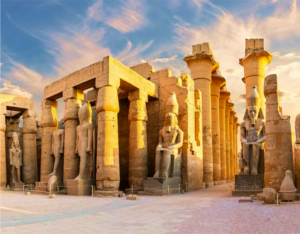
Explore Egypt’s first capital at the Memphis Open-Air Museum, the pioneering Step Pyramid of Djoser at Saqqara, and the three Great Pyramids and Sphinx of Giza on one private 8-hour excursion.
Combine a morning exploration of Khufu, Khafre, Menkaure, and the Great Sphinx with a guided afternoon visit inside the world-famous galleries of the Grand Egyptian Museum (GEM).
Stand before the Fourth Dynasty pyramids and Great Sphinx on the Giza Plateau before visiting the Royal Mummies Hall at the National Museum of Egyptian Civilization.
Short on time? Dedicate a focused half-day or full-day private excursion to the Great Pyramids of Khufu, Khafre, and Menkaure, the Valley Temple, and the Great Sphinx.
11. Memphis Giza Travel Tips – When to Visit and What to Expect
When is the best time to visit Memphis and Giza, and how should travelers prepare? The ideal months for comfortable outdoor sightseeing across Giza, Saqqara, and Mit Rahina are October through April, when daytime temperatures hover between 20°C and 26°C (68°F–79°F). In any season, starting your itinerary at 8:00 AM lets you enjoy crisp morning light, cooler desert air, and quieter monument courtyards.
Seasonal Weather Planning: Read our seasonal breakdown of the best time to visit Egypt to compare winter peak months with quieter shoulder seasons in May, September, and October.
Comfortable Footwear & Sun Protection: Wear sturdy, closed-toe walking sneakers with good traction for sandy paths, ancient limestone steps, and sloped wooden tomb ramps. Pack sunglasses, high-SPF sunscreen, a wide-brimmed hat, and breathable cotton or linen layers.
Bank Cards for Ticket Windows: All Ministry of Tourism and Antiquities ticket offices at Giza, Saqqara, and the Memphis Open-Air Museum operate on a cashless system requiring Visa or Mastercard for direct ticket purchases (unless your tickets are pre-included in your tour package). Keep small Egyptian Pound (EGP) notes handy for bottled water, cafes, and tipping site guardians.
Adding the Grand Egyptian Museum: Because thousands of statues and royal artifacts excavated from Memphis, Saqqara, and Giza are exhibited in Cairo’s newest museum complex, consider booking a dedicated Grand Egyptian Museum tour in Cairo on the following day of your trip.
12. Conclusion – Why Memphis Giza Belongs on Your Egypt Itinerary
Exploring Giza, Saqqara, and ancient Memphis together transforms your visit from a quick photo stop into a complete narrative of human civilization. At Mit Rahina, you stand inside the palm-shaded sanctuary of Memphis where pharaohs governed a unified land and honored the creator god Ptah; at Saqqara, you witness Imhotep’s bold leap from mudbrick mastabas to the world’s first stone Step Pyramid; and at Giza, you behold the geometric perfection of the Fourth Dynasty pyramids and the Great Sphinx.
By dedicating one full day to the complete Memphis Giza archaeological corridor, you experience both the living heart and the eternal horizon of ancient Egypt’s Old Kingdom in a single unforgettable journey.
Plan Your Private Giza, Saqqara and Memphis Experience
Ready to explore Egypt’s ancient capital at Mit Rahina, the Step Pyramid of Saqqara, and the Great Pyramids of Giza with your own private Egyptologist guide? Customize your departure time and package inclusions today.
Ancient Memphis (originally named Inebu-Hedj or "White Walls," and later Men-nefer) was the capital of ancient Egypt during the Early Dynastic Period and the Old Kingdom (c. 3100–2181 BCE), and remained one of the country’s most important administrative, military, and religious centers for three millennia. Located near modern Mit Rahina, it was the seat of the royal court that governed the pyramid builders and housed the Great Temple of the creator god Ptah.
2. Where was ancient Memphis located in relation to Giza?
Ancient Memphis was located on the west bank of the Nile River at the southern apex of the Nile Delta around the modern village of Mit Rahina (Badrashein district, Giza Governorate). Geographically, it lies approximately 19 to 20 kilometers (12 miles) south-southeast of the Giza Plateau in a straight line, and about 24 kilometers (15 miles) south of downtown Cairo.
3. How far is Memphis from the Giza Pyramids?
The straight-line distance from the Giza Pyramids to the archaeological site of ancient Memphis at Mit Rahina is 19 to 20 kilometers (12 miles). By modern paved roads (via the Mariouteya Canal road or the Ring Road to Badrashein), the driving distance is 24 to 28 kilometers (15 to 17.5 miles), which takes 35 to 55 minutes by car depending on traffic.
4. Did Memphis build the Pyramids of Giza?
While a city cannot construct monuments on its own, the centralized Egyptian royal government, treasury, and vizierate headquartered at Memphis organized, financed, supplied, and directed the construction of the Pyramids of Giza. Royal administrators based in Memphis coordinated limestone and granite quarry expeditions, managed state agricultural rations, and oversaw the skilled artisans and rotating Egyptian labor teams housed at the Giza pyramid builders' settlement.
5. Is there a pyramid in Memphis, and is the Memphis Pyramid bigger than Giza?
There are no standing pyramids inside the urban floodplain ruins of ancient Memphis at Mit Rahina because ancient Egyptians built their royal pyramids on the elevated desert plateau west of the city (at Saqqara, Abusir, Dahshur, and Giza) safely above the annual Nile flood. When people ask if the "Memphis Pyramid" is bigger than Giza, they are usually referring to the modern 1991 steel pyramid arena in Memphis, Tennessee, USA (98 meters / 321 feet tall), which is much smaller than the ancient Great Pyramid of Giza in Egypt (originally 146.6 meters / 481 feet tall; 138.5 meters / 454 feet today).
6. Is Memphis older than Giza?
Yes. According to historical and archaeological records, Memphis was founded around 3100–3000 BCE at the beginning of the First Dynasty as the capital of unified Egypt, with First Dynasty elite mastaba tombs built immediately overlooking the city at North Saqqara. The monumental royal pyramids of the Giza Plateau were built roughly 500 years later during the Fourth Dynasty (c. 2589–2504 BCE) under Pharaohs Khufu, Khafre, and Menkaure.
7. Can you visit Giza, Saqqara and Memphis in one day?
Yes. Because Giza, Saqqara, and Memphis lie along a continuous 25-kilometer corridor on the west bank of the Nile, travelers can comfortably visit all three sites in a single 8-hour full-day private tour. A well-paced itinerary spends 2.5–3 hours at the Giza Plateau, 2–2.5 hours at Saqqara, and 1 hour at the Memphis Open-Air Museum in Mit Rahina, with a lunch stop in between. Browse more Egypt day-tour ideas when arranging the rest of your stay.
8. What is the difference between Memphis and Saqqara?
Memphis was the living capital city in the fertile Nile floodplain where pharaohs ruled, officials administered the kingdom, and priests served at the Great Temple of Ptah. Saqqara, located on the elevated desert limestone plateau 5 kilometers west of Memphis, was the capital’s principal necropolis (city of the dead) where kings and nobles built the Step Pyramid of Djoser, painted mastaba tombs, and the subterranean Serapeum.
9. What is Memphis famous for today?
Today, the archaeological site of ancient Memphis at Mit Rahina is famous for its Open-Air Museum, which features the monumental 10-meter-long limestone Colossus of Ramses II, the 80-ton Eighteenth Dynasty Alabaster Sphinx, red granite statues of Ramses II and Ptah, royal stelae, and the stone embalming tables of the sacred Apis bulls.
10. What is the best way to explore Memphis Giza in one day?
The best way to explore the Memphis Giza archaeological corridor is on a private full-day tour to Giza, Saqqara, and Memphis with a licensed Egyptologist guide and a private air-conditioned vehicle. Private door-to-door transport eliminates the challenge of finding taxis in rural Mit Rahina and the Saqqara desert while giving you rich historical context across all three UNESCO World Heritage sites.
Egyptian Ministry of Tourism and Antiquities:Archaeological Sites & Museums Directory — Mit Rahina Open-Air Museum (Memphis), Saqqara Necropolis, and Giza Plateau. Official Ministry of Tourism and Antiquities Portal.
Harvard University / Museum of Fine Arts, Boston:Digital Giza — The Giza Project (Archaeological Records of the Fourth Dynasty Pyramids, Sphinx, and Cemeteries). Harvard University Digital Giza Archive.
The Metropolitan Museum of Art (Heilbrunn Timeline of Art History):Egypt in the Old Kingdom (ca. 2649–2150 B.C.) — Memphis, Saqqara, and the Pyramids of Giza. The Met Museum Academic Resource.
Ancient Egypt Research Associates (AERA):Excavations at Heit el-Ghurab (The Lost City of the Pyramid Builders at Giza), directed by Dr. Mark Lehner. AERA Archaeological Research Archive.
Editorial & Historical Note: Historical dates follow standard Egyptological chronology (Shaw, Oxford History of Ancient Egypt). Driving times and site admission regulations are subject to local traffic conditions and updates by the Egyptian Ministry of Tourism and Antiquities.
Egypt Ramses the Great: 10 Iconic Monuments & History Guide
Egypt Ramses the Great: The Life, Legacy, and Monuments of Pharaoh Ramses II
An Egyptologist-verified historical and travel guide to King Ramses II — exploring his 66-year New Kingdom reign, the Battle and Treaty of Kadesh, Queen Nefertari, his royal mummy in Cairo, and how to experience his colossal temples across Luxor, Aswan, and Abu Simbel.
Last Updated: November 2026 | Egyptology & Luxury Travel Research
Why Ramses II Remains the Most Iconic Pharaoh of Ancient Egypt
When travelers and historians picture the zenith of imperial power along the Nile, no ruler commands the landscape quite like Egypt Ramses the Great. Known to Egyptologists as Ramses II (or Ramesses II) and to classical Greek writers as Ozymandias, the third pharaoh of the Nineteenth Dynasty ruled ancient Egypt for an astonishing 66 years and two months (c. 1279–1213 BCE). Who was Ramses the Great? He was a New Kingdom warrior-monarch, master diplomat, and prolific architectural patron who inherited an empire stretching from the Fourth Cataract of the Nile in Nubia to the contested hills of Syria-Palestine — and who spent nearly seven decades chiseling his royal cartouche so deeply into Egypt's sandstone cliffs and granite obelisks that three millennia of desert wind and human history could never erase it.
Unlike rulers whose reputations survive through a single intact tomb or a brief religious upheaval, Pharaoh Ramses II shaped the physical geography of Egypt from the Mediterranean Delta to the Sudanese border. He led four army divisions into the largest documented chariot clash of the Bronze Age at the Battle of Kadesh, subsequently concluded one of human history's earliest surviving international peace treaties with the Hittite Empire, founded the sprawling Delta capital of Pi-Ramesses, and excavated the monumental cliffside sanctuaries of Abu Simbel for himself and his beloved Great Royal Wife, Queen Nefertari.
For modern cultural travelers planning a journey through our comprehensive Egypt travel guide, encountering Ramses II is not confined to a single museum vitrine. You stand beneath his 83-ton red granite colossus in Giza, trace his deeply incised battle narratives across the pylons of Luxor and the Ramesseum, sail across Lake Nasser to watch the rising sun pierce his mountain sanctuary at Abu Simbel, and come face-to-face with the actual preserved features of the ninety-year-old king in Cairo. This guide separates royal propaganda from verified archaeological evidence and shows you exactly how to experience the world of Ramses the Great across Egypt today.
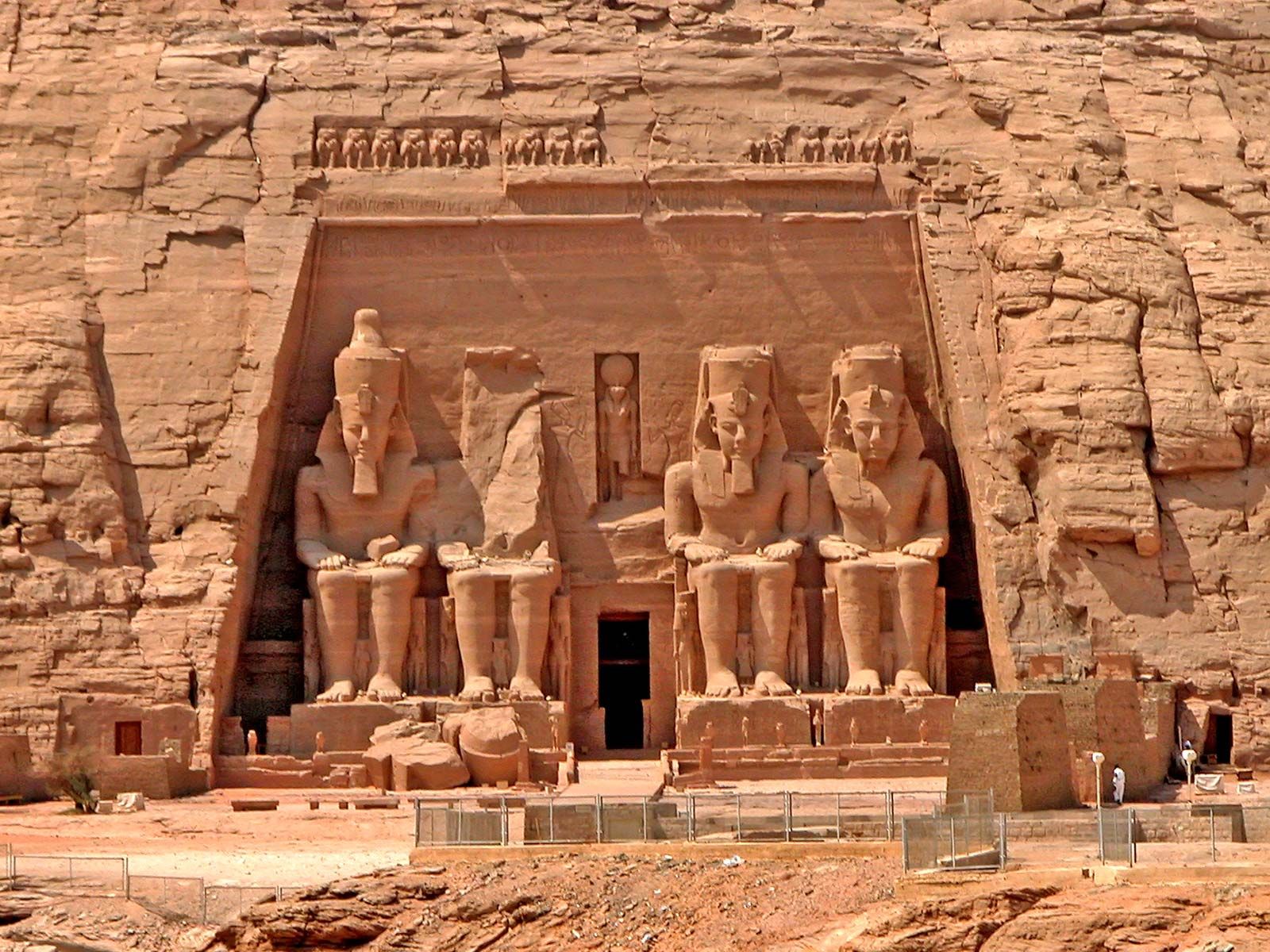
The four 20-meter seated colossi of Pharaoh Ramses II guarding the facade of the Great Temple of Abu Simbel overlooking Lake Nasser in southern Egypt.
Quick Facts About Ramses the Great (Historical Profile)
Because ancient Egyptian chronology is reconstructed from regnal year inscriptions, astronomical records, and comparative Near Eastern archives, reputable Egyptologists use qualified date ranges rather than invented calendar days where ancient sources vary. Below is the verified historical profile of King Ramses II:
Historical Attribute
Verified Egyptological Record
Birth Name (Nomen)
Ramesses Meryamun (Egyptian: Rꜥ-ms-sw Mry-Jmn) — meaning "Ra Has Fashioned Him, Beloved of Amun."
Throne Name (Prenomen)
Usermaatre Setepenre (Wsr-Mꜣꜥt-Rꜥ Stp-n-Rꜥ) — meaning "The Cosmic Order (Maat) of Ra Is Powerful, Chosen of Ra." Transliterated into Greek as Ozymandias.
Dynasty & Historical Era
Third Pharaoh of the 19th Dynasty, New Kingdom of Ancient Egypt (the Ramesside Period).
Approximate Birth & Death Dates
Born c. 1303 BCE; died c. 1213 BCE at approximately 90 years of age.
Period & Length of Reign
c. 1279–1213 BCE (Standard Low Chronology). Ruled for 66 years and 2 months (entering his 67th regnal year) — the second-longest reign in Egyptian history after Old Kingdom pharaoh Pepi II.
Parents
Father: Pharaoh Seti I; Mother: Great Royal Wife Queen Tuya (also spelled Tuy or Mut-Tuya).
Principal Royal Wives
Queen Nefertari (chief consort of his early reign) and Queen Isetnofret (mother of his successor Merneptah); later consorts included his daughters Bintanath and Meritamen, plus the Hittite princess Maathorneferure.
Major Military & Diplomatic Milestones
Led Egyptian forces at the Battle of Kadesh (c. 1274 BCE, Year 5) against Hittite King Muwatalli II; signed the Egyptian-Hittite Peace Treaty (c. 1259 BCE, Year 21) with King Hattusili III.
Most Famous Monuments
Abu Simbel Temples (Aswan/Nubia), The Ramesseum (Luxor West Bank), expansions at Karnak Temple and Luxor Temple, the Delta capital of Pi-Ramesses, the Temple of Ramses II at Abydos, and Nubian temples at Beit el-Wali, Wadi el-Seboua, and Derr.
Original Burial & Secondary Cache
Originally buried in Tomb KV7 in Luxor's Valley of the Kings; relocated by 21st Dynasty priests for protection against tomb robbers to the Deir el-Bahari Royal Cache (TT320), where it was rediscovered in 1881.
Current Location of His Mummy
Displayed in the Royal Mummies Hall at the National Museum of Egyptian Civilization (NMEC) in Fustat, Cairo (distinct from his 83-ton granite statue at the Grand Egyptian Museum in Giza).
Walk in the Footsteps of Pharaoh Ramses II Across Egypt
Since 2005, Egy Travel Lux has designed private, Egyptologist-led cultural journeys across Cairo, Luxor, Aswan, and Abu Simbel. Experience the colossal monuments of Ramses the Great at your own pace, away from rushed mass-market bus schedules.
Who Was Ramses the Great? Origins, Family & 19th Dynasty Lineage
To understand the relentless ambition of Pharaoh Ramses II, one must look at the political origins of his family. Unlike the blue-blooded Eighteenth Dynasty monarchs who preceded them, the rulers of the Nineteenth Dynasty rose from a family of non-royal military commanders native to Avaris (near modern Tell el-Dab'a and Qantir) in the northeastern Nile Delta. After the religious and diplomatic crisis of Akhenaten's Amarna Period and the death of the child-king Tutankhamun without an heir, the general Horemheb stabilized Egypt and appointed his aging vizier and military deputy, Paramessu, as his successor.
Taking the royal name Ramesses I (c. 1292–1290 BCE), Paramessu founded the Nineteenth Dynasty at a moment when he already had a grown son — the future Seti I — and a young grandson, born around 1303 BCE, named Ramesses in his grandfather's honor. Because the Ramesside family had occupied the throne for less than fifteen years when Seti I ruled (c. 1290–1279 BCE), both father and son understood that dynastic legitimacy had to be earned visibly through military defense of Egypt's borders, monumental building on a scale that recalled Amenhotep III, and public devotion to the supreme triad of traditional deities explored in our Egyptian civilization gods guide — namely Amun-Ra of Thebes, Ra-Horakhty of Heliopolis, and Ptah of Memphis.
Education Under Seti I and Early Military Command
Raised in the royal household by his father Seti I and his influential mother, Queen Tuya, young Ramses received an intensive princely education in chariotry, archery, military logistics, and temple administration. In his monumental dedicatory inscription at Abydos, Ramses II later recalled that his father presented him to the court as crown prince and co-ruler while he was still an adolescent. Seti I brought the young prince along on northern military campaigns into Canaan and western border patrols against Libyan tribes so he could witness frontline strategy firsthand.
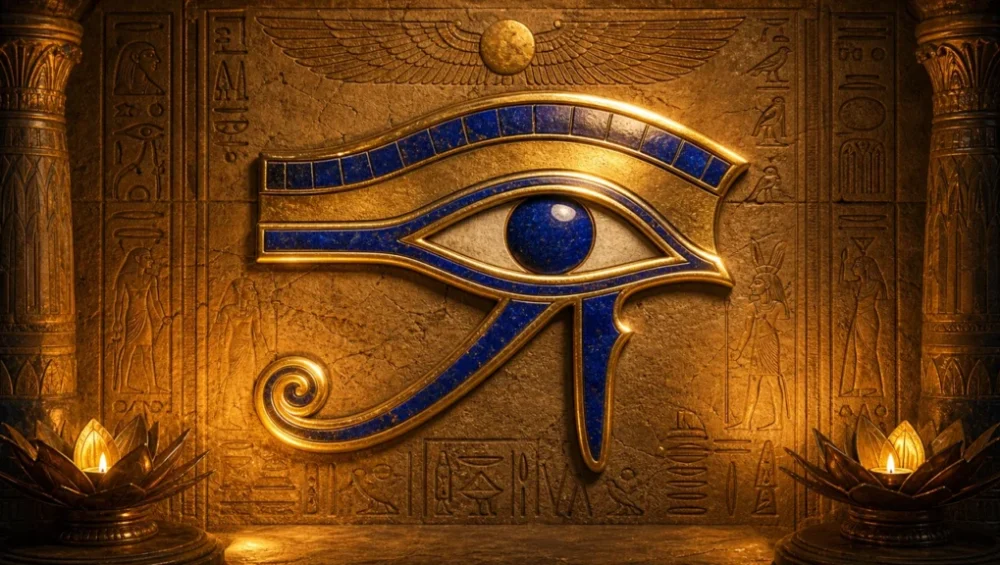
Before ascending the throne as sole ruler, Ramses gained independent command experience to the south, leading an expedition into Lower Nubia (Kush) to suppress a localized rebellion accompanied by two of his own young sons, Amun-her-khepeshef and Khaemwaset — a campaign vividly commemorated on the painted sandstone walls of the rock-cut temple at Beit el-Wali. When Seti I died in 1279 BCE after an eleven-to-fifteen-year reign, Ramses II assumed the Double Crown as the earthly incarnation of the falcon god Horus — protected by the sacred royal iconography of the Eye of Horus — at roughly 24 or 25 years of age, fully prepared to confront the superpower rivalry brewing along Egypt's northern frontier.
Ramses II's Rise to Power and His 66-Year Reign
Upon his coronation, King Ramses II inherited a wealthy, confident empire, yet one facing two immediate strategic pressures: maritime instability in the eastern Mediterranean and the southward expansion of the Hittite Empire (based in Hattusa in central Anatolia, modern Turkey) into Syria and northern Canaan. Within his first two regnal years, Ramses demonstrated decisive leadership on both domestic and military fronts.
In his second year on the throne, coastal watchposts in the western Nile Delta faced raids by the Sherden (Shardana) — seafaring warriors associated with the early waves of the "Sea Peoples" who threatened Bronze Age shipping lanes. According to the Tanis Stele, Ramses II stationed concealed naval vessels near the mouths of the Nile, allowed the Sherden warships to approach in battle formation, and ambushed them in a coordinated maritime engagement. Showing pragmatic statecraft, he incorporated the defeated Sherden warriors — easily recognizable in Egyptian temple reliefs by their horned helmets and long triangular swords — directly into his own elite royal bodyguard.
The finely carved limestone colossus of King Ramses II at the Memphis Open-Air Museum (Mit Rahina), showcasing the idealized royal portraiture of the 19th Dynasty.
Stand face-to-face with the magnificent 10-meter carved limestone colossus of Pharaoh Ramses II and the Alabaster Sphinx at the ancient capital of Memphis (Mit Rahina), paired with the Step Pyramid of Djoser at Saqqara and the Great Pyramids of Giza with your private Egyptologist guide.
Moving the Imperial Gravity Northward and Celebrating 14 Sed Festivals
Recognizing that ancient Thebes (modern Luxor) in Upper Egypt lay nearly 800 kilometers too far south to serve as an effective diplomatic and military command center for campaigns in the Levant, Ramses II expanded his father's summer palace in the eastern Nile Delta into a brand-new imperial capital: Pi-Ramesses ("House of Ramesses, Beloved of Amun, Great of Victories"), while also endowing the great Ptah temple precinct at Egypt's traditional administrative capital of Memphis — a site travelers can explore firsthand on a private Giza, Saqqara, and Memphis tour. From these northern strongholds, he oversaw agricultural reclamation, red granite quarrying in Aswan, gold mining in the Eastern Desert and Nubian wadis, and the construction of western coastal fortresses stretching 300 kilometers toward modern El Alamein and Marsa Matruh (such as the fortress of Zawyet Umm el-Rakham) to halt Libyan incursions.
As decades passed, the sheer longevity of Ramses II's rule became a theological phenomenon in its own right. In ancient Egyptian kingship tradition, a pharaoh celebrated his first Heb-Sed (Sed Jubilee Festival) — an elaborate ritual of physical regeneration and cosmic renewal closely tied to New Kingdom solar-eternity concepts like the Ouroboros symbol — after 30 years on the throne, and subsequently every two to three years thereafter. Most pharaohs never survived to reach their thirtieth year; Ramses II celebrated an extraordinary 13 or 14 Sed festivals over his 66-year reign, organized largely during their middle years by his scholarly fourth son, Prince Khaemwaset. By the final decades of his life, almost no living Egyptian could remember a time when anyone other than Ramses II sat upon the Horus Throne.
The Battle of Kadesh: Ramses II Against the Hittites
No military event in ancient Egyptian history was publicized as relentlessly as the Battle of Kadesh, fought in late May of Ramses II's fifth regnal year (c. 1274 BCE). For generations, Egypt and the Hittite Empire had vied for hegemony over the wealthy city-states of the northern Levant — particularly the coastal kingdom of Amurru and the fortified city of Kadesh (modern Tell Nebi Mend in western Syria). Situated on a strategic mound along the Orontes River near the Homs Gap, Kadesh controlled the vital trade and military crossroads connecting the Mediterranean coast with inland Syria and Mesopotamia.
The March of the Four Divisions and the Hittite Ambush
In his fourth regnal year, Ramses II had marched north through Canaan and forced Benteshina, ruler of Amurru, to switch allegiance from Hatti back to Egypt. Determined to crush this Egyptian advance and reclaim Kadesh once and for all, Ramses II mustered an army of roughly 20,000 soldiers in the spring of Year 5, organized into four main corps of approximately 5,000 men each (roughly 4,000 infantry and 1,000 chariot crewmen stationed across 500 two-man light war chariots), named after Egypt's four supreme state deities:
The Division of Amun: Commanded personally by Pharaoh Ramses II in the vanguard.
The Division of Ra: Marching several kilometers behind the Amun division.
The Division of Ptah: Moving further south toward the fords of the Orontes River.
The Division of Sutekh (Set): Forming the rear guard along the southern approach road.
The Ne'arin Auxiliary Force: An elite task force of Canaanite or Egyptian coastal troops advancing separately from the Mediterranean coast through the land of Amurru toward Kadesh.
As the Egyptian vanguard approached the heights south of Kadesh, Ramses II's scouts captured two local Shasu bedouin nomads who claimed to be defectors from the Hittite army. Under interrogation, the two men assured the pharaoh that the Hittite Great King, Muwatalli II, was terrified of Egypt's advance and had retreated nearly 200 kilometers north to the land of Aleppo. Satisfied by this report, Ramses II raced ahead across the Orontes River with only the Amun division and his household bodyguard, pitching his royal camp northwest of Kadesh while the Ra, Ptah, and Set divisions remained strung out miles to the south.
The Shasu nomads were, in fact, double agents dispatched directly by Muwatalli II. Only when Egyptian scouts captured two actual Hittite reconnaissance soldiers and forced them to confess did Ramses learn the truth: Muwatalli II and a massive coalition army of up to 37,000 infantry and 2,500 to 3,500 heavy three-man war chariots were concealed immediately behind the mound of Old Kadesh, ready to strike.
Royal war reliefs depicting Pharaoh Ramses II charging in his chariot — a visual motif inscribed across Abu Simbel, the Ramesseum, Luxor, Karnak, and Abydos.
Chariot Warfare, Royal Propaganda vs. Modern Historical Consensus
Before the Egyptian divisions could close ranks, a detachment of 2,500 Hittite chariots forded the Orontes River and smashed into the flank of the marching Ra division, splitting it in two and sending panicked survivors fleeing northward right into Ramses II's unfinished royal camp. Surrounded and facing catastrophic defeat, Ramses II mounted his chariot drawn by his famous warhorses ("Victory in Thebes" and "Mut Is Contented"), rallied his personal Sherden bodyguards, and launched desperate counter-charges against the Hittite chariot wings that had paused to plunder the Egyptian baggage train.
Crucially, two battlefield factors saved the Egyptian king: first, the nimble two-man Egyptian chariots (carrying a driver and an archer armed with a composite bow) proved faster and more maneuverable at close quarters than the heavier three-man Hittite spear chariots; second, the elite Ne'arin auxiliary force arrived unexpectedly from the coast of Amurru at the exact moment the Hittites were disorganized inside the camp, driving Muwatalli's charioteers back toward the Orontes River as the Ptah division finally reached the field from the south.
When evaluating the outcome of the Battle of Kadesh, historians draw a sharp distinction between royal Egyptian inscriptions and objective strategic reality:
Ramses II's Royal Account: Upon returning to Egypt, the pharaoh commissioned two complementary literary compositions — the lyrical Poem of Pentaur and the pictorial military report known as the Bulletin — and had them carved across at least eight major temple walls at Abu Simbel, the Ramesseum, Luxor Temple, Karnak, and Abydos. In these texts, Ramses portrays himself abandoned by his fearful army, calling upon his divine father Amun-Ra, and single-handedly routing thousands of Hittite chariots before graciously accepting a truce plea from Muwatalli II.
Modern Historical & Hittite Interpretation: Clay tablets excavated from the Hittite royal archives at Hattusa (modern Boğazköy, Turkey) reveal a very different aftermath. While Ramses II achieved a genuine tactical rescue by preventing the total destruction of his army and bringing his divisions home intact, the battle ended in a tactical stalemate and a strategic victory for the Hittites. Ramses II failed to capture Kadesh, retreated southward to Damascus, and watched Muwatalli II immediately march south into the Egyptian province of Upi and re-establish Hittite control over Amurru.
The Treaty of Kadesh: One of History's Earliest Surviving Peace Agreements
The stalemate at Kadesh did not end the conflict immediately. In his seventh through tenth regnal years, Pharaoh Ramses II launched further military campaigns into Moab, Edom, Canaan, and northern Syria — capturing fortresses such as Dapur and Tunip — only to see those distant garrisons revert to Hittite influence once the Egyptian army marched home for the winter. By his twentieth year on the throne, however, the geopolitical chessboard of the Near East had shifted dramatically for both empires.
To the east, the aggressive Middle Assyrian Empire under King Adad-nirari I and Shalmaneser I had conquered the buffers of Mitanni (Hanigalbat), placing Assyrian armies directly on the Euphrates frontier of the Hittite Empire. Simultaneously, inside Hatti, Muwatalli II had died, and his brother Hattusili III had deposed his nephew Mursili III (Urhi-Teshub) to seize the Hittite throne. Because the deposed nephew eventually fled to Ramses II's court in Egypt, Hattusili III urgently needed international recognition of his legitimacy and peace on his southern Syrian border so he could focus on the Assyrian threat.
The Akkadian cuneiform clay tablet of the Treaty of Kadesh (c. 1259 BCE) excavated at the Hittite capital of Hattusa, matching the hieroglyphic inscriptions carved by Ramses II at Karnak.
Why the Egyptian-Hittite Treaty (c. 1259 BCE) Is Historically Unique
In Year 21 of Ramses II's reign (c. 1259 BCE), fifteen years after the Battle of Kadesh, royal envoys from Hatti arrived at the Delta capital of Pi-Ramesses bearing a solid silver tablet inscribed with a formal peace treaty between Ramses II, Great King of Egypt, and Hattusili III, Great King of Hatti. While popular articles frequently call this the "first peace treaty in history" without qualification, historians note that older Mesopotamian diplomatic agreements (such as the 25th-century BCE treaty between Lagash and Umma or the 24th-century BCE Ebla–Abarsal treaty) predate it. What makes the Treaty of Kadesh truly landmark is that it is the earliest surviving international peace treaty in world history where the original texts of both signatory states have been discovered and compared side by side:
The Hittite Version: Written in Akkadian (the diplomatic lingua franca of the Bronze Age) using cuneiform script on baked clay tablets discovered in 1906 by Hugo Winckler at the royal archives of Hattusa (Boğazköy) in Turkey; now displayed at the Istanbul Archaeology Museums, with a monumental replica hanging at the United Nations Headquarters in New York.
The Egyptian Version: Translated from the Hittite silver tablet into Egyptian hieroglyphs and carved on the walls of the Precinct of Amun-Ra at Karnak Temple and the Ramesseum in Luxor.
Main Provisions and Dynastic Marriage
Aside from a face-saving preamble in which each monarch tells his domestic audience that the rival king sued for peace first, the eighteen clauses of the treaty are strictly symmetrical and egalitarian. The agreement established:
Permanent Cessation of Hostilities: A solemn oath that neither Egypt nor Hatti would ever again invade the other's territory to seize land, implicitly fixing the border along northern Canaan and leaving Kadesh and Amurru within the Hittite sphere.
A Mutual Defense Pact: An explicit military alliance pledging that if a foreign power attacked either Egypt or Hatti — or if internal subjects rebelled against either king — the other monarch would dispatch infantry and chariot forces to aid his "brother."
Extradition with Humanitarian Protections: The first known international extradition clause, requiring both states to return noble political fugitives and skilled runaway artisans, while explicitly stipulating that extradited individuals and their families must not have their homes destroyed, their eyes or ears mutilated, or their lives taken.
Divine Witnesses: The treaty concludes by invoking a thousand gods and goddesses of both Hatti and Egypt as cosmic guarantors of the oath.
The peace held unbroken for the remaining 46 years of Ramses II's reign. In Year 34 (c. 1246 BCE), the alliance was sealed by a grand dynastic marriage when Hattusili III and his powerful queen, Puduhepa, sent their eldest daughter across the snow-covered passes of Anatolia and Syria with a vast dowry to marry Ramses II at Pi-Ramesses, where she received the Egyptian royal name Maathorneferure ("She Who Sees Horus, the Invisible Splendor of Ra").
The Greatest Monuments of Egypt Ramses the Great
Archaeologists estimate that nearly half of all surviving temples in Egypt bear the cartouche of Egypt Ramses the Great. However, a careful traveler and historian must distinguish between three categories of Ramesside monuments: sanctuaries newly founded and constructed by Ramses II (such as Abu Simbel, the Ramesseum, Pi-Ramesses, and his Nubian temples), older dynastic temples that he expanded or completed (such as Karnak and Luxor Temple), and Middle or Eighteenth Dynasty statues that his stonemasons usurped and re-inscribed by carving his cartouches up to several inches deep into the stone so no successor could chisel them out. Below are the six monumental sites that define his architectural legacy.
1. The Abu Simbel Temples – Aswan (Lower Nubia)
Carved directly into two living sandstone cliffs overlooking the western bank of the Nile in Lower Nubia (roughly 280 kilometers south of Aswan) between approximately 1264 and 1244 BCE, the twin rock-cut sanctuaries (speoi) of Abu Simbel represent the ultimate fusion of religious devotion and imperial statecraft. Today, history enthusiasts can approach these cliffside colossi either by air/road or from the water on a multi-day Lake Nasser cruise from Aswan to Abu Simbel, witnessing the exact panoramic vista designed to awe ancient Nubian trade flotillas with the godlike power of the Egyptian pharaoh:
The Great Temple of Ramses II: Rising 33 meters high and 38 meters wide, the pylon-shaped cliff facade is dominated by four colossal seated statues of Ramses II, each towering approximately 20 meters (65 feet) high from throne base to the tip of the Double Crown of Upper and Lower Egypt. Smaller statues of his mother Queen Tuya, his Great Royal Wife Nefertari, and his older royal sons and daughters stand beside the king's massive calves. Extending 60 meters deep into the mountain, the First Hypostyle Hall features eight 10-meter Osiride pillars showing Ramses II in the form of Osiris, flanked by sweeping wall reliefs of the Battle of Kadesh (on the north wall) and campaigns in Nubia and Libya (on the south wall). In the innermost sanctuary sit four rock-cut cult statues: Ptah of Memphis, Amun-Ra of Thebes, the deified living Ramses II, and Ra-Horakhty of Heliopolis.
The Small Temple of Hathor and Queen Nefertari: Excavated about 100 meters northeast of the Great Temple at the sacred cliff of Ibshek, this temple is dedicated to the goddess Hathor and the deified Queen Nefertari. Its facade features six 10-meter-tall recessed standing statues — four of Ramses II and two of Nefertari wearing the horned solar disk and plumes of Hathor. Remarkably, Nefertari's statues are carved at the exact same monumental height as the pharaoh's, an honor virtually unprecedented for an Egyptian queen consort.
The Biannual Solar Alignment Phenomenon: Ancient Egyptian astronomer-architects oriented the eastern axis of the Great Temple so that twice a year — today occurring on February 22 and October 22 (widely interpreted by Egyptologists as marking the season of the king's coronation/agricultural emergence and birthday) — the first rays of the rising sun travel 60 meters through the temple doorways to illuminate the faces of Amun-Ra, Ramses II, and Ra-Horakhty for roughly 20 minutes, while leaving Ptah, god of the underworld and primordial darkness, perpetually in shadow.
The 1964–1968 UNESCO Rescue Operation: When the construction of the Aswan High Dam threatened to submerge Abu Simbel beneath the rising waters of Lake Nasser, UNESCO and the Egyptian government led an international salvage campaign costing approximately $40 million. Between 1964 and 1968, an international engineering team cut both sandstone temples into 1,036 numbered blocks weighing 20 to 30 tons each, lifted them 65 meters higher and 200 meters back from the river, and reassembled them inside two immense load-bearing reinforced concrete domes hidden beneath artificial hills — shifting the solar alignment by just one calendar day from February 21/October 21 to February 22/October 22.
Sail through the tranquil desert waters of Lower Nubia to inspect Ramses II's remote rock-cut sanctuaries — including Beit el-Wali, Wadi el-Seboua, and Derr — before anchoring directly beneath the illuminated twin temples of Abu Simbel.
Known to the ancient Egyptians as the "House of Millions of Years of Usermaatre Setepenre Which Unites with Thebes in the Domain of Amun," the Ramesseum is the grand mortuary temple built by Ramses II on the edge of the fertile floodplain on the West Bank of Luxor. In New Kingdom theology, a pharaoh's rock-cut tomb in the Valley of the Kings remained sealed and hidden after burial, whereas his mortuary temple served as the active, public center of his eternal royal cult coupled with the worship of Amun-Ra.
Taking more than twenty years to construct, the Ramesseum covered a vast rectangular precinct measuring roughly 270 by 180 meters, enclosed by monumental mudbrick vaulted storerooms, administrative offices, workshops, and a royal scribal school (Per-Ankh, or "House of Life") where thousands of student limestone ostraca have been unearthed. Many travelers first appreciate the monumental layout of these mudbrick vaults and sandstone courts from the sky during a sunrise hot air balloon ride over Luxor before descending to explore the temple's three unforgettable features on foot:
The Fallen Colossus of "Ozymandias": In the First Courtyard lies the shattered upper torso, shoulder, and pedestal of what was once the largest monolithic royal statue ever transported in pharaonic Egypt. Quarried from a single piece of Aswan red granite over 200 kilometers away, the enthroned colossus originally stood approximately 17 to 19 meters (56 to 62 feet) tall and weighed an estimated 1,000 tons. In the first century BCE, the Greek historian Diodorus Siculus recorded the monument's paraphrase inscription — "King of Kings am I, Ozymandias. If anyone would know how great I am and where I lie, let him surpass one of my works" — which directly inspired Percy Bysshe Shelley's famous 1818 sonnet "Ozymandias." Another massive granite head from the Ramesseum (known as the "Younger Memnon") was removed by Giovanni Belzoni in 1816 and now stands in the British Museum.
The First & Second Pylons: Deeply carved sunk reliefs on the stone pylons preserve some of the clearest surviving depictions of the Egyptian camp at Kadesh, chariot charges, and the siege of the Hittite fortress of Dapur.
The 48-Column Hypostyle Hall: Beyond the Osiride pillars of the Second Court stands a forest of 39 surviving sandstone columns (out of an original 48) topped with open papyrus-umbel and closed-bud capitals. Look upward in the central nave to spot sections of the original astronomical ceiling charting the months of the Egyptian calendar and the constellations of the northern sky, while the rear wall preserves scenes of the sacred barque procession and the king's sons.
Osiride pillars of the second courtyard and fragments of the fallen "Ozymandias" colossus at the Ramesseum, the mortuary temple of Ramses II on Luxor's West Bank.
Float silently above the Ramesseum mortuary temple, its vast mudbrick royal granaries, the Colossi of Memnon, and the Theban necropolis at dawn as golden sunlight illuminates the West Bank of ancient Thebes.
At the vast Precinct of Amun-Ra at Karnak — the supreme state sanctuary of the New Kingdom — Ramses II did not found the temple from scratch, as construction had begun more than 700 years earlier in the Middle Kingdom. Instead, his reign left a decisive architectural and epigraphic mark on the heart of the complex:
Completing the Great Hypostyle Hall: Spanning 5,000 square meters and supported by 134 towering sandstone columns (including 12 central columns rising 21 meters high with capitals wide enough to hold 50 standing people), the Great Hypostyle Hall was structurally erected by his father, Seti I. When Seti I died, only the northern half of the hall had been decorated. Ramses II completed the decoration of the entire southern wing and the massive central columns. Egyptologists point out a striking stylistic contrast right inside the hall: Seti I's artisans carved delicate, high-precision raised relief in the northern wing, whereas Ramses II ordered his sculptors to switch to rapid, deeply incised sunk relief in the southern wing (and even usurped several of his father's reliefs along the main axis) so the work could be finished quickly and catch dramatic shadows.
The Hittite Peace Treaty Wall & Battle Reliefs: On the exterior southern wall of the Great Hypostyle Hall (facing the Cachette Court), visitors can examine the monumental hieroglyphic inscription of the Year 21 Treaty of Kadesh alongside dynamic scenes of Ramses II's Canaanite and Syrian campaigns.
Colossi & Eastern Shrine: In front of the Second Pylon stands a famous pink granite colossus of Ramses II with his daughter-wife Princess Bintanath standing gracefully at his knees, while at the far eastern end of the Karnak axis, Ramses built the "Temple of Ramesses-Meryamun Who Hears Prayers" for ordinary citizens who were barred from entering the inner sanctuary of Amun.
4. Luxor Temple – Luxor East Bank
Located three kilometers south of Karnak and linked to it by the ceremonial Avenue of Sphinxes, Luxor Temple (Ipet-Resyt, the "Southern Sanctuary") was originally built in the Eighteenth Dynasty by Amenhotep III and Tutankhamun as the focal point of the annual Opet Festival, which renewed the divine royal ka (vital spirit) of the living pharaoh. Recognizing the political power of the Opet rituals, Ramses II transformed the northern entrance of Luxor Temple into a monumental tribute to his own reign — making a combined Karnak and Luxor Temples East Bank tour one of the richest architectural experiences in Upper Egypt:
The Monumental First Pylon & Battle of Kadesh Facade: Ramses II constructed the 24-meter-high entrance pylon and covered its exterior faces with sweeping reliefs of his royal camp and chariot charge at the Battle of Kadesh.
Colossal Statues and Twin Granite Obelisks: Before the First Pylon, Ramses placed six colossal statues of himself (two seated and four standing, of which two massive seated black granite colossi and one standing statue remain intact on the facade) and erected two towering pink granite obelisks covered in deep hieroglyphs. The eastern obelisk (25 meters tall) still stands in place today; its western twin (23 meters tall) was gifted by Ottoman ruler Muhammad Ali Pasha to France in the 1830s and has stood in the center of the Place de la Concorde in Paris since 1836.
The Peristyle Court of Ramses II: Behind the First Pylon, Ramses added a grand open courtyard surrounded by 74 papyrus-bud columns and 14 colossal standing statues of the king striding between the columns. Experienced guides point out that Ramses II's architects built this courtyard at a noticeable eastward axial bend relative to Amenhotep III's older colonnade — a deliberate engineering choice made both to align the new entrance with the processional avenue from Karnak and to preserve an existing triple barque shrine built earlier by Hatshepsut and Thutmose III, which Ramses renovated and incorporated into the northwestern corner of his court.
The monumental First Pylon, red granite obelisk, and seated colossi added by Pharaoh Ramses II to the northern entrance of Luxor Temple.
Walk beneath the 134 columns of Karnak's Great Hypostyle Hall, inspect the hieroglyphic Treaty of Kadesh wall, and stand before Ramses II's granite obelisk and seated colossi at Luxor Temple with a licensed Egyptologist.
5. Pi-Ramesses – The Ancient Imperial Capital in the Nile Delta
While the sandstone temples of Upper Egypt survived in the dry southern desert, the political and military nerve center of Ramses II's empire stood in the lush northeastern Nile Delta at Pi-Ramesses, located around the modern village of Qantir (adjacent to Tell el-Dab'a, ancient Avaris) in Egypt's Sharqia Governorate, roughly 100 kilometers northeast of Cairo.
Situated along the Pelusiac branch of the Nile with direct waterways to the Mediterranean Sea and overland access to the "Ways of Horus" military road across northern Sinai, Pi-Ramesses grew into one of the largest metropolises of the ancient world, covering approximately 18 square kilometers (nearly 7 square miles) and housing an estimated 250,000 to 300,000 residents. Long-term German-Egyptian excavations led by Edgar Pusch and Manfred Bietak have revealed that the city contained:
Four Massive Temple Precincts: Oriented toward the cardinal directions and dedicated to Amun-Ra (west), Sutekh/Set (south), Wadjet and Astarte (north), and Ra-Horakhty (east).
A Military Industrial Complex: Vast multi-furnace bronze foundries capable of casting thousands of arrowheads, spear tips, and khopesh swords simultaneously, alongside chariot assembly workshops, shield manufactories, and royal stables spanning 17,000 square meters that housed up to 460 warhorses at a time.
Lavish Royal Palaces & Glazed Faience Studios: Palaces decorated with polychrome glazed faience floor tiles depicting bound foreign captives beneath the pharaoh's sandals, private canals, botanical gardens, and a royal menagerie where bones of lions, elephants, and giraffes have been excavated.
What Remains of Pi-Ramesses Today? Around 1070 BCE, near the close of the Twentieth Dynasty, the Pelusiac branch of the Nile silted up and shifted its course westward, leaving Pi-Ramesses landlocked without fresh water or harbor access. Rather than abandoning its precious stonework in the Delta mud, the pharaohs of the Twenty-First Dynasty dismantled Pi-Ramesses wholesale — hauling its granite obelisks, columns, sphinxes, and colossal statues of Ramses II roughly 20 kilometers north to build their new capital at Tanis (San el-Hagar). Consequently, Qantir today is primarily a subterranean archaeological landscape of cultivated fields (where visitors see only modest granite base fragments), whereas the relocated obelisks and colossi originally carved for Pi-Ramesses lie scattered across the monumental ruins of Tanis and in the Egyptian Museum in Cairo.
6. Abydos and the Other Nubian Temples of Ramses II
Beyond Abu Simbel, Ramses II constructed a strategic chain of five additional rock-cut and half-freestanding (hemispeos) temples across Lower Nubia between the First and Second Cataracts of the Nile to administer Nubian gold production, tax river commerce, and promote the state cult of the living king:
Temple of Beit el-Wali: His earliest Nubian rock temple, relocated to New Kalabsha Island just south of the Aswan High Dam — a site easily paired with a private Aswan High Dam and Philae Temple tour — famous for its painted reliefs of Nubian tribute (ivory, gold, panther skins, and a giraffe).
Temple of Wadi el-Seboua ("Valley of the Lions"): Located 150 kilometers south of Aswan on Lake Nasser, approached by a dramatic avenue of human-headed and falcon-headed sphinxes wearing the Double Crown, later converted in part into a Christian church with a fresco of St. Peter painted between figures of Ramses II.
Rock-Cut Temple of Derr: Built on the eastern bank of the Nile in Nubia (and relocated near Amada during the UNESCO campaign), dedicated to the solar god Ra-Horakhty.
Temple of Gerf Hussein: Dedicated to Ptah, Ptah-Tatenen, and Hathor; its freestanding forecourt and colossal Osiride statues were rescued before Lake Nasser flooded the inner rock cave, and key sections now stand at the New Kalabsha open-air site and the Nubian Museum in Aswan.
Temple of Aksha (Serra West): Built near the modern Sudanese border and dedicated directly to the "Living Image of Ramesses II in Nubia"; key inscribed reliefs were rescued and moved to the Sudan National Museum in Khartoum.
Further north in Upper Egypt at the sacred Osirian city of Abydos (Sohag Governorate), Ramses II both completed the outer courts of his father Seti I's Great Temple (where the famous Abydos King List shows young Prince Ramses standing beside Seti I offering incense to the cartouches of 76 ancestral pharaohs) and constructed his own separate Temple of Ramses II 300 meters to the northwest — a jewel box of fine white limestone carved with vividly preserved polychrome reliefs of the Battle of Kadesh that travelers can visit on a dedicated Dendera and Abydos tour.
Examine the vibrant painted limestone reliefs of the Temple of Ramses II and the famous Abydos King List inside the Great Temple of Seti I, paired with the astronomical ceiling of Dendera.
Stand atop the engineering marvel of the Aswan High Dam overlooking Lake Nasser — the catalyst for the UNESCO Nubian temple rescue — and sail to the island sanctuary of Philae.
Ramses the Great and Queen Nefertari: Historical Evidence vs. Romantic Legend
Among all the royal consorts of ancient Egypt, few hold as prominent a place in both archaeological inscriptions and popular imagination as Queen Nefertari (Nefertari Meritmut — "Beautiful Companion, Beloved of Mut"). Married to Ramses before he ascended the throne in 1279 BCE, Nefertari served as his primary Great Royal Wife (Hemet Nesu Weret) throughout the first twenty-four years of his reign. While her exact family origins remain unconfirmed, a knob bearing the cartouche of the Eighteenth Dynasty pharaoh Ay found in her tomb has led several Egyptologists to suggest she may have belonged to the aristocratic Theban elite, helping cement the Delta-born Ramesside dynasty's ties to Upper Egypt.
Diplomatic Status, Royal Titles & the Small Temple at Abu Simbel
Modern documentaries often reduce Ramses II and Nefertari to a simple fairy-tale romance, yet the surviving archaeological record reveals that Nefertari was a highly educated political partner and religious officiant of immense influence. On temple walls across Egypt, she bears an extraordinary sequence of titles: "Lady of the Two Lands," "Mistress of Upper and Lower Egypt," "Great of Praises," "Sweet of Love," and uniquely, on the facade of her temple at Abu Simbel, "She for Whom the Sun Does Shine."
More telling than poetic epithets is hard diplomatic evidence from the Hittite royal archives at Hattusa: after the signing of the Treaty of Kadesh in Year 21, Queen Nefertari (written in Akkadian cuneiform as Naptera) corresponded directly in her own name with the Hittite Queen Puduhepa, exchanging diplomatic letters of peace alongside luxury gifts of golden jewelry and fine royal linen. Shortly after traveling south with Ramses II in Year 24 (c. 1255 BCE) to inaugurate the twin temples of Abu Simbel — where she appears at the same 10-meter colossal height as the king — Nefertari disappears from the historical record, having died around Year 24 or 25 at roughly forty to fifty years of age.
Exquisite polychrome painted reliefs inside Tomb QV66 in the Valley of the Queens, built by Ramses II for his principal consort, Queen Nefertari.
Tomb QV66 in the Valley of the Queens: The "Sistine Chapel" of Ancient Egypt
Ramses II laid Nefertari to rest in Tomb QV66 in the Valley of the Queens (Ta-Set-Neferu, the "Place of Beauty") on the West Bank of Luxor. Discovered in 1904 by the Italian archaeologist Ernesto Schiaparelli and meticulously conserved by the Getty Conservation Institute and Egyptian antiquities authorities, QV66 is universally regarded by art historians as the finest surviving painted tomb of the New Kingdom.
Spanning roughly 520 square meters of plaster-coated limestone walls and ceilings painted with lapis-blue vaults scattered with five-pointed golden stars, the tomb illustrates Chapters 17, 94, 144, 146, and 148 of the Book of the Dead. Rather than showing the pharaoh or scenes of earthly daily life, QV66 focuses exclusively on Nefertari's personal spiritual journey through the gates of the underworld (Duat): she plays the board game Senet in a pleated white linen gown, receives the breath of life from Isis and Hathor, and transforms into a radiant Osiris justified before the tribunal of eternity. Because the gypsum plaster inside QV66 is exceptionally sensitive to human breath and humidity, the Egyptian Ministry of Tourism and Antiquities strictly limits daily visitor numbers (and periodically closes the tomb for microclimate stabilization).
Ramses II's Wives, Children, and Dynastic Succession
In ancient Egyptian statecraft, a large royal family was not merely a symbol of virility; it was a cornerstone of administrative stability, providing loyal royal princes to serve as high priests, army generals, and governors, while cementing diplomatic alliances with foreign powers. Over his ninety-year life, Pharaoh Ramses II maintained two primary queens during his early decades, elevated several royal daughters after their mothers' deaths, and welcomed multiple foreign princesses into the royal harem.
Principal Queens and Consorts
Queen Nefertari: Principal Great Royal Wife until her death around Year 24; mother of the firstborn crown prince Amun-her-khepeshef, Prince Pareherwenemef, Prince Meryre, Prince Meryatum (High Priest of Ra at Heliopolis), and the princesses Meritamen and Henuttawy.
Queen Isetnofret (Isisnofret): Married to Ramses II before his accession alongside Nefertari, Isetnofret succeeded Nefertari as chief Great Royal Wife until her own death around Year 34. Though less visible on early state monuments than Nefertari, Isetnofret's children shaped the political future of Egypt: she was the mother of Princess-Queen Bintanath, Prince Ramesses (crown prince from Year 25 to Year 50), the revered scholar-prince Khaemwaset, and the thirteenth son, Merneptah, who eventually inherited the throne.
Daughter-Queens (Bintanath, Meritamen & Nebettawy): Following the deaths of Nefertari and Isetnofret, Ramses II elevated his eldest daughters — Bintanath, Meritamen (whose magnificent white limestone "White Queen" bust was found by Flinders Petrie in Luxor), and Nebettawy — to the ceremonial liturgical role of Great Royal Wife, alongside Queen Henutmire (likely his younger sister or daughter).
Foreign Diplomatic Consorts: Including the Hittite princess Maathorneferure (married in Year 34), a second Hittite princess sent around Year 40, and Babylonian and Syrian noblewomen residing at the palace of Pi-Ramesses and the lakeside royal harem complex of Mer-wer (Gurob) at the entrance to the Fayoum oasis.
80 to 100+ Royal Children, Prince Khaemwaset & Tomb KV5
How many children did Ramses II actually father? Rather than guessing, Egyptologists rely on formal monumental processions of royal princes and princesses carved in strict birth order at the Ramesseum, Luxor Temple, Wadi el-Seboua, and the Temple of Abydos. These lists document by name between 48 and 50 royal sons and between 40 and 53 royal daughters — yielding a historically attested total of roughly 88 to more than 100 children.
Two developments involving Ramses II's sons stand out in archaeological history:
Prince Khaemwaset, the "First Egyptologist": Ramses II's fourth son (and second son by Queen Isetnofret), Khaemwaset served as High Priest of Ptah at Memphis and chief organizer of his father's Sed festivals until his death in Year 55. Deeply fascinated by Egypt's ancient past, Khaemwaset inspected, identified, and restored decaying Old Kingdom pyramids and sun temples at Saqqara, Abusir, and Giza — carving restoration inscriptions on their casing stones that preserved the names of kings who had ruled more than a thousand years before him, while also excavating the monumental subterranean burial galleries for the sacred Apis bulls at the Serapeum of Saqqara.
Tomb KV5 in the Valley of the Kings: Located near the entrance of the Valley of the Kings across from Ramses II's own tomb (KV7), Tomb KV5 was long dismissed by early explorers as a rubble-filled minor shaft. Beginning in 1995, the Theban Mapping Project led by Dr. Kent Weeks excavated past the outer chambers to reveal the largest rock-cut tomb ever discovered in the Valley of the Kings — a sprawling subterranean complex of more than 130 corridors and pillared chambers carved specifically as a collective family mausoleum for the many sons of Ramses II who predeceased their long-lived father (including Amun-her-khepeshef, Ramesses, and Seti).
Because Ramses II lived to approximately age 90, he outlived his first twelve sons one after another. When he finally died in 1213 BCE, the throne passed to his thirteenth son, Merneptah, who was already in his sixties when his own ten-year reign began.
The Mummy of Ramses II: Discovery, Restoration, and Its Current Location
Few rulers from antiquity allow modern visitors to look directly upon their physical face three thousand years after death. The survival of the Ramses II mummy is one of the most extraordinary stories in Egyptian archaeology — involving ancient floods, priestly rescue operations, nineteenth-century tomb hunters, twentieth-century forensic science in Paris, and a twenty-first-century state procession through Cairo.
From Tomb KV7 to the Deir el-Bahari Royal Cache (TT320)
When Ramses II died in his 67th regnal year (c. 1213 BCE), his body was embalmed over seventy days and laid to rest inside a grand eight-chambered rock-cut tomb, KV7, in the main wadi of the Valley of the Kings on Luxor's West Bank. However, KV7 had been excavated in a low-lying geological fault zone of unstable shale; over the centuries, rare desert cloudbursts sent catastrophic flash floods roaring through the tomb, cracking the limestone pillars and filling the burial chamber with compacted mud (modern Franco-Egyptian archaeological missions led by Christian Leblanc have worked for decades to excavate and stabilize KV7, which remains closed to regular tourists).
Even worse than flash floods was the collapse of state security at the end of the Twentieth Dynasty. Around 1090–1070 BCE, organized bands of tomb robbers broke into KV7 and stripped the gold, jewelry, and outer sarcophagi from the king's burial. To save the physical body of their revered ancestor, the High Priests of Amun of the Twenty-First Dynasty intervened. Hieratic dockets written in black ink directly onto the linen wrappings and replacement cedarwood coffin of Ramses II record each stage of his ancient rescue:
First, High Priest Herihor and later High Priest Pinedjem I re-wrapped the damaged mummy in fresh linen and moved it into the safer adjacent tomb of his father, Seti I (KV17).
Later, in Year 10 of Pharaoh Siamun (c. 969 BCE), High Priest Pinedjem II moved both Ramses II and Seti I out of the Valley of the Kings altogether, carrying them secretly over the Theban cliffs to a hidden family shaft tomb — TT320 (also known as DB320) — tucked into a rocky cleft south of Hatshepsut's temple at Deir el-Bahari, where more than forty royal mummies of the New Kingdom were concealed together.
The re-inscribed royal cedarwood coffin in which 21st Dynasty priests safeguarded the mummy of Pharaoh Ramses II inside the Deir el-Bahari Royal Cache (TT320).
The 1881 Rediscovery, Physical Health & the 1976 Paris Conservation
There Ramses II rested undisturbed for nearly 2,850 years until members of the local Abd el-Rassul family of Qurna stumbled upon the Deir el-Bahari cache in the 1870s. Alerted by royal artifacts appearing on the antiquities market, Egyptian Antiquities Service officials Émile Brugsch and Ahmed Kamal entered TT320 in July 1881 and transported the royal mummies by steamer down the Nile to Cairo. When Gaston Maspero officially unwrapped the mummy of Ramses II in June 1886, the world saw a tall, striking elderly monarch with an aquiline nose, prominent cheekbones, pierced earlobes, and wavy hair.
By 1975, rising humidity and biological deterioration threatened the mummy's preservation. In September 1976, the Egyptian government flew the mummy of Ramses II aboard a French military aircraft to Paris, where a team of over one hundred scientists at the Musée de l'Homme conducted a full eight-month forensic investigation and sterilized the mummy against nearly 80 species of fungi and insects using controlled Cobalt-60 gamma irradiation before returning him to Cairo in May 1977.
Separating Forensic Fact from Popular Myths:
The "Egyptian Passport" Myth: A widely shared internet image claims to show an official green 1970s Egyptian passport listing Ramses II's occupation as "King (Deceased)." In reality, that viral image is a modern graphic artist's mock-up created decades later; while French and Egyptian authorities did issue official civil transit and customs documentation to transport human remains legally as cargo/dignitary heritage, no literal photographic passport book was ever printed by the Egyptian government.
Physical Stature, Red Hair & Cause of Death: Forensic X-rays and CT scans (including subsequent studies led by Dr. Sahar Saleem and Dr. Zahi Hawass) confirm that Ramses II stood approximately 1.73 meters (5 feet 8 inches) tall in youth — well above average for ancient Egypt. Microscopic hair analysis by Pierre-Fernand Ceccaldi in Paris demonstrated that Ramses was a natural redhead (a leukocyte pigment trait associated in Egyptian religion with the god Set, patron deity of the Ramesside family in the eastern Delta), and that embalming priests had dyed his age-whitened hair with red henna. In his eighties, the king suffered from severe spinal arthritis (ankylosing spondylitis) that forced him to walk with a hunched neck, advanced arteriosclerosis (hardened arteries), and a massive, untreated dental abscess and jaw infection that likely caused fatal sepsis around age 90.
Visiting the Mummy at NMEC vs. the Colossal Statue at GEM
Travelers planning a trip to Cairo must avoid one of the most common points of confusion found in outdated guidebooks: Ramses II's mummy is no longer in the old Egyptian Museum in Tahrir Square, nor is it at the Grand Egyptian Museum (GEM).
On April 3, 2021, the mummy of Ramses II led the globally televised Pharaohs' Golden Parade across Cairo to its permanent, state-of-the-art home at the National Museum of Egyptian Civilization (NMEC) Royal Mummies Hall in historic Fustat. Designed like a subterranean royal tomb in the Valley of the Kings, the climate-controlled NMEC Royal Mummies Gallery displays Ramses II in a nitrogen-regulated capsule alongside his father Seti I, his mother Queen Tuya, and his son Merneptah.
Essential Visitor Tips for NMEC Cairo: Entry to the Royal Mummies Hall is included in the standard general admission ticket at the National Museum of Egyptian Civilization (NMEC) (note that NMEC uses cashless bank card ticketing at the gate). All photography and video recording are strictly prohibited inside the lower Royal Mummies Hall to protect the ancient remains, and visitors should be aware that individual mummies are occasionally rotated off display briefly for routine preventive conservation.
Where Is the Famous 83-Ton Statue of Ramses II? While his physical mummy rests at NMEC in Fustat, the iconic 83-ton, 11-meter red granite colossal statue of Ramses II — discovered in 1820 at Memphis and displayed for half a century outside Cairo's main train station (Ramses Square) — now greets visitors inside the soaring Grand Atrium on a Giza Pyramids and Grand Egyptian Museum tour.
Marvel at the 83-ton red granite colossus of Pharaoh Ramses II in the Grand Atrium and the royal statues lining the Grand Staircase of the Grand Egyptian Museum, combined with the Great Pyramids and Sphinx of Giza.
Did the ancient Egyptians themselves use the English title "the Great"? Not in those exact words — the epithet "Ramses the Great" was popularized by nineteenth-century European Egyptologists such as Jean-François Champollion and Karl Richard Lepsius as they marveled at the ubiquity of his monuments. Yet the modern title reflects a genuine ancient reality: generations of Egyptians who lived after him revered Ramses II simply as Pa-Wer-Aa ("The Great Ancestor") and viewed his 66-year reign as the golden benchmark of pharaonic civilization.
A balanced historical assessment shows that Ramses II earned his enduring reputation through five converging achievements:
Unmatched Architectural Output and Visual Branding: As discussed by National Geographic's historical profile of Ramses II, no pharaoh before or after him commissioned as many colossal statues, obelisks, and temple complexes from the Mediterranean coast to the Fourth Cataract. By instructing his sculptors to carve his cartouches in deep, V-shaped sunk relief — and by boldly re-inscribing older monuments of the Twelfth and Eighteenth Dynasties — he ensured that his name dominated every major religious center in Egypt.
Sixty-Six Years of Continuity and Economic Prosperity: In the ancient world, short reigns and succession crises frequently triggered civil unrest or foreign invasion. By occupying the throne for nearly seven decades and celebrating 13 to 14 Sed jubilees, Ramses II gave Egypt two full generations of internal stability, thriving agricultural yields, and uninterrupted trade across the eastern Mediterranean.
Pragmatic Diplomacy Following Military Realism: While his temple walls boasted of superhuman prowess at Kadesh, the historical greatness of Ramses II lay in his willingness to pivot from costly attrition warfare in Syria to the Year 21 Treaty of Kadesh. That peace freed Egypt from forty-six years of exhausting northern military campaigns and allowed resources to flow into monumental construction.
Lifetime Deification: Whereas most Egyptian kings were worshiped as full gods only after death in their mortuary temples, Ramses II systematically promoted the cult of his own living royal divine image (such as "Ramesses-the-God, Great of Victories") alongside Amun-Ra, Ra-Horakhty, and Ptah during his own lifetime, particularly at Abu Simbel and his Nubian sanctuaries.
Dynastic Reverence Across Later Centuries: During the subsequent Twentieth Dynasty, nine consecutive pharaohs (Ramesses III through Ramesses XI) adopted his birth name — and several even adopted variations of his throne name, Usermaatre — in an effort to channel his prestige as the Late Bronze Age world collapsed around Egypt.
Was Ramses II the Pharaoh of the Biblical Exodus?
One of the most frequent questions travelers ask their Egyptologist guides is whether Pharaoh Ramses II was the ruler who confronted Moses in the biblical Book of Exodus. Because classic Hollywood epics such as Cecil B. DeMille's The Ten Commandments (1956), DreamWorks' The Prince of Egypt (1998), and Ridley Scott's Exodus: Gods and Kings (2014) all cast Ramses II in the role, many visitors assume the identification is an established historical fact. In reality, modern Egyptology and biblical scholarship treat this question with careful nuance, separating religious tradition from verifiable archaeological evidence.
Why Ramses II Became Linked to the Exodus Narrative
The Book of Exodus itself never names the reigning pharaoh, referring to the Egyptian monarch simply by the generic title "Pharaoh." The popular association with Ramses II arose in the nineteenth and early twentieth centuries primarily from Exodus 1:11, which states that the Israelites in Egypt were forced to build the royal store-cities of "Pithom and Raamses."
When archaeologists identified "Pithom" with Tell el-Maskhuta (or Tell el-Retaba) in the Wadi Tumilat and "Raamses" with Ramses II's Delta capital of Pi-Ramesses (which functioned as the royal residence only between roughly 1279 and 1070 BCE), scholars who favored a thirteenth-century BCE timeline for the Exodus reasoned that Seti I may have been the pharaoh of the oppression and Ramses II the pharaoh of the Exodus.
What Archaeological and Historical Evidence Actually Shows
Despite the place-name link to Pi-Ramesses, there is no scholarly consensus identifying Ramses II as the pharaoh of the Exodus, and the Egyptian Ministry of Tourism and Antiquities alongside mainstream academic historians emphasize three critical points of evidence:
Absence of Egyptian Textual or Archaeological Confirmation: The Nineteenth Dynasty is one of the most heavily documented periods in Egyptian history, preserving thousands of administrative papyri, frontier military journals (such as Papyrus Anastasi III recording border crossings into Sinai), workman's village records from Deir el-Medina, and royal inscriptions. None of these Egyptian sources record ten nationwide plagues, the mass departure of hundreds of thousands of Semitic laborers, or the drowning of a pharaoh and his chariot corps in the sea.
The Forensic Evidence of Ramses II's Mummy: Examination of Ramses II's mummy at the Musée de l'Homme and in Cairo confirms that he did not drown in the prime of life; he died of natural old age and dental infection in his palace at roughly 90 years old in 1213 BCE.
Chronological Debates and the Merneptah Stele: Scholars who follow a literal reading of 1 Kings 6:1 (which places the Exodus 480 years before King Solomon's temple, around 1446 BCE) look instead to the Eighteenth Dynasty (under Thutmose III or Amenhotep II), nearly two centuries before Ramses II was born. Meanwhile, the earliest confirmed extrabiblical mention of the name "Israel" anywhere in ancient history appears on the Merneptah Stele (also called the "Israel Stele," Cairo Museum JE 31408), erected in Year 5 of Ramses II's son and successor, Merneptah (c. 1208 BCE) — a landmark granite monument visitors can inspect firsthand in Cairo during a Giza Plateau and Egyptian Museum tour. In a single line at the bottom of a hymn celebrating Libyan victories, Merneptah lists a campaign in Canaan and states: "Israel is laid waste, his seed is not" — using the hieroglyphic determinative for a nomadic or semi-settled tribal people already living in the highlands of Canaan by 1208 BCE, rather than a fortified city-state.
For visitors today, understanding this distinction enriches the travel experience: while the biblical tradition remains a foundational pillar of heritage, archaeologists view the reference to "Raamses" in Exodus as a reflection of Iron Age memories of the famous Delta capital of Pi-Ramesses rather than a direct historical biography of Ramses II.
Where Can You See Ramses the Great's Legacy in Egypt Today?
If you are planning a cultural itinerary to trace Ramses II monuments firsthand, his major surviving works are distributed across three primary geographical hubs: Greater Cairo & Giza, Luxor (Ancient Thebes), and Aswan & Lower Nubia (Lake Nasser). Before locking in your travel dates — especially if you hope to witness the February 22 or October 22 solar alignment at Abu Simbel or enjoy mild winter sunshine in Upper Egypt — consult our seasonal guide to the best time to visit Egypt. Below is a verified destination-by-destination breakdown showing what you will see at each site and how they connect logistically:
Destination Hub
Monument or Museum Site
What You Will See of Ramses the Great
How It Fits Into Your Itinerary
Cairo (Fustat)
National Museum of Egyptian Civilization (NMEC)
The actual preserved mummy of Pharaoh Ramses II inside the climate-controlled Royal Mummies Hall, alongside the mummies of his father Seti I, mother Queen Tuya, and son Merneptah.
Easily combined on a half-day or full-day Cairo museum and historic district itinerary.
Giza (Greater Cairo)
Grand Egyptian Museum (GEM)
The famous 83-ton, 11-meter red granite colossus of Ramses II standing in the Grand Atrium (formerly in Ramses Square), plus Ramesside statues along the Grand Staircase.
Combined directly on the same day with a private visit to the Giza Pyramids and the Great Sphinx.
Cairo (Tahrir) & Memphis
Egyptian Museum (Tahrir) & Memphis Open-Air Museum (Mit Rahina)
At Tahrir: the masterpiece Tanis statue of young Ramses II protected by the falcon-god Horon and the Merneptah Stele. At Memphis (24 km south of Cairo): the fallen 10-meter limestone colossus of Ramses II in an indoor viewing gallery and the Alabaster Sphinx.
Memphis is combined with the Step Pyramid of Saqqara and the Serapeum; Tahrir is combined with the Giza Plateau.
Luxor (West Bank)
The Ramesseum & Valley of the Queens (QV66)
At the Ramesseum: Ramses II's mortuary temple, 48-column hypostyle hall, Kadesh reliefs, and the shattered 1,000-ton "Ozymandias" granite colossus. At Valley of the Queens: Queen Nefertari's Tomb (QV66) (subject to special ticket/conservation opening status).
Combined on a full-day Luxor West Bank tour with the Valley of the Kings, Temple of Hatshepsut, and Colossi of Memnon.
Luxor (East Bank)
Karnak Temple & Luxor Temple
At Karnak: the 134 columns of the Great Hypostyle Hall, the Hittite Peace Treaty wall, and pink granite colossi. At Luxor Temple: the First Pylon, single standing red granite obelisk, seated black granite colossi, and Peristyle Court of Ramses II.
Visited together in a single half-day or evening tour on Luxor's East Bank.
Aswan & Abu Simbel
Great & Small Temples of Abu Simbel
The crowning achievement of Ramses II's reign: the four 20-meter rock-cut colossi of the Great Temple and the six 10-meter statues of the Temple of Hathor and Nefertari overlooking Lake Nasser.
Requires a dedicated half-day excursion from Aswan (via a 45-minute flight or 3-hour private road transfer) or a multi-day cruise across Lake Nasser.
Lower Nubia (Lake Nasser)
Beit el-Wali, Wadi el-Seboua & Temple of Derr
Relocated UNESCO Nubian rock temples of Ramses II preserving vibrant painted Nubian tribute scenes (Beit el-Wali) and the sphinx-lined "Valley of the Lions" avenue (Wadi el-Seboua).
Beit el-Wali (on New Kalabsha Island) can be visited by boat near the Aswan High Dam; Wadi el-Seboua and Derr are visited on a Lake Nasser cruise to Abu Simbel.
Decode Ramses II's Temples with a Private Licensed Egyptologist
Standing before the walls of Karnak, the Ramesseum, or Abu Simbel is infinitely more rewarding when an expert scholar translates the hieroglyphic cartouches, points out where Ramses II re-inscribed older monuments, and paces your visits to avoid peak midday crowds. Discover how our private Egypt tours bring 3,300 years of Ramesside history to life across Cairo, Luxor, and Aswan.
How to Experience Ramses II's Monuments During an Egypt Tour
Because Ramses the Great built along a 1,100-kilometer corridor of the Nile Valley, seeing his most important sites without exhausting overland transit requires thoughtful itinerary sequencing. To compare route durations, domestic flight connections, and seasonal rates, start with our detailed Egypt tours planning guide, itineraries, and prices alongside our updated breakdown of Egypt trip cost in 2026. Whether you are visiting Egypt for eight days or two weeks, our specialists at Egy Travel Lux recommend structuring your journey around these proven travel blueprints:
1. How Many Days Do You Need? (Proven Ramesside Itinerary Blueprints)
The 8-Day "Essential Pharaohs & Nile Cruise" Blueprint (Cairo, Luxor, Aswan & Abu Simbel): Ideal for travelers with roughly one week. Follow our 8-days Cairo, Luxor, and Aswan Nile cruise tour by spending 3 days in Cairo & Giza (visiting the Pyramids, the 83-ton Ramses II statue at GEM, the Memphis Open-Air Museum colossus, and the Royal Mummies Hall at NMEC), flying south to board a luxury Nile cruise between Luxor and Aswan (covering Karnak, Luxor Temple, the Valley of the Kings, and the Ramesseum), and adding a morning excursion to Abu Simbel.
The 12-Day "Ultimate Pharaonic & Ramesside Expedition" Blueprint: Designed for history connoisseurs who want unhurried depth across Upper and Lower Egypt. By choosing a comprehensive 12-day Egypt tour package, you can combine Cairo, Giza, Memphis, and Saqqara with an extended Upper Egypt exploration that includes a private excursion north from Luxor to the painted Temple of Seti I and Temple of Ramses II at Abydos, a full West Bank day at the Ramesseum and Valley of the Queens, and dedicated time in Aswan and Abu Simbel.
Experience the essentials of Ramses the Great in one seamless week: the Grand Egyptian Museum and Giza Pyramids in Cairo, followed by a 5-star Nile cruise covering Karnak, Luxor Temple, the West Bank, Aswan, and Abu Simbel.
Our flagship multi-city cultural itinerary connecting Cairo, Memphis, Saqqara, Luxor's East and West Banks, Abydos, Aswan, and the rock-cut temples of Abu Simbel with private Egyptologist guiding throughout.
2. Why Private Custom Pacing Matters for History Lovers
One of the biggest frustrations for history-minded travelers on standard group packages is that mass-market itineraries often skip both the Ramesseum on Luxor's West Bank and the Memphis Open-Air Museum near Saqqara in favor of souvenir workshops, while scheduling Abu Simbel only during the crowded mid-morning tour-bus rush. By traveling on a private tailor-made itinerary:
Include the Ramesseum Alongside the Valley of the Kings: Your private driver and Egyptologist can add a dedicated 60-to-90-minute stop at the Ramesseum right after your early-morning visit to the Valley of the Kings, when the morning sun rakes across the Battle of Kadesh reliefs on the First Pylon.
Time Luxor Temple for Golden Hour & Evening Illumination: Visit Karnak Temple early in the morning to stand beneath the 134 columns of the Great Hypostyle Hall in cool temperatures, and save Luxor Temple for late afternoon so you can watch the sunset and floodlights illuminate Ramses II's granite obelisk and colossi.
Coordinate Museum Tickets & Conservation Access Seamlessly: Because ticketing across Egyptian archaeological sites and museums (including GEM, NMEC, Karnak, and Abu Simbel) operates on an electronic card-based system and high-demand tombs like Nefertari's QV66 have strict conservation rules, traveling with a licensed operator ensures all permits, domestic flights, and private climate-controlled vehicles are synchronized in advance.
Frequently Asked Questions About Egypt Ramses the Great
Who was Ramses the Great in ancient Egypt?
Ramses the Great (also spelled Ramesses II) was the third pharaoh of ancient Egypt's 19th Dynasty during the New Kingdom. Ruling from approximately 1279 to 1213 BCE for 66 years and two months, he was the son of Pharaoh Seti I and Queen Tuya and is celebrated for his monumental temple construction, the Battle and Treaty of Kadesh, and his long, prosperous reign.
Why is Ramses II called Ramses the Great?
Historians call Ramses II "the Great" because of the extraordinary length of his 66-year reign, the unprecedented scale of his monument building from the Nile Delta to Nubia, his celebration of 13 or 14 Sed royal jubilee festivals, and the half-century of international stability created by his peace treaty with the Hittite Empire. Later Egyptians revered him as the "Great Ancestor," and nine subsequent pharaohs of the 20th Dynasty took his royal name.
How long did Ramses II rule Egypt?
Based on contemporary Egyptian administrative ostraca and the historical records of Manetho, Ramses II ruled Egypt for 66 years and 2 months (c. 1279–1213 BCE), dying in his 67th regnal year at approximately 90 years of age. This makes his reign the second-longest in ancient Egyptian history after Old Kingdom ruler Pepi II.
What is Ramses II most famous for?
Ramses II is most famous for carving the twin rock-cut temples of Abu Simbel, building the Ramesseum mortuary temple in Luxor, fighting the massive chariot Battle of Kadesh (c. 1274 BCE), and signing the Treaty of Kadesh (c. 1259 BCE) with Hittite King Hattusili III — the earliest surviving international peace treaty preserved by both signatory sides.
Did Ramses II build Abu Simbel?
Yes. Unlike older temples at Karnak or Luxor that Ramses II expanded, the Great and Small Temples of Abu Simbel in Lower Nubia were entirely founded and excavated out of solid sandstone cliffs under Ramses II's reign between approximately 1264 and 1244 BCE to honor Egypt's principal gods, Queen Nefertari, and the deified king himself.
Where is the mummy of Ramses II today?
The actual royal mummy of Ramses II is housed in the Royal Mummies Hall at the National Museum of Egyptian Civilization (NMEC) in the Fustat district of Cairo, where it was transferred from the Egyptian Museum in Tahrir Square during the Pharaohs' Golden Parade in April 2021. It should not be confused with his 83-ton granite statue displayed inside the Grand Egyptian Museum (GEM) in Giza.
Can visitors see Ramses II's mummy in Cairo?
Yes. Visitors to the National Museum of Egyptian Civilization (NMEC) in Cairo can enter the climate-controlled Royal Mummies Hall, which is included in the general museum admission ticket. Note that photography is strictly prohibited inside the mummies gallery, and individual royal mummies occasionally undergo scheduled off-display conservation checks.
Who was Queen Nefertari to Ramses II?
Queen Nefertari (Nefertari Meritmut) was Ramses II's primary Great Royal Wife during the first two decades of his reign. She held prominent religious and diplomatic roles, corresponded directly with the Hittite Queen Puduhepa, was honored with the Small Temple at Abu Simbel where her statues stand equal in height to the pharaoh's, and was buried in the magnificently painted tomb QV66 in Luxor's Valley of the Queens.
How many children did Ramses II have?
While exact totals vary across surviving temple inscriptions, Egyptologists estimate that Ramses II fathered between 80 and more than 100 royal children over his 90-year life — roughly 48 to 50 sons and 40 to 53 daughters — recorded in monumental procession lists at Abydos, Luxor Temple, Wadi el-Seboua, and the Ramesseum.
Did Ramses II win the Battle of Kadesh?
Although Ramses II carved monumental inscriptions across Egypt claiming a sweeping personal triumph at the Battle of Kadesh (c. 1274 BCE), modern historians classify the battle as a tactical recovery for Egypt and a strategic victory for the Hittites. Ramses successfully rallied his ambushed troops and saved his army from annihilation, but Hittite King Muwatalli II retained control of the fortress of Kadesh and northern Syria.
What was the Treaty of Kadesh?
Signed in Year 21 of Ramses II's reign (c. 1259 BCE) between Pharaoh Ramses II and Hittite King Hattusili III, the Treaty of Kadesh is the oldest surviving written international peace agreement verified by copies from both sides. It ended decades of border warfare in the Levant, established a mutual defense pact, and provided for the humane extradition of political fugitives.
Was Ramses II the pharaoh of the Exodus?
There is no definitive historical or archaeological evidence proving that Ramses II was the pharaoh of the biblical Exodus. The popular link stems largely from the reference in Exodus 1:11 to the store-city of "Raamses" (associated with Pi-Ramesses) and Hollywood films, but Egyptian state archives, temple reliefs, and archaeological surveys in Sinai contain no record of the biblical events.
Where are Ramses II's most famous monuments?
Ramses II's greatest monuments are concentrated in three primary regions of Egypt: Aswan and Lower Nubia (the Great and Small Temples of Abu Simbel, Beit el-Wali, Wadi el-Seboua, and Derr), Luxor (the Ramesseum on the West Bank, plus the First Pylon of Luxor Temple and the Great Hypostyle Hall of Karnak on the East Bank), and Greater Cairo (his colossal statues at the Grand Egyptian Museum and Memphis Open-Air Museum).
Is Abu Simbel worth visiting?
Yes. Abu Simbel is widely considered one of the most awe-inspiring archaeological sites in the world. Both the monumental 20-meter rock-cut statues of Ramses II and Nefertari and the 1964–1968 UNESCO engineering feat that relocated the entire cliffside sanctuaries above Lake Nasser make it an essential highlight of any trip to southern Egypt.
Can you visit the Ramesseum in Luxor?
Yes. The Ramesseum is open daily to visitors on the West Bank of Luxor, situated near the Colossi of Memnon and the Tombs of the Nobles. It is significantly quieter than Karnak or the Valley of the Kings, allowing travelers to inspect its hypostyle columns, Battle of Kadesh reliefs, and the shattered 1,000-ton granite statue that inspired Shelley's poem "Ozymandias."
Conclusion: Experiencing the Immortal Legacy of Ramses the Great
More than 3,200 years after his death, Egypt Ramses the Great has achieved the very immortality that ancient Egyptian religion promised its kings. In ancient Egyptian thought, to speak a person's name was to make them live again (senekh ren). By carving his royal titulary deep into the pylons of Luxor and Karnak, raising the fallen giant of the Ramesseum, negotiating a peace treaty that still hangs in the halls of the United Nations, and shaping an entire sandstone mountain into his likeness at Abu Simbel, Pharaoh Ramses II ensured that his name would never fall silent.
Yet reading about the Battle of Kadesh or the UNESCO rescue of Abu Simbel is only half the story. The true measure of Ramses II's ambition can only be felt when you stand beneath the 21-meter columns of Karnak's Great Hypostyle Hall, trace the painted hieroglyphs inside his West Bank mortuary temple, or watch the morning light warm the four colossi of Abu Simbel above the waters of Lake Nasser.
Start Planning Your Personalized Journey Through Ancient Egypt
Established in 2005, Egy Travel Lux specializes in bespoke, private cultural journeys across Cairo, Luxor, Aswan, and Abu Simbel. Whether you want to combine a luxury Nile cruise with a private flight to Abu Simbel or design an in-depth archaeological itinerary led by a seasoned Egyptologist, our team will craft every detail around your interests and travel dates.
Official Archaeological, Museum & Academic Sources
Chronological dates, monument histories, royal mummy conservation records, and visitor details in this resource were verified against the following institutional and Egyptological references:
Kitchen, Kenneth A. (1982) — Pharaoh Triumphant: The Life and Times of Ramesses II, King of Egypt, Warminster: Aris & Phillips.
Bryce, Trevor (2005) — The Kingdom of the Hittites (New Edition, Chapters on the Battle of Kadesh and the Treaty of Year 21), Oxford: Oxford University Press.
Wilkinson, Richard H. (2000) — The Complete Temples of Ancient Egypt, London: Thames & Hudson.
Saleem, Sahar N. & Hawass, Zahi (2016) — Scanning the Pharaohs: CT Imaging of the New Kingdom Royal Mummies, Cairo/New York: American University in Cairo Press.
What to Do During a Cairo Layover? Explore the Pyramids & Grand Egyptian Museum
Licensed Egypt travel specialists since 2005
What to Do During a Cairo Layover? Explore the Pyramids & Grand Egyptian Museum
Turn your hours between flights at Cairo International Airport into a private guided visit to ancient Egypt.
Wondering what to do during a Cairo layover? Most travelers with a long connection can leave the airport and see the Giza Pyramids, the Great Sphinx, and the Grand Egyptian Museum. The key is matching your flight schedule to a realistic plan. A private Cairo layover tour handles pickup, transport, and an Egyptologist guide, so you spend your time on the sites, not in traffic or queues.
What to Do During a Cairo Layover: Can You Leave Cairo Airport?
Yes, most international travelers can leave Cairo International Airport (CAI) during a layover. Before deciding what to do during a Cairo layover, check that you have a valid passport, the right Egyptian entry visa for your nationality, and enough time to exit and re-enter before your onward flight.
Staying in the transit area means you never pass Egyptian border control. A sightseeing trip means you clear passport control and customs, then enter the public arrivals hall.
What to Do During a Cairo Layover: Visas and Eligibility
Many nationalities can buy a Visa on Arrival at the bank kiosks before passport control, or apply in advance through the Egypt e-Visa portal. Others need a consular visa before boarding. Check your passport validity (usually at least six months beyond entry) and your eligibility before you book. Our guide on whether Americans need a visa for Egypt walks through the rules for one nationality, and the same checks apply to any passport.
What to Do During a Cairo Layover: Terminal Procedures
Exiting involves walking from your gate, buying a visa if needed, passport control, and customs. Returning means terminal security, airline check-in or boarding pass checks, outbound passport control, and gate security.
Confirm your transit window with buffers for exit formalities and re-entry deadlines.
Verify your visa requirement early on the official Egyptian portal or your airline's site.
Carry your onward boarding pass and check bags through, so re-entry is faster.
Cairo stopover sightseeing
Top Attractions for What to Do During a Cairo Layover
Greater Cairo has thousands of years of history, but a layover works best when you focus on one high-impact cluster: the Giza Plateau and the Grand Egyptian Museum. These guides go deeper on the planning behind each stop.
Pricing guide
Pyramids Cairo Tour Prices 2026
Official Giza and museum tickets, and what each tour type costs per person, from shared buses to private Egyptologist days.
The Giza Necropolis was built more than 4,500 years ago during Egypt's Old Kingdom. For a first-time visitor deciding what to do during a Cairo layover, it is the top priority: the scale and open-air access are unmatched.
With a private vehicle and an Egyptologist, you skip long walks in the sun between ticket points. Your driver moves you between viewpoints while your guide explains the dynasties behind the monuments. Ticket prices and tour types are compared in detail in our Pyramids Cairo tour prices guide.
What to Do During a Cairo Layover: The Pyramids of Khufu, Khafre, and Menkaure
Start at the Great Pyramid of Khufu, the largest monument on the plateau. Next is Khafre, which still has smooth limestone casing near its top, then Menkaure, whose lower courses are red Aswan granite.
Interior chambers need a separate ticket and involve narrow, sloped passages. Ask your guide whether it fits your time.
What to Do During a Cairo Layover: The Sphinx and Panoramic Views
A high-desert viewpoint shows all three pyramids together, a good spot for photos. You then descend to the Valley Temple and the terrace beside the Great Sphinx, carved from a single ridge of bedrock.
What to Do During a Cairo Layover: Explore the Grand Egyptian Museum
The Grand Egyptian Museum (GEM) sits about two kilometers from the Giza Pyramids. When you plan what to do during a Cairo layover, visiting both on one stop avoids driving back across central Cairo.
Inside, the Grand Atrium holds the colossal statue of Ramses II, over 11 meters tall. A six-story Grand Staircase lined with royal statues leads up to a window framing the Pyramids, then to chronological galleries from prehistory through the Greco-Roman period.
Museum hours and timed-entry rules change, so check the official museum site or let our team book entry for you. For a broader look at what to expect, see our Egypt trip cost 2026 guide when budgeting a longer visit.
The Grand Atrium and Ramses II: the first stop, beneath a soaring canopy.
The Grand Staircase: lined with colossal sculptures and sarcophagi.
The Main Galleries: artifacts organized by era, from kingship to daily life.
Close to Giza: easy to combine when your flight schedule allows.
Your total layover is not your sightseeing time. Passport control, transit by road, site security, and the return buffer all come out of it. Flight delays and traffic can change these numbers, so no plan is guaranteed.
Total layover
Time on site
Recommended plan
Notes
4 to 5 hours
Not enough for Giza
Stay in the airport or a lounge.
A round trip to Giza plus exit and security is too risky for your connection.
6 to 7 hours
About 1.5 to 2.5 hours
Pyramids and Sphinx only, exterior visit.
Needs an on-time daytime arrival, checked bags, and a pre-booked pickup.
8 to 10 hours
About 3.5 to 5 hours
Pyramids, Sphinx, and the Grand Egyptian Museum.
The best window for a full layover tour with a comfortable return buffer.
10 to 12+ hours
About 5.5 to 7+ hours
Full Giza and GEM tour, lunch, and an optional Old Cairo stop.
Room for a relaxed pace, photography, and museum galleries.
Check Opening Hours Against Your Arrival
The Giza Plateau operates in daylight, from early morning to late afternoon. The museum has daytime and some evening hours. If your layover falls entirely overnight, between about 10 PM and 6 AM, sites are closed. Plan a Nile dinner cruise or evening drive, then an early visit to Giza at opening.
Suggested Itinerary: What to Do During a Cairo Layover
This is a sample for an 8 to 10 hour daytime layover. Your guide adjusts each stop to your exact flight times and to traffic.
Hours 0 to 1: Arrival
Land, complete visa formalities, clear passport control and customs, and meet your driver and Egyptologist.
Hours 1 to 2.25: Transfer to Giza
Private, air-conditioned car with a short historical briefing on the way.
Hours 2.25 to 4.25: Giza Plateau
Khufu, Khafre, Menkaure, the panoramic viewpoint, the Valley Temple, and the Sphinx.
Hours 4.25 to 6.5: Grand Egyptian Museum
Grand Atrium, Ramses II, Grand Staircase, and the galleries, with lunch if time allows.
Hours 6.5 to 7.75: Return to the airport
Arrive with a buffer before check-in and security.
Adjusting for Delays
If your inbound flight is late or immigration is slow, your guide can shorten each stop so the return to the airport stays protected. Flexibility matters more than fitting in every site.
Prefer a longer timeline? Our Egypt tours planning guide lays out itineraries and prices for trips of several days.
Compare your options
Private Tour or Independent Travel for a Cairo Layover?
Independent travel can work well on a long stay. On a tight connection, every minute spent finding a taxi or a ticket line comes out of your sightseeing.
Factor
Private layover tour
Independent travel
Airport pickup
Coordinated pickup at your terminal, with flight tracking.
Find a rideshare zone or negotiate with taxis after customs.
Moving around Giza
Your driver stays with you between Khufu, the viewpoint, the Sphinx, and the museum.
Walk long distances or hail separate transport.
Guidance
A licensed Egyptologist tailors the story to your interests.
Self-guided, or negotiate guides at the gates.
Luggage
Bags stay locked in the vehicle with your driver.
Use left-luggage counters or carry bags through security.
Return timing
Guide and driver watch traffic and protect your return.
You find a return taxi and estimate traffic yourself.
Not sure what a private day costs? Compare options in our Pyramids Cairo tour prices guide, which breaks down shared and private rates.
Airport to Giza logistics
Airport Transfers for a Cairo Layover
Cairo International Airport is in the northeastern district of Heliopolis. The Pyramids and the Grand Egyptian Museum are on the southwestern side of the city, across the Nile. The drive is roughly 40 to 55 kilometers (25 to 34 miles) each way.
Off-peak, the trip can take 50 to 70 minutes. At weekday rush hour, it can take 75 to 110 minutes or more each way. Plan for the slower times, not the best case. For the full breakdown by starting point, see how far the Pyramids are from Cairo.
The airport has several terminals, mainly Terminals 1, 2, and 3. Confirm your pickup point and your departure terminal in advance.
A dedicated driver stays with the vehicle the whole time.
Route choice is made live, based on current traffic.
A return buffer of about 2.5 to 3 hours before your international departure.
Visa, Luggage, and Tips for What to Do During a Cairo Layover
Some details are official requirements and some are our recommendations. Each tile says which is which.
Verified requirement
Visa and cash
If your nationality qualifies for a Visa on Arrival, the bank kiosks before passport control take cash in USD, EUR, or GBP. The fee was $25 USD for a single-entry visa at the time of writing. Check the current fee before you travel. An e-Visa is paid online in advance.
Verified policy
Card-only ticketing
The Giza Plateau and the Grand Egyptian Museum accept international credit and debit cards only. A guided tour can arrange entry so you do not need local currency for tickets.
Recommendation
Footwear and clothing
Wear supportive closed shoes for uneven limestone and sand. Bring sunscreen, a hat, and sunglasses. A light layer helps in cool winter mornings and in air-conditioned galleries.
Verified policy
Photography
Phone photos are allowed outdoors at Giza and inside the museum without flash. Professional gear or tripods may need a permit. Drones are banned across Egypt, including at the airport.
Recommendation
Some local cash
Keep small Egyptian pound notes or small USD or EUR bills for water, restrooms, and tips.
Recommendation
Weather
Cairo is sunny most of the year, and midday summer heat makes air-conditioned transport between sites valuable. Read our best time to visit Egypt guide to pick your month.
Checked Bags
On a single ticket with a full-service airline, your checked bags are usually tagged through to your final destination. Confirm this at your origin airport so you do not have to collect them in Cairo.
Carry-On Bags
On a private tour, your bags stay locked in the vehicle with your driver while you visit the sites.
Trusted Egyptian operator
Why Choose Egy Travel Lux for Your Cairo Layover?
Since 2005, Egy Travel Lux has designed private, tailor-made trips across Egypt. Our Cairo team manages your pickup, vehicle, and guide directly, instead of passing your booking to third-party subcontractors.
Established in 2005
Two decades of licensed operation for international travelers.
Frequently Asked Questions About What to Do During a Cairo Layover
What to do during a Cairo layover of 8 hours or more?
With 8 hours or more in daylight, a private tour of the Giza Pyramids, the Great Sphinx, and the Grand Egyptian Museum is the best choice for what to do during a Cairo layover. With 6 to 7 hours, focus on the Giza Plateau. With 10 to 12+ hours, add lunch and Old Cairo.
Can I leave Cairo Airport during an international layover?
Yes, if you have a passport valid for at least six months, the right entry visa or exemption for your nationality, and enough time to exit and re-enter before your next flight.
How many hours do I need to see the Pyramids during a layover?
A minimum of 6 to 7 hours for an exterior visit to Giza and the Sphinx, and 8 to 10 hours to also visit the Grand Egyptian Museum. Allow about an hour for arrival formalities, 2 to 3 hours of round-trip driving, time on site, and a return buffer.
Is a 6-hour layover enough to visit the Pyramids?
Only just. It works if your flight lands on time in daylight, your bags are checked through, you clear passport control quickly, and a driver is waiting. If your layover is under 6 hours, stay at the airport.
Can I see the Pyramids and the Grand Egyptian Museum in one day?
Yes. The museum is about two kilometers from the Pyramids, so a daytime layover of 8 to 10+ hours covers both without crossing central Cairo twice.
Do I need an Egyptian visa for a layover tour?
Yes. Entering Egypt requires a valid visa or exemption for your passport. Many travelers buy a Visa on Arrival at the airport bank kiosks, or apply in advance through the official e-Visa portal. Check the requirements for your nationality before you travel.
How far are the Pyramids from Cairo International Airport?
Roughly 35 to 55 kilometers depending on the route. Driving takes about 45 to 90 minutes each way, depending on traffic. Our distance and travel time guide covers the details.
Is a private layover tour worth it?
On a timed connection, usually yes: coordinated pickup, a vehicle that stays with you, safe bag storage, and a guide who keeps you on schedule. To compare costs, see our Pyramids Cairo tour prices guide.
Can I book a layover tour with airport pickup?
Yes. We coordinate pickup and drop-off at Terminals 1, 2, or 3 based on your flight numbers. Share your flight details when you book the tour.
What happens to my luggage during a Cairo layover?
On a single connected ticket, checked bags usually go through to your final destination. Carry-on bags stay in your private vehicle with your driver during the tour.
What is the best way to get from the airport to the Pyramids?
A pre-booked private transfer. Taxis and rideshares often drop you at an outer gate, and you would then need new transport between the Pyramids, the Sphinx, and the museum. A private vehicle stays with you at every stop.
Can I visit Cairo during an overnight layover?
Yes, but the sites are closed at night. Many travelers take an evening Nile dinner cruise or a walk through Khan El Khalili, then visit the Pyramids when they open in the morning.
Are guided layover tours available in other languages?
Yes. Our licensed Egyptologists guide in English, German, Spanish, Italian, Portuguese, and French.
What if my flight is delayed or changes?
We track your inbound flight and message you by WhatsApp or email. If your arrival or departure changes, we adjust your pickup time and sightseeing so the return to the airport stays the priority.
How early should I return to the airport?
Allow 2.5 to 3 hours before an international departure if you have bags to check. If you already have your boarding pass and no bags, allow 2 to 2.5 hours.
Egy Travel Lux · Since 2005
Make Your Cairo Layover Unforgettable
Now you know what to do during a Cairo layover, so there is no reason to spend a long connection looking through terminal glass. With realistic timing, the right visa, and door-to-door coordination, a stop at Cairo International can become the highlight of your trip.
Whether you have eight hours for the Great Pyramid, the Sphinx, and the Grand Egyptian Museum, or a longer stop for a slower pace, our team will plan around your exact flight times. See the private Cairo layover experience.
Egypt Cruise Port Excursions & Private Tours 2026/2027
Discover Ancient Wonders, Red Sea Escapes & Unforgettable Egyptian Experiences
Make every moment in Egypt count. Explore the legendary Pyramids of Giza, discover the magnificent temples of Luxor, experience Alexandria's Mediterranean charm, or extend your journey to the beautiful Red Sea coastline.
With Egy Travel Lux, enjoy personalized travel experiences shaped around your interests, schedule, and preferred travel style.
Whether your ship arrives in Safaga, Alexandria, Port Said, or Sokhna, Egypt offers extraordinary opportunities to explore its history, culture, and remarkable destinations.
Safaga Port
Discover Luxor, Dendera, and Abydos through remarkable historical experiences.
Duration and prices are shown on each tour page and depend on dates and selected services.
Safaga Port
Safaga Port Shore Excursions: Discover Ancient Luxor
From Safaga, many cruise guests choose a day trip to Luxor, one of the richest open-air museums in the world. The right itinerary depends on the time your ship allows, so it is worth matching the programme to the port schedule before you book.
Karnak Temple – the vast temple complex of Amun-Ra.
Valley of the Kings – royal tombs carved into the western cliffs.
Temple of Hatshepsut – a terraced monument rising from the desert.
Dendera Temple – famous for its Hathor temple and zodiac ceiling.
Abydos Temple – one of Egypt's most important sacred sites.
Alexandria rewards cruise guests with sea breezes, layered history, and a very different character from Upper Egypt. Depending on your ship's schedule, you can focus on the city itself or consider a longer journey to Cairo.
Qaitbay Citadel – a fifteenth-century fortress guarding the harbour.
Catacombs of Kom El Shoqafa – an underground necropolis of Roman-era design.
Bibliotheca Alexandrina – a modern centre of learning near the old library site.
Pompey's Pillar – a monumental column overlooking the city.
Alexandria Corniche – a seafront promenade ideal for a relaxed walk.
Port Said Shore Excursions: Experience the Pyramids and Cairo
A port visit gives you the chance to explore Cairo's most famous landmarks. Plan with your ship's timetable in mind, and choose the sights that best suit the hours available.
Giza Pyramids – the last surviving wonder of the ancient world.
Great Sphinx – the monumental guardian of the Giza Plateau.
Egyptian museum experiences – treasures from across the pharaonic era.
Historic Cairo – the medieval streets and bazaars of the old city.
Sokhna Port Excursions: Explore Cairo and the Giza Plateau
Sokhna is a convenient gateway to the Giza Plateau. The following highlights are typical of a Cairo day programme, and inclusions vary by the itinerary you select.
Great Pyramid of Khufu – the largest of the Giza pyramids.
Pyramid of Khafre – recognisable by its remaining casing stones near the top.
Pyramid of Menkaure – the smallest of the three great pyramids.
Great Sphinx – carved from a single limestone outcrop.
Museum visits – included only where your selected itinerary specifies them.
Escape the Winter Cold. Welcome the New Year with Sunshine, History & Beautiful Beaches.
Looking for a special destination for your year-end holiday? Instead of spending your winter break in cold European cities such as Paris or London, consider discovering Egypt during one of the most enjoyable seasons to explore the country.
Egypt offers generally mild winter daytime temperatures, plenty of sunshine, and a wonderful combination of ancient history, cultural experiences, beautiful beaches, and relaxing coastal resorts.
1. Enjoy Mild Winter Weather
Explore the Pyramids, discover Luxor's temples, and enjoy outdoor sightseeing away from the intense summer heat.
2. More Value for Your Budget
Accommodation, dining, transport and sightseeing can offer attractive value compared with major European city breaks. Prices vary by date and demand.
3. History Meets the Beach
Combine Cairo and the Giza Pyramids, Luxor, Aswan and the Nile, with Hurghada and the Red Sea.
4. A Holiday That Fits You
Choose a luxury resort, a private sightseeing holiday, a romantic escape, or a family adventure.
Late-December and early-January demand can raise prices, so planning early helps you compare options.
Escape to the Red Sea: Discover Egypt's Beautiful Beaches
Extend your Egyptian adventure with relaxing days along the Red Sea coast. From sandy beaches to colourful coral reefs, the region balances cultural sightseeing with seaside rest.
Hurghada
Turquoise water · Sandy beaches · Snorkelling · Coral reefs
Red Sea stays are best planned as an extension before or after a cruise. Beach time is not included in a one-day port excursion.
Nile Cruises
Discover the Timeless Beauty of the Nile
A journey along the Nile offers a unique way to experience Egypt's extraordinary heritage. Drift past the landscapes of Upper Egypt, visit remarkable temples, and enjoy the rhythm of river life between Luxor and Aswan.
For travellers with more time, luxury cruise ships and traditional dahabiya houseboats offer different ways to see the river.
The best choice depends on your port and available time. Safaga offers Luxor's temples, Alexandria offers Mediterranean heritage and optional Cairo trips, while Port Said and Sokhna are well suited to Cairo and the Giza Plateau.
What can I visit from Safaga Port?
Safaga is a popular base for Luxor, where you can visit Karnak Temple, the Valley of the Kings, the Temple of Hatshepsut, and, depending on the itinerary, Dendera and Abydos.
Can I explore Luxor during a cruise stop?
Yes. Many guests visit Luxor on a day programme from Safaga. Choose a schedule that fits your ship's departure time, as the journey and sightseeing take most of the day.
What are the best Alexandria cruise excursions?
Popular choices include Qaitbay Citadel, the Catacombs of Kom El Shoqafa, the Bibliotheca Alexandrina, Pompey's Pillar, and a walk along the Corniche.
Can I visit Cairo from Alexandria Port?
Yes, if your schedule allows a longer excursion. Cairo is a few hours by road, so check your ship's timing before choosing a Cairo programme.
What can I explore from Port Said?
From Port Said you can explore Cairo's major sights, including the Giza Pyramids, the Great Sphinx, museum experiences, and historic Cairo, depending on the itinerary.
What are the best excursions from Sokhna Port?
Sokhna excursions typically focus on the Giza Plateau, the Pyramids and Sphinx, and Cairo's attractions. Available programmes are listed in our shore excursions category.
Is Egypt a good destination for a New Year holiday?
Yes. Winter offers generally mild, sunny days for sightseeing, plus a combination of history, Nile scenery and Red Sea beaches. New Year is a busy period, so early booking is recommended.
What is the weather like in Egypt during December and January?
Winter daytime weather is generally mild across much of Egypt, with regional differences. Luxor, Aswan, and the Red Sea resorts are often particularly pleasant during the day. Evenings can be cooler, so bring a light layer.
Is Egypt warmer than London and Paris during winter?
Generally, yes. Egypt's winter daytime temperatures are typically milder than those in London and Paris, though the exact conditions vary by region and by day.
Is a New Year holiday in Egypt more affordable than a European city break?
Many travellers find that everyday costs in Egypt, such as dining and local transport, can be lower than in major European cities. Total cost depends on dates, flights, accommodation and preferences, and holiday-season demand can raise prices.
Can I combine a Nile cruise with a Red Sea beach holiday?
Yes. Many travellers combine a Nile cruise with a stay in Hurghada. Our Nile Cruise and Hurghada Package is one example of this combination.
Are Hurghada beaches suitable for a winter holiday?
Hurghada is known for its sunny weather and clear water, making it a popular winter destination for beach stays, snorkelling, and coral reef visits.
Can I customize a private Egypt holiday?
Yes. Our tailor-made service builds itineraries around your interests, schedule, travel style, and preferred level of comfort.
How early should I plan my New Year trip to Egypt?
We recommend planning as early as possible, especially for late December and early January, when flights and accommodation can fill quickly and prices may rise.
Egy Travel Lux
Your Egyptian Journey Starts Here
Whether you're planning a private cruise excursion, a relaxing Red Sea escape, a luxury Nile cruise, or a memorable New Year holiday, Egy Travel Lux is ready to help you discover Egypt your way.
Discover Egypt through a private journey shaped around your interests, travel dates, and preferred pace. From the Pyramids of Giza and Historic Cairo to the temples of Luxor, Aswan, and selected Nile cruise routes, explore with a licensed Egyptologist guide, private air-conditioned transfers, and transparent, itemized planning.
Tailor-Made Egypt Planning Since 1983Licensed Egyptologist Guides (EN / DE / ES / IT / PT)100% Private Land Vehicles & Flexible Pacing
Private Guided Tours of Egypt, Including the Pyramids of Giza
Booking one of our Private Egypt Tours means your itinerary is built around your calendar, curiosity, and stamina rather than a rigid coach timetable. Many international visitors assume they must choose between navigating Egypt's logistics completely alone or joining a 35-seat tour bus with fixed wake-up calls and unannounced bazaar stops. A privately planned journey offers a balanced third path: you travel in a modern, private air-conditioned vehicle accompanied by a dedicated driver and a licensed Egyptologist guide whose sole focus is your travel party.
Nowhere is the difference between a standard group excursion and a private guided tour of Egypt clearer than at the Pyramids of Giza and the Great Sphinx. Instead of arriving at peak mid-morning congestion and rushing through a 45-minute photo stop, a privately guided visit allows you to coordinate early entry when the plateau opens, move smoothly by private vehicle between the Great Pyramid of Khufu, the Pyramid of Khafre, the panoramic desert ridge, and the Valley Temple, and decide in advance whether you wish to add interior burial-chamber tickets or pair Giza with the Step Pyramid of Djoser at Saqqara and the Grand Egyptian Museum.
Whether your priority is deciphering royal reliefs in the Valley of the Kings with a specialist in ancient Egyptian history and temple iconography, sailing between Luxor and Aswan on one of our curated Egypt Nile cruises, or balancing cultural sightseeing with unhurried family time by the Red Sea, every element — hotel category, domestic flights, guide language, and daily pacing — is itemized and confirmed in writing before you book.
Exploring the Giza Plateau on a private tour allows you to time your arrival at the Pyramids of Khufu, Khafre, and Menkaure away from mid-morning tour bus crowds.
Personal Pacing & Flexible Daily Starts: Spend extra time photographing Karnak's Hypostyle Hall or return early to your hotel pool during warm afternoons — your schedule adapts to you.
Dedicated Licensed Egyptologist Interpretation: Ask questions freely and explore archaeological context in English, German, Spanish, Italian, or Portuguese (subject to language specification at inquiry).
Seamless Door-to-Door Logistics: From airport arrival meet-and-assist through domestic flight connections and hotel check-ins, every transfer is privately chauffeured and coordinated.
Complete Quotation Transparency: Review accommodation tiers, Nile cruise ships, entrance ticket inclusions, and cancellation terms upfront before confirming your arrangements.
Explore Our Private Egypt Tour Packages & Customizable Frameworks
Every traveler arrives in Egypt with a different timeframe and wishlist. You can book one of our proven itinerary frameworks below as a complete private package or use it as a starting point for a fully customized route through our Tailor-Made Egypt Tour Planner. All land touring, airport transfers, and guided sightseeing in these frameworks are conducted privately for your party.
Most Popular First-Time Route
Classic Cairo, Giza Pyramids & Upper Egypt Nile Cruise
Recommended Duration: 8 to 10 Days (Customizable)
Destinations: Cairo, Giza, Saqqara, Luxor, Edfu, Kom Ombo, Aswan (+ Optional Abu Simbel)
Accommodation: 4-Star Comfort or 5-Star Deluxe Hotels + 4-Night Full-Board Nile Cruise Ship
Designed for first-time visitors who want to see Egypt's essential pharaonic landmarks in one cohesive trip. Combine private guided days at the Giza Pyramids, Saqqara, and the Grand Egyptian Museum with domestic flights to Upper Egypt and a 4-night Luxor-to-Aswan Nile River cruise featuring private shore excursions.
Key Inclusions: Private airport meet-and-assist, private AC vehicles, licensed Egyptologist guide, 4-night full-board cruise cabin, daily hotel breakfast, and itemized monument tickets.
5-Star Luxury & Heritage Tier
Luxury Private Egypt Journey & Deluxe Nile Cruise
Recommended Duration: 10 to 12 Days (Customizable)
Destinations: Cairo, Giza, Luxor, Aswan & Abu Simbel by Air
Accommodation: 5-Star Luxury / Palace Hotels (Nile or Pyramid View) + Luxury Suite Nile Vessel or Dahabiya
Crafted for discerning travelers seeking upgraded comfort, iconic views, and unhurried archaeological access. Pair Pyramid-view or Nile-front luxury hotels in Cairo and Aswan with a boutique luxury Nile cruise vessel, including special-entry tickets to the Tomb of Seti I, Nefertari (when open to visitors), and private domestic flight transfers to Abu Simbel.
Cairo, Giza Pyramids, Alexandria & Luxor Private Express
Recommended Duration: 5 to 6 Days
Destinations: Cairo, Giza, Saqqara, Historic Cairo + Day Flight to Luxor or Overland to Alexandria
Accommodation: 4-Star or 5-Star Cairo & Luxor City Hotels
Ideal for European travelers seeking a high-impact 5- or 6-day cultural getaway without committing to a multi-day cruise schedule. Base yourself in Cairo to explore the Giza Pyramids, Sphinx, Islamic and Coptic Cairo, and the Grand Egyptian Museum, paired with either a short domestic flight to Luxor's temples and tombs or a private coastal excursion to Alexandria.
Key Inclusions: All private airport and intercity transfers, hotel stays, private Egyptologist guide, and customizable Egypt day tour modules.
Family-Paced Discovery
Private Family Egypt Tour: Pyramids, Nile & Red Sea
Accommodation: Family-Friendly Hotels (Interconnecting Rooms Available) + Nile Cruise + Red Sea Resort
Designed around realistic family energy levels. Morning sightseeing with an engaging private Egyptologist is balanced with afternoon pool time, a private felucca sailboat ride around Elephantine Island in Aswan, and 3 to 4 relaxing days at a Red Sea beach resort in Hurghada for snorkeling and downtime before flying home.
Key Inclusions: Dedicated family van/minibus, child-paced monument tours, domestic flights, and coordinated family room configurations.
Couples & Honeymooners
Romantic Private Egypt, Nile Cruise & El Gouna / Red Sea
Recommended Duration: 10 to 14 Days
Destinations: Cairo, Luxor, Aswan, Abu Simbel & El Gouna / Sahl Hasheesh
Built for couples who want iconic ancient history without feeling rushed. Enjoy late-morning starts where preferred, private sunset felucca sailing on the Nile in Aswan, candlelit dinner recommendations overlooking Al-Azhar Park or the Nile, and unhurried coastal relaxation along the Red Sea lagoons of El Gouna or Sahl Hasheesh.
Key Inclusions: Private chauffeured car, private Egyptologist for all temple visits, domestic air links, and customizable leisure days.
In-Depth Archaeology (12–15 Days)
Grand Egypt, Upper Nile & Lake Nasser Nubian Temples
Recommended Duration: 12 to 15 Days
Destinations: Cairo, Giza, Dahshur, Luxor, Aswan, Lake Nasser (Kalabsha, Wadi el-Seboua, Amada) & Abu Simbel
Accommodation: 5-Star Hotels + 4-Night Luxor–Aswan Cruise + 3- or 4-Night Lake Nasser Cruise
The definitive archaeological expedition through Egypt and ancient Lower Nubia. Link private touring in Cairo, Memphis, Saqqara, and Dahshur with a classic Luxor–Aswan river cruise, then cross south of the High Dam onto a tranquil Lake Nasser Nile Cruise to approach the Great Temples of Abu Simbel directly by water.
Key Inclusions: Dual Nile and Lake Nasser cruise coordination, private Cairo and Luxor Egyptologist guiding, and all domestic flights.
Want to Combine or Modify Any of These Egypt Tour Frameworks?
You are never locked into a fixed brochure route. Tell our travel specialists at Egy Travel Lux which cities, temples, hotel categories, and travel dates you have in mind, and we will prepare a clear, itemized private itinerary tailored to your party.
Matching a Private Egypt Tour to Your Travel Style & Practical Needs
Different travelers require different operational logistics. Rather than offering one-size-fits-all promises, here is how we adapt vehicle selection, hotel categories, sightseeing durations, and guide assignments to specific traveler profiles:
1. Cost-Conscious & Value-Focused Private Tours
Private touring does not require booking ultra-expensive palace hotels. Cost-conscious couples, friends, and families can keep a private driver and Egyptologist guide while reducing overall trip spend by selecting well-located 4-Star Comfort hotels, traveling in shoulder or summer months (May–September), using the first-class VIP seated train between Cairo and Luxor/Aswan, and focusing on standard monument admissions rather than high-cost extra tombs.
2. Christmas, New Year & Easter Seasonal Travel
Late December through early January and the weeks surrounding Western and Coptic Easter bring prime winter sunshine across Upper Egypt. Because Egyptian hotels and Nile cruise ships apply mandatory peak-period gala dinner supplements and minimum-stay rules during these dates, we help travelers secure confirmed cruise cabins and domestic flights 6 to 10 months in advance with full disclosure of holiday surcharges.
3. UNESCO & Deep Heritage Enthusiasts
For travelers focused on archaeology, architecture, and religious history, itineraries can be expanded beyond the standard highlights to include all major UNESCO World Heritage zones: Dahshur's Red and Bent Pyramids, the aristocratic Tombs of the Nobles and Deir el-Medina artisans' village on Luxor's West Bank, the temples of Abydos and Dendera, Islamic and Coptic Cairo, or the 4x4 desert fossil sites of Wadi Al-Hitan (Whale Valley).
4. Senior Travelers & Paced Sightseeing
Ancient sites in Egypt often involve uneven limestone blocks, sandy inclines, temple pylon steps, and sloped wooden shafts inside Valley of the Kings tombs. While not every ancient monument is wheelchair-accessible, a private tour lets senior visitors set a comfortable walking pace, utilize private car drop-offs right at ticket checkpoints, prioritize flatter sites (such as the Grand Egyptian Museum, Karnak, and Luxor Temple), and build midday rest hours into every day.
5. Solo Women Traveling Independently
While no travel company anywhere can guarantee absolute personal security or zero urban friction, booking a private guided itinerary removes the most common stressors reported by solo female visitors in Egypt. You are met inside the airport terminal upon arrival, driven between sites in a pre-assigned private vehicle, accompanied at monuments by a licensed Egyptologist (with female Egyptologist guides available upon advance request), and supported via direct WhatsApp communication throughout your stay.
6. Families & Multi-Generational Groups
When grandparents, parents, and children travel together, traveling in your own spacious Toyota HiAce or Mercedes-Benz minibus means luggage, strollers, cold bottled water, and flexible restroom or snack stops are always on hand. Sightseeing sessions can be capped at 3 to 4 hours in the morning so afternoons remain free for swimming and relaxation.
Explore Egypt's Historic Destinations: What to See & How They Connect
No single trip needs to cover every region of Egypt. Understanding what each destination offers — and how it links by air, river, or highway — helps you build a balanced itinerary without spending your holiday in transit:
Walking through the 134 monumental columns of the Great Hypostyle Hall at Karnak Temple in Luxor (part of the Ancient Thebes UNESCO World Heritage Site).
Destination
UNESCO Status & Signature Attractions
Who Will Love It
How It Fits Into a Private Itinerary
Cairo & Giza Plateau
2 UNESCO World Heritage Listings: • Memphis and its Necropolis (Great Pyramids of Giza, Great Sphinx, Saqqara Step Pyramid, Dahshur) • Historic Cairo (Citadel of Saladin, Sultan Hassan & Al-Rifa'i Mosques, Moez Street, Khan el-Khalili, Coptic Cairo) • Plus the Grand Egyptian Museum (GEM) & NMEC Royal Mummies.
Essential for every first-time and repeat visitor; architecture, museum, and culinary enthusiasts.
Serves as the primary international arrival and departure hub (2 to 4 nights at the start or end of your trip); also bookable via modular Cairo & Giza day tours.
Luxor (Ancient Thebes)
UNESCO World Heritage Site (Ancient Thebes with its Necropolis): • East Bank: Karnak Temple Complex & Luxor Temple • West Bank: Valley of the Kings, Valley of the Queens, Temple of Hatshepsut, Colossi of Memnon, Medinet Habu & Deir el-Medina.
History lovers, photographers, and anyone wanting to step inside vivid painted New Kingdom royal tombs.
Reached by a 1-hour flight from Cairo; serves as the embarkation or disembarkation port for 4-night and 3-night Luxor–Aswan Nile cruises or as a 2-to-3-night hotel stay.
Aswan & Philae
UNESCO Nubian Monuments Zone: • Island Temple of Philae (dedicated to Isis) • The Unfinished Obelisk & Aswan High Dam • Nubian Museum, Elephantine Island, Kitchener's Botanical Island & West Bank Nubian villages.
Couples, slow travelers, and visitors drawn to scenic granite cataracts, felucca sailing, and living Nubian culture.
Pairs naturally with Luxor via Nile cruise or private overland transfer (via Edfu & Kom Ombo temples) and acts as the gateway to Abu Simbel and Lake Nasser.
Abu Simbel
UNESCO World Heritage Site (Nubian Monuments): • Great Rock-Cut Temple of Ramesses II • Small Temple of Hathor & Queen Nefertari • Biannual Solar Alignment on February 22 and October 22.
Travelers seeking Egypt's most dramatic monumental facade and UNESCO relocation engineering story.
Visited as a half-day excursion from Aswan (45-min flight or ~3.5-hour private car transfer each way) or as the highlight of a 4- or 5-day Lake Nasser cruise.
Alexandria (Mediterranean Coast)
Greco-Roman & Mediterranean Heritage: • Catacombs of Kom el-Shoqafa, Pompey's Pillar & Roman Amphitheater • Citadel of Qaitbay (site of the ancient Pharos Lighthouse) & the modern Bibliotheca Alexandrina. (Nearby Abu Mena is a separate UNESCO site).
Travelers interested in Cleopatra, Alexander the Great, Hellenistic history, and Mediterranean seafood.
Easily added as a full-day private excursion from Cairo (~2.5 to 3 hours each way via desert highway) or an overnight coastal stay.
Hurghada, El Gouna & Marsa Alam (Red Sea)
Marine & Coastal Relaxation: • Giftun Island coral reefs, lagoon towns (El Gouna), Sahl Hasheesh resorts, and Marsa Alam turtle/dugong bays.
Families, honeymooners, divers, snorkelers, and travelers wanting beach rest after intensive temple touring.
Connected to Luxor by a 4-hour private road transfer across the Eastern Desert or to Cairo by a 1-hour domestic flight; ideal for 3 to 5 nights at the end of a tour.
Sharm El Sheikh & Saint Catherine (South Sinai)
UNESCO World Heritage Site (Saint Catherine Area): • 6th-century Monastery of Saint Catherine at the foot of Mount Sinai (Jebel Musa) • Ras Mohammed National Park reefs in Sharm El Sheikh.
Visitors interested in Byzantine monastic heritage, mountain landscapes, cultural history, or Red Sea diving.
Reached by flight from Cairo to Sharm El Sheikh; Saint Catherine can be visited for its historical, architectural, or mountainous significance without framing every visit as a religious pilgrimage.
Plan Your Egypt Tour by Duration: Realistic Route Blueprints
One of the most common planning mistakes is trying to squeeze Cairo, Alexandria, Luxor, Aswan, Abu Simbel, and the Red Sea into a 5-day trip. Because Egypt spans over 1,000 kilometers from the Mediterranean to Abu Simbel, realistic scheduling is critical. Review our Egypt transportation guide alongside the four duration blueprints below to see what fits comfortably into your vacation window:
Approaching the Island Temple of Isis at Philae in Aswan by private motorboat — a central highlight of 8-to-12-day Upper Egypt and Nile Cruise itineraries.
Available Time
Recommended Route Blueprint
Principal Highlights Covered
Pacing & Realistic Adjustments
4 to 5 Days (Short Break / Stopover)
Option A: Cairo, Giza, Saqqara & Alexandria Option B: Cairo (3 Nights) + Luxor by Air (1–2 Nights)
Pyramids of Giza, Great Sphinx, Step Pyramid of Saqqara, Grand Egyptian Museum, Historic Cairo & Khan el-Khalili, plus either Alexandria's Greco-Roman sites or Karnak & Valley of the Kings.
Brisk cultural pace: Avoid adding a multi-day Nile cruise or Red Sea stay to a 4–5 day window; stick to 1 or 2 hubs connected by a 1-hour flight.
7 to 8 Days (Classic 1-Week Holiday)
Cairo (3 Nights) + 3- or 4-Night Nile Cruise (Aswan ↔ Luxor)
Giza Pyramids,GEM, Historic Cairo, flight to Aswan or Luxor, Philae Temple, Kom Ombo, Edfu Temple, Valley of the Kings, Hatshepsut Temple & Karnak.
Well-balanced classic pace: Requires two domestic flights (Cairo → Aswan/Luxor and return). Abu Simbel can be added as an early-morning flight or private car excursion from Aswan.
10 to 12 Days (Comprehensive Discovery)
Cairo (4 Nights) + 4-Night Luxor–Aswan Cruise + Abu Simbel + Red Sea or Alexandria (2–3 Nights)
Full Cairo & Giza coverage (including Dahshur & Coptic Cairo), complete 5-day/4-night Upper Egypt Nile cruise, private visit to Abu Simbel, plus 3 nights unwinding in Hurghada/El Gouna or exploring Alexandria.
Comfortable, unhurried pace: Our most popular duration for UK and European visitors because it allows free afternoons and avoids back-to-back early-morning flights.
14 to 16+ Days (Grand Expedition)
Cairo + Luxor–Aswan Nile Cruise + 4-Day Lake Nasser Cruise (or Siwa Oasis + Red Sea)
All major pharaonic capitals from Memphis and Thebes through Lower Nubia (Kalabsha, Wadi el-Seboua, Amada, Abu Simbel by water), plus optional Red Sea coast or Western Desert oases.
Slow-travel immersion: Ideal for repeat visitors, honeymooners, and retirees who want rest days built between archaeological regions.
Why Plan Your Private Egypt Tour With Egy Travel Lux?
When booking an international trip from Europe or North America, trust comes from operational clarity rather than exaggerated marketing superlatives. Here is what you can verify and expect when planning your journey with Egy Travel Lux:
Established Egyptian Travel Heritage (Since 1983): Drawing on family and operational roots in Egyptian tourism dating back to 1983, our Cairo- and Giza-based planning team coordinates ground logistics directly across Cairo, Luxor, Aswan, Abu Simbel, and the Red Sea rather than outsourcing your trip through multiple overseas brokers.
Qualified, Licensed Multilingual Egyptologist Guides: All historical sightseeing is led by university-qualified Egyptologist guides licensed by the Egyptian Ministry of Tourism and Antiquities. Upon request during the quotation stage, we arrange private guides fluent in English, German, Spanish, Italian, or Portuguese.
Modern Private Vehicle Fleet: Your party travels exclusively in late-model, air-conditioned private sedans, SUVs, or high-roof tourist minibuses operated by licensed professional drivers, detailed on our Egypt transportations page.
Itemized Quotations Without Hidden Baits: Before you pay any deposit, your written proposal specifies hotel names, room categories, Nile cruise vessel tiers, domestic flight inclusions, and which monument entrance fees are bundled versus optional.
Direct Human Communication Before & During Your Trip: From your first inquiry via info@egytravellux.com or WhatsApp (+20 114 314 1473) through your final airport departure transfer, you have direct access to an on-ground coordinator in Egypt to handle flight adjustments, restaurant reservations, or special requests.
Private Egypt Tours vs. Small Group Tours: An Honest Comparison
Travelers often weigh the flexibility of a private Egypt tour against the lower per-person cost of a scheduled small-group departure (typically 12 to 18 unrelated travelers sharing a minibus). Neither option is universally right for every budget — use the comparison below to decide which format matches your priorities:
Comparison Factor
Private Egypt Tours (Egy Travel Lux Focus)
Scheduled Small Group Tours
Who Is in Your Vehicle & Guide Group?
Exclusively your travel party (solo traveler, couple, family, or private group of friends) plus your private driver and licensed Egyptologist.
Typically 10 to 18 unrelated travelers sharing one bus and one guide for the duration of the land itinerary.
Departure Dates & Trip Length
Depart any day of the year that aligns with your preferred international flights and cruise embarkation rotation.
Fixed calendar departure dates and rigid itinerary lengths; if your flight arrives a day early or late, you must book extra solo nights.
Daily Sightseeing Pace
Adjustable on the ground: Start earlier to beat heat and crowds, linger longer at sites you love, or skip optional commission-based craft stops if you prefer not to shop.
Fixed group timetable; everyone waits for the slowest member of the group and follows the pre-set itinerary sequence.
Accommodation & Room Selection
Choose between 4-Star Comfort, 5-Star Standard, or 5-Star Luxury Palace hotels, and select specific upgrades like Pyramid-view or Nile-view rooms.
Pre-selected group hotels (often standard 4-star or run-of-house 5-star rooms) with limited ability to upgrade individual properties.
Nile Cruise Experience
Stay in your private cabin/suite onboard a 5-star ship, while enjoying your own private Egyptologist guide and private transfers at shore excursions.
Stay onboard a shared ship and tour all temples in a shared group bus of 15 to 35 passengers.
Price Structure
Higher per-person cost for solo travelers (who absorb the full private vehicle/guide cost); highly competitive per person for couples, families of 3–6, and small private groups.
Lower baseline per-person price for solo travelers or budget pairs willing to trade schedule flexibility for shared transport costs.
How Much Does a Private Egypt Tour Cost in 2026? (Pricing Factors & Tiers)
Because every private itinerary is tailored around your exact dates, hotel selections, and group size, any website quoting a single flat price for all of 2026 is leaving out critical variables. To help you budget accurately before requesting a formal quote, the table below outlines realistic 2026 per-person daily and package benchmarks based on double occupancy (two travelers sharing a twin/double room), alongside our comprehensive 2026 Egypt trip cost breakdown.
Estimated 8-Day Classic Package Range (Per Person, Double)
What Drives the Price Within This Tier
4-Star Comfort Private Tier
Well-rated 4-star hotels in Cairo/Giza + classic 5-star standard Nile cruise ship + private AC vehicle & guide.
~$180 – $260 USD per person / day
~$1,450 – $2,080 USD per person (8 days)
Summer low season (May–Sept) sits near the lower end; winter peak (Oct–Apr) and bundled domestic flights sit toward the upper range.
5-Star Standard / Deluxe Private Tier
International 5-star hotels (e.g., Nile-side or Giza resorts) + 5-star deluxe Nile cruise vessel + private vehicle, guide & domestic flights.
~$270 – $420 USD per person / day
~$2,150 – $3,350 USD per person (8 days)
Includes upgraded deluxe Nile cruise ships with superior dining, central 5-star hotel rooms, and comprehensive monument admissions.
5-Star Luxury, Boutique & Heritage Tier
Iconic luxury properties (Pyramid-view or historic palace hotels in Cairo, Luxor & Aswan) + luxury all-suite ship or Dahabiya + VIP airport service.
~$480 – $850+ USD per person / day
~$3,850 – $6,800+ USD per person (8 days)
Driven by Pyramid-view/Nile-front suite categories, boutique 8-to-12-cabin Dahabiya charters, Lake Nasser luxury suites, and peak holiday dates.
Standard Inclusions vs. Typical Exclusions in Your Quotation
Typically Included in Private Package Quotes
Typically Excluded (Paid Directly by Traveler)
Optional Upgrades (Confirm in Writing at Inquiry)
• Meet-and-assist service at Egyptian airports upon arrival and departure.
• All private air-conditioned ground transportation and hotel/port transfers.
• Private licensed Egyptologist guide for all scheduled sightseeing days.
• Hotel accommodation with daily breakfast and full-board dining onboard Nile/Lake Nasser cruises.
• Standard admission tickets to all archaeological sites listed in your confirmed itinerary.
• Bottled water inside your private vehicle during touring days and all local taxes.
• International flights to and from Egypt.
• Egyptian tourist entry visa ($25 USD per passport for eligible nationalities).
• Lunches and dinners on city hotel days (unless half-board/full-board is requested) and beverages onboard cruises.
• Customary gratuities (tipping) for drivers, cruise crew, and Egyptologist guides.
• Personal travel and medical insurance.
• Special Extra-Ticket Monuments: Interior entry to the Great Pyramid of Khufu, the Tomb of Tutankhamun, the Tomb of Seti I, and the Tomb of Queen Nefertari (subject to official antiquities opening status).
• Domestic Flights: Cairo ↔ Aswan / Luxor / Abu Simbel / Hurghada air tickets (can be bundled in your quote or booked separately).
• Hot-Air Balloon Ride in Luxor & Evening Sound and Light Shows.
Get an Accurate, Itemized 2026/2027 Price Quote for Your Exact Dates
Because hotel and Nile cruise tariffs shift significantly between summer low season, winter peak season, and holiday weeks, the fastest way to compare costs is with a personalized calculation. Share your group size, approximate dates, and preferred comfort tier with Egy Travel Lux for a no-obligation breakdown.
Planning a Personalized Egypt Itinerary: How Customization Works
When you contact our planning team, we do not simply hand you a pre-printed PDF. We work through six practical variables to make sure your itinerary matches both your interests and physical reality on the ground:
Whether you reach the Great Temple of Ramesses II at Abu Simbel by domestic flight, private vehicle from Aswan, or a multi-day Lake Nasser cruise, our team aligns the logistics around your schedule.
Aligning Your Flight Dates With Nile Cruise Embarkation Days: Most Luxor-to-Aswan Nile cruises depart on Mondays and Saturdays (for 4-night sailings), while Aswan-to-Luxor cruises depart on Fridays and Wednesdays (for 3-night sailings). We sequence your Cairo hotel nights before or after the cruise so your domestic flight lands smoothly on embarkation morning.
Balancing Ancient History With Rest & Scenery: Visiting five temples in a single day leads to exhaustion. We cluster nearby monuments logically (for example, pairing Saqqara and Giza on one day, and the Grand Egyptian Museum with Historic Cairo on another) so you return to your hotel with time to relax.
Selecting the Right Domestic Transit Mode: Depending on your budget and preference, we compare 1-hour domestic flights (EgyptAir / Air Cairo), private air-conditioned highway transfers (such as Luxor to Aswan via Edfu and Kom Ombo, or Luxor to Hurghada), and overnight or seated trains.
Confirming Guide Language & Specialist Interests: Whether you need a German-, Italian-, Spanish-, Portuguese-, or English-speaking Egyptologist — or have a specific fascination with photography, Coptic heritage, culinary markets, or Amarna-period history — we match the right guide to your group.
Accommodating Dietary, Family, or Mobility Needs: Vegetarian, vegan, gluten-free, or halal dining requirements, child car seats, interconnecting family rooms, and low-step sightseeing routes are noted directly on your operational voucher.
Practical Egypt Travel Information for UK, European & International Visitors
To help you plan confidently, review these essential operational facts verified against official Egyptian tourism and consular guidelines:
Planning Topic
Verified Practical Guidance for 2026/2027
Best Time of Year to Visit
October to April offers the most comfortable daytime temperatures across Cairo (20°C–28°C) and Upper Egypt (23°C–32°C). May to September brings hot desert temperatures in Luxor and Aswan (38°C–43°C+), which we manage by scheduling private temple visits between 6:00 AM and 10:30 AM. See our full month-by-month Egypt weather guide.
Visa & Passport Requirements
Travelers from the UK, EU member states, USA, Canada, and Australia require a tourist visa and a passport valid for at least 6 months beyond arrival. Eligible nationals can apply online at least 7 days prior via the official Egypt Government e-Visa Portal or purchase a single-entry Visa on Arrival ($25 USD cash per passport) at airport bank kiosks before immigration. Always verify nationality-specific rules with your country's official travel advisory (UK FCDO Egypt Advice).
Appropriate Clothing & Etiquette
Lightweight, breathable cotton or linen clothing, sturdy closed-toe walking shoes for uneven temple stones, a sun hat, and high-SPF sunscreen are essential. When visiting Historic Cairo mosques or Coptic churches, men and women should wear clothing that covers shoulders and knees (women should also carry a light scarf to cover their hair inside mosques; shoes are removed at mosque entrances).
Currency, Cards & Tipping
The local currency is the Egyptian Pound (EGP). Notice that official archaeological sites, museums, and ticket offices in Egypt now operate on a strictly cashless (Visa/Mastercard credit or debit card only) system for entrance tickets. However, small EGP notes (and small USD/EUR bills) remain essential for tipping drivers, luggage porters, restroom attendants, and bazaar purchases.
Travel Insurance & Health
Comprehensive travel and medical insurance (covering trip cancellation, baggage, and medical evacuation) is strongly recommended for all visitors. Drink only sealed bottled water (provided daily in our private vehicles) and pack a light sweater or fleece for cool desert evenings and air-conditioned domestic flights between November and February.
How to Request a Custom Quotation & Book Your Private Egypt Tour
Our inquiry and booking process is designed to give you complete clarity before you commit financially:
Step 1 — Share Your Travel Preferences: Submit your approximate travel dates (or target month), number of adults and children, preferred trip duration, accommodation tier (4-Star, 5-Star Standard, or 5-Star Luxury), and preferred guiding language via our online planner, email, or WhatsApp.
Step 2 — Review Your Tailored Itinerary & Itemized Quote: A dedicated specialist prepares a day-by-day route proposal detailing recommended hotels, Nile cruise options, domestic flight connections, and a clear list of included and excluded services.
Step 3 — Refine the Details Together: Want to swap a hotel, add a hot-air balloon ride in Luxor, include a Lake Nasser cruise, or adjust the pace? We revise the proposal until it fits your exact expectations and budget.
Step 4 — Review Written Booking & Cancellation Terms: Before paying a deposit, you receive written confirmation of the deposit percentage required to lock in your domestic flights, cruise cabin, and hotels, along with the applicable payment schedule and cancellation/amendment policy.
Step 5 — Receive Your Final Travel Voucher & 24/7 Local Support: Once confirmed, you receive your complete operational voucher, airport arrival instructions, and direct local WhatsApp contact for your stay in Egypt.
Online Tailor-Made Form
Use our interactive trip builder to select your destinations, travel style, hotel category, and dates in under two minutes.
Frequently Asked Questions About Private Egypt Tours
What is included in a private Egypt tour with Egy Travel Lux?
A private Egypt tour is customized around your quotation, but typically includes private airport meet-and-assist, private air-conditioned ground transfers for your party only, a licensed private Egyptologist guide in your chosen language (English, German, Spanish, Italian, or Portuguese upon confirmation), selected hotel and/or Nile cruise accommodation, itemized monument entrance tickets, and domestic flights where specified in your itinerary.
Can I visit the Pyramids of Giza and the Great Sphinx with a private Egyptologist guide?
Yes. Every private Cairo itinerary or day excursion can include a dedicated Egyptologist guide and a private chauffeured vehicle across the Giza Plateau. Your guide explains the Old Kingdom architectural history of the Great Pyramid of Khufu, Khafre, Menkaure, the Valley Temple, and the Great Sphinx, while helping you time optional interior pyramid entries and panoramic viewpoint stops at your own pace.
How is a private Egypt tour different from a group tour?
On a private Egypt tour, your land transportation and licensed Egyptologist guide are reserved exclusively for your travel party. Unlike scheduled group tours where 15 to 40 unrelated passengers share a bus and follow fixed departure times and mandatory shopping stops, a private tour lets you choose your departure dates, adjust morning start times, linger longer at temples or museums that interest you, and select your preferred hotel category.
When a private Egypt tour includes a Nile cruise, is the cruise ship private?
Unless you specifically charter a private Dahabiya sailing yacht, the Nile cruise ship between Luxor and Aswan (or across Lake Nasser) is a shared 5-star standard, deluxe, or luxury passenger vessel where you have your own private cabin or suite. However, when booked as a private tour package, your shore excursions at Luxor, Edfu, Kom Ombo, and Aswan can be conducted privately with your own Egyptologist guide and private transfers rather than in a large ship-wide bus group.
How much does a private Egypt tour cost in 2026?
The total cost of a private Egypt tour depends on your travel season, group size, duration, hotel/cruise tier, and domestic flights. As a realistic 2026 benchmark for two travelers sharing a double room, private packages typically range from approximately $180 to $260 per person per day in the 4-Star Comfort tier, $270 to $420 per person per day in the 5-Star Standard/Deluxe tier, and $480 to $850+ per person per day for 5-Star Luxury and heritage palace properties.
What factors change the total price of a customized Egypt quotation?
Ten primary variables determine your final quotation: (1) seasonality (May–September low season vs. October–April winter peak vs. Christmas, New Year, and Easter surcharges), (2) number of travelers sharing private vehicle and guide costs, (3) trip duration, (4) hotel star rating and room view (such as Pyramid-view or Nile-view upgrades), (5) Nile cruise category, (6) domestic flights vs. overland transfers, (7) special tomb and museum tickets (such as the Tomb of Seti I or Tutankhamun), (8) meal plan, (9) language-specific guide requests, and (10) single-occupancy supplements.
How many days are needed for a well-paced private tour of Egypt?
For a focused introduction to Cairo, the Giza Pyramids, and Luxor, 5 to 6 days is the practical minimum. Most international travelers from the UK and Europe choose 8 to 10 days to combine Cairo (3–4 nights) with a 4-night Luxor-to-Aswan Nile cruise and Abu Simbel. Travelers with 12 to 14+ days can comfortably add a Red Sea stay in Hurghada or El Gouna, a Lake Nasser cruise, or Alexandria and Siwa Oasis.
Which languages do your Egyptologist guides speak?
Egy Travel Lux works with licensed Egyptologist guides fluent in English, German, Spanish, Italian, and Portuguese. Because specialist non-English guides are in high demand during the October-to-April winter season, always specify your preferred guiding language when requesting your initial quotation so availability can be confirmed in writing.
Can families with children or teenagers customize a private Egypt itinerary?
Yes. Private tours are well suited to families because daily sightseeing hours can be shortened to prevent temple fatigue, interconnecting hotel rooms or family suites can be requested prior to booking, and hands-on experiences — such as felucca sailing in Aswan, camel rides at Giza, and Red Sea snorkeling — can be balanced with museum and temple visits.
Are private Egypt tours suitable for senior travelers or guests with mobility considerations?
Yes, provided mobility requirements are discussed before confirming the itinerary. Many ancient Egyptian sites involve uneven stone paving, sand pathways, stairs at temple pylons, and inclined wooden ramps inside royal tombs. With a private tour, your driver can drop you as close as legally permitted to entrance gates, your guide can select flatter archaeological routes (such as Karnak, Luxor Temple, and the Grand Egyptian Museum), and midday rest breaks can be built into the schedule.
Is a private guided tour a practical choice for solo female travelers in Egypt?
Many solo women choose a private guided arrangement in Egypt because it eliminates the logistical friction of negotiating street taxis, navigating train stations alone, or dealing with persistent touts at major monuments. From airport arrival meet-and-assist to pre-vetted private drivers, licensed Egyptologist guides (including female Egyptologist guides when requested in advance and available), and 24/7 local WhatsApp coordination, every daytime transfer and excursion is structured and accompanied.
Which UNESCO World Heritage Sites can be visited on a private Egypt itinerary?
Egypt is home to seven official UNESCO World Heritage Sites, six of which are cultural and one natural: (1) Memphis and its Necropolis – the Pyramid Fields from Giza to Dahshur, (2) Historic Cairo, (3) Ancient Thebes with its Necropolis (Luxor, Karnak, Valley of the Kings, Hatshepsut), (4) Nubian Monuments from Abu Simbel to Philae, (5) Saint Catherine Area in South Sinai, (6) Abu Mena near Alexandria, and (7) Wadi Al-Hitan (Whale Valley) in the Western Desert.
What is the best time of year to book a private Egypt tour?
The most comfortable months for sightseeing across Cairo, Luxor, and Aswan are October through April, when daytime temperatures are mild and sunny. November to February is peak winter season with the coolest desert weather. May through September offers lower hotel and cruise rates and quieter archaeological sites, provided Upper Egypt temple visits are scheduled at dawn to avoid midday heat.
How do visa and entry requirements work for UK and European travelers visiting Egypt?
Citizens of the United Kingdom, the European Union, the United States, Canada, and Australia typically require a tourist visa to enter Egypt, valid for 30 days on a single entry. Most eligible nationalities can either obtain an official Egypt e-Visa online prior to departure via the Egyptian government portal or purchase a Visa on Arrival ($25 USD cash per passport) at banking kiosks inside Cairo, Luxor, Aswan, or Hurghada airports before passport control. Passports must have at least 6 months validity beyond your arrival date.
How do I request a customized quotation and what should I confirm before booking?
You can request a personalized proposal through our Tailor-Made planner page, by emailing info@egytravellux.com, or via WhatsApp. Share your approximate travel dates, number of travelers, preferred duration, hotel tier, and key destinations. Before paying a deposit, always review your written quotation to confirm itemized inclusions, domestic flight luggage allowances, optional tomb ticket add-ons, deposit percentage, and the applicable cancellation and amendment schedule.
Let's Plan Your Private Egypt Tour
Whether you are dreaming of standing before the Great Pyramid of Khufu with a private Egyptologist, sailing between Luxor and Aswan on a 5-star Nile cruise, or linking Upper Egypt with the remote Nubian temples of Lake Nasser and the Red Sea, careful planning makes all the difference. Share your preferences with our local team in Egypt and review a clear, customized itinerary built around your dates and budget.
Ready to Design Your Custom Egypt Itinerary for 2026 or 2027?
Connect directly with a senior travel specialist at Egy Travel Lux to discuss available routes, hotel and Nile cruise tiers, multilingual Egyptologist guides, and transparent pricing.
Official Archaeological, Institutional & Consular Sources
World Heritage site designations, monument ticketing rules, and international entry guidance referenced on this page are aligned with the following primary authorities:
UNESCO World Heritage Centre — States Parties: Egypt (Official World Heritage List properties: Memphis and its Necropolis Ref. 86; Ancient Thebes with its Necropolis Ref. 87; Nubian Monuments from Abu Simbel to Philae Ref. 88; Historic Cairo Ref. 89; Abu Mena Ref. 90; Saint Catherine Area Ref. 954; Wadi Al-Hitan Ref. 1186).
Egyptian Ministry of Tourism and Antiquities (egymonuments.gov.eg) — Official Site Regulations, Cashless Ticketing Policy, and Monument Profiles for Giza, Saqqara, Luxor, and Aswan.
Arab Republic of Egypt Official Visa Portal (visa2egypt.gov.eg) — Official Electronic Visa Eligibility and Application Requirements.
Eye of Horus: Meaning, Mythology & Symbolism | Egy Travel Lux
Eye of Horus: Meaning, Mythology, and Ancient Egyptian Symbolism
An evidence-based guide to the Wedjat ("The Whole One") — exploring the mythological conflict of Horus and Set, the 63/64 fraction system, how the Eye of Horus differs from the Eye of Ra, and its role in royal amulets and funerary beliefs.
Last Updated: October 2026 | Egyptology & Cultural Heritage Guide
The Eye of Horus — known to the ancient Egyptians as the Wedjat (wḏꜣt, meaning "the Whole One" or "the Restored One") — is one of the most enduring religious emblems of the ancient Mediterranean world. Combining a stylized human eye and eyebrow with the dark facial markings of a falcon, the symbol originated in the mythological struggle between the sky god Horus and his rival Set. Because Horus's injured left eye was healed and restored through divine intervention, the Wedjat came to embody physical healing, bodily completeness, royal legitimacy, ritual offerings, and unbreakable protection for both the living and the dead across more than three millennia of pharaonic history.
Yet the popularity of the Eye of Horus in modern jewelry, design, and esoteric writing has also surrounded it with misconceptions. Many online summaries confuse the Egyptian words Wedjat ("the sound eye") and Wadjet (the cobra goddess of Lower Egypt), conflate the lunar Eye of Horus with the fierce solar Eye of Ra, or present twentieth-century theories about human senses and grain fractions as undisputed ancient dogma. Prepared by the Egyptology editorial team at Egy Travel Lux, this guide examines what surviving Egyptian texts, temple reliefs, and museum artifacts actually reveal about the Eye of Horus — helping history enthusiasts and travelers researching the best things to do in Cairo and along the Nile read Egypt's monuments with genuine historical clarity.
Key Takeaways: The Eye of Horus at a Glance
Origin and Ancient Name: In ancient Egyptian, the symbol was called the Wedjat (or Udjat), meaning "that which is whole, sound, or restored," referring to the left eye of the falcon god Horus after it was injured by Set and healed by Thoth (or Hathor).
Core Religious Meaning: Rather than serving as a generic good-luck charm, the Eye of Horus represented cosmic and physical restoration — making what was broken whole again, sustaining the dead through ritual offerings, and warding off chaos and disease.
Wedjat vs. Wadjet Terminology: While English writers often use "Wadjet" for the Eye of Horus, Egyptologists distinguish wḏꜣt ("the whole eye") from Wꜣḏyt ("the Green One"), the cobra tutelary goddess of Lower Egypt, which comes from a different Egyptian root.
Eye of Horus vs. Eye of Ra: The Eye of Horus is predominantly linked to the moon, healing, and restoration (usually the left eye), whereas the Eye of Ra represents the fierce, protective solar disk and its feminine manifestations (usually the right eye), though the two frequently paired in temple art.
The 63/64 Fraction System: In New Kingdom and Late Period mathematical traditions, parts of the Wedjat eye were linked to the binary unit fractions (1/2, 1/4, 1/8, 1/16, 1/32, and 1/64, totaling 63/64) used to measure grain and medicine by the heqat, though paleographers note these cursive numerals originally developed independently in Old and Middle Kingdom bookkeeping.
1. What Is the Eye of Horus?
The Eye of Horus (or Wedjat eye) is a composite hieroglyphic sign and protective religious emblem from ancient Egypt that depicts a frontal human eye rimmed with cosmetic kohl, surmounted by an arched eyebrow, and accented below by two distinctive markings drawn from the plumage of a falcon: a vertical teardrop-shaped stripe and a backward-curling spiral. In the standard classification of Egyptian hieroglyphs compiled by Sir Alan Gardiner, the symbol is cataloged as sign D10.
Modern vector diagram based on standard New Kingdom iconography showing the six classic visual components of the left Wedjat eye (Eye of Horus): the arched eyebrow, central pupil, left and right corners of the sclera, vertical malar stripe, and curved sub-ocular spiral.
What makes the symbol immediately recognizable is its hybrid anatomy. Ancient Egyptian artists observed the wild lanner falcon (Falco biarmicus) and peregrine falcon (Falco peregrinus) hovering high above the Nile Valley. Both birds of prey possess dark malar stripes ("tear marks") beneath their eyes that reduce sun glare while hunting. By fusing the human organ of sight with the markings of the sacred sky falcon — an artistic synthesis visitors can admire up close during a Giza Pyramids and Grand Egyptian Museum tour — Egyptian craftsmen created a visual metaphor for all-seeing divine vigilance.
Clarifying the Terminology: Wedjat, Udjat, and Wadjet
One of the most frequent points of confusion in popular histories is the spelling and meaning of the eye's Egyptian name. In academic Egyptology, you will encounter three closely spelled terms that must be carefully distinguished:
Wedjat / Udjat / Oudjat (wḏꜣt): These are simply English, German, and French transliteration variants of the exact same ancient Egyptian feminine noun, wḏꜣt. Derived from the verb wḏꜣ ("to be whole, uninjured, prosperous, or healthy"), Wedjat literally translates as "The Whole One" or "The Sound Eye." It refers specifically to the eye of Horus after it had been healed from damage.
Wadjet (Wꜣḏyt): By contrast, Wadjet is the name of the ancient cobra goddess of Lower Egypt, whose cult center stood at Buto (Per-Wadjet) in the northwestern Nile Delta. Her name derives from a different Egyptian root, wꜣḏ ("papyrus-colored," "green," or "flourishing"). Because the rearing cobra (uraeus) of Wadjet was worn on the pharaoh's brow to protect the king and was frequently associated with the fiery solar Eye of Ra, later Egyptian religious texts sometimes intertwined the cobra goddess with divine eye imagery. Nevertheless, calling the Eye of Horus "the Wadjet" without qualification blurs two distinct linguistic roots: wḏꜣt (the restored eye) and Wꜣḏyt (the cobra goddess).
2. The Myth Behind the Eye of Horus
In ancient Egypt, there was no single canonical scripture equivalent to a modern Bible. Instead, the myth of the Eye of Horus developed across more than two thousand years through ritual allusions in the Old Kingdom Pyramid Texts (first inscribed inside the Pyramid of Unas at Saqqara around 2345 BCE), the Middle Kingdom Coffin Texts, the New Kingdom Book of the Dead, the satirical literary tale The Contendings of Horus and Seth (preserved on Papyrus Chester Beatty I from the Twentieth Dynasty), and the first-century CE Greek treatise On Isis and Osiris by Plutarch. To understand how these narratives fit into the broader pantheon, you can explore our comprehensive guide to the gods of ancient Egyptian civilization.
Osiris, Isis, Set, and the Struggle for Egypt's Throne
The mythological foundation of the Eye of Horus lies in the royal succession drama of the Heliopolitan Ennead (the nine primordial deities descended from the creator sun god Atum-Ra). According to the Osirian cycle, Osiris ruled Egypt as a benevolent civilizing king alongside his sister-consort Isis, the mistress of magic and wisdom. Driven by ambition and chaotic aggression, their brother Set (Seth, lord of the red desert, storms, and disorder) murdered Osiris, dismembered his body, and usurped the kingship of Egypt.
Through tireless devotion and ritual magic, Isis and her sister Nephthys located the scattered pieces of Osiris's corpse, bound them together to create the first mummy, and revived Osiris long enough for Isis to conceive a son and rightful heir: Horus. While Osiris descended to rule the Duat (the underworld) as judge of the dead, Isis raised the young Horus in secret among the papyrus marshes of Khemmis in the Nile Delta until he grew strong enough to challenge his uncle Set before the tribunal of the gods.
How Horus Lost His Eye — and How It Was Restored
For eighty years, according to New Kingdom literary accounts, Horus and Set competed in both legal debates before the Ennead and violent physical duels for the throne of Egypt. During their fiercest combat, Set attacked Horus's eye. Ancient Egyptian texts preserve several distinct versions of both the injury and the healing:
The Tearing and Trampling of the Left Eye (Funerary & Lunar Tradition): In the dominant theological tradition recorded in the Pyramid Texts and Coffin Texts, Set tore out Horus's left eye — associated with the moon — and either swallowed it, flung it beyond the edge of the sky, or trampled it into pieces. Thoth, the ibis-headed god of wisdom, reckoning, and sacred words, retrieved the scattered fragments, reassembled them, and spat upon the wound to restore the eye to complete health (transforming the injured eye into the Wedjat).
Hathor and the Milk of the Gazelle (Papyrus Chester Beatty I): In the New Kingdom narrative The Contendings of Horus and Seth, Set gouges out both of Horus's eyes and buries them on a mountainside to illuminate the earth, where the eyeballs sprout into two lotus blossoms. The goddess Hathor (Lady of the Southern Sycamore) finds Horus weeping in the desert, catches a wild gazelle, milks it, and pours the soothing milk into Horus's empty eye sockets — instantly restoring both his right and left eyes.
Horus Presents the Healed Eye to Revive Osiris: Once Horus finally triumphed over Set and was crowned legitimate ruler of Egypt, he did not keep the restored eye solely for himself. In the pivotal act of filial piety described in the Pyramid Texts (Utterances 35–40 and 587) — carved onto subterranean tomb walls that travelers can still visit on a guided journey through Giza, Saqqara, and Memphis — Horus traveled to the underworld and offered his healed Wedjat eye to his murdered father Osiris. By placing the living eye against Osiris's lips, Horus restored his father's vital energy (ka) and spiritual faculties in the afterlife.
This final act explains why, across every temple wall in Egypt, every ritual offering of bread, beer, wine, incense, linen, or ointment made by a pharaoh to a god was formally pronounced with the liturgy: "Take to yourself the Eye of Horus." The restored eye had become the ultimate prototype for every life-giving gift.
Experience the Myths of Horus and Osiris Where They Were Carved
Reading about the conflict of Horus and Set is only the beginning; standing before the monumental sandstone reliefs of Edfu, Abydos, and Saqqara with a private Egyptologist brings three thousand years of sacred storytelling to life. Let our specialists help you plan a tailor-made Egypt journey designed around your historical interests.
To appreciate the prestige of the Eye of Horus, one must understand that "Horus" (Egyptian Ḥr, meaning "The Distant One" or "He Who Is Above") was not a single, static figure, but an overarching falcon deity whose worship predated the unification of Egypt around 3100 BCE and encompassed several distinct regional and theological forms.
Modern Egyptological illustration based on New Kingdom temple reliefs showing Horus as a falcon-headed deity wearing the Double Crown (pschent) of Upper and Lower Egypt and carrying the Was scepter of dominion and the ankh of life.
The Two Principal Traditions: Horus the Elder vs. Horus Son of Isis
Egyptologists distinguish two primary streams of theology that gradually merged over the course of Egyptian history:
Horus the Elder (Heru-ur / Greek Haroeris): One of the oldest cosmic sky gods of Egypt, revered at Nekhen (Hierakonpolis) and Letopolis from the Late Predynastic Period. In this celestial aspect, Horus was envisioned as an immense cosmic falcon whose outstretched wings spanned the vault of heaven: his right eye was the sun and his left eye was the moon. When the moon waned each month or passed through a lunar eclipse, Egyptians saw the periodic injury of Horus's left eye; when the full moon returned, the eye was once again wedjat — whole and sound.
Horus the Son of Isis and Osiris (Harsiese and Harpocrates): As the Osirian funerary cult rose to prominence during the late Old Kingdom, Horus was integrated into the family drama of Osiris and Isis. Depicted either as a vulnerable child nursing on Isis's lap (Horpakhered / Harpocrates, protector against scorpion stings and snakebites) or as the adult avenger of his father (Harendotes), this Horus represented rightful dynastic succession and filial devotion.
Above all, Horus was the patron deity of Egyptian kingship. From the First Dynasty onward, the first and oldest of a pharaoh's five royal titles was the Horus Name, written inside a rectangular palace-facade frame (serekh) surmounted by the perching Horus falcon. Every builder of the great Old Kingdom monuments — which travelers explore on our Egypt pyramid tours and can easily reach once they know how far the pyramids sit from modern Cairo — ruled Egypt as the living embodiment of Horus on earth, and upon death united with Osiris while his successor ascended the throne as the new Horus.
4. What Does the Eye of Horus Mean?
In ancient Egyptian thought, symbols were not passive illustrations; through the principle of heka (divine creative and magical energy), an image actively generated the reality it depicted. Based on surviving inscriptions, medical papyri, and funerary texts, the Eye of Horus carried five interconnected meanings:
Healing and Physical Restoration: Because Horus's mutilated eye was reassembled and healed by Thoth, the Wedjat became the supreme emblem of medical recovery. Physicians invoked the myth of the injured eye in curative spells (such as those preserved in the Ebers Papyrus and the London Medical Papyrus), comparing a patient's illness or wound to the damaged eye of Horus and commanding Thoth and Isis to make the patient's body whole again.
Apotropaic Protection (Warding Off Evil): As an unblinking falcon eye, the Wedjat watched over vulnerable spaces and thresholds. Painted on the prows of Nile riverboats and Mediterranean cargo ships, carved above temple doorways, or worn on the chest, the eye deflected the "evil eye," hostile spirits, venomous creatures, and unseen malice.
Wholeness, Perfection, and Cosmic Order (Ma'at): The word wedjat literally signified a state of unimpaired completeness — whether applied to a healthy human body, a full lunar disk, an intact storehouse of grain, or a prosperous kingdom governed according to ma'at (truth, balance, and cosmic harmony).
The Archetype of Sacred Offerings: Following Horus's gift of his eye to revive Osiris, every ritual offering placed on a temple altar or tomb offering table — including the royal funerary dedications carved inside underground monuments such as the Serapeum of Saqqara — was mystically identified as "the Eye of Horus," capable of nourishing gods and deceased ancestors alike.
Lunar Cyclical Renewal: Tied to the 29.5-day lunar cycle, the waning and waxing of the left eye assured Egyptians that loss, darkness, and death were never permanent, but always followed by regeneration.
5. Eye of Horus Symbolism and Its Visual Elements
Look closely at a finely carved ancient Wedjat amulet and you will see six distinct graphic strokes. How did ancient Egyptians understand these parts, and how do those beliefs differ from modern claims?
Documented Ancient Iconography vs. Modern Popular Claims
In documented Egyptology — a subject that a licensed female Egyptologist tour guide in Cairo or museum specialist frequently decodes for visitors — the visual elements of the Wedjat are understood primarily through natural observation and royal art:
The Arched Eyebrow: Modeled on the heavy supraorbital ridge of the falcon and rendered in royal art with lapis lazuli inlays, framing the eye from above.
The Central Pupil and Iris: The dark focal point of vision and life force, often inlaid with obsidian or black glass in royal jewelry.
The Inner and Outer Corners of the Sclera (White of the Eye): Outlined in heavy dark lines representing green malachite (wadju) and black galena (mesdemet) eye paint — cosmetics that ancient Egyptians wore not only for beauty, but also to reduce desert sun glare and ward off bacterial eye infections.
The Vertical Teardrop Line: Representing the dark sub-ocular malar stripe of the falcon, sometimes interpreted in funerary texts as the tear shed by Horus or Isis during the mourning of Osiris.
The Curved Spiral Line: Sweeping backward beneath the eye, this stroke mimics the feathered cheek markings of the lanner falcon while echoing the stylized curl of the Red Crown of Lower Egypt and the regenerative coil of cosmic energy.
Important Historical Caveat — The "Six Human Senses" Theory: Many modern websites assert as an established historical fact that the six parts of the Eye of Horus stood for the "six human senses": smell (right side of the sclera), sight (pupil), thought/mind (eyebrow), hearing (left side of the sclera), taste (curved spiral), and touch (vertical teardrop). While ancient Egyptians certainly associated the faculties of sight, hearing, taste, and breath with bodily vitality (and placed thought inside the ib, or heart, rather than the brain), the rigid one-to-one mapping of the six strokes of the Wedjat to six sensory faculties is a twentieth-century philosophical synthesis popularized by esoteric writers such as R. A. Schwaller de Lubicz rather than an explicit table translated from an ancient Egyptian papyrus. Similarly, popular claims comparing the cross-section of the human brain's thalamus and pineal gland to the outline of the Eye of Horus have no basis in ancient Egyptian medical anatomy, which removed and discarded the brain during mummification while venerating the heart as the seat of intelligence.
6. The Eye of Horus and the Ancient Egyptian Fraction System
One of the most fascinating intersections between Egyptian religion and practical administration is the connection between the components of the Eye of Horus and the binary fraction series known as the Horus-Eye Fractions. In daily economic and medical life, Egyptian scribes measured dry commodities — especially barley, emmer wheat, incense, and pharmacological pigments — using a volume unit called the heqat (ḥqꜣt, equivalent to approximately 4.8 liters, or slightly more than one U.S. dry gallon), using wooden and stone measuring vessels of the kind displayed on guided Cairo cultural day tours.
To measure smaller portions of a heqat, scribes did not use decimal notation. Instead, they divided the heqat repeatedly in half using a geometric progression of six binary fractions: 1/2, 1/4, 1/8, 1/16, 1/32, and 1/64. The smallest of these fractions, 1/64 of a heqat, was equal to 5 ro (roughly 75 milliliters, or about five tablespoons — a standard dose in ancient Egyptian medical prescriptions).
Verifying the 63/64 Mathematical Calculation
When you add all six binary fractions together by converting each term to a common denominator of 64, the arithmetic works out as follows:
1/2 = 32/64
1/4 = 16/64
1/8 = 8/64
1/16 = 4/64
1/32 = 2/64
1/64 = 1/64
Total Sum: (32 + 16 + 8 + 4 + 2 + 1) / 64 = 63/64
Visual Component of the Wedjat Eye
Gardiner Hieroglyph Sign
Attributed Heqat Fraction
Equivalent in 64ths & Ro (1 Heqat = 320 Ro)
Historical Context & Scholarly Caveat
Inner Corner of Sclera (Side nearest the nose)
D11
1/2
32/64 heqat (160 ro / ~2.4 liters)
Used in grain rations and bakery accounts; linked to the inner white of the eye in Late Period and Ptolemaic temple lists.
Central Pupil / Iris
D12
1/4
16/64 heqat (80 ro / ~1.2 liters)
Represented by a circular disc; used widely in administrative grain records and temple offering tallies.
Arched Eyebrow
D13
1/8
8/64 heqat (40 ro / ~600 ml)
Curved stroke above the eye; standard quarter-subdivision in grain and flour accounting.
Outer Corner of Sclera (Side nearest the temple)
D14
1/16
4/64 heqat (20 ro / ~300 ml)
Triangular outer eye corner; frequent measure for brewing and medical ingredients.
Curved Sub-Ocular Spiral (Lower sweeping tail)
D15
1/32
2/64 heqat (10 ro / ~150 ml)
Diagonal/curved lower line; used for smaller dry quantities of resins, seeds, and ointments.
Vertical Teardrop Marking (Falcon malar stripe)
D16
1/64
1/64 heqat (5 ro / ~75 ml)
Smallest standard binary heqat fraction; smaller volumes were written using the mouth sign (ro, 1/320 of a heqat).
What Does the Missing 1/64 Really Mean?
Because the six fractions sum to 63/64 rather than a full 64/64 (1 whole), a popular story states that when Thoth reassembled the fragments of Horus's torn eye, one sixty-fourth was missing, and Thoth supplied the final 1/64 through his magic — symbolizing that no human measurement is ever completely exact without divine aid. While this is a poetic explanation, historians of ancient mathematics point out two essential scholarly nuances:
Paleographic Origin of the Signs: In 1911, the German Egyptologist Georg Möller suggested that the cursive hieratic signs for the six heqat fractions had evolved directly from the parts of the Wedjat eye, based on Late Period and Graeco-Roman temple diagrams (such as those at Edfu) that explicitly group the six signs into the Eye of Horus. However, subsequent research by historian of science Jim Ritter (2002) demonstrated that in third-millennium BCE Old Kingdom archives (such as the Abusir Papyri), the cursive fraction signs looked quite different from the parts of the eye; it was only during the New Kingdom and Late Period, as the cursive numerals came to resemble the strokes of the Wedjat, that Egyptian scribes and priests wove the mathematical signs into the myth of Horus's fragmented eye.
Practical Accounting Reality: In everyday bookkeeping (as shown in the Rhind Mathematical Papyrus), scribes handled remainders below 1/64 of a heqat using a precise secondary unit called the ro (equal to 1/320 of a heqat, where 1/64 heqat = 5 ro), rather than leaving a mystical gap in their grain ledgers.
7. Eye of Horus vs. Eye of Ra: Understanding the Differences and Overlaps
Walk through an Egyptian museum gallery or sail between Upper Egypt's temples on a Cairo and Nile cruise package and you will notice two identical-looking eyes — one facing left and one facing right — often painted side by side on wooden coffins or carved above temple lintels. Are they both the Eye of Horus, or is one the Eye of Ra? In Egyptian theology, the two symbols were closely related twins representing the two great lights of the sky, yet they carried distinct mythological personalities.
While the Eye of Horus was primarily identified with the left (lunar) eye — injured in battle, healed by Thoth, and associated with restoration, healing, and funerary offerings — the Eye of Ra was primarily identified with the right (solar) eye of the sun creator god Ra. Unlike Horus's eye, the Eye of Ra functioned as an independent, fierce feminine force (personified as a daughter of Ra) that could detach from the sun god to punish rebels, incinerate enemies of cosmic order (ma'at), and guard the pharaoh. In myth, the Eye of Ra manifested as powerful goddesses including Hathor, Sekhmet (the lioness of plague and fiery destruction), Tefnut, Bastet, Mut, and the cobra goddess Wadjet.
Feature / Dimension
The Eye of Horus (Lunar Wedjat)
The Eye of Ra (Solar Eye)
Primary Celestial Association
The Moon (waxing and waning lunar disk) and the left eye of the cosmic sky falcon.
The Sun (blazing solar disk) and the right eye of the sun god Ra (or Horus the Elder).
Usual Anatomical Orientation
Typically depicted as the left eye (from the viewer's perspective, looking at a face, the eye on the right side; in profile, facing right).
Typically depicted as the right eye (though orientation varied by artistic symmetry on temple walls and coffins).
Core Mythological Narrative
Torn out or injured by Set during the struggle for the throne; healed by Thoth (or Hathor) and offered by Horus to revive Osiris.
Sent out by Ra as an autonomous feminine avenger (Sekhmet/Hathor/Tefnut) to subdue rebellious humanity or return from the Distant Desert.
Associated Deities
Horus, Thoth (healer of the eye), Osiris (recipient of the eye), and Isis.
Ra, Hathor, Sekhmet, Bastet, Tefnut, Mut, and the royal cobra goddess Wadjet.
Distinctive Iconographic Variations
Standard falcon-marked Wedjat; in funerary amulets, sometimes shown with a falcon wing or human arm holding an offering or ankh.
Frequently depicted either as a right Wedjat eye OR as a solar disk encircled by one or two rearing cobras (uraei).
Primary Religious Function
Healing, bodily restoration, funerary offerings, sensory awakening of the mummy, and protective wholeness.
Active defense of the king and solar bark, aggressive destruction of chaos (isfet) and enemies, and royal authority.
Why You Cannot Reduce Them to "Left vs. Right" Alone: Although left-for-Horus and right-for-Ra is a helpful rule of thumb, ancient Egyptian iconography valued visual symmetry above rigid checklists. When Egyptian artisans painted a pair of Wedjat eyes on the eastern exterior panel of a Middle Kingdom coffin or at the top arch of a limestone stela, the two eyes worked together as the "Two Eyes" of heaven — sun and moon, day and night, defensive fire and restorative healing — ensuring continuous 24-hour protection.
8. The Eye of Horus in Ancient Egyptian Religion
Beyond its mythological origin, the Eye of Horus permeated daily temple liturgy, maritime navigation, and royal ideology across Egypt. Central to its religious power was the concept of ma'at — the divinely ordained harmony, truth, justice, and cosmic balance established at creation and constantly threatened by isfet (chaos, violence, illness, and decay).
Sustaining Cosmic Order in Temple Rituals: Every morning in major temples from Memphis to Thebes and Edfu, the officiating high priest (acting on behalf of the pharaoh) broke the clay seal on the inner sanctuary shrine and presented food, incense, linen, eye paint, and wine to the cult statue of the deity. Each offering was consecrated as "the Eye of Horus," because just as Set's mutilation of the eye represented an assault on cosmic order, returning the healed eye to its rightful owner restored ma'at throughout the universe.
Protection on the Water (Ship Prows and Sacred Barks): Navigating the Nile — with its shifting sandbars, hippopotamuses, and crocodiles — as well as sailing into the Red Sea or the Mediterranean ports highlighted on our Cairo and Alexandria cultural tour packages required divine sight. From the Old Kingdom through the Ptolemaic era, Egyptian shipwrights painted large pairs of Wedjat eyes on the wooden bows of funerary barges, royal riverboats, and seafaring cargo vessels so the ship could "see" its course safely through treacherous waters — a maritime heritage that travelers can trace from the Nile Valley to the Mediterranean coast during a six-day Cairo and Alexandria itinerary.
Festival of the Full Moon (Book of the Dead Spell 140): Religious calendars celebrated the "filling of the Wedjat" on the fifteenth day of the lunar month (when the moon reached full brightness) and on the winter solstice, accompanied by the crafting of glazed steatite and lapis lazuli eye amulets over which priests recited Chapter 140 of the Book of the Dead.
9. Eye of Horus Amulets: Materials, Uses, and Archaeological Evidence
Archaeological excavations across Egypt show that the Wedjat was the single most common protective amulet (meket or sa) produced in pharaonic history. When pioneer archaeologist Sir William Matthew Flinders Petrie cataloged thousands of Egyptian amulets in his foundational 1914 study Amulets (now documented online through University College London's Digital Egypt amulet archive), he recorded hundreds of distinct variations of the Wedjat spanning from the late Old Kingdom (Sixth Dynasty, c. 2300 BCE) all the way to the Roman Period.
Why Materials and Colors Mattered
In ancient Egyptian craftsmanship, the material chosen for an amulet was never merely decorative; the stone or glaze imparted specific symbolic properties to the eye:
Egyptian Faience (Blue and Turquoise Glaze): By far the most widespread material. Made from sintered crushed quartz coated in a copper-based alkaline glaze, its vibrant blue-green color (wadj) evoked the sky, the life-giving waters of the Nile inundation, and ceaseless rebirth.
Lapis Lazuli and Dark Blue Glass: Associated with the night sky and the hair of the gods; the rubric to Chapter 140 of the Book of the Dead specifically prescribes making a Wedjat amulet of genuine lapis lazuli or jasper plated with gold.
Carnelian and Red Jasper: Deep red stones connected the eye with solar vitality, blood, and fierce protective energy against hostile demons.
Gold, Electrum, and Silver: Because gold did not tarnish, Egyptians called it "the flesh of the gods," while silver was "the bones of the gods" (associated with lunar light). Royal exemplars — such as the famous pectoral and bracelet worn by Pharaoh Tutankhamun (Eighteenth Dynasty), which visitors can admire during a guided visit to the Grand Egyptian Museum, and the golden Wedjat plaques of King Shoshenq II found at Tanis — inlaid a solid gold chassis with carnelian, turquoise, lapis lazuli, and black obsidian.
As documented in the Metropolitan Museum of Art's Department of Egyptian Art collection and displayed in Cairo on a dedicated GEM museum tour in Cairo, Wedjat amulets were worn by the living strung on linen cords around the neck, wrist, or ankle (especially by pregnant women, infants, soldiers, and sailors), while elaborate openwork plural Wedjat plaques — combining four, eight, or dozens of miniature eyes into a single amulet — were mass-produced during the Third Intermediate and Late Periods to multiply protective power.
10. The Eye of Horus in Funerary Beliefs
Nowhere was the restorative power of the Eye of Horus more vital than in the tomb. Because death represented the ultimate fragmentation of the individual — mirroring Osiris's dismemberment and Horus's injured eye — funerary rituals relied on the Wedjat at every stage of mummification and burial.
Authentic Nineteenth Dynasty funerary vignette from the Book of the Dead of the royal scribe Hunefer (c. 1275 BCE, British Museum, EA 9901,3): after passing the Weighing of the Heart, Hunefer is led by the falcon-headed Horus (wearing the Double Crown) into the shrine of his father Osiris.
How the Wedjat Protected and Revived the Deceased
Sealing the Embalmer's Incision: During mummification, embalmers made a vertical cut in the lower left flank of the abdomen to remove the internal organs (lungs, liver, stomach, and intestines) for placement in the four canopic jars. Because this surgical cut left a physical breach in the body's defenses, embalmers covered the stitched or resin-packed incision with a flat plaque of gold foil, bronze, beeswax, or faience embossed with the Eye of Horus. Located on the left side — matching Horus's left eye — the plaque magically healed the wound and prevented malevolent spirits from entering the corpse.
Amulets Woven into Mummy Wrappings: As confirmed by CT scans and historical unwrappings cataloged in the British Museum's Egyptian Death and Afterlife galleries, priests placed multiple Wedjat amulets on the chest, throat, forehead, and wrists between specific layers of linen bandages while reciting Chapter 167 of the Book of the Dead ("Spell for Bringing the Wedjat Eye").
Painted Eyes on Middle Kingdom Rectangular Coffins: During the First Intermediate Period and Middle Kingdom (c. 2150–1650 BCE), wooden coffins were routinely painted on their exterior left (eastern) wall with a prominent pair of Wedjat eyes positioned directly in front of the mummy's face, which rested on its left side looking east toward the rising sun. Above an ornate "false door" panel, these painted eyes acted as a magical window enabling the deceased's spirit to look out into the world of the living and receive funerary offerings — part of Egypt's deep cultural reverence for maintaining bonds between the living and the dead, a tradition whose later medieval expressions can also be understood through the historic City of the Dead in Cairo or an architectural walking tour of Cairo's historic necropolis.
11. Eye of Horus vs. Other Ancient Egyptian Symbols
Ancient Egyptian artisans rarely used the Eye of Horus in isolation. On temple friezes, royal pectorals, and coffin lids, the Wedjat frequently appeared in deliberate combinations alongside other sacred hieroglyphs — each contributing a distinct aspect of divine blessing. For instance, while the Eye of Horus represents linear restoration and the healing of what was damaged, the Ouroboros symbol in ancient Egyptian history (the tail-devouring serpent that first appeared in New Kingdom royal underworld books such as the Enigmatic Book of the Netherworld on Tutankhamun's golden shrine) symbolizes the boundless, cyclical regeneration of time and the cosmos around the sun god.
Symbol Name & Hieroglyph
Visual Form
Core Meaning & Religious Role
How It Relates to or Differs from the Eye of Horus
Eye of Horus (Wedjat) Gardiner D10
Stylized human eye and eyebrow with falcon cheek markings.
Healing, restoration, wholeness, ritual offerings, and apotropaic protection.
Focuses specifically on repairing damage, restoring physical/cosmic integrity, and guarding against unseen harm.
Ankh (ꜥnḫ) Gardiner S34
Looped cross (teardrop loop above a T-shaped crossbar).
Eternal life, vital breath, and divine animation given by the gods to the king.
Whereas the Ankh bestows the spark of life itself, the Wedjat protects and heals that life from injury; the two are often held together by winged eyes.
Djed Pillar (ḏd) Gardiner R11
Flanged vertical column with four horizontal crossbars at the top.
Endurance, stability, permanence, and the reconstructed backbone of Osiris.
Both stem from the Osirian myth: the Djed represents Osiris's upright spine and permanence, while the Wedjat represents Horus's gift that revived him.
Was Scepter (wꜣs) Gardiner S40
Long staff with a stylized canine/Set-animal head and forked base.
Dominion, royal power, and sovereign control over chaotic forces.
Frequently grouped with the Ankh and Djed beneath a Wedjat eye on temple walls to wish the king "All life, stability, dominion, and health."
Scarab Beetle (Kheper) Gardiner L1
Sacred dung beetle (Scarabaeus sacer) rolling a sphere.
Dawn creation, self-generation, transformation ("coming into being"), and heart protection.
The scarab embodies solar morning rebirth (Khepri) and guarded the heart in the Weighing of the Heart, whereas the Wedjat guarded the embalming incision and outer body.
Ouroboros (Shed / Mehen)
Serpent curving in a circle with its tail inside its mouth.
Cosmic boundary between order and non-existence; eternal cyclical renewal of time.
Unlike the Wedjat (which heals a specific wound and serves as a wearable protective amulet), the Ouroboros originated as a cosmological boundary guardian in royal tomb theology.
12. The Eye of Horus in Modern Culture
More than two thousand years after the last hieroglyphic inscription was carved at Philae, the Eye of Horus remains instantly recognizable around the globe. Its clean geometric lines have made it a favorite motif in contemporary silver and gold jewelry — still crafted by hand by silversmiths in Khan el-Khalili, which visitors often browse while exploring Cairo by night or attending traditional cultural performances at Wekalet El Ghouri — as well as in architectural art deco revivals, tattoo art, and modern brand iconography. Even in the history of Western medicine, medical historians have long debated whether the modern pharmacological prescription symbol Rx — while directly abbreviated from the medieval Latin imperative Recipe ("Take thou") and the astrological sign of Jupiter — also absorbed visual and conceptual echoes from the Roman-era invocation of the healing Eye of Horus.
At the same time, it is helpful to separate ancient Egyptian history from modern conspiracy theories and occult folklore. Because Renaissance hermeticism, eighteenth-century Freemasonry, and early twentieth-century esoteric movements (such as Aleister Crowley's Thelema) borrowed Egyptian motifs alongside the Christian/Deist "Eye of Providence" (the eye inside a triangle seen on the Great Seal of the United States), internet videos occasionally label the Eye of Horus an "Illuminati" or "Satanic" symbol. From an historical and archaeological standpoint, that claim is completely anachronistic: the concept of the biblical Satan did not exist in pharaonic Egyptian religion, and for ancient Egyptians the Wedjat was doing the exact opposite of promoting evil — it was a sacred emblem of divine healing, filial devotion, and the defense of cosmic justice (ma'at) against chaos.
13. Where Can You Learn More About the Eye of Horus in Egypt?
For travelers fascinated by ancient Egyptian symbolism, seeing the Eye of Horus in its original archaeological context — inlaid in royal gold, painted on cedar coffins, or carved twenty feet high across a Ptolemaic temple pylon — transforms an abstract drawing into living history. When organizing your itinerary with a practical guide to planning an Egypt trip, four destinations in Egypt offer extraordinary encounters with the mythology and artifacts of Horus:
The Grand Egyptian Museum (Giza) and the Egyptian Museum (Tahrir, Cairo): Cairo's major museums house the world's richest collections of royal and private Wedjat amulets, funerary papyri, and painted coffins. Examining the royal jewelry from the tomb of Tutankhamun reveals winged Wedjat eyes crafted from gold, lapis lazuli, carnelian, and turquoise forming the centerpieces of the young king's funerary pectorals and bracelets, alongside thousands of New Kingdom and Late Period protective amulets.
The Saqqara Necropolis and Giza Plateau: Inside the Fifth and Sixth Dynasty pyramids at Saqqara (such as the Pyramid of Unas and the Pyramid of Teti), the subterranean limestone walls preserve the earliest carved Pyramid Texts recounting how Horus presented his healed eye to Osiris. Travelers comparing day excursion options can review our Cairo and Giza day trip price breakdown as well as affordable pyramid tour options to match their schedule.
The Temple of Horus at Edfu (Upper Egypt): Located on the west bank of the Nile between Luxor and Aswan — a highlight of any 7-day Egypt cultural itinerary or fully guided 7-day Egypt tour — the Ptolemaic Temple of Edfu (constructed between 237 and 57 BCE) is the best-preserved cult temple in Egypt and the supreme monument dedicated to Horus of Behdet. Its outer ambulatory wall preserves the complete carved drama of the Triumph of Horus over Set, while its inner offering chambers feature dozens of pristine reliefs showing the king presenting the Wedjat eye to Horus and Hathor.
The Temple of Kom Ombo and Its Ancient Medical Reliefs: Situated south of Edfu and shared by Sobek and Haroeris (Horus the Elder, "the Good Doctor"), the Temple of Kom Ombo acted as an ancient center of healing where pilgrims sought cures under the watchful gaze of Horus. On the rear outer corridor wall, a famous Roman-period relief depicts surgical and medical instruments alongside two sacred Wedjat eyes and seated healing goddesses.
Explore Egypt's Museums and Temples with a Private Egyptologist
Standing before a wall of hieroglyphs at the Grand Egyptian Museum or the Temple of Horus at Edfu is infinitely more rewarding when a qualified Egyptologist can read the royal cartouches, point out the offering formulas of the Wedjat eye, and connect the artifacts to the myths behind them. Discover how our private tours bring Egypt's heritage to life.
14. Frequently Asked Questions About the Eye of Horus
What does the Eye of Horus mean?
In ancient Egyptian religion, the Eye of Horus — called the Wedjat ("the Whole One") — meant physical and spiritual healing, restoration to completeness, royal protection, and the triumph of cosmic order (ma'at) over chaos. It also served as the supreme symbol for every sacred offering presented to the gods and the dead.
Why did Horus lose his eye?
According to Egyptian mythology, Horus lost his left eye during a fierce battle against his uncle Set (Seth) to avenge the murder of Horus's father, Osiris, and reclaim the rightful throne of Egypt. During the combat, Set tore out, trampled, or gouged Horus's eye.
Who restored the Eye of Horus?
In the majority of funerary and religious texts (such as the Pyramid Texts and Book of the Dead), the ibis-headed god of wisdom and magic, Thoth, reassembled and healed Horus's injured left eye. In another literary version preserved in the New Kingdom tale The Contendings of Horus and Seth, the goddess Hathor restored Horus's eyes using the milk of a wild gazelle.
Is the Eye of Horus the same as the Eye of Ra?
No, though they are closely related counterparts. The Eye of Horus is predominantly associated with the left (lunar) eye, healing, restoration, and funerary offerings, whereas the Eye of Ra represents the right (solar) eye of the sun god Ra and acts as a fierce feminine defender (manifesting as Sekhmet, Hathor, or Wadjet) who destroys the sun god's enemies.
What is the Wedjat eye?
Wedjat (also spelled Udjat or Oudjat, from the Egyptian wḏꜣt) is the authentic ancient Egyptian name for the Eye of Horus. Derived from the verb wḏꜣ ("to be sound, intact, or healthy"), it literally translates as "The Whole One" or "The Uninjured/Restored Eye."
What does the Eye of Horus protect against in ancient Egyptian beliefs?
Ancient Egyptians believed the Eye of Horus protected against disease, physical wounds, venomous snakebites and scorpion stings, the envious "evil eye," shipwreck on the Nile or sea, and hostile underworld demons seeking to harm a deceased person's mummy.
Why was the Eye of Horus used in amulets?
Because the Wedjat represented an injured organ that had been miraculously made whole again by divine magic, wearing it as an amulet (crafted from faience, lapis lazuli, carnelian, or gold) transferred that same guarantee of bodily integrity and divine vigilance to the wearer, both in daily life and inside the tomb.
What do the six parts of the Eye of Horus represent?
Anatomically, the six strokes depict the eyebrow, pupil, inner and outer sclera corners, vertical falcon malar stripe, and curved cheek spiral. In Late Period and Ptolemaic temple traditions, these six strokes were equated with the six binary fractions of the heqat grain measure (1/2, 1/4, 1/8, 1/16, 1/32, and 1/64). The popular idea that the six parts also represent the "six human senses" is a modern twentieth-century interpretation rather than an explicit ancient Egyptian text.
Do the Eye of Horus fractions really add up to 63/64?
Yes. Adding the six binary fractions — 1/2 (32/64) + 1/4 (16/64) + 1/8 (8/64) + 1/16 (4/64) + 1/32 (2/64) + 1/64 (1/64) — equals exactly 63/64. In practical Egyptian grain accounting, quantities smaller than 1/64 of a heqat were measured in a smaller unit called the ro (1/320 of a heqat), while popular commentary often poetically links the missing 1/64 to Thoth's restorative magic.
Is the Eye of Horus connected to the moon?
Yes. In Egyptian cosmology, the sky god Horus's right eye was the sun and his left eye was the moon. The monthly waning of the moon and lunar eclipses were explained mythologically as Set injuring Horus's left eye, while the return of the full moon on the fifteenth day of the lunar month celebrated Thoth healing the eye back to full wholeness.
What is the difference between the Eye of Horus and the Eye of Ra?
The primary difference lies in their mythological roles and celestial associations: the Eye of Horus is the left, lunar eye of healing, restoration, and funerary offerings, while the Eye of Ra is the right, solar eye of fierce royal defense and destructive solar heat. Visually, the Eye of Ra is also frequently depicted as a sun disk encircled by a rearing cobra (uraeus).
Did ancient Egyptians wear the Eye of Horus in daily life?
Yes. Archaeological excavations of residential towns (such as Amarna, Deir el-Medina, and Lahun) confirm that living men, women, and children wore glazed faience, stone, and metal Wedjat amulets strung as necklaces, bracelets, and finger rings to guard their health.
Was the Eye of Horus used in burial practices?
Extensively. Embalmers placed a gold, wax, or faience Eye of Horus incision plate directly over the abdominal cut made to remove the internal organs, wove Wedjat amulets into the mummy's linen bandages, and painted pairs of Wedjat eyes on the outsides of coffins so the deceased could look out into the world and receive offerings.
Is the Eye of Horus a religious or magical symbol?
In ancient Egypt, it was both simultaneously. Egyptians did not separate religion from magic (heka); they viewed heka as a sacred divine force created by the gods to sustain the universe, heal the sick, and protect the dead through temple liturgy and amulets.
Can visitors see Eye of Horus artifacts in Egyptian museums?
Yes. Visitors to Egypt can view exquisite gold and semi-precious stone Wedjat pectorals, bracelets, and amulets (including those from the tomb of Tutankhamun) at the Grand Egyptian Museum in Giza, as well as hundreds of funerary amulets, painted Middle Kingdom coffins, and stelae at the Egyptian Museum in Tahrir Square and the Luxor Museum. Before booking your museum and plateau visits, you can check current Cairo and Giza pyramid tour prices and review our Egypt entry and visa requirements guide.
Is the Eye of Horus associated with Satan or the occult?
No. The Eye of Horus originated thousands of years before the Christian era in a polytheistic civilization that had no concept of the biblical Satan. In ancient Egyptian belief, the Wedjat was a deeply positive emblem of healing, filial devotion, and protection against evil and chaos; associations with the occult stem entirely from modern pop-culture misconceptions.
What is the difference between Horus and Wadjet?
Horus is the falcon-headed male deity of the sky and kingship whose healed eye is called the Wedjat (wḏꜣt, "the Whole One"). Wadjet (Wꜣḏyt, "the Green One") is the ancient cobra tutelary goddess of Lower Egypt, depicted as the rearing uraeus serpent on the pharaoh's crown. Although their names sound similar in English, they are two distinct deities with different Egyptian linguistic roots.
15. Conclusion: Why the Eye of Horus Still Captivates the World
Across more than three thousand years of human history, few symbols have carried as much emotional and theological weight as the Eye of Horus. Born from a myth of loss, family loyalty, and miraculous healing, the Wedjat spoke to one of humanity's deepest hopes: that what has been broken by violence, illness, or death can be made whole again. Whether carved in miniature turquoise faience for an ordinary villager along the Nile, inlaid in solid gold and lapis lazuli on the chest of Tutankhamun, or chiselled into the towering sandstone walls of the Temple of Edfu, the Eye of Horus united royal power, medical science, mathematics, and eternal afterlife beliefs into a single, unmistakable silhouette.
When you understand the real history behind the Wedjat — distinguishing its ancient roots from modern myths — every museum gallery and temple relief in Egypt begins to speak in a clearer voice. If reading about Egypt's sacred symbols inspires you to see these masterpieces in person, our team can help you customize your Egypt cultural itinerary with private Egyptologist guides who bring every inscription to life.
Turn Your Fascination with Ancient Egypt into a Personalized Journey
From the royal jewelry galleries of the Grand Egyptian Museum and the Old Kingdom Pyramid Texts of Saqqara to the magnificent Sanctuary of Horus at Edfu, our private Egyptologists craft seamless itineraries tailored to your pace and curiosity.
Mythological narratives, linguistic transliterations, mathematical analyses, and artifact descriptions in this article were verified against the following authoritative museum and academic Egyptology sources:
Andrews, Carol (1994) — Amulets of Ancient Egypt, London: British Museum Press, pp. 43–44 ("The Wedjat-eye").
Pinch, Geraldine (2002) — Handbook of Egyptian Mythology, Santa Barbara: ABC-CLIO, pp. 131–132, 143–146.
Wilkinson, Richard H. (1992) — Reading Egyptian Art: A Hieroglyphic Guide to Ancient Egyptian Painting and Sculpture, London: Thames & Hudson, pp. 42–43 ("The Eye of Horus").
Ritter, Jim (2002) — "Closing the Eye of Horus: The Rise and Fall of 'Horus-Eye' Fractions," in J. M. Steele and A. Imhausen (eds.), Under One Sky: Astronomy and Mathematics in the Ancient Near East, Münster: Ugarit-Verlag, pp. 297–323.
The Serapeum of Saqqara: History, Sacred Apis Bulls & 2026 Visitor Guide | Egy Travel Lux
The Serapeum of Saqqara: History, Sacred Bulls, and Underground Tombs
An evidence-based historical and archaeological guide to the subterranean burial galleries of the sacred Apis bulls at Saqqara — covering Prince Khaemwaset, the 24 monolithic granite sarcophagi, Auguste Mariette's 1851 discovery, and practical 2026 visitor logistics.
Last Updated: October 2026 | Editorial & Egyptology Review
What Is the Serapeum of Saqqara?
The Serapeum of Saqqara is a monumental subterranean burial complex hewn directly into the limestone bedrock of the Saqqara necropolis, approximately 30 kilometers south of Cairo, Egypt. For more than 1,350 years — from the reign of Pharaoh Amenhotep III in the Eighteenth Dynasty (c. 1390–1352 BCE) until the end of the Ptolemaic Period (30 BCE) — these underground galleries served as the state cemetery for the sacred Apis bulls, which were venerated in the nearby capital city of Memphis as the living earthly manifestation of the creator god Ptah. Today, the accessible portion of the catacombs is famous for its nearly 200-meter-long main gallery flanked by deep, vaulted side chambers holding 24 colossal sarcophagi carved from single blocks of granite, greywacke, basalt, and diorite weighing between 60 and 80 metric tons each.
To understand the monument, it helps to clarify its name. Ancient Egyptians did not originally call this site the "Serapeum." In Egyptian texts, the burial complex was known as the resting place of Osiris-Apis (written in hieroglyphs as Wsjr-Ḥp and preserved in Coptic as Userhapi), reflecting the belief that a deceased Apis bull merged with Osiris, Lord of the Underworld. During the Hellenistic period, the Ptolemaic dynasty Hellenized Osiris-Apis into the Graeco-Egyptian god Serapis (Sarapis), and Greek and Roman writers consequently referred to the sanctuary and its catacombs as the Serapeion or Serapeum. Note that the Serapeum of Saqqara is entirely distinct from the later Ptolemaic Serapeum of Alexandria; while Alexandria's temple was a civic sanctuary dedicated to the syncretic god Serapis, Saqqara's Serapeum was the actual subterranean necropolis where mummified Apis bulls were physically interred with royal honors.
Among all the things to do in Cairo and its surrounding desert plateaus, descending into the Serapeum provides a striking contrast to the sunlit pyramids above. Rather than celebrating a single pharaoh's reign, these rock-cut corridors record a continuous religious institution maintained by dozens of successive kings — native Egyptian, Kushite, Persian, and Macedonian Greek alike — each seeking political and spiritual legitimacy by honoring Memphis's sacred bull.
Explore Saqqara and the Serapeum with a Licensed Egyptologist
Since 1983, Egy Travel Lux has designed private, customized archaeological excursions led by licensed Egyptologists. If you want to connect the underground galleries of the Serapeum with the Step Pyramid of Djoser and the ancient capital of Memphis in a single, seamless day, explore our curated Cairo sightseeing options.
The Serapeum of Saqqara sits in the northwestern sector of the Saqqara necropolis within Egypt's Giza Governorate, on the elevated western desert escarpment overlooking the Nile Valley. Geographically, the entrance to the subterranean galleries lies approximately 800 meters (half a mile) northwest of the Step Pyramid of Djoser and roughly 30 kilometers (19 miles) south of downtown Cairo. Since 1979, the entire plateau has been inscribed by UNESCO as part of the Memphis and its Necropolis – the Pyramid Fields from Giza to Dahshur World Heritage Site.
For ancient Egyptians, this specific location was chosen for both topographical and sacred reasons:
Connection to the Capital of Memphis: Directly below the eastern cliffs of the Saqqara plateau, in the fertile floodplain around modern Mit Rahina, stood Memphis (ancient Inbu-Hedj, "The White Walls"), the administrative and religious center of Old Kingdom Egypt and home to the Great Temple of Ptah. The living Apis bull resided in a sacred court adjacent to Ptah's temple in the valley.
The Processional Transition from Valley to Desert: When the bull died, its funeral cortege climbed from the cultivated Nile floodplain up to the dry limestone plateau of the western desert — the realm of Osiris and the dead — following a paved sacred causeway and a sphinx-lined processional avenue (dromos) that terminated directly at the Serapeum enclosure.
Orientation Within the Saqqara Visitor Zone: For modern travelers arriving through the main Saqqara ticket gate, the road forks past the Step Pyramid of Djoser complex and continues northwest across open desert toward the New Kingdom tombs and the Serapeum parking area, located immediately adjacent to the tombs of Ti and Ptahhotep.
The History of the Serapeum of Saqqara
Although worship of the Apis bull in the Memphis area is attested on Early Dynastic monuments dating back to the First Dynasty (c. 3000 BCE), archaeological evidence for where the earliest bulls were buried prior to the New Kingdom has not survived. The monumental complex known today as the Serapeum of Saqqara developed over three distinct architectural phases spanning the New Kingdom, the Third Intermediate Period, the Late Period, and the Ptolemaic Kingdom.
Phase 1: The Isolated Tombs (Eighteenth to Early Nineteenth Dynasty, c. 1390–1250 BCE)
The earliest archaeologically verified burial at the Serapeum dates to the reign of Amenhotep III in the Eighteenth Dynasty (c. 1390–1352 BCE). Supervised by the king's eldest son, Crown Prince Thutmose (who served as High Priest of Ptah in Memphis before his premature death), this inaugural tomb established a pattern that lasted for roughly a century and a half. During the reigns of Amenhotep III, Tutankhamun, Horemheb, Seti I, and the early decades of Ramesses II, each deceased Apis bull received its own independent monument: a vertical shaft descending into a subterranean burial chamber cut into the bedrock, surmounted on the desert surface by a small freestanding cult chapel built of mudbrick and faced with carved limestone reliefs. In these early burials, the mummified bull — or specifically treated ritual remains — was placed inside wooden coffins accompanied by canopic jars containing the animal's embalmed internal organs and royal funerary figurines (shabtis).
Phase 2: Prince Khaemwaset and the Lesser Vaults (Nineteenth to Twenty-Sixth Dynasty, c. 1250–644 BCE)
A major architectural turning point occurred in Year 30 of the reign of Ramesses II (c. 1250 BCE) under the direction of his fourth son, Prince Khaemwaset. Serving as High Priest of Ptah in Memphis, Khaemwaset is widely recognized by modern scholars as an early antiquarian ("the first Egyptologist") because he systematically studied, cataloged, and restored dilapidated Old Kingdom pyramids and temples across Giza and Saqqara, leaving restoration inscriptions on monuments such as the Pyramid of Unas.
Rather than digging additional isolated shafts for each new Apis burial, Khaemwaset ordered the excavation of a shared underground gallery — known to archaeologists as the Lesser Vaults (Petits Souterrains). Measuring approximately 68 meters in length, this rock-cut corridor allowed priests to carve individual burial chambers into the side walls as successive bulls died, sealing each chamber with masonry once the funeral was complete and embedding commemorative limestone stelae into the corridor walls. The Lesser Vaults remained the active burial gallery through the Twentieth, Twenty-First, Twenty-Second (Libyan), Twenty-Fifth (Kushite), and early Twenty-Sixth Dynasties. Inside the Lesser Vaults, the bulls continued to be buried in monumental wooden coffins until the final interment in this gallery, which took place in Year 21 of King Psamtik I (c. 644 BCE).
Phase 3: Psamtik I and the Greater Vaults (Twenty-Sixth Dynasty to Ptolemaic Period, c. 612–30 BCE)
By the late seventh century BCE, Egypt was experiencing the Saite Renaissance under the Twenty-Sixth Dynasty, a period marked by resurgent economic wealth and deliberate emulation of Old Kingdom monumental stonework. When another Apis bull died in Year 52 of Psamtik I (c. 612 BCE), the king inaugurated a far grander subterranean gallery: the Greater Vaults (Grands Souterrains). Cut on a broader, higher scale and extending nearly 198 meters along its main axis, the Greater Vaults introduced the systematic use of massive monolithic stone sarcophagi quarried from granite, basalt, and greywacke.
Subsequent Twenty-Sixth Dynasty pharaohs, particularly Apries and Amasis (Ahmose II), commissioned some of the most finely polished stone sarcophagi in the gallery. During the First Persian Occupation (Twenty-Seventh Dynasty), despite ancient Greek historian Herodotus's claim that the Persian king Cambyses II stabbed the Apis bull in the thigh in a fit of madness, archaeological evidence inside the Serapeum proves that Cambyses officially dedicated a monolithic granite sarcophagus and commemorative stela for an Apis burial in Year 6 of his reign (524 BCE), and his successor Darius I likewise honored the cult.
During the Thirtieth Dynasty — the final dynasty of native Egyptian rulers — Pharaohs Nectanebo I and Nectanebo II (c. 380–343 BCE) constructed an ornate eastern surface temple and lined the desert approach with hundreds of limestone sphinxes. Following Alexander the Great's arrival in Egypt in 332 BCE (during which Arrian records that Alexander personally offered sacrifices to Apis in Memphis), the Ptolemaic kings expanded the Greater Vaults to their maximum extent, patronized the international cult of Serapis, and added a semicircular monument of Greek philosophers and poets outside the temple enclosure. After the death of Cleopatra VII and the Roman annexation of Egypt in 30 BCE, new burials inside the Saqqara galleries ceased, though Roman emperors and travelers continued to visit the living Apis bull in Memphis for generations.
Historical Period & Date
Ruler / Key Figure
Complex Section
Documented Development & Archaeological Evidence
18th Dynasty c. 1390–1352 BCE
Amenhotep III & Crown Prince Thutmose
Isolated Tombs
Earliest verified Apis tomb at Saqqara; rock-cut underground chamber topped by a surface chapel; burial in wooden coffin with canopic jars.
Late 18th to Early 19th Dynasty c. 1336–1260 BCE
Tutankhamun, Horemheb, Seti I, early Ramesses II
Isolated Tombs
Continued practice of individual shaft tombs and surface chapels; two bulls buried in Years 16 and 30 of Ramesses II in shared/transitional shafts.
19th Dynasty (Year 30 of Ramesses II) c. 1250 BCE
Ramesses II & Prince Khaemwaset
Lesser Vaults
Khaemwaset excavates the first collective subterranean gallery (68 m long) with side niches; undisturbed burial from Year 26/30 later found by Mariette.
20th to Early 26th Dynasty c. 1189–644 BCE
Ramesses III–XI, Shoshenq I, Taharqa, early Psamtik I
Lesser Vaults
Gallery extended with side chambers for wooden-coffin burials; hundreds of dated votive stelae mounted in corridor walls down to Year 21 of Psamtik I.
26th Dynasty (Saite Period) c. 612–526 BCE
Psamtik I (Year 52), Apries, Amasis (Year 23)
Greater Vaults
Inauguration of the monumental Greater Vaults; transition to colossal monolithic stone sarcophagi of Aswan granite and greywacke.
27th Dynasty (First Persian Period) c. 524–486 BCE
Cambyses II (Year 6) & Darius I
Greater Vaults
Inscribed granite sarcophagus and official stela dedicated under Cambyses II, qualifying Greek literary accounts of Persian hostility.
4th Century BCE & 30th Dynasty c. 380–336 BCE
Nectanebo I, Nectanebo II, Khababash (Year 2)
Surface Temple & Greater Vaults
Construction of the long limestone Avenue of Sphinxes (Nectanebo I), eastern temple sanctuary (Nectanebo II), and inscribed sarcophagus lid of Khababash.
Ptolemaic Period 305–30 BCE
Ptolemy I through Cleopatra VII
Greater Vaults & Dromos
Major southward extension of the Greater Vaults; promotion of the syncretic god Serapis; erection of the Greek Philosophers' Hemicycle along the approach.
The Sacred Apis Bull and Its Religious Significance
To grasp why ancient Egyptian kings invested such extraordinary labor in hollowing out the bedrock of Saqqara, one must understand the theology of the sacred Apis bull in ancient Egyptian religion. Unlike modern caricatures of "animal worship," Egyptians did not worship cattle as a species. Instead, they believed that a single, uniquely marked bull acted as the living vessel and earthly manifestation (ba) of a specific deity — in this case, Ptah, the supreme creator god of Memphis who brought the universe into existence through his heart (thought) and tongue (speech).
Ancient Egyptian representation of the sacred Apis bull crowned with the solar disk and royal cobra (uraeus) between its horns, showing the distinctive sacred markings on its body.
How Priests Identified the Living Apis Bull
Only one Apis bull could exist in Egypt at any given time. When the reigning bull died and was buried in the Serapeum, priests traveled across the country searching herds for a newborn male calf bearing divinely ordained physical markings. Both Egyptian stelae and classical historians — notably Herodotus (Histories 3.28) and Strabo (Geography 17.1.31) — record that the calf had to be black with specific contrasting patterns:
A white triangular or diamond-shaped blaze on its forehead.
A white marking across its back resembling the outstretched wings of an eagle or vulture.
A growth or lump beneath its tongue shaped like a sacred kheper scarab beetle.
Double hairs (black and white strands) on its tail, along with a crescent-shaped mark on its right flank.
According to Egyptian myth, the calf was conceived when a flash of celestial fire or moonlight from heaven struck a virgin cow that never bore another offspring. Once verified by the Memphite priesthood, the calf and its mother (who was venerated separately as the Isis-cow and buried in her own catacomb, the Iseum, located north of the Serapeum) were transported on a gilded ceremonial barge to Memphis.
Life at Memphis and Assimilation with Osiris in Death
During its lifetime — which lasted an average of 18 to 25 years — the Apis bull lived in luxury inside a special sanctuary (the Apieion) within the precinct of the Great Temple of Ptah at Memphis. The bull slept on soft bedding, drank from a dedicated well, was fed fine grain and milk, and was provided with a harem of cows. Worshippers and royal envoys visited its courtyard to consult the bull as an oracle: priests interpreted the future by observing which chamber the bull chose to enter or whether it accepted food from a petitioner's hand (ancient writers claimed the bull refused food offered by Germanicus Caesar shortly before the Roman general's death). For a deeper look at how Ptah, Osiris, and sacred animals interacted across the Nile Valley, see our complete guide to ancient Egyptian gods and burial beliefs.
When the bull died a natural death (or, according to late classical sources whose historicity remains debated among Egyptologists, was ritually drowned if it surpassed 25 years of age — a claim not corroborated by Egyptian Serapeum stelae, several of which record bulls living 26 to 27 years), the entire country entered official mourning. Through the 70-day mummification ceremony, the bull underwent the same theological transformation as a deceased pharaoh: having lived as the herald of Ptah, it merged in death with Osiris to become the immortal composite god Osiris-Apis, guarantor of resurrection and cosmic renewal.
How the Serapeum Was Designed and Constructed
The underground architecture of the Serapeum reflects an ambitious evolution in rock-cut engineering. Situated roughly 10 to 12 meters below the desert surface, the galleries were excavated into the layered Eocene limestone of the Saqqara plateau using bronze and iron chisels, heavy dolerite pounders, wooden wedges, and oil lamps that left minimal soot thanks to salt-treated wicks or carefully managed ventilation shafts.
The subterranean main gallery of the Greater Vaults inside the Serapeum of Saqqara, showing the rock-cut corridor, modern steel stabilization arches, and side burial chambers.
Architectural Comparison: The Lesser Vaults vs. The Greater Vaults
The Lesser Vaults (Nineteenth to Early Twenty-Sixth Dynasty): Oriented roughly north-south and measuring about 68 meters in length, this older gallery was cut into a relatively friable stratum of marly limestone. Its narrower corridor gave access to smaller rectangular side chambers dug at floor level or slightly recessed, designed to hold wooden coffins and funerary equipment. Because the surrounding rock is prone to fracturing, the Lesser Vaults are heavily shored up and remain closed to general visitors.
The Greater Vaults (Twenty-Sixth Dynasty to Ptolemaic Period): Beginning under Psamtik I and extending approximately 198 meters (650 feet) along its primary north-south gallery — with secondary east-west service corridors and inclined entry ramps bringing the total underground network to over 350 meters — the Greater Vaults were cut on a monumental scale. The main corridor averages 3 meters in width and up to 4.5 to 5 meters in height.
Sunken Burial Niches (Crypts): Flanking both sides of the Greater Vaults in an alternating staggered layout (so that no two chambers sit directly opposite one another, preserving the structural integrity of the bedrock pillars) are 28 vaulted side chambers. Each burial chamber measures roughly 8 to 11 meters long and 4 to 6 meters wide, with its floor excavated 1.5 to 2.5 meters below the level of the central walkway. Originally, the upper arched walls and ceilings of several chambers were lined with fine white Tura limestone masonry blocks to reinforce the natural rock.
Once a sarcophagus was lowered into its sunken pit and the mummified Apis bull was sealed inside, priests built a thick masonry wall completely across the mouth of the side niche, sealing the burial chamber off from the main corridor while affixing royal and private devotional stelae into recessed sockets along the outer gallery walls.
The Giant Sarcophagi of the Serapeum
The centerpiece of any visit to the Serapeum of Saqqara is its collection of 24 surviving monolithic stone sarcophagi. Carved from single blocks of some of the hardest stones available in the ancient world — ranking between 6 and 7 on the Mohs hardness scale — these chests represent one of the highest achievements of Late Period and Ptolemaic stoneworking.
Most of the stone was quarried hundreds of kilometers away: red, pink, and black granite came from the quarries of Aswan (nearly 900 kilometers up the Nile), while dark greywacke, basalt, and diorite were extracted from the Wadi Hammamat in the Eastern Desert or quarries near the Faiyum and Cairo. Despite sensational claims on the internet that the boxes are "100-ton mysteries made with laser tools," archaeological measurements show consistent, well-documented dimensions and weights across the 24 surviving examples:
External Length: Approximately 3.80 to 4.00 meters (12.5 to 13.1 feet).
External Width: Approximately 2.25 to 2.35 meters (7.4 to 7.7 feet).
Total Height (Chest + Lid): Approximately 2.40 to 3.35 meters (7.9 to 11.0 feet).
Documented Weights: The hollowed main chests typically weigh between 40 and 65 metric tons, while the solid slab lids weigh between 20 and 30 metric tons, resulting in total combined weights of 60 to 80 metric tons for most complete sarcophagi (with only the largest Ptolemaic example estimated near 85 to 90 metric tons).
Inscribed vs. Uninscribed Sarcophagi
Twenty-one of the twenty-four sarcophagi have smooth, uninscribed exteriors — some polished to a mirror-like sheen and others left at an earlier stage of dressing. However, three famous sarcophagi bear detailed hieroglyphic inscriptions and royal cartouches that anchor the chronology of the Greater Vaults, alongside a fourth late Ptolemaic example bearing blank cartouches:
Sarcophagus Attribution
Dynasty & Date
Stone Material
Approx. Dimensions & Weight
Key Features & Location in Gallery
Psamtik I (Transitional Burial)
26th Dynasty, Year 52 (c. 612 BCE)
Hard Limestone / Granite
~3.8 m long; ~55–60 metric tons
Marks the architectural shift from wooden coffins to monolithic stone chests at the start of the Greater Vaults.
Amasis (Ahmose II)
26th Dynasty, Year 23 (c. 547 BCE)
Polished Dark Greywacke / Granite
~3.85 m x 2.3 m x 2.5 m; ~65 metric tons total
Finest craftsmanship in the Serapeum; exterior carved with palace-facade (serekh) paneling and crisp hieroglyphic prayers to Osiris-Apis.
Cambyses II
27th Dynasty, Year 6 (524 BCE)
Pink/Grey Aswan Granite
~3.9 m x 2.3 m; ~65–70 metric tons total
Positioned near the western entry corridor; bears a formal dedicatory inscription proving Cambyses II sponsored an official Apis burial.
Khababash
4th Century BCE (Year 2, c. 337 BCE)
Dark Granite / Basalt
~3.9 m x 2.3 m; ~70 metric tons total
Inscribed along the lid with the cartouche of the native Egyptian rebel pharaoh Khababash shortly before Alexander the Great's arrival.
Late Ptolemaic Unfinished Cartouche Chest
Late Ptolemaic Period (1st Century BCE)
Black/Dark Grey Granite
~4.0 m x 2.3 m x 3.3 m; ~80+ metric tons total
One of the largest chests at the southern end of the gallery; features roughly scratched, empty royal cartouches never finalized by master scribes.
Corridor-Blocking Sarcophagus & Lid
Late Period / Ptolemaic
Black Granite
Chest ~50 tons; separate lid nearby
Abandoned mid-transport inside the narrow entrance service corridor, providing physical evidence of how rough-dressed chests were hauled on rollers before final polishing.
Ancient Egyptian Funerary Rituals and the Burial of the Apis Bulls
How was a deceased bull prepared for burial inside a 70-ton granite chest? Unlike many aspects of ancient religion that must be inferred solely from tomb art, the mummification of the Apis bull is documented step by step in an extraordinary primary text: the Apis Embalming Ritual Papyrus (Papyrus Vindobonensis 3873, housed in the Kunsthistorisches Museum in Vienna and translated by Egyptologist Robert L. Vos), dating to the second century BCE.
The 70-Day Embalming Process at Memphis
Immediately after the bull expired in Memphis, its body was carried to the Wabet ("Pure Place" or embalming house) near the Temple of Ptah. Still today at the ruins of Memphis (Mit Rahina), visitors can see the massive carved calcite (Egyptian alabaster) embalming tables shaped with lion-relief sides and drainage spouts where the sacred bulls were prepared. Over 70 days — the exact duration prescribed for pharaohs — specialized lector priests and embalmers performed a strict sequence of medical and liturgical acts:
Evisceration and Natron Desiccation (Days 1–40): The internal organs were removed through a ventral incision, washed with palm wine and myrrh, and placed inside four oversized limestone or alabaster canopic jars. The body cavity was packed with bags of dry natron salt, aromatic resins, and linen packets to dehydrate the flesh.
Wrapping and Gilding (Days 41–68): Priests wrapped the bull in hundreds of meters of fine linen bandages coated in heated coniferous resin and bitumen. To preserve the animal's sacred posture, its legs were folded beneath its body in a kneeling (recumbent) sphinx-like pose on a heavy wooden base sled. Artificial eyes of inlaid rock crystal and bronze were inserted, gold foil was applied to the face and horns, and protective amulets, heart scarabs, and royal pectorals were woven into the wrappings.
The Opening of the Mouth Ceremony: Just as with human mummies, priests touched the bull's muzzle and eyes with ritual adzes to restore its senses in the afterlife.
The Grand Funeral Procession to Saqqara
On the final days of mourning, the wrapped bull was placed inside a gilded wooden shrine mounted on a ceremonial boat-sledge. Accompanied by the High Priest of Ptah, royal officials, wailing mourners, and two priestesses impersonating the goddesses Isis and Nephthys, the cortege crossed the sacred lake of Memphis and ascended the desert causeway along the Avenue of Sphinxes to the Serapeum. After final libations at the surface temple, workmen and priests guided the mummy down the subterranean ramp and sealed it inside its stone sarcophagus for eternity.
Auguste Mariette and the Rediscovery of the Serapeum
After the rise of Christianity and the closure of Egypt's pagan temples in the late fourth century CE, desert winds buried the surface sanctuaries of Saqqara beneath deep drifts of sand. For nearly 1,500 years, the exact location of the underground tombs of the Apis bulls was lost to history — until the arrival of a 29-year-old French scholar named Auguste Mariette in October 1850.
Mariette had been sent to Cairo by the Louvre Museum with modest funds to purchase Coptic and Syriac manuscripts from Egyptian monasteries. Delayed by negotiations with patriarchate officials, he rode out to the Saqqara plateau to inspect its ruins. Walking across the northern desert sands, Mariette noticed the weathered limestone head of a sphinx protruding just above a dune. Having seen similar avenues in Alexandria and Cairo gardens that had originated in Saqqara, he immediately recalled a famous passage written in the first century BCE by the Greek geographer Strabo (Geography 17.1.32):
"There is also a Serapeum in a very sandy place, where drifts of sand are piled up by the wind to such a degree that we saw some of the sphinxes buried up to their heads, and others only half-visible — from which one may conjecture the danger if a windstorm should strike someone walking toward the temple."
Excavation of the Avenue and Entry into the Vaults (1850–1851)
Redirecting his manuscript budget without waiting for authorization from Paris, Mariette hired thirty local workmen on November 1, 1850, and began digging along the line of buried statues. Over the next year, his team uncovered an avenue stretching several hundred meters, lined by more than 130 limestone sphinxes, along with the Ptolemaic hemicycle of eleven Greek philosophers and poets and the chapels of Nectanebo I and II.
On November 12, 1851, Mariette finally located the subterranean entrance and stepped inside the Greater Vaults. According to his excavation reports, the sight was astonishing and sobering at once: 24 colossal stone sarcophagi stood in their sunken side crypts, yet every single one in the Greater Vaults had already been robbed in antiquity, their heavy stone lids levered sidewaysjust enough for ancient plunderers to extract the mummies and jewelry.
When Mariette encountered collapsed ceiling rock blocking access to the older Lesser Vaults, he resorted to mid-nineteenth-century clearance methods — using gunpowder charges to blast away fallen boulders. While destructive by modern archaeological standards, these clearances revealed a walled-up chamber from Year 26 (and Year 30) of Ramesses II that ancient tomb robbers had completely missed. On the sandy floor, Mariette reported seeing the preserved bare footprints of the workmen who had sealed the tomb more than 3,000 years earlier. Inside lay undisturbed wooden coffins containing bituminous ritual masses, gold masks, carnelian and lapis lazuli pectorals inscribed with the names of Ramesses II and Prince Khaemwaset, and hundreds of shabti figurines.
Why the Serapeum Stelae Changed Egyptology
Beyond the royal jewelry (much of which was shipped to the Louvre Museum before Mariette founded the Egyptian Antiquities Service and the Cairo Museum in 1858), the most historically decisive discovery inside the Serapeum was the recovery of more than 500 inscribed limestone stelae. Set into the corridor walls by kings, priests, and stonecutters, official epitaph stelae recorded a standardized formula: "In Year X, Month Y, Day Z of King N, the god [Apis] was born; he was enthroned in Year A; he went to heaven [died] in Year B; his total lifespan was C years, D months, and E days." Because individual bulls lived across the reigns of two or three successive pharaohs, these overlapping lifespan records allowed Egyptologists to calculate the exact length of reigns from the Twenty-Second Dynasty through the Ptolemaic Period with mathematical certainty.
What Archaeologists Know — and What Remains Uncertain
Because the Serapeum's granite sarcophagi are so immense and their interior surfaces so finely finished, the complex frequently appears in popular media alongside claims that ancient Egyptians lacked the tools to carve or move them. A responsible historical examination separates verified archaeological mechanics from genuine, ongoing scholarly questions.
How Were the 60-to-80-Ton Sarcophagi Moved and Lowered?
Archaeologists have clear physical evidence inside the Serapeum itself demonstrating how the sarcophagi were transported, dressed, and installed:
Evidence of Rough Transport Before Final Polishing: In the narrow service corridor near the visitors' entrance sits a granite sarcophagus and lid that were abandoned mid-delivery in antiquity. Significantly, this abandoned chest is still only rough-dressed — proving that the blocks were NOT brought into the tunnels with fragile, mirror-polished surfaces, but were hauled in rough form to prevent chipping and then ground and polished inside the burial chambers using quartz sand abrasives, copper saws, dolerite pounders, and polishing stones.
Winches, Rollers, and Inclined Ramps: The northern and western service entrances feature gentle inclined ramps rather than steep stairs. Furthermore, vertical niches cut into the limestone walls at key turns inside the tunnels served as anchor sockets for heavy wooden capstans (winches) and rope tackle systems used to guide wooden sledges moving over timber rollers.
The Sand-Pit Lowering Method: How did workmen lower a 50-ton chest into a sunken crypt with barely a meter of clearance on each side? Egyptian engineers filled the sunken burial pit completely to corridor level with dry desert sand, slid the sarcophagus on rollers onto the top of the sand pile, and then slowly scooped the sand out from rhythmic side channels beneath the base, allowing gravity to lower the stone chest millimeter by millimeter onto its limestone floor blocks.
Genuine Unresolved Questions in Egyptology
While the engineering methods are well understood within Egyptian stoneworking traditions, several legitimate historical questions remain open to scholarly debate:
Why were only minimal bone fragments found inside the undisturbed Ramesses II coffins? When Mariette opened the intact wooden coffins of the Nineteenth Dynasty and examined a bituminous mass in the Greater Vaults, he found crushed bone fragments embedded in resin rather than complete articulated bull skeletons. Some earlier scholars speculated about ritual consumption or cremation, whereas modern zooarchaeologists and Egyptologists (such as Salima Ikram and Aidan Dodson) suggest either specialized New Kingdom excarnation/packing techniques or severe organic degradation caused by hot resin poured over the corpse during wrapping.
Where are the Pre-New Kingdom Apis burials? Textual records confirm the Apis bull was worshiped at Memphis from the First Dynasty (over 1,600 years before Amenhotep III), yet no Old Kingdom or Middle Kingdom Apis tombs have ever been definitively identified at Saqqara.
Exact Date of the Ancient Plundering: Whether the stone sarcophagi in the Greater Vaults were looted during late Roman political turmoil, early Christian iconoclasm in the late fourth century CE, or medieval treasure hunting remains undocumented in surviving texts.
What Can Visitors See at the Serapeum Today?
Following an eleven-year structural conservation project conducted by the Egyptian Ministry of Tourism and Antiquities at the Saqqara necropolis between 2001 and 2012 — which added rock bolts, steel support arches, moisture drainage, and low-heat LED lighting — the Serapeum of Saqqara offers one of the cleanest and most accessible underground experiences in Egypt. However, visitors should have clear expectations about which parts of the historical complex survive on site and which artifacts were moved to museums:
Accessible Underground Area (The Greater Vaults): Your ticket grants access to the entire length of the Greater Vaults via the western service entrance and exit corridors. A flat wooden boardwalk with handrails runs down the center of the nearly 200-meter-long main tunnel, illuminated by warm uplighting.
The 24 Monolithic Sarcophagi in Situ: You can look directly into the sunken side crypts along both sides of the main corridor to see the 24 giant granite, basalt, and greywacke sarcophagi. Notice how several massive stone lids remain pushed halfway off their chests where ancient robbers levered them open, and look for the small semicircular recessed niches carved into the limestone corridor walls that once held the dated Serapeum stelae.
Close-Up Access to the Sarcophagus of Amasis: One sunken burial chamber near the southern end — containing the exquisitely carved and polished sarcophagus of King Amasis (Twenty-Sixth Dynasty) — is equipped with a dedicated wooden staircase allowing visitors to walk down into the crypt, stand directly beside the 65-ton chest, and examine its recessed palace-facade carvings and hieroglyphic inscriptions at eye level (interior entry into the chest itself is not permitted).
The Abandoned Sarcophagus in the Entry Passage: As you walk through the entrance and exit corridors, you pass within inches of a rough-hewn black granite chest and its separate lid left behind in the narrow passageway.
What Is NOT Visible on Site: The older Lesser Vaults of Prince Khaemwaset remain closed to the general public for structural safety. Furthermore, the surface temple of Nectanebo and most of the Avenue of Sphinxes and the Philosophers' Hemicycle on the desert surface above are either drifted over by sand, poorly preserved at foundation level, or housed in museums — with the finest Serapeum stelae, Apis statues, and Khaemwaset jewelry displayed primarily in the Louvre Museum in Paris, the Egyptian Museum in Tahrir, and the Grand Egyptian Museum.
How to Visit the Serapeum of Saqqara (2026 Guide)
Because Saqqara is a sprawling desert archaeological zone rather than a compact museum courtyard, planning your logistics before leaving Cairo makes a substantial difference to your comfort and budget.
2026 Ticket Prices, Opening Hours, and Payment Rules
As verified with the Ministry of Tourism and Antiquities as of October 2026, Saqqara uses a tiered ticketing system purchased at the main entrance gate before you drive onto the plateau. All official ticket windows in Egypt operate on a strictly cashless (credit/debit card only — Visa or Mastercard) policy:
Ticket Type / Detail (October 2026)
Foreign Adult Price
Foreign Student Price
What Is Included & Practical Notes
Saqqara All-Inclusive Ticket (Recommended for Serapeum Visitors)
~EGP 1,000 – 1,200
~EGP 500 – 600
Includes general Saqqara site admission, the Serapeum of Saqqara, the Noble Tombs (Mereruka, Kagemni, Ti, Ptahhotep), the Unas Causeway, and the Imhotep Museum.
Standard Saqqara Area Ticket + Separate Serapeum Ticket
~EGP 600 (Area) + ~EGP 350–400 (Serapeum add-on)
~EGP 300 (Area) + ~EGP 180–200 (Serapeum add-on)
You must buy the Serapeum ticket at the main entry gate BEFORE driving up to the plateau; there is no ticket booth at the Serapeum tunnel door itself.
Step Pyramid of Djoser Interior Ticket
~EGP 280 (extra)
~EGP 140 (extra)
Optional add-on to walk inside the Step Pyramid's southern shaft to view the central burial vault from above.
Opening Hours & Photography Rules
Daily: 8:00 AM – 4:00 PM (5:00 PM in summer)
Last entry at 3:30 PM
Mobile phone photography and non-flash camera photography are free inside the Serapeum; flash and commercial tripods are prohibited.
Note: The Egyptian Ministry of Tourism and Antiquities adjusts monument tariffs periodically. For a complete overview of how ticket fees fit into a full trip budget, consult our 2026 Egypt trip cost guide.
Transportation and Getting Between Monuments at Saqqara
Saqqara lies roughly 45 to 60 minutes south of central Cairo via the Ring Road and the Mariouteya Canal corridor. While ride-hailing apps like Uber can drop you at the outer Saqqara gate from Cairo, you cannot rely on walking or finding an Uber inside the Saqqara necropolis: the drive from the main ticket office to the Step Pyramid and onward to the Serapeum parking lot covers several kilometers of exposed desert roads, and return cars are scarce in rural Badrashin. Travelers should either book a guided day excursion or arrange a private car with a dedicated driver for the day so your vehicle waits for you at each monument parking lot. Additional regional transit advice can be found in our Egypt transportation guide.
Accessibility, Climate, and Practical Visitor Checklist
Buy your Serapeum ticket at the main outer gate: Guards at the Serapeum entrance strictly check tickets and cannot sell add-on tickets on the spot; turning back to the main gate requires a 15-minute round-trip drive.
Expect a warm, dry microclimate underground: Although shielded from direct sun, the Greater Vaults sit below the desert rock and retain warm, dry air year-round. Visit between 8:30 AM and 11:00 AM, and read our guide to the best time of year to visit Egypt when choosing your travel dates.
Footwear and mobility considerations: Reaching the Serapeum involves walking down a sloped sand-and-stone ramp into the rock-cut entrance trench, followed by flat wooden boardwalks inside. Wear closed-toe walking shoes with good grip; while the main boardwalk is wide, the entry/exit ramps and the staircase into Amasis's crypt are not wheelchair accessible.
Respectful tipping (baksheesh) etiquette: Site attendants inside the galleries may offer to point out inscriptions or stand in a sarcophagus niche for scale photos. If you do not want assistance, a polite "La, shukran" ("No, thank you") suffices; if you accept their help, a small tip of EGP 20 to 50 is customary.
Combine Saqqara, the Serapeum, and Cairo's Iconic Monuments
Because the Serapeum contains no English informational plaques inside its underground galleries, visiting with a licensed Egyptologist transforms 24 silent stone boxes into a vivid narrative of royal rituals, Persian kings, and 19th-century archaeology. Browse our private Cairo day tours to coordinate door-to-door transport, ticketing, and expert guiding.
What Other Archaeological Sites Can You Visit Near the Serapeum?
No traveler drives out to Saqqara solely for the 45 minutes required to walk through the Serapeum. Its true value shines when paired with the surrounding monuments of the Memphite necropolis, which together trace more than 2,500 years of Egyptian architectural evolution within a single day trip.
The Step Pyramid of Djoser (c. 2670 BCE) at Saqqara — the world's oldest monumental stone structure, located just 800 meters southeast of the Serapeum galleries.
1. The Step Pyramid of Djoser and the Heb-Sed Court
Located two minutes by car from the Serapeum, the Step Pyramid of Djoser (Third Dynasty, c. 2670 BCE) is the oldest monumental cut-stone building in human history. Designed by the royal architect and polymath Imhotep, the six-tiered pyramid rises 60 meters above a vast walled funerary complex that translated earlier reed-and-mudbrick ceremonial architecture into permanent white limestone.
2. The Painted Mastaba Tombs of the Old Kingdom Nobles
Immediately outside the Serapeum parking lot lies the Tomb of Ti (Fifth Dynasty overseer of the sun temples), and near the Pyramid of Teti stands the Mastaba of Mereruka (Sixth Dynasty vizier, containing 32 rooms). Unlike the austere granite interiors of the pyramids or the Serapeum, these noble mastabas preserve vibrant, finely carved limestone reliefs depicting Old Kingdom daily life: hippopotamus hunts in papyrus marshes, bread baking, beer brewing, shipbuilding, and livestock herds crossing Nile canals.
3. The Pyramid of Unas and the Earliest Pyramid Texts
At the southwestern corner of Djoser's enclosure stands the externally modest Pyramid of Unas (last king of the Fifth Dynasty, c. 2345 BCE). Inside its subterranean burial chamber, the limestone walls are carved from floor to ceiling with blue-painted columns of the Pyramid Texts — the oldest surviving corpus of religious funerary literature in the world, which directly shaped the later Osiris-Apis theology of the Serapeum.
4. The Open-Air Museum of Memphis (Mit Rahina) and the Pyramids of Dahshur
Fifteen minutes east in the palm groves of the Nile Valley sits Memphis, where the living Apis bull actually resided. Visitors today can inspect the colossal 10-meter limestone statue of Ramesses II, the Alabaster Sphinx of the Eighteenth Dynasty, and the calcite Apis embalming tables near the ruined enclosure of Ptah. Twenty minutes further south lies Dahshur, home to Pharaoh Sneferu's Bent Pyramid and Red Pyramid (Fourth Dynasty, c. 2600 BCE) — making a combined Saqqara, Memphis, and Dahshur circuit the ultimate companion to our Egypt pyramid tours and the Giza Pyramids and Grand Egyptian Museum tour.
Is the Serapeum of Saqqara Worth Visiting?
For the vast majority of travelers visiting Saqqara, yes — the Serapeum is unequivocally worth the time and the additional ticket cost, provided you know what you are going to see. Standing in a quiet, subterranean bedrock gallery beside 24 polished stone chests that each weigh as much as a commercial airliner delivers a sense of scale and engineering mastery that photographs rarely capture.
Why the Serapeum Stands Out
Unmatched engineering scale: Nowhere else in Egypt can you view 24 monolithic granite and greywacke sarcophagi of this size lined up in their original underground vaults.
Cool, uncrowded atmosphere: Even when the Giza Plateau is busy, the Serapeum's wide wooden walkways allow you to explore at an unhurried, contemplative pace out of the direct sun.
Unique religious perspective: It illustrates Late Period and Ptolemaic Egypt — bridging pharaonic religion, Persian rule, and the Hellenistic world — in a placeotherwise dominated by Old Kingdom pyramids.
When You Might Skip or Adjust
No colorful wall paintings: Unlike the nearby Tomb of Ti or Mereruka, the Serapeum is an austere rock-cut cavern of bare limestone and dark polished stone; travelers seeking colorful reliefs should prioritize the noble mastabas.
Requires an extra ticket at the main gate: If you are on a strict budget and purchased only the basic Saqqara entry ticket, you cannot add the Serapeum ticket once you reach the tunnel entrance.
Severe claustrophobia or mobility limits: While the tunnels are spacious (3 to 5 meters high), visitors uncomfortable underground or unable to negotiate sloped entry ramps may prefer staying above ground.
Frequently Asked Questions About the Serapeum of Saqqara
What is the Serapeum of Saqqara?
The Serapeum of Saqqara is an ancient Egyptian subterranean burial complex carved into the limestone bedrock of the Saqqara necropolis, northwest of the Step Pyramid of Djoser. From the reign of Amenhotep III in the Eighteenth Dynasty until the end of the Ptolemaic Period (c. 1390–30 BCE), it served as the state cemetery for the sacred Apis bulls worshiped at Memphis.
Why were the Apis bulls buried in the Serapeum?
In ancient Egyptian theology, the living Apis bull was revered as the earthly manifestation and herald (ba) of Ptah, the patron creator god of Memphis. When an Apis bull died, it merged with Osiris, Lord of the Underworld, becoming the immortal composite deity Osiris-Apis. Because the bull held divine royal status, its mummified body required a monumental tomb fit for a god-king.
Where is the Serapeum of Saqqara located?
The Serapeum is located in the northwestern sector of the Saqqara archaeological site in Giza Governorate, approximately 800 meters northwest of the Step Pyramid of Djoser, adjacent to the Mastaba of Ti, and roughly 30 kilometers (19 miles) south of central Cairo.
Who discovered the Serapeum of Saqqara?
French archaeologist Auguste Mariette rediscovered the complex between October 1850 and November 1851. After spotting the head of a limestone sphinx emerging from the desert sand and recalling the Roman geographer Strabo's description of a sphinx-lined avenue leading to the Serapeum, Mariette excavated the processional road and entered the subterranean galleries on November 12, 1851.
When was the Serapeum of Saqqara built?
The complex evolved across three architectural phases over 1,350 years. Individual shaft tombs began under Amenhotep III (c. 1390–1352 BCE). Prince Khaemwaset, son of Ramesses II, excavated the first shared underground gallery (the Lesser Vaults) around 1250 BCE, and King Psamtik I inaugurated the monumental Greater Vaults around 612 BCE, which were expanded through the Ptolemaic Period until 30 BCE.
How is the Serapeum related to the god Ptah?
During its lifetime, the sacred Apis bull lived inside a dedicated sanctuary within the Great Temple of Ptah at Memphis and was worshiped as Ptah's living spiritual force on earth. The Serapeum on the Saqqara plateau above functioned as the eternal funerary counterpart to Ptah's valley temple.
What is the relationship between Apis, Osiris, and Serapis?
Upon death and 70-day mummification, the Apis bull assimilated with Osiris to become Osiris-Apis (Wsjr-Ḥp in Egyptian). Under the Greek-speaking Ptolemaic kings, Osiris-Apis was Hellenized into the syncretic deity Serapis, giving rise to the Greek and Roman name Serapeum.
How many sarcophagi remain in the Serapeum of Saqqara?
Twenty-four monolithic stone sarcophagi remain in place inside the underground complex. Although the Greater Vaults feature 28 vaulted side chambers along the main corridor, four of the niches do not contain stone chests.
What materials were used for the Serapeum sarcophagi?
The surviving sarcophagi were carved from single blocks of exceptionally hard stones, primarily red, pink, and black granite quarried in Aswan (nearly 900 kilometers south), as well as greywacke, basalt, diorite, and hard crystalline limestone from the Eastern Desert and northern quarries.
How heavy are the sarcophagi, and how were the large sarcophagi moved?
Most complete sarcophagi in the Serapeum weigh between 60 and 80 metric tons (roughly 40 to 65 tons for the chest and 20 to 30 tons for the lid). Ancient Egyptian workmen shipped the rough-hewn blocks by Nile barge, dragged them up desert ramps on wooden sledges over timber rollers using rope winches anchored into wall sockets, lowered them into sand-filled burial pits by gradually removing the sand beneath them, and polished the stone surfaces in situ.
What is the difference between the Lesser Vaults and the Greater Vaults?
The Lesser Vaults were excavated in Year 30 of Ramesses II (c. 1250 BCE) by Prince Khaemwaset and remained in use until c. 644 BCE, housing Apis bulls primarily in wooden coffins along a 68-meter tunnel. The Greater Vaults were opened in Year 52 of Psamtik I (c. 612 BCE) and feature a wider, 198-meter main corridor with deep sunken crypts designed specifically for colossal monolithic stone sarcophagi.
Can visitors enter the underground galleries of the Serapeum?
Yes. Visitors can walk through the entire Greater Vaults gallery, which reopened in September 2012 with modern steel stabilization arches, level wooden walkways, and LED lighting. You can also walk down a wooden staircase into one crypt to inspect the inscribed sarcophagus of King Amasis up close. The older Lesser Vaults remain closed due to fragile bedrock.
How can travelers visit the Serapeum from Cairo?
The Serapeum is a 45-to-60-minute drive south of central Cairo. Because Saqqara's monuments are spread across several kilometers of desert roads with no internal public transit, visitors should arrange a private car with a driver or join a guided tour rather than taking a one-way taxi or Uber.
Can the Serapeum be combined with the Step Pyramid and Memphis?
Yes. Pairing the Serapeum with the Step Pyramid of Djoser, the Old Kingdom mastaba tombs at Saqqara, the open-air museum of Memphis (where the living Apis bull resided and was embalmed), and the pyramids of Dahshur forms the classic full-day historical circuit from Cairo.
Is the Serapeum worth visiting for travelers interested in ancient Egyptian history?
Yes. For anyone interested in ancient engineering, sacred animal cults, or Late Period and Ptolemaic history, the Serapeum is one of the most memorable monuments in Egypt, offering a dramatic subterranean contrast to the open-air pyramids of Giza and Saqqara.
Why were the Serapeum sarcophagi empty when Auguste Mariette entered the Greater Vaults?
All 24 stone sarcophagi in the Greater Vaults had already been plundered in antiquity; ancient tomb robbers pried the massive stone lids sideways just far enough to remove the mummified bulls and their golden ornaments. However, Mariette discovered an intact, walled-up burial chamber from the reign of Ramesses II inside the older Lesser Vaults.
Conclusion: The Enduring Legacy of the Serapeum
More than a collection of oversized stone chests, the Serapeum of Saqqara stands as physical testimony to the longevity and devotion of ancient Egyptian religion. Across thirteen centuries of political upheaval — from the imperial zenith of Amenhotep III and Prince Khaemwaset to the Saite Renaissance of Psamtik I, the Persian Empire, and the Hellenistic court of the Ptolemies — rulers of every dynasty descended into this limestone plateau to honor the sacred bull of Memphis and bind their reigns to the eternal cycle of Ptah and Osiris.
When you walk down its cool subterranean corridor today and stand beside the polished granite sarcophagus of Amasis, you are experiencing both a triumph of ancient stoneworking and the birthplace of modern chronological Egyptology.
Plan Your Customized Saqqara & Egypt Itinerary
Whether you want a focused private day exploring Saqqara, Memphis, and Dahshur with a dedicated Egyptologist or a multi-day journey connecting Cairo's pyramid fields with Luxor and Aswan, our specialists at Egy Travel Lux have been crafting personalized itineraries since 1983.
Historical dates, architectural measurements, archaeological findings, and 2026 visitor regulations in this article were verified against the following primary Egyptological and official institutional sources:
Egyptian Ministry of Tourism and Antiquities — Official Archaeological Site Profile: Saqqara Necropolis and the Serapeum (accessed October 2026).
UNESCO World Heritage Centre — Memphis and its Necropolis – the Pyramid Fields from Giza to Dahshur (World Heritage List Ref. 86).
Mariette, Auguste (1857, ed. Gaston Maspero 1882) — Le Sérapéum de Memphis, Paris: Gide / F. Vieweg.
Dodson, Aidan (2005) — "Bull Cults," in Salima Ikram (ed.), Divine Creatures: Animal Mummies in Ancient Egypt, Cairo: American University in Cairo Press, pp. 72–105.
Vos, Robert L. (1993) — The Apis Embalming Ritual: P. Vindob. 3873 (Orientalia Lovaniensia Analecta 50), Leuven: Peeters Publishers.
Thompson, Dorothy J. (2012) — Memphis Under the Ptolemies (Second Edition), Princeton: Princeton University Press.
Lauer, Jean-Philippe (1976) — Saqqara: The Royal Cemetery of Memphis, Excavations and Discoveries Since 1850, London: Thames & Hudson.
Musée du Louvre, Department of Egyptian Antiquities — Collection records for the Serapeum of Memphis stelae, jewelry of Prince Khaemwaset, and the limestone statue of the Apis bull.
Things to Do in Cairo, Egypt: The Ultimate 2026 Guide | Egy Travel Lux
The Ultimate List of Things to Do in Cairo, Egypt (2026 Edition)
A practical, honest guide to Cairo's pyramids, museums, medieval streets, Nile evenings and neighborhood secrets — with 2026 ticket prices, timing advice, day-trip pairings and itineraries for one to four days.
Last Updated: October 2026
Introduction: What Kind of City Are You Visiting?
Cairo is the largest city in the Arab world, the gateway to the last surviving wonder of the ancient world, and a place where you can eat breakfast next to a 4,500-year-old pyramid and watch Sufi dancers spin in a 14th-century courtyard the same evening. It is also loud, dusty, endlessly alive, and far more layered than most itineraries give it credit for. Deciding what to do in Cairo is less about finding enough attractions and more about choosing between them, because this is a city of more than twenty million people where distances, traffic and heat shape what you can realistically fit into a day.
This guide covers the full range: the monuments everyone comes for, the museums worth arguing over, the medieval Islamic quarter that UNESCO compares to no other city on earth, the neighborhoods where actual daily life happens, and the food, river evenings and cultural performances that give a Cairo trip its texture. Along the way you will find 2026 ticket prices from official sources, honest notes about crowds and logistics, and suggested combinations that keep your days efficient instead of exhausting.
A note on who is writing: Egy Travel Lux is an Egyptian tour operator with decades of experience arranging private tours and multi-city itineraries for international visitors. The recommendations here are written for independent-minded travelers first — you do not need to buy anything to use this guide — but where a guided option genuinely makes a visit easier, it is flagged as such.
Cairo Trip Planning: Quick Answers to the Big Questions
Before getting into the attraction list, here are direct answers to the questions travelers ask most often when they start planning. Each one is expanded on later in the guide, but these are the decisions that shape everything else.
How many days do you need in Cairo?
Short answer: two full days for the essentials, three to four for a satisfying visit. With one day, you can see the Pyramids of Giza and one major museum, then finish with an evening in Islamic Cairo. With two days, you add Coptic Cairo and a proper walk through the medieval quarter. A third day opens up Saqqara, Dahshur and Memphis — the older pyramid fields that many travelers end up preferring to Giza itself. Four or five days lets you add Alexandria or Fayoum, or simply slow the pace down, which in this city is a luxury worth buying.
What should first-time visitors prioritize?
If you have never been, five experiences define the city: the Pyramids of Giza and the Sphinx, the Grand Egyptian Museum, a walk through Islamic Cairo ending at Khan el-Khalili, the churches of Coptic Cairo, and an evening on the Nile. Everything else in this guide builds on or around those five. If you must cut something, travelers consistently report that the museums and the medieval quarter give more lasting value than a second trip to any single monument.
Is Cairo safe to visit?
Millions of international visitors travel to Cairo every year, and violent crime against tourists is rare. The realistic challenges are not that kind of danger: chaotic traffic that demands real attention when crossing streets, persistent sellers at major monuments, and occasional unwanted attention directed at women traveling alone. Most visits pass without any serious incident. That said, no responsible guide will call any megacity "completely safe" — check your own government's current travel advice before booking, take normal precautions with belongings in crowds, and consider how you will handle evenings (ride-hailing apps solve most of it). Solo female travelers will find specific, practical notes in the practical tips section below.
What is the best time of year to visit Cairo?
October through April is prime season, with daytime temperatures usually between 20°C and 30°C and cool evenings. Summer months regularly push past 35°C, which turns exposed sites like the Giza Plateau into a test of endurance — visits there become early-morning affairs. Ramadan changes the city's rhythm: hours shift, daytime streets quiet down, and evenings turn festive. The month-by-month details are covered in our guide to the best time to visit Egypt, including how Upper Egypt compares with Cairo seasonally.
What about visas and entry requirements?
Most nationalities need a visa, available on arrival for around USD 25 or in advance through Egypt's official e-visa portal. Rules vary by passport, and the details trip up enough travelers that it deserves its own checklist — our explanation of Egypt's visa requirements for American travelers walks through the process step by step and applies to many other nationalities with minor variations.
How much does a Cairo trip cost?
Cairo can be done on almost any budget, but it helps to know where the money actually goes. Attractions are inexpensive by international standards, guided days and private transport are the main variable costs, and accommodation ranges from $20 hostels to grand riverfront hotels. The table below shows 2026 foreign-adult ticket prices from official sources; for flights, hotels and full itineraries, our 2026 Egypt trip cost breakdown goes line by line.
Attraction (Foreign Adult, 2026)
Approx. Ticket Price
Time Needed
Notes
Giza Plateau (Pyramids & Sphinx)
EGP 700 (interior of the Great Pyramid extra, around EGP 1,500)
Half day
Student tickets around half price; prices set by the Ministry of Tourism and Antiquities
Grand Egyptian Museum (GEM)
From ~USD 30
3–5 hours
Galleries 9 AM–6 PM; until 9 PM Wednesdays & Saturdays
Egyptian Museum, Tahrir
EGP 550
2–3 hours
Tutankhamun collection has moved to the GEM; still holds major masterpieces
Citadel of Saladin
EGP 550
2–3 hours
Includes the Mosque of Muhammad Ali; best combined with Sultan Hassan Mosque
Memphis and Dahshur are separate tickets, usually combined in one day
Al-Azhar Park
~EGP 35–50
1–2 hours
Best in the last two hours of daylight
Prices verified from official and current sources as of October 2026. Egypt adjusts monument fees periodically, so treat these as planning figures and confirm shortly before travel.
Can you explore Cairo independently, or do you need a guided tour?
Honestly, both work, and most good trips mix them. Cairo's ride-hailing apps, cheap metro and walkable old-city core make independent sightseeing more practical than first-time visitors expect. What guides genuinely add is context that transforms mute stones into stories, and insulation from the sales pitches that can wear you down at Giza. Here is the balanced picture:
Guided tours work best for
First-time visitors who want historical context at museums and monuments
Travelers short on time who need efficient routing between distant sites
Anyone who would rather not negotiate with sellers and camel touts
Families and older travelers who value door-to-door logistics
Independent exploring works best for
Budget travelers comfortable with the metro and ride-hailing apps
Second visits and slow travelers revisiting favorite corners
Neighborhood wandering in Downtown, Zamalek and the old city, where a guide adds little
Photographers who want to linger without a schedule
Want Your Cairo Days Pre-Planned?
If you would rather land with the logistics already handled, browse our Cairo day tours — private, guided days covering the pyramids, museums, Islamic Cairo and the city's hidden corners, with hotel pickup and licensed Egyptologist guides included.
Cairo rewards travelers who match experiences to interests rather than ticking boxes, because its attractions are wildly different from one another — a desert plateau, a modern museum the size of an airport terminal, a medieval city of mosques and caravanserais, and a river that cuts through all of it. The ten recommendations below are ordered roughly the way a first-time visitor should prioritize them, and each one explains what you are actually getting into, how long it takes, and which other sights pair well with it geographically.
1. Stand Before the Pyramids of Giza and the Great Sphinx
What it is and why it matters: The Giza necropolis holds the Great Pyramid of Khufu, the last surviving monument of the Seven Wonders of the ancient world. Built around 2560 BC from more than 2.3 million blocks and standing 146.5 meters at completion, it remained the tallest human structure on earth for nearly 4,000 years. The Sphinx — carved from a single limestone outcrop — guards the valley below, and the desert-edge setting is part of the experience: the pyramids rise directly from the sand where the metropolis simply stops.
What to expect: The plateau is bigger than most visitors anticipate — the three pyramids sit along a ridge roughly two kilometers long, so plan to cover ground by vehicle between stops. The iconic panorama where all three pyramids line up is at the southern end of the site. Expect sellers offering camel and horse rides, photo "help" and souvenirs from the moment you arrive; a polite but firm la, shukran (no, thank you) works, and agreeing on any ride price in writing before mounting avoids disputes later. Going inside the Great Pyramid costs extra (around EGP 1,500 on top of the EGP 700 area ticket as of 2026) and involves a crouched climb up a steep passage — memorable, claustrophobic, and honestly not for everyone; the empty chamber rewards the engineering story more than the view.
Timing and practical advice: Arrive at the 8 AM opening to beat both tour buses and midday heat, and allow half a day including transport. The plateau sits on Giza's western edge — closer to downtown than many people assume, roughly 45 minutes outside rush hour, and our guide to the distance from Cairo and how to get there compares every transport option. If you want the site with a licensed Egyptologist and pre-arranged tickets, current Cairo and Giza pyramid tour prices show what different levels of guiding and transport actually cost, while budget-friendly pyramid tour options exist for travelers watching their spend. Pairing Giza with the Grand Egyptian Museum the same day is the classic combination — the museum sits minutes away (see the next section). And if the pyramids capture you the way they capture most people, our Egypt pyramid tours extend the theme to Saqqara, Dahshur and the great temples of Upper Egypt.
The Great Pyramid of Khufu and the Sphinx at Giza — the last surviving Wonder of the ancient world, an easy half-day from central Cairo.
2. Spend Half a Day at the Grand Egyptian Museum
What it is and why it matters: The GEM is the largest museum in the world dedicated to a single civilization, and after its full opening in November 2025 it finally houses what it was built for: the complete contents of Tutankhamun's tomb — more than 5,000 objects, including the golden burial mask — displayed together for the first time since Howard Carter opened the tomb in 1922. The building itself is part of the experience: a translucent triangular facade aligned with the pyramids, a monumental staircase lined with royal statuary, and the colossal statue of Ramses II greeting visitors in the atrium.
What to see and do: Give the Tutankhamun galleries at least ninety minutes, save time for the Grand Staircase's sculpture parade, and do not miss Khufu's reconstructed solar boat — a 4,500-year-old cedar vessel — in its own wing. The museum is airy and uncrowded by Cairo standards, with excellent signage, and its Wednesday and Saturday late openings (galleries run until 9 PM those days) make it a great evening activity. Tickets start from around USD 30 for foreign adults as of 2026, rising to $35 from November 2026 — check the official GEM ticketing site for current prices and hours before your visit.
Practical advice: The museum sits between Giza and downtown, so combining it with a morning at the pyramids is the most efficient route — one hour there, five here, lunch in between. A self-guided visit works fine thanks to the labeling, but if context is what you are after, our guided Grand Egyptian Museum tour covers the highlights in a structured half-day with an Egyptologist. Budget half a day minimum; museum-fatigue is real and the café is decent enough to plan a break around it.
The Grand Egyptian Museum near Giza — home to the complete Tutankhamun collection and the reconstructed solar boat of Khufu since its full opening in November 2025.
3. Decide Between the Egyptian Museum in Tahrir — or Add It Anyway
The century-old pink palace on Tahrir Square is no longer the headliner — Tutankhamun's golden mask and his tomb's treasures moved to the GEM in the 2025 transfer — but the Egyptian Museum remains worth understanding rather than dismissing. It still holds tens of thousands of artifacts in gloriously old-school display cases, including the unbroken silver funerary masks and gold coffins from the royal tombs at Tanis, Old Kingdom statues that rival anything in Giza, and the famous Gebelein "screaming" mummy. Entry costs EGP 550, it sits steps from Downtown and the metro, and two focused hours here feel like walking through the history of Egyptian archaeology itself.
The practical decision for most first-time visitors: choose the GEM for Tutankhamun and modern presentation, keep Tahrir for a second museum day or a quick Central Cairo stop. There is a third option too — the National Museum of Egyptian Civilization in Fustat, which pairs beautifully with Coptic Cairo (they are neighbors) and whose Royal Mummies Hall displays the actual mummified kings and queens of the New Kingdom in a dramatically lit underground gallery; admission runs EGP 550. Whichever museum you choose, the exhibits make far more sense with some background first — our guide to ancient Egyptian civilization, gods and burial beliefs explains the mythology behind the artifacts in plain language.
4. Walk Islamic Cairo from Al-Muizz Street to the Great Mosques
Why it matters: The medieval core of the city is inscribed by UNESCO as Historic Cairo, a World Heritage Site — one of the world's oldest Islamic cities, founded in the 10th century, with a concentration of mosques, madrasas, hammams and fountains that has no real parallel. This is the Cairo most tourists photograph least and remember most.
What to see and do: Start at Bab el-Futuh, the northern crusader-era gate, and walk south down Al-Muizz li-Din Allah Street, the spine of Fatimid Cairo, where restored Mamluk mosques, Quran schools, palaces and water fountains stand shoulder to shoulder. Detour into Bayt Al-Suhaymi, a perfectly restored Ottoman merchant house with shaded courtyards and mashrabiya screens. Continue to Bab Zuweila — climb its minarets for rooftop views — and, if your feet allow, push on to the Mosque of Ibn Tulun, Cairo's oldest surviving mosque in its original form, with its spiral minaret and vast brick courtyard. Near the Citadel, the Mosque-Madrassa of Sultan Hassan is the masterpiece of Mamluk architecture, a vast cruciform college carved from stone.
What to know: Active mosques ask visitors to remove shoes, cover shoulders and knees, and avoid prayer times (especially Friday midday); women should carry a light scarf. Entry is free or a small donation, and student guides often offer themselves at the door — agree terms clearly if you accept. Allow three to four unhurried hours, and time the walk for morning light or the golden hour before sunset, when the district is at its most photogenic and least sweltering.
5. End Your Walk at Khan el-Khalili and El-Fishawy Café
Khan el-Khalili has been the city's bazaar since the 1380s, and it makes no pretense of being a hidden gem — it is the commercial heart of Islamic Cairo, half tourist market, half genuine trade quarter where locals still buy kitchenware beside the souvenir stalls. The brass lantern shops and spice pyramids are the postcard; the real pleasure is the café ritual. El-Fishawy, pouring mint tea and shisha continuously since 1797, is the classic stop, its mirrors and decades of patina unchanged in spirit even as the crowds have grown. Haggling is expected and friendly: open around half of the asking price, stay good-humored, and walk away without guilt if the deal stalls — half the game is the conversation. The Khan sits directly off Al-Muizz Street, so the two belong to the same outing; arrive as the light softens, when the lanterns switch on and the lane under the ornate gateway feels like the 14th century with electricity.
6. Explore Coptic Cairo's Ancient Churches
Long before the mosques, Cairo was a Christian capital, and the district Egyptians still call Coptic Cairo preserves that layer inside the walls of the Roman fortress of Babylon. The Hanging Church (El Muallaqa) earns its name by hovering above a fortress gateway, its nave reached up a staircase and its ceiling shaped like Noah's ark. Down the lane, Church of St. Sergius (Abu Serga) claims the crypt where the Holy Family sheltered during their flight into Egypt — a pilgrimage site for sixteen centuries — and the small but excellent Coptic Museum displays the woven textiles and iconography that bridged pharaonic and Islamic art. The Ben Ezra Synagogue, where the medieval Geniza documents were discovered, completes a story of three faiths within a five-minute walk.
The practical appeal is efficiency: the district sits at Mar Girgis metro station, twenty minutes from Downtown, and pairs naturally with the National Museum of Egyptian Civilization in neighboring Fustat. Come in the morning before tour groups fill the narrow lanes, dress as you would for a mosque (covered shoulders, nothing too short), and allow two hours. It is compact, shaded, calm — and one of the few major sights in Cairo where nobody will try to sell you a papyrus.
7. Climb to the Citadel of Saladin and the Alabaster Mosque
Saladin began this hilltop fortress in 1176 to defend the city against Crusaders, and Egypt ruled from inside its walls for seven centuries. Today the Citadel's centerpiece is the Mosque of Muhammad Ali (1830–1848), the Ottoman-style "Alabaster Mosque" whose twin minarets and vast dome define Cairo's skyline. Inside, alabaster panels climb toward a domed ceiling hung with enormous chandeliers, and the polished floor reflects light in a way that surprises everyone expecting a somber interior. The terraces outside deliver the best panoramic view in the city — on clear days you can pick out the pyramids beyond the urban haze.
Admission runs EGP 550 for foreign adults (2026), the complex opens 8 AM to 5 PM, and three to four hours covers the mosque, the smaller Mamluk-era Mosque of al-Nasir Muhammad with its distinctive enameled minarets, and a couple of the interior museums if they are open (they rotate renovations, so treat them as bonuses). Geographically the Citadel belongs with Islamic Cairo: visit the mosque-madrassa of Sultan Hassan directly below it, then descend to Al-Azhar Park for sunset — an ideal single afternoon. Midday summer heat is brutal up here with little shade, and Friday prayer times bring crowds; mornings are calmer.
8. Watch the Sunset from Al-Azhar Park
Where a 500-year mound of rubble once separated the old city from its eastern edge, the Aga Khan Trust spent decades creating a 30-hectare garden — and Cairo responded like it had been waiting for one. Al-Azhar Park is where local families picnic, couples take wedding photos, and travelers discover that the best skyline view of the minarets and domes of Historic Cairo comes from a lakeside lawn. Entry is a token EGP 35–50, the paths are level and stroller-friendly, and the hilltop café terrace frames the Citadel across the valley. Time your visit for the last two hours of daylight: the park fills with golden light, the call to prayer rolls over the old city, and the lanterns come on along the water channel. It pairs perfectly after a Citadel visit (they face each other across the valley) and works for every kind of traveler — families, couples, and anyone needing an hour of green after tomb-hopping.
9. Take in the View from Cairo Tower
Built in 1961 and faced with eight million mosaic tiles in a latticework pattern said to evoke the lotus flower, the 187-meter Cairo Tower on Gezira Island remains the best place to understand the city's sheer scale. The observation deck circles the top, a glass-fronted elevator makes the ascent part of the fun, and a slowly revolving restaurant turns a drink into a full panorama. Sunset is the magic window — the city shifts from sand-colored to glittering, the Nile catches the last light, and on clear evenings the tower's own lights make it a landmark for the rest of your trip. Admission runs around EGP 350 for foreign adults (2026), it stays open late, and it combines naturally with a Zamalek dinner or a corniche walk afterwards. Photographers take note: the deck's mesh railing is shootable-through with a phone pressed close, and blue hour beats full dark for cityscape shots.
10. Day-Trip to Saqqara, Dahshur and Memphis
Why it matters: Giza gets the fame, but the pyramid story starts earlier and ends more quietly about 40 minutes south. Saqqara is Egypt's vast royal necropolis, home to the Step Pyramid of Djoser (c. 2670 BC) — the world's oldest monumental stone building, designed by the architect Imhotep — plus painted nobles' tombs whose carved daily-life scenes outclass anything you can photograph at Giza. Nearby Dahshur holds the Bent Pyramid and the Red Pyramid, the experimental and successful ancestors of Giza's perfection; the Red Pyramid is usually enterable at no extra charge, with a gloriously empty interior corridor. Memphis, the Old Kingdom capital, adds an open-air museum built around a colossal recumbent statue of Ramses II.
What to expect: The Saqqara area ticket runs about EGP 600 with the Djoser enclosure ticketed separately (~EGP 280), crowds are a fraction of Giza's, and sellers are gentler. It is a full or three-quarter day from central Cairo — sites are spread across desert roads where transport between them matters — which is why the day is almost always run as a circuit; our Giza, Saqqara and Memphis day tour shows how the route is structured with an Egyptologist. Travelers with a strong interest in archaeology consistently rank this day above everything else in Cairo; travelers with less patience for heat and driving should choose either Saqqara+Memphis or Dahshur, not all three, in July or August.
One Day, Both Icons: Pyramids + Grand Egyptian Museum
Short on days? Our Giza Pyramids and Grand Egyptian Museum tour combines the plateau and the complete Tutankhamun collection into a single well-paced day — private transport, licensed Egyptologist, and tickets handled, so you spend your energy on the sites instead of the logistics.
Beyond the Tourist Trail: Neighborhoods Worth Exploring
Once the headline sights are covered, Cairo's neighborhoods become the attraction. These three areas are established on the city's cultural map rather than secret — locals know them well — but they sit well outside the standard tour-bus circuit, and each shows a different face of how the city actually lives. They suit second-day visitors, slow travelers, and anyone whose interest runs more toward contemporary Egypt than ancient Egypt.
City of the Dead (Qarafa): History and Life Among the Tombs
The belt of Mamluk and Ottoman cemeteries beneath the Citadel cliffs is one of the most misunderstood places in Egypt. Western media long reduced it to a sensational label — "a city where people live in graves" — while the reality is more layered: a four-kilometer necropolis of monumental mausoleums where generations of cemetery caretakers and urban migrants built real neighborhoods among the tomb enclosures, complete with cafés and workshops. Architecturally it holds some of Cairo's finest Mamluk funerary complexes; socially it is a working district that deserves the same respect you would give any neighborhood. Go with a guide who is known there — our City of the Dead explainer covers its history and complexities, and the City of the Dead walking tour supports local residents while taking you through complexes most visitors never find. Greet people, ask before photographing, and this becomes one of the most memorable mornings Cairo offers. Budget half a day.
Garbage City and the Cave Church of St. Simon
On the eastern slopes of the Mokattam hills, the district of Manshiyat Naser — universally known as Garbage City — hosts the Zabbaleen community, Coptic Christian recyclers who built one of the world's most effective informal recycling economies, recovering the large majority of the waste they collect by hand. Two things draw visitors: the extraordinary scale of the recycling workshops themselves, and the Cave Church of St. Simon, a cathedral carved directly into the rock quarry above the district, seating thousands beneath a carved cliff facade — often described as one of the largest churches in the Middle East. It is an intense, eye-opening visit rather than a comfortable one; go with a guide, ideally on one of the organized community visits such as our Garbage City tour, dress modestly, and be prepared for a landscape of commerce and dust rather than postcard scenery. Photographers and travelers interested in social realities rate it among their most valuable Cairo experiences; it is not for everyone, and that is fine.
Downtown Cairo, Zamalek and the Corniche
Cairo's 19th and early-20th century core — the district Egyptians simply call "Downtown" (Wust el-Balad) — is a warren of Belle Époque apartment blocks with wrought-iron balconies, colonial-era arcades and a rediscovering-in-real-time creative scene around Emad Eddin Street's old theaters and Tahrir's painted walls. The pleasure here is aimless: coffee at a marble-table café, bookshops, vinyl stores, and the contrast of this faded Europe against the medieval city a mile east. Across the river, leafy Zamalek island is the city's quiet quarter — art galleries around the Gezira grounds, the Cairo Opera House, embassies, and riverside terraces where afternoon light on the Nile does the entertainment. Neither district needs a guide or a ticket; they need two or three unstructured hours. Combine Downtown with the Egyptian Museum, or pair Zamalek with the Cairo Tower and a corniche dinner — geography does the planning for you.
Unique Things to Do in Cairo
These are the experiences that give a Cairo trip its stories — the evenings, rituals and tastes you remember after the monuments blur together. None requires a full day, and most slot naturally into gaps in your itinerary.
Watch the Tanoura Dancers at Wekalet El Ghouri
In a 15th-century Mamluk caravanserai in the heart of Islamic Cairo, the tanoura troupe performs Egypt's mesmerizing take on Sufi whirling: musicians drum and chant as dancers in layered skirts spin — and spin, and spin — their colored panels opening like flowers, for a show that is folk art and devotional trance at once. Performances traditionally run on Monday, Wednesday and Saturday evenings around 8 PM in the open-air courtyard of Wekalet El Ghouri, with entry historically free or for a nominal ticket collected at the door. Because schedules and arrangements do change, confirm the current details before building an evening around the tanoura show at Wekalet El Ghouri. Arrive by 7:30 for a seat, and let the final ten minutes — a dozen spinning dancers in simultaneous orbit — justify the whole trip. It combines perfectly with an Al-Muizz Street afternoon and a Khan el-Khalili dinner, since the wikala sits just off the bazaar's edge.
Sail the Nile on a Felucca at Golden Hour
The lateen-sailed wooden felucca is the Nile's original vessel, and an hour aboard one as the day cools is Cairo at its most peaceful. Boats depart from the corniche gardens (the most reliable access is near Garden City and Zamalek's eastern shore), pilots charge per boat rather than per person, and everything — departure time, route, duration — is negotiable before you step aboard; agree the price and length first and there will be no surprises. Bring a layer: the river breeze turns cool even in summer, and in winter it is genuinely cold after sunset. Sunrise sails are quieter, but the classic is the last hour of daylight, when the city slides gold behind the bridges.
Eat Your Way Through Old Cairo on a Food Walk
Cairo's street food rewards the curious: ful medames slow-stewed since dawn, ta'ameya (Egyptian falafel, green with herbs) fried to order, hawawshi blistering in bakery ovens, and the national dish koshary — rice, lentils, pasta, chickpeas and tomato sauce under a shell of crisp fried onions — at marble counters that have fed the same recipe for generations. Guided food walks through Downtown and the old city exist and are excellent for first-timers who want the hygiene logic and the history explained; independent eaters should simply follow the queues, since turnover is the best food-safety indicator. Our favorite combination for visitors: a Downtown lunch crawl around Tahrir, then mint tea at El-Fishawy as the bazaar lights come on. Details and specific stops are in the food section below.
See the Pyramids After Dark at the Sound & Light Show
Each evening the Giza Plateau hosts a projected narration-and-light program across the Sphinx and the pyramids — theatrical, a little dated in that charming way, and genuinely atmospheric once the lasers start tracing the monument silhouettes against the stars. Shows run in multiple languages on different nights (check the current schedule when booking), seats are open-air so bring a jacket in winter, and families with young children tend to love it even when parents find it campy. Is it essential? No. Is it an easy, low-energy evening that fits the night before a long flight? Often, yes — and it lets you see the pyramids twice for the price of one drive out to Giza.
Things to Do in Cairo at Night
Cairo genuinely starts its second shift after dark. The heat drops, the corniche fills with families, and the monuments and streets take on a different character. If you structure your days well, one or two of these evenings will do more for your trip than any additional daytime stop.
Dinner cruise on the Nile: The fixed menu is rarely the point — it is the floating front row on a glittering corniche, usually with live music aboard. Quality varies between operators, so treat it as scenery-plus-dinner rather than fine dining, and skip the ones that feel like coach-group cattle runs.
Islamic Cairo after the lanterns come on: Al-Muizz Street and the Khan are calmer and dramatically lit in the evening; pair with the tanoura show (Mondays, Wednesdays, Saturdays) and a late dinner nearby.
A structured Cairo by night route: If you want the evening highlights — illuminated landmarks, the corniche, a felucca or cruise, and safe door-to-door logistics — our Cairo by night tour strings them together in one relaxed loop.
Rooftop and riverside drinks: Zamalek and Garden City hotel terraces put you at eye level with the skyline; the Cairo Tower's revolving restaurant is the classic splurge.
Sound & Light at Giza: Covered in the unique experiences section — an easy add-on for a free evening.
One honest note on getting back: the metro thins out early and street taxis after midnight mean negotiation in the dark. Use Uber or Careem, which is how most Cairenes get around at night anyway, and you remove the only real friction from Cairo evenings.
What and Where to Eat in Cairo
Egyptian food is built on generosity and starch, and eating well in Cairo costs almost nothing. Start with breakfast the local way: ful medames (fava beans stewed overnight, dressed with cumin, lemon and olive oil) and ta'ameya — Egypt's herb-flecked falafel — scooped into baladi bread from any street cart before 10 AM. Lunch belongs to koshary, the beloved rice-lentil-pasta mountain that is Egypt's national dish; the marble-counter koshary houses around Downtown serve a bowl for pocket change and feed hundreds an hour, which is exactly the turnover you want. In the evening, order hawawshi (spiced minced beef baked inside bread until the crust shatters), molokhia (the deep-green jute-leaf stew visitors either adopt for life or politely decline), mahshi (vegetables stuffed with herbed rice), and finish with om ali, the milk-soaked pastry pudding that outclasses its pudding-in-a-cup appearance.
Where to eat: follow the queues at street stalls — high turnover means fresh food — sit down to grills and mezze in the old-city restaurants around Al-Hussein and the Khan, and treat El-Fishawy in Khan el-Khalili as your tea-and-shisha salon rather than a meal. A few practical notes: most classic street dishes are vegetarian-friendly, spice levels are mild by regional standards, tap water is best skipped in favor of bottled, and the busiest-looking place with laminated menus and tourists-only seating is usually the one to walk past. A food walk with a local guide (see the unique experiences section) compresses a week of trial-and-error into an afternoon if you are short on days.
Day Trips from Cairo
Cairo anchors plenty of itineraries that stretch beyond the city, and three destinations earn the early alarm clock. Note that the Saqqara–Dahshur–Memphis circuit, covered as attraction #10 above, is itself the most popular day trip — everything below assumes you have that covered or are choosing between them.
Alexandria
Egypt's Mediterranean second city sits about 220 km northwest — call it three hours each way on the desert highway — and offers a completely different atmosphere: sea wind, 19th-century corniche architecture, the striking modern Bibliotheca Alexandrina, and the Qaitbay Citadel on the harbor's thumb where the ancient Lighthouse once stood. A long day trip works, but Alexandria rewards an overnight if your schedule stretches; our Cairo and Alexandria tour packages show how the two cities combine across two to six days. Visit October–April for the sea at its best; summer brings the crowds and the humidity.
Fayoum and Wadi El-Rayan
About two hours southwest, the Fayoum oasis is where Cairenes go to breathe: waterwheels still turning in the provincial town, the salt lake of Qarun, the cascades of Wadi El-Rayan, and — for the committed — the UNESCO-listed Wadi Al-Hitan, the Valley of the Whales, where 40-million-year-old whale skeletons lie exposed in the desert. It is a rougher, more adventurous day than Alexandria, usually run with 4x4 transfers, and pairs beautifully with a night in an eco-lodge if you want to go slower.
Luxor and Aswan (the classic extension)
If you have three extra days rather than one, the classic Egyptian move is flying south. A one-hour flight from Cairo puts you among Karnak, the Valley of the Kings and the riverside temples of Upper Egypt, and the traditional way to experience them is by river — our Cairo and Nile cruise package explains how the two halves of Egypt connect by air. Day-tripping Luxor from Cairo is technically possible but exhausting; treat it as an overnight minimum.
Suggested Cairo Itineraries for 1 to 4 Days
The table below strings the recommendations above into realistic days, ordered to minimize backtracking. The logic: pyramids and museums live in the west, medieval Cairo in the east, and the river runs between them — so anchor each day to one side.
Day
Morning
Afternoon
Evening
Day 1 The icons
Pyramids of Giza & Sphinx (8 AM arrival)
Grand Egyptian Museum
Felucca at golden hour; corniche dinner
Day 2 Medieval Cairo
Islamic Cairo walk: Bab el-Futuh → Al-Muizz → Bayt Al-Suhaymi
Khan el-Khalili + El-Fishawy; Coptic Cairo (or swap with the Citadel)
Tanoura show at Wekalet El Ghouri (Mon/Wed/Sat)
Day 3 Older pyramids
Saqqara & the Step Pyramid
Dahshur (Red Pyramid interior) and Memphis
Cairo Tower at sunset; Zamalek dinner
Day 4 Depth day
Citadel & Muhammad Ali Mosque; Sultan Hassan below
Al-Azhar Park; Downtown & Zamalek wandering
Sound & Light at Giza, or City of the Dead morning on Day 3's swap
Two honest calibrations: in summer, days 1 and 3 should start earlier than this table implies, and any single day that includes both Giza and a museum is a full day even when a tour company promises otherwise. If a one-day visit is all you have, the efficient solo day is Giza + GEM with a Khan evening — pricing for that classic single day is broken down on our Cairo and Giza day trip price guide.
And when Cairo grows into a longer Egypt trip, the natural progressions are already mapped: a relaxed six days split between Cairo and Alexandria, a 7-day Egypt itinerary that adds Luxor and Aswan by air, or a fully guided 7-day Egypt tour that handles every transfer for you. Pick based on whether you want depth (two cities), breadth (four), or a hands-off week.
Getting Around Cairo
Cairo's geography is simple — the Nile splits the city, the pyramids anchor the west, medieval Cairo the east — but its traffic is genuinely among the most intense on the planet, and every itinerary above assumes you budget transport time honestly. Here is what actually works:
Ride-hailing (Uber, Careem, inDrive): The default choice for visitors — cheap by Western standards, cash-free, with a route you can show a driver. Surge pricing at rush hour is real; 20 minutes of misjudged timing can double a fare and cost you an hour.
The metro: Two useful lines for visitors — Line 1 stops at Mar Girgis (Coptic Cairo) and Line 2 serves Giza and the Egyptian Museum side of Downtown. It is fast, extremely cheap, and the first two carriages of each train are reserved for women, a detail solo female travelers appreciate. It gets crowded at rush hour but never inefficient.
Private car with driver: For full sightseeing days, especially with family or in summer heat, a dedicated vehicle removes every transport decision; our private car and driver service in Egypt prices it by day rather than by ride.
White taxis: Street-hail taxis exist but run no meters you can trust; agree the fare before entering or skip them in favor of the apps.
Walking: Rewards come in Islamic Cairo, Downtown and Zamalek — but crossing major roads is a skill (move steadily, commit, and locals will flow around you), and summer midday walks are best kept short.
For how all of this fits into travel between cities — trains, domestic flights, and the red-eye bus options — our guide to getting around Egypt covers the whole country, and the same principles apply inside the capital.
Practical Tips Before You Visit
The details below come up on nearly every first visit. None is complicated, and knowing them in advance is the difference between friction and flow:
Dress with the heat and the culture in mind: loose, breathable clothing that covers shoulders and knees works everywhere; mosques additionally ask women for a headscarf and everyone for shoes off. A light scarf in your day bag solves it on the spot.
Cash and cards both matter: carry small Egyptian pound notes for entry tickets, tips and cafés; the GEM and major museums take cards, but many gates and markets remain cash-first. ATMs are everywhere.
Learn the rhythm of baksheesh: small tips oil daily life — a few pounds for the museum cloakroom, the bathroom attendant, the person who helps you at the felucca dock. Keep a stash of EGP 10–20 notes and hand them over without stress.
Friday afternoons shift everything: midday prayer closes many mosques to visitors and slows the old city; it is a fine museum or park day. During Ramadan, expect adjusted hours everywhere and gloriously busy nights.
Book the two big timed experiences early: GEM tickets and any guided Giza morning sell through in peak season (October–April), and December–January needs weeks of lead time.
Water and sun are the real health risks: two liters of bottled water per person per day in warm months, a hat for the plateau, and sunscreen even on hazy days — the desert sun does not negotiate.
Solo women travelers: thousands visit Cairo independently every year. Modest dress, ride-hailing at night, and a confident "no thank you" handle most situations; many travelers also choose to start with a female tour guide in Cairo or join a women-only Cairo tour for the first day or two before venturing out alone.
Photography: bring your camera everywhere, but ask before photographing people — especially women, and especially in the City of the Dead and Garbage City — and expect guards to prohibit tripods at some monuments.
Frequently Asked Questions About Visiting Cairo
How many days do you need in Cairo?
Two full days cover the essential Cairo experiences: the Giza Pyramids with the Grand Egyptian Museum on day one, and Islamic and Coptic Cairo on day two. A third day adds Saqqara, Dahshur and Memphis, while four or five days leave room for Alexandria or Fayoum at a calmer pace.
Is Cairo safe for tourists?
Millions of international travelers visit Cairo each year, and violent crime against visitors is rare. The realistic challenges are heavy traffic, persistent sellers at major sites, and occasional petty harassment, especially of women traveling alone. Check your government's current travel advice before booking and take normal city precautions.
What is the best time of year to visit Cairo?
October through April offers the most comfortable sightseeing weather, with daytime temperatures usually between 20°C and 30°C. Summer often exceeds 35°C, which makes exposed sites like the Giza Plateau demanding. Ramadan changes opening hours and rhythms, though its evenings are atmospheric.
How much do Cairo's main attractions cost in 2026?
As of October 2026, foreign adult tickets cost around EGP 700 for the Giza Plateau, EGP 550 for the Egyptian Museum and the Citadel, roughly USD 30 for the Grand Egyptian Museum, and about EGP 600 for the Saqqara area. Fees change periodically, so confirm current prices on official channels shortly before your visit.
Is the Grand Egyptian Museum open, and where is Tutankhamun's mask now?
The Grand Egyptian Museum opened fully in November 2025 and now displays the complete contents of Tutankhamun's tomb, including the golden burial mask, together for the first time. Galleries are open daily from 9 AM to 6 PM, with extended hours on Wednesdays and Saturdays. A guided GEM museum tour helps first-time visitors focus the visit.
Do I need a guide for the Pyramids of Giza?
You can visit independently using ride-hailing apps, but a licensed Egyptologist guide adds historical context, handles ticketing and logistics, and manages approaches from camel and horse touts. The plateau has little signage, so most first-time visitors find a guided or semi-guided visit more rewarding.
What should I wear in Cairo?
Lightweight, loose clothing that covers shoulders and knees works well year-round and is respectful in local neighborhoods. Mosques require shoes to be removed, and women need a headscarf inside active mosques. Bring a warm layer for winter evenings and sturdy shoes for uneven archaeological sites.
What is the best way to get around Cairo?
Uber and Careem are inexpensive and widely used, and the metro is fast for trips along its two main lines, including stations for Coptic Cairo and Giza. Traffic is heavy at rush hours, so plan around it. A private car with driver is a comfortable option for full sightseeing days.
Is Cairo a good destination for families with children?
Yes, with realistic pacing. Children tend to enjoy the pyramids, camel rides, felucca sails, Al-Azhar Park and the GEM Children's Museum. Heat, traffic and long museum galleries are the main challenges, so plan one major activity per day and keep afternoons light.
What are the best day trips from Cairo?
Saqqara, Dahshur and Memphis combine easily into one day of Old Kingdom history. Alexandria works as a long day trip of roughly three hours each way, and Fayoum offers lakes, waterfalls and desert scenery about two hours away. Longer extensions add Luxor and Aswan, usually by short domestic flight.
Conclusion: How to Prioritize Your Cairo Trip
Cairo asks you to choose. The pyramids, the museums, the medieval quarter, the river, the neighborhoods — all of them are excellent, and none of them are next door to each other. The travelers who love this city are the ones who pick a theme per day, start early, and accept that twenty million people cannot be hurried. Two days will show you the icons; four will show you the city; five or more will start to feel like understanding it.
Wherever you land, come hungry, come early, and leave room for the Cairo that never makes the itinerary — the mint tea, the river breeze, and the call to prayer rolling over a city that has been doing this for a very long time.
Let Us Shape Cairo Around Your Dates and Budget
If the planning feels heavier than the trip deserves — distances, tickets, heat, timing — that is precisely the work we do every day. Our team can turn the recommendations in this guide into a seamless private itinerary, whether that means two focused Cairo days or a full journey on to Alexandria, Luxor and the Nile.
Factual and time-sensitive details in this guide — ticket prices, opening hours, museum collections and heritage listings — were verified against the following official and current sources (accessed October 2026):
Nile River Cruise in Egypt: 2026 Prices, Best Routes & What's Included
An authoritative, transparent planning resource comparing 3-night and 4-night Luxor–Aswan routes, verified 2026 package rates, temple excursions, hidden fees, and Cairo combinations.
Last Updated: October 2026
Introduction: Is a Nile River Cruise Right for Your Egypt Trip?
Booking a Nile River Cruise is the single most efficient and scenic way to explore Upper Egypt's monumental temples between Luxor and Aswan without packing and unpacking at a different hotel every night. In this guide, you will compare verified 2026 prices, 3-night versus 4-night route durations, upstream versus downstream sailing logistics, and what package rates actually include versus what costs extra on the ground so you can reserve the right vessel with complete financial clarity.
Most travelers researching Egypt quickly encounter a frustrating gap between headline cruise advertisements and the real total cost of the trip. One listing advertises a low nightly cabin rate that excludes temple entrance fees, licensed Egyptologist guiding, and airport transfers, while another bundles full-board dining, private ground transport, and guided excursions into a comprehensive package. Note also that multi-day river cruises do not sail all the way from Cairo to Aswan on standard 4- or 5-day holidays; instead, commercial passenger ships operate along the historic 210-kilometer Upper Egypt corridor between Luxor and Aswan, connecting with Cairo via a one-hour domestic flight.
Operating across Egypt since 1983, Egy Travel Lux has helped thousands of international visitors from the United States, the United Kingdom, and Europe navigate these exact decisions through transparent itinerary planning. Whether you are evaluating a standalone river voyage or reviewing our established Egyptian travel team and private guiding standards, the comparisons ahead give you an immediate path to the 2026 price breakdown, route durations, and inclusion audits you need before paying a deposit. Last Updated: October 2026.
Nile River Cruise at a Glance
For travelers who want a rapid, fact-checked overview before examining detailed tables, a multi-day Upper Egypt river journey revolves around five core operational parameters:
Common Cruise Routes: Almost all multi-day passenger vessels sail the Upper Egypt stretch between Luxor and Aswan (upstream, southward) or Aswan and Luxor (downstream, northward), passing through the Esna Lock and stopping at the riverside temple towns of Edfu and Kom Ombo.
Typical Available Durations: Verified itineraries across our complete directory of Egypt tours and cruises span 3 nights / 4 days (most commonly sailing Aswan to Luxor), 4 nights / 5 days (most commonly sailing Luxor to Aswan), 7 nights / 8 days (round-trip river cruising or combined Cairo-and-Nile packages), and 10 to 15 days when integrated with Cairo, Alexandria, and the Red Sea.
Main Sightseeing Destinations: Standard routes center on Luxor's East Bank (Karnak and Luxor Temples) and West Bank (Valley of the Kings, Temple of Hatshepsut, Colossi of Memnon), the Ptolemaic temples of Edfu and Kom Ombo along the river, and Aswan's highlights (Philae Temple, the High Dam, and the Unfinished Obelisk), with Abu Simbel offered either as a confirmed itinerary visit or an optional morning excursion.
Main Factors Affecting Price: Total costs shift based on vessel category (standard 5-star ships, deluxe 5-star Nile cruise vessels, ultra-luxury ships, or traditional wind-powered dahabiyas), departure season (October–April peak winter versus May–September summer rates), cabin occupancy (double versus single supplement), and whether guiding is private or shared.
Why Checking Package Inclusions Matters: A standalone cabin-only booking leaves you responsible for organizing separate temple transport, site admission tickets (which easily exceed $120–$180 USD per person across Upper Egypt), and licensed Egyptologists at every dock, whereas bundled packages such as a structured 4-day Nile cruise package consolidate accommodation, full-board meals, transfers, and guided sightseeing into a single predictable quote.
Multi-day Nile River Cruise vessels operate between Luxor and Aswan, combining full-board exterior cabins and sundeck lounges with daily guided temple visits.
How Much Does a Nile River Cruise Cost in 2026?
In 2026, a multi-day Nile River Cruise package between Luxor and Aswan typically starts from $510 to $710 USD per person for a 3-night (4-day) itinerary and from $530 to $980 USD per person for a 4-night (5-day) deluxe itinerary based on double cabin occupancy, while multi-city packages combining Cairo, domestic flights, and a Nile cruise generally start from $1,122 USD per person for 7 days and scale upward for 8- to 15-day luxury journeys. Understanding what drives those numbers prevents you from overpaying or booking an artificially cheap cabin that lacks sightseeing support.
Seven Factors That Determine What You Actually Pay
Cruise Category and Vessel Standards: Egyptian river ships are locally rated by the Ministry of Tourism, meaning almost all large vessels carry a nominal "5-star" label. In practice, the market divides into entry-level/budget-conscious 5-star ships, verified deluxe 5-star Nile cruise ships with updated interiors and elevated dining, ultra-luxury boutique vessels with larger suites, and intimate 6-to-12-cabin sailing dahabiyas.
Number of Nights Onboard: A 3-night / 4-day voyage requires one fewer night of full-board catering and cabin allocation than a 4-night / 5-day voyage, creating a baseline price difference even when both routes visit the exact same monuments.
Travel Season and Holiday Surcharges: Peak winter demand runs from October through April, when Upper Egypt daytime temperatures are mildest. Within peak season, Christmas, New Year, and Easter departures carry mandatory holiday peak supplements, whereas summer sailings (May through September) offer substantial accommodation savings, which you can track in our 2026 Egypt trip cost breakdown.
Cabin Type and Occupancy: Published starting prices almost always assume two travelers sharing a standard double or twin river-view cabin. Solo travelers occupying a private cabin pay a single-occupancy supplement, while upper-deck cabins and panoramic royal suites command higher rates than main-deck or lower-deck cabins.
Private vs. Shared Sightseeing: Some cruise packages group 15 to 30 passengers onto a single bus with one guide at each dock, while premium packages provide a dedicated private Egyptologist and private air-conditioned vehicle for your party at Luxor and Aswan ports.
Meals, Drinks, Entrance Tickets, and Excursions: Full-board meals (breakfast, lunch, and dinner) are standard onboard, but beverages, general monument admission tickets, and optional excursions (such as Abu Simbel or a sunrise hot air balloon flight) may be included in the package price or billed separately.
Transfers and Domestic Flights: If you are starting your holiday in Cairo, check whether round-trip domestic airfare (Cairo–Luxor and Aswan–Cairo) is bundled into your quote, as seen in our Egypt tour packages with domestic flights, or purchased separately.
Cruise Type
Typical Duration
Verified or Indicative Price
Important Price Considerations
Budget-conscious (Entry-level standard vessels & felucca/short river options)
3 Nights / 4 Days or 4 Nights / 5 Days (2-to-3-day overnight felucca options also available)
Verified starting benchmarks from $390 to $510 USD per person (double occupancy; e.g., 4-day Nile cruise from Aswan to Luxor starting from $510 USD; shorter sailing options from $390–$470 USD)
Confirm exact vessel facilities, cabin deck level, whether temple entrance fees and Egyptologist guiding are included or extra, and seasonal date adjustments.
Standard (Classic 5-star Upper Egypt Nile cruise packages)
3 Nights / 4 Days (Aswan–Luxor) or 4 Nights / 5 Days (Luxor–Aswan)
Verified starting benchmarks from $530 to $670 USD per person (double occupancy; e.g., 4-day/3-night Aswan-to-Luxor from $670 USD; 5-day Luxor-to-Aswan options starting from $530–$669 USD)
Compare the exact day-by-day itinerary, verify whether Abu Simbel is included or optional, and confirm airport/station pickup and drop-off coverage.
4 Nights / 5 Days (Cruise only) or 7 to 15 Days (Combined Cairo + Nile Cruise packages)
Verified starting benchmarks from $710 to $980 USD per person for 4-to-5-day luxury cruise packages; from $1,122 USD per person for a 7-day Egypt tour with Nile cruise and domestic flights; up to $3,020+ USD for 15-day luxury itineraries
Check private Egyptologist guiding vs. small-group excursions, cabin or suite square footage, upper-deck balcony availability, and included domestic flight sectors.
4 to 7 Nights on the Nile (or 8-Day combined Pyramids & Luxury Dahabiya packages)
Indicative market range: $1,400 to $2,800+ USD per person (cruise only); verified package benchmark from $4,000 USD per person for an 8-day Pyramids & Luxury Dahabiya Nile Experience
Confirm exact sailing route (typically Esna to Aswan), total cabin count (usually 6 to 12 cabins), private mooring stops, and full-board dining inclusions.
Why Two Seemingly Similar Cruises Can Have Very Different Final Costs
All rates quoted above are expressed in US Dollars (USD) per person based on double cabin occupancy and represent verified published starting prices or clearly labeled market estimates rather than fixed nightly rates for every calendar date. Two 4-night Luxor-to-Aswan cruises that look identical on paper can differ by $300 to $500 per person in final cost because one quote includes general admission tickets to Karnak, Luxor Temple, the Valley of the Kings, Hatshepsut Temple, Edfu, Kom Ombo, and Philae Temple—plus a private Egyptologist, motorboat crossing to Philae Island, and an excursion to Abu Simbel—while a competing bare-cabin rate forces you to pay for all guiding, site tickets, and port transfers out of pocket. Always check current seasonal Egypt travel offers and ask for a written inclusion breakdown before comparing bottom-line figures.
Which Nile River Cruise Itinerary Is Best?
There is no single universal "best" Nile River Cruise itinerary because the ideal choice depends entirely on how many vacation days you have on the ground, whether you have already arranged your stay in Cairo, and whether you want to extend your trip to Abu Simbel or the Red Sea. Practically speaking, travelers choose among four proven itinerary frameworks:
3-Night / 4-Day Cruise (Aswan to Luxor): Designed for travelers with tight schedules who still want the complete Upper Egypt temple circuit. Because sailing downstream (northward) with the Nile current is slightly faster, ships cover Aswan, Kom Ombo, Edfu, and Luxor in three nights instead of four.
4-Night / 5-Day Cruise (Luxor to Aswan): The classic standalone river duration. Sailing upstream (southward) from Luxor to Aswan gives you an extra afternoon of relaxed daytime river sailing between Esna, Edfu, and Kom Ombo, plus more breathing room to visit both banks of Luxor and add Abu Simbel from Aswan.
7- to 8-Day Cairo + Nile Cruise Packages: Ideal for one-week international vacations, pairing 3 nights in Cairo (Giza Pyramids, Sphinx, Grand Egyptian Museum) with a 3- or 4-night Upper Egypt cruise connected by domestic flights, such as our 7-day Egypt tour and Nile cruise or the 8-day Cairo, Luxor, and Aswan Nile cruise tour.
Aswan High Dam, Philae Temple, Unfinished Obelisk, Kom Ombo Temple, Edfu Temple, Valley of the Kings, Hatshepsut Temple, Colossi of Memnon, Karnak & Luxor Temples
Travelers with limited time or those fitting Upper Egypt into a 6- to 8-day holiday
Sightseeing coverage on embarkation and disembarkation mornings, plus whether optional Abu Simbel is scheduled on Day 1 or Day 2 early morning
Karnak & Luxor Temples, Valley of the Kings, Hatshepsut Temple, Colossi of Memnon, Esna Lock, Edfu Temple, Kom Ombo Temple, Philae Temple, Aswan High Dam & Abu Simbel arrangements
10 to 15 Days (including 3–4 nights on the Nile or 7-night extended river options)
Giza Pyramids, Grand Egyptian Museum, Old Cairo, full Luxor–Aswan Nile cruise, Abu Simbel temples, and Red Sea beachfront resort stay in Hurghada
Travelers with more time seeking a balance of archaeology, river cruising, and Red Sea leisure
Additional destinations covered, number of resort nights in Hurghada, and whether transport between Luxor, Hurghada, and Cairo is by private road or flight
Giza Pyramids, Great Sphinx, Cairo museum highlights, domestic flights to Upper Egypt, and a complete 3- or 4-night Luxor–Aswan river cruise
Complete Egypt itineraries for one-week to eight-day international vacations
Flights and transfers between Cairo, Luxor, and Aswan, plus luggage weight allowances on domestic flight sectors
Compare Nile Cruise Routes Before You Choose
Trying to fit a Nile River Cruise into a shorter Egypt trip without missing Upper Egypt's essential monuments? Explore this four-day itinerary from Aswan to Luxor and review its verified starting price, day-by-day sightseeing schedule, and package details before making your decision.
One of the most practical questions travelers ask before booking a Nile River Cruise is whether sailing upstream from Luxor to Aswan is better than sailing downstream from Aswan to Luxor. Neither direction is inherently more luxurious or scenic—in fact, the exact same ships alternate between both directions every week—but the two routes differ in duration, sightseeing sequence, and flight connections.
1. Embarkation Logistics and Available Nights
Because the Nile flows northward from Lake Nasser toward the Mediterranean, sailing Luxor to Aswan moves against the current and typically takes 4 nights / 5 days. Sailing Aswan to Luxor moves with the current and typically takes 3 nights / 4 days. Furthermore, cruise ships in Upper Egypt operate on fixed weekly embarkation windows (most commonly Mondays, Thursdays, and Saturdays for Luxor embarkations, and Wednesdays, Fridays, and Mondays for Aswan embarkations, depending on the specific vessel). Matching your embarkation direction to the day of the week you finish sightseeing in Cairo often saves an entire wasted transit day.
2. Sightseeing Order and Historical Narrative
Why Choose Luxor to Aswan (4 Nights): You begin with the grand New Kingdom capital of Thebes (Karnak, Luxor Temple, and the Valley of the Kings), enjoy extra afternoon hours on the sundeck as the ship sails south through Esna, Edfu, and Kom Ombo, and finish in the tranquil granite island landscape of Aswan and Abu Simbel. Many travelers appreciate how the pace gradually slows down as you head south into Nubia.
Why Choose Aswan to Luxor (3 Nights): You start in the serene setting of Aswan (visiting Philae Temple, the High Dam, and optional Abu Simbel first), sail north past Kom Ombo and Edfu, and build toward a dramatic architectural finale at Luxor's colossal temples and royal tombs. As demonstrated in our 8-day Cairo, Alexandria, Aswan-to-Luxor Nile cruise with domestic flights, this direction is also ideal if you plan to travel overland from Luxor to Hurghada on the Red Sea (a 4-hour private drive) immediately after disembarking.
3. Connections to Cairo and Transfer Arrangements
Both Luxor International Airport (LXR) and Aswan International Airport (ASW) have frequent daily flights to and from Cairo International Airport (CAI). However, morning flights from Cairo to Aswan often connect smoothly with Day 1 Aswan sightseeing and midday cruise check-in, whereas ending in Luxor gives you broader evening flight schedules back to Cairo or direct road access to Red Sea resorts.
What Will You See on a Nile River Cruise?
The corridor between Luxor and Aswan contains the highest concentration of preserved pharaonic and Greco-Roman temples in the world, explored extensively across the official Experience Egypt Nile River destination guide. While every itinerary visits the core riverside monuments, you should always distinguish between standard included stops and optional excursions confirmed in your specific tour contract.
The 134 sandstone columns of the Great Hypostyle Hall at Karnak Temple form a foundational East Bank highlight on Luxor-to-Aswan and Aswan-to-Luxor cruises.
Luxor East Bank: Karnak Temple and Luxor Temple
Karnak Temple Complex: Spanning more than 200 acres and constructed over 2,000 years by thirty consecutive pharaohs, Karnak Temple's monumental precincts represent the largest religious complex of the ancient world. Highlights include the Avenue of Ram-Headed Sphinxes, the Great Hypostyle Hall with its 134 towering columns, the granite Obelisk of Queen Hatshepsut, and the Sacred Lake. Arrive early in the morning with your Egyptologist to photograph the relief carvings before midday crowds peak.
Luxor Temple: Situated directly along the East Bank riverfront corniche and linked to Karnak by the restored three-kilometer Avenue of Sphinxes, Luxor Temple was dedicated to the rejuvenation of kingship during the annual Opet Festival. Built largely by Amenhotep III and Ramses II, it is uniquely atmospheric in the late afternoon and early evening when floodlights illuminate its papyrus-bundle columns and the colossal seated statues of Ramses II.
Luxor West Bank: Valley of the Kings and Temple of Hatshepsut
The Valley of the Kings: Carved deep into the limestone cliffs beneath the natural pyramid peak of al-Qurn, this royal necropolis houses 63 discovered tombs. A standard general admission ticket included in cruise packages grants access to three open royal tombs rotating according to conservation schedules (such as Ramses IV, Ramses IX, or Merneptah). Entering the tombs of Tutankhamun, Seti I, or Ramses V and VI requires separate supplemental tickets purchased at the gate or arranged in advance.
The Mortuary Temple of Queen Hatshepsut (Deir el-Bahari): Rising in three dramatic colonnaded terraces against sheer golden limestone cliffs, Hatshepsut's temple celebrates her divine birth and her famous trading expedition to the Land of Punt. Because the courtyard is completely open to the sun, morning visits are essential—and many travelers pair their West Bank morning with an optional sunrise hot air balloon ride over Luxor just before visiting the tombs, followed by a brief stop at the 18-meter twin Colossi of Memnon.
Riverside Temples Between Luxor and Aswan: Edfu and Kom Ombo
Edfu Temple (Temple of Horus): Located roughly halfway between Luxor and Aswan on the West Bank, Edfu is the best-preserved cult temple in Egypt. Built during the Ptolemaic period between 237 and 57 BCE, its towering 36-meter entrance pylon, intact roofing blocks, and dramatic reliefs depicting the mythological battle between the falcon god Horus and Seth offer the clearest picture of how ancient temples functioned—a subject explored deeply in our guide to ancient Egyptian gods and temple mythology.
Kom Ombo Temple: Perched directly on a bend overlooking the Nile where ships dock steps from the entrance, Kom Ombo is a rare symmetrical double temple dedicated simultaneously to Sobek (the crocodile god of fertility) and Haroeris (Horus the Elder). Visitors also explore the famous relief of ancient surgical and medical instruments and the adjacent Crocodile Museum displaying mummified Nile crocodiles.
Aswan Highlights: Philae Temple, the High Dam, and the Unfinished Obelisk
Philae Temple (Temple of Isis): Relocated stone by stone from submerged Philae Island to higher ground on Agilkia Island during the UNESCO Nubian rescue campaign, Philae is reached via a short, scenic motorboat crossing. Its graceful kiosks and Ptolemaic reliefs mark the last active outpost of ancient Egyptian religion.
The Aswan High Dam and the Unfinished Obelisk: Completed in 1970, the High Dam created Lake Nasser and regulated annual Nile flooding. Nearby in Aswan's northern granite quarries lies the Unfinished Obelisk—a 42-meter, 1,168-ton red granite shaft commissioned by Queen Hatshepsut that cracked during carving, revealing the exact trenching and pounding marks of ancient quarrymen.
How Abu Simbel Fits Into a Nile River Cruise
Carved into a mountainside 280 kilometers southwest of Aswan on the banks of Lake Nasser, the twin temples of Ramses II and Queen Nefertari at Abu Simbel are among Egypt's most awe-inspiring monuments. Note that standard Nile cruise ships cannot sail past the Aswan High Dam into Lake Nasser. Instead, cruise passengers visit Abu Simbel from Aswan either as a confirmed excursion built into packages like our 5-day Nile cruise from Luxor to Aswan or as an optional early-morning add-on (roughly 3.5 hours each way by private air-conditioned vehicle, or 45 minutes by domestic flight). Always verify whether Abu Simbel is included in your base package or priced as an optional excursion before booking.
A Nile Cruise Day by Day: What Does the Journey Look Like?
To help you visualize how sightseeing, river sailing, and onboard dining fit together, the schedule below outlines a realistic 5-Day / 4-Night Luxor-to-Aswan sample itinerary modeled on our verified Explore a longer Luxor-to-Aswan itinerary. Note: Exact sailing hours, Esna Lock crossing times, and temple visit sequences are regulated by river navigation authorities and may adjust slightly by departure date and vessel.
On Day 2 in Luxor, travelers can opt for an early-morning hot air balloon flight over the West Bank before exploring the Valley of the Kings and Hatshepsut Temple.
Day 1: Arrival in Luxor, Embarkation & East Bank Temples (Karnak & Luxor Temple)
Morning / Midday: Meet your Egy Travel Lux representative at Luxor Airport, Luxor Railway Station, or your Luxor hotel and transfer by private air-conditioned vehicle to embark your Nile cruise ship before lunch.
Afternoon Sightseeing: Accompanied by your licensed Egyptologist guide, explore the vast Karnak Temple Complex (including the Great Hypostyle Hall, Sacred Lake, and royal obelisks) followed by Luxor Temple along the riverfront corniche as late-afternoon light warms the sandstone columns.
Meals & Overnight: Lunch and Dinner onboard | Overnight docked in Luxor.
Day 2: Luxor West Bank (Valley of the Kings & Hatshepsut) & Sailing to Edfu via Esna Lock
Early Morning (Optional): Pre-dawn pickup for an optional sunrise hot air balloon flight over the Theban Necropolis.
Morning Sightseeing: After breakfast onboard, cross to the West Bank to descend into the painted royal tombs of the Valley of the Kings, tour the terraced Mortuary Temple of Queen Hatshepsut at Deir el-Bahari, and pause for photographs at the Colossi of Memnon.
Afternoon Sailing: Return to the ship for lunch as the vessel casts off southward, offering several hours of relaxed sundeck cruising past rural Nile villages and palm groves, crossing through the engineering chamber of the Esna Lock en route to Edfu.
Meals & Overnight: Breakfast, Lunch, and Dinner onboard | Overnight docked in Edfu.
Day 3: Edfu Temple, River Sailing & Kom Ombo Temple to Aswan
Morning Sightseeing: Travel from the Edfu dock to the Ptolemaic Temple of Horus at Edfu to explore its intact courtyards, falcon statues, and sanctuary reliefs.
Midday Sailing: Return to the vessel and sail southward along one of the most scenic stretches of the Upper Nile, where golden desert dunes meet fertile green riverbanks.
Late Afternoon / Evening Sightseeing: Dock directly below the double Temple of Kom Ombo to explore the twin sanctuaries of Sobek and Haroeris and the Crocodile Museum before sailing onward to Aswan during dinner.
Meals & Overnight: Breakfast, Lunch, and Dinner onboard | Overnight docked in Aswan.
Day 4: Aswan Sightseeing (High Dam, Unfinished Obelisk & Philae Temple) or Abu Simbel
Morning Sightseeing: Discover Aswan's signature landmarks with your Egyptologist, including the Aswan High Dam overlooking Lake Nasser, the Unfinished Obelisk in the ancient granite quarries, and a motorboat ride to Agilkia Island to tour the Temple of Philae dedicated to Isis (depending on your selected package option, an early-morning excursion to the colossal rock-cut temples of Abu Simbel is scheduled either on Day 4 or Day 5 morning).
Afternoon: Enjoy serene views of Aswan's granite islands and white felucca sails from the ship or during an afternoon sail.
Meals & Overnight: Breakfast, Lunch, and Dinner onboard | Overnight docked in Aswan.
Day 5: Disembarkation in Aswan (Optional Abu Simbel & Onward Transfer)
Morning: Enjoy your final breakfast onboard before disembarking at 8:00 AM. If not completed on Day 4, travelers taking the morning excursion to Abu Simbel depart early by private vehicle or domestic flight before transferring to Aswan Airport, Aswan Railway Station, or their hotel for onward travel.
Meals: Breakfast onboard.
Have More Time for the Nile? Explore a 5-Day Route
Compare a longer journey from Luxor to Aswan and see how its four-night sailing pace and Abu Simbel options fit your travel plans. Check the confirmed sightseeing, cabin inclusions, and available arrangements before booking.
What's Included in a Nile River Cruise — and What Costs Extra?
Before paying a deposit on any Nile River Cruise, you need a crystal-clear distinction between what is covered in the invoiced package rate and what you will pay for on the ground. General industry practices vary widely between bare-cabin booking sites and full-service tour operators, so use Comparison Table 3 below to verify every line item before confirming your reservation.
Item
Common Arrangement
What to Verify Before Booking
Cabin accommodation
Package dependent (3 or 4 nights in an exterior river-view cabin with private bathroom and air conditioning)
Cabin category (standard cabin vs. panoramic suite), deck level (main/upper deck vs. lower deck), and double vs. single-occupancy pricing
Meals
Package dependent (almost universally Full Board—breakfast, lunch, and dinner—beginning with lunch on Day 1 and ending with breakfast on the final day)
Which meals are included on arrival/departure days and whether dietary requirements (vegetarian, gluten-free) are accommodated
Drinks
May vary (tea and coffee at breakfast are typically included; bottled water, soft drinks, wine, and beer at lunch/dinner are usually billed to your cabin)
Beverage policy onboard your specific vessel and whether an optional non-alcoholic or alcoholic drink package is offered
Guided sightseeing
Package dependent (included in full-service tour packages; often excluded on cabin-only hotel-booking websites)
Guide and excursion coverage—specifically whether your licensed Egyptologist guide is private to your booking party or shared with a small group
Entrance tickets
May be included or additional (bundled into comprehensive packages, or itemized separately)
Exact ticket coverage for Karnak, Luxor Temple, Valley of the Kings (3 tombs), Hatshepsut, Edfu, Kom Ombo, and Philae, plus supplemental fees for Tutankhamun or Seti I tombs
Transfers
Package dependent (private air-conditioned airport, train station, hotel, and temple transfers included in full packages)
Airport, hotel, and cruise transfers, as well as the Philae Island motorboat crossing and Edfu temple shuttle/carriage ride
Domestic flights
Package dependent (excluded on standalone Luxor–Aswan cruise bookings; included in flight-bundled Cairo + Nile packages)
Flight arrangements between Cairo, Luxor, and Aswan, carrier schedule, and checked baggage weight limits (typically 23 kg per passenger)
Tips and personal expenses
Terms vary (customary tipping/baksheesh for cruise crew, drivers, and Egyptologist guides is paid separately by the traveler unless prepaid)
Expected additional expenses per person per day for cruise staff gratuities (~$10–$15 USD/day), guide/driver tips, laundry, Wi-Fi, and entry visas
Optional excursions
Package dependent (sunrise hot air ballooning in Luxor, Abu Simbel on certain routes, Sound & Light shows, and Nubian village visits)
Price and availability for optional add-ons, and whether booking them in advance locks in lower per-person rates
The most comfortable time for a Nile River Cruise is during the cooler months from October through April, when daytime temperatures in Luxor and Aswan allow pleasant walking through open-air temple courtyards under clear desert skies. Because Upper Egypt sits in an arid sub-tropical desert zone with virtually zero rainfall year-round, seasonal differences revolve around daytime heat intensity, daylight hours, and visitor crowd levels rather than rain, as detailed in our complete seasonal guide to the best time to visit Egypt.
Peak Cooler Season (October to April): Daytime highs in Luxor and Aswan generally feel mild and sunny, making late morning and afternoon temple visits comfortable. However, desert evenings on the river cool down briskly between December and February, requiring a warm jacket or fleece for morning balloon rides and evening sundeck sailing. Because international travel demand peaks during these months—especially over Christmas, New Year, and Easter—cruise cabins sell out early and command peak seasonal rates.
Shoulder Transition Months (Late September, October, April & Early May): These months bridge winter comfort and summer warmth, offering long sunny days, warm sundeck swimming pools, and slightly quieter monument courtyards outside of Easter week.
Warmer Summer Period (May to September): Summer brings intense dry daytime heat to Upper Egypt, where afternoon temperatures regularly climb well above 38°C–40°C (100°F+). While summer is hot, experienced guides adapt the daily rhythm by starting Valley of the Kings, Hatshepsut, and Karnak visits at 6:00 AM–7:00 AM, returning to the air-conditioned ship and shaded sundeck pool between 11:30 AM and 4:00 PM, and visiting illuminated temples like Luxor Temple and Kom Ombo in the cooler evening hours. Summer departures also offer the lowest seasonal cabin rates and far fewer crowds inside royal tombs.
Luxury Nile Cruise vs. Standard Cruise vs. Dahabiya
Not all river vessels deliver the same onboard atmosphere. Choosing between a standard 5-star cruise ship, a deluxe or luxury river liner, and a traditional sailing dahabiya shapes your cabin space, dining style, group size, and docking flexibility.
While large motor cruise ships offer swimming pools, lounges, and 40 to 70 cabins, traditional wind-powered vessels and dahabiyas provide a quieter, slow-paced sailing atmosphere.
1. Standard 5-Star Nile Cruise Ships
Standard river ships typically house 50 to 80 exterior cabins across three or four decks, offering a sociable atmosphere, full-board buffet dining, a sundeck plunge pool, an evening lounge bar, and scheduled stops at the main temple docks of Luxor, Edfu, Kom Ombo, and Aswan. They represent the most cost-effective choice for budget-conscious travelers, solo visitors, and families who prioritize monument time over lavish cabin interiors.
2. Deluxe & Luxury Nile Cruise Ships
Upgrading to our deluxe 5-star Nile cruise collection or ultra-luxury vessels brings noticeably larger cabin square footage, floor-to-ceiling panoramic sliding windows or French balconies, refined à la carte dinner menus alongside upscale buffets, higher staff-to-guest ratios, spa facilities, and quieter onboard soundproofing. Couples booking romantic Egypt honeymoon packages consistently favor deluxe and luxury ships for their private balcony views and elevated dining.
3. Traditional Dahabiya Sailing Yachts
A dahabiya is a shallow-draft, twin-masted boutique sailing vessel modeled on the aristocratic river yachts of 19th-century Egypt. Carrying only 6 to 12 cabins (12 to 24 guests maximum), a dahabiya has no noisy propulsion engine during wind-powered sailing (relying on a small tugboat only when winds drop) and can moor at quiet river islands, rural villages, and smaller archaeological sites (such as El Kab or Gebel el-Silsila) where large ships cannot dock. While dahabiyas lack large swimming pools or elevators and carry a higher per-person price, they are unmatched for photography enthusiasts, repeat visitors, private family charters, and travelers seeking complete tranquility.
Should You Combine Cairo with a Nile River Cruise?
Unless you have already visited Lower Egypt on a previous trip, combining Cairo with your Nile River Cruise is the most practical way to experience the full arc of ancient Egyptian civilization. Upper Egypt (Luxor and Aswan) showcases the monumental temples and royal rock-cut tombs of the New Kingdom and Ptolemaic eras, whereas Greater Cairo holds the Old Kingdom pyramids and world-class museum collections built more than a thousand years earlier.
Trying to book a standalone Luxor-to-Aswan cruise separately from your Cairo hotels, airport transfers, and domestic flights means coordinating multiple vendors if an airline schedule shifts. By contrast, booking an integrated Cairo and Nile cruise package or a comprehensive Cairo, Luxor, and Aswan Nile cruise itinerary places your entire vacation under one local operations team:
Coordinated Domestic Flight Connections: Your driver transfers you directly from your Cairo hotel to Cairo International Airport for the 1-hour flight to Luxor or Aswan, where your Upper Egypt representative and Egyptologist meet you at the arrival gate and transfer you straight to your ship.
Optional Red Sea or Abu Simbel Extensions: If you have 12 to 15 days available, you can expand a Cairo-and-Nile itinerary into our 15-day Egypt tour covering Cairo, Hurghada, a Nile cruise, and Abu Simbel so you finish your temple exploration with several days of beachfront relaxation on the Red Sea.
How to Choose the Right Nile Cruise for Your Budget and Travel Style
To narrow down the exact product that fits your vacation, match your priorities across these eight practical decision criteria:
Total Budget: If your target spend for Upper Egypt is $510 to $700 USD per person, focus on our verified 3-night and 4-night standard 5-star packages. If your budget allows $1,122 to $2,500+ USD per person for a complete holiday, look at flight-inclusive 7- to 12-day Cairo and deluxe Nile cruise packages.
Available Vacation Days: With 4 to 5 days total, book a standalone cruise (4-day Aswan to Luxor or 5-day Luxor to Aswan). With 7 to 8 days, choose a combined Cairo and Nile cruise tour. With 10 to 15 days, add Abu Simbel, Alexandria, or Hurghada.
Route Preference: Choose Luxor to Aswan (4 nights) if you want extra daytime river sailing hours; choose Aswan to Luxor (3 nights) if you are short on time or continuing overland from Luxor to the Red Sea.
Desired Comfort Level: Select a deluxe 5-star vessel if modern cabin decor, upper-deck views, and refined dining matter to your enjoyment, or a dahabiya if you prefer an intimate, engine-free sailing yacht.
Group Size and Cabin Occupancy: Families traveling with children should review our Egypt family holiday packages to secure connecting cabins or triple-occupancy arrangements, while solo female travelers and women-only groups can explore our curated Egypt women tours for dedicated door-to-door escorting.
Interest in Archaeology and Cultural Depth: Dedicated history lovers should choose the 4-night / 5-day route so they have time to add optional West Bank tomb passes (Seti I, Tutankhamun) and an unhurried visit to Abu Simbel.
Private vs. Shared Sightseeing: Confirm private Egyptologist guiding if you want the freedom to linger for photography, ask detailed historical questions, or adjust morning departure times.
Need for Additional Destinations: Decide early whether you want a pure river-and-temple focus or a multi-region holiday that incorporates Cairo's pyramids and Hurghada's coral reefs.
What to Check Before Booking a Nile River Cruise
Before submitting your payment on any of our customizable Egypt vacation packages or standalone river cruises, run through this 10-point verification checklist with your travel specialist so there are zero ambiguities in your written confirmation:
Written Day-by-Day Itinerary: Confirm that every temple stop, embarkation city, and overnight docking port is listed in writing for each day of your trip.
Exact Duration (Nights vs. Days): Verify whether your cruise is 3 nights / 4 days or 4 nights / 5 days, and check the standard cabin check-in time (usually 11:00 AM–12:00 PM) and check-out time (usually 8:00 AM).
Departure Day and Embarkation Logistics: Confirm that the ship's weekly embarkation day in Luxor or Aswan aligns with your domestic flight or arrival schedule.
Cabin Category and Deck Level: Verify whether your quote covers a standard main-deck cabin, an upper-deck panoramic cabin, or a suite, and specify twin beds versus a king bed.
Included Meals and Excursions: Check that Full Board (breakfast, lunch, and dinner) is included onboard and confirm whether Abu Simbel is part of the base itinerary or an optional add-on.
Entrance Tickets Coverage: Confirm whether general admission tickets to all scheduled temples and three tombs in the Valley of the Kings are included in your package price.
Transfers and Domestic Flights: Verify that private air-conditioned transfers between airports, hotels, and cruise docks—plus the Philae Island motorboat—are included, and check domestic flight baggage limits.
Cancellation and Amendment Terms: Review the specific cancellation timeline and date-change flexibility for your selected tour and any bundled domestic airline tickets.
Deposit and Payment Conditions: Confirm the deposit percentage required to lock in your cabin and flights, the final balance due date, and accepted payment methods.
Final Quotation and Additional Expenses: Ensure your written quote clearly separates included services from on-the-ground extras such as beverages, entry visas ($25 USD), optional hot air balloon rides, and crew/guide gratuities.
Turn Your Nile Cruise into a Complete Egypt Trip
Want to experience Cairo's Great Pyramids and the Grand Egyptian Museum alongside the temples of the Nile Valley? Explore a combined Cairo and Nile cruise package to see how domestic flights, guided sightseeing, and river cruising fit into one organized Egypt itinerary.
Frequently Asked Questions About Nile River Cruises
1. How much does a Nile River Cruise cost in 2026?
In 2026, verified standalone Nile River Cruise packages on Egy Travel Lux start from $510 to $710 USD per person for a 4-day (3-night) Aswan-to-Luxor itinerary and from $530 to $980 USD per person for a 5-day (4-night) Luxor-to-Aswan itinerary based on double cabin occupancy. Combined 7-day packages with Cairo hotels and domestic flights start from $1,122 USD per person, with final quotes depending on season, vessel tier, and inclusions.
2. How many nights should you spend on a Nile cruise?
For most first-time visitors, spending 3 or 4 nights onboard is ideal. Both durations cover the essential Upper Egypt temple route between Luxor and Aswan—including Karnak, Luxor Temple, the Valley of the Kings, Hatshepsut Temple, Edfu, Kom Ombo, and Philae Temple—while leaving enough time in a 7- to 12-day vacation to explore Cairo's pyramids and museums.
3. Is a 3-night or 4-night Nile cruise better?
A 4-night cruise (Luxor to Aswan) is better if you want a more relaxed pace with extra daytime sundeck sailing hours and an unhurried schedule for Luxor's East and West Banks. A 3-night cruise (Aswan to Luxor) is better if you have a tighter vacation schedule, as it visits the exact same core monuments in one fewer night while sailing downstream with the river current.
4. Is Luxor to Aswan better than Aswan to Luxor?
Neither direction is inherently superior; the same ships sail both routes using identical cabins and guides. Choose Luxor to Aswan if you have 5 days and enjoy ending in the tranquil island setting of Aswan and Abu Simbel. Choose Aswan to Luxor if you have 4 days or plan to travel overland from Luxor to a Red Sea resort in Hurghada after disembarking.
5. What is included in a typical Nile cruise package?
A comprehensive Nile cruise package typically includes 3 or 4 nights of exterior cabin accommodation onboard, full-board meals (daily breakfast, lunch, and dinner), airport or hotel transfers in Luxor and Aswan, guided temple excursions led by a licensed Egyptologist, and scheduled monument admission tickets. Always check the written inclusion list to confirm whether Abu Simbel and domestic flights are bundled or optional.
6. Are entrance tickets included in Nile cruise prices?
Entrance tickets are included in full-service tour packages from operators like Egy Travel Lux for all scheduled itinerary sites, including general admission to three open royal tombs in the Valley of the Kings. However, bare-cabin hotel booking sites often exclude site tickets, and special conservation tombs (such as Tutankhamun, Seti I, or Nefertari) always require separate supplemental tickets.
7. What is the best month for a Nile River Cruise?
November, February, and March are widely considered the best months for a Nile cruise because daytime temperatures in Luxor and Aswan are pleasantly warm (typically 23°C–28°C / 73°F–82°F) without the peak holiday crowds and surcharges of late December. October and April also offer warm, sunny conditions ideal for pairing a cruise with Red Sea swimming.
8. Can you visit Abu Simbel on a Nile cruise?
Yes. Although standard Nile cruise ships cannot sail south of the Aswan High Dam into Lake Nasser, passengers visit Abu Simbel from Aswan either as an included excursion on selected 5-day and multi-day packages or as an optional early-morning add-on via a 3.5-hour private air-conditioned drive or a 45-minute domestic flight.
9. Is a Nile cruise worth it for first-time visitors?
Yes, a Nile cruise is the most convenient and rewarding way for first-time visitors to experience Upper Egypt. Instead of enduring long highway drives and checking into multiple hotels, you unpack once in a river-view cabin, watch palm groves and desert cliffs drift past from the sundeck, and visit Karnak, Valley of the Kings, Edfu, Kom Ombo, and Philae with an expert Egyptologist.
10. Can you combine Cairo with a Nile cruise?
Yes, combining Cairo with a Luxor–Aswan cruise is the classic Egyptian vacation structure. Integrated 7- to 12-day packages pair 3 nights in Cairo (covering the Giza Pyramids, Sphinx, Saqqara, and the Grand Egyptian Museum) with domestic flights to Upper Egypt and a 3- or 4-night full-board Nile cruise under a single coordinated itinerary.
11. Are meals included on Nile cruise ships?
Yes, multi-day Nile cruise ships operate on a Full-Board basis, meaning daily breakfast, lunch, and dinner are included in your cruise price, starting with lunch on embarkation day and ending with breakfast on disembarkation day. Tea and coffee during breakfast are included, while bottled water, soft drinks, and alcoholic beverages are billed separately to your cabin.
12. Is a luxury Nile cruise worth the extra cost?
Upgrading to a deluxe 5-star or luxury Nile cruise ship is worth the price difference for couples, honeymooners, and comfort-focused travelers who value larger cabins or suites, panoramic French balconies, quieter engines, elevated à la carte dining, and private Egyptologist guiding at every temple stop rather than large bus groups.
13. What is the difference between a Nile cruise and a dahabiya?
A standard or luxury Nile cruise ship is a multi-deck motorized river vessel with 40 to 80 cabins, a swimming pool, lounge bars, and buffet dining. A dahabiya is a traditional twin-masted boutique sailing boat with only 6 to 12 cabins that sails by wind power and moors at quiet river islands and small temples inaccessible to large ships.
14. What should you pack for a Nile River Cruise?
Pack supportive closed-toe walking shoes for uneven temple stones and tomb ramps, breathable cotton or linen clothing, a wide-brimmed sun hat, UV sunglasses, high-SPF sunscreen, and swimwear for the sundeck pool. If sailing between November and March, bring a warm fleece or light down jacket for chilly early-morning excursions and desert evenings.
15. How far in advance should you book?
For peak winter departures between October and April, book 3 to 6 months in advance—and 6 to 9 months ahead for Christmas, New Year, or Easter dates, as deluxe cabins and domestic flight seats sell out quickly. For summer departures between May and September, booking 4 to 8 weeks in advance generally provides strong availability.
Conclusion: Find the Nile River Cruise That Fits Your Trip
Choosing the right Nile River Cruise comes down to matching four practical variables to your calendar and budget: selecting a 3-night Aswan-to-Luxor route when time is tight versus a 4-night Luxor-to-Aswan route when you want extra river sailing hours, picking the vessel tier that matches your comfort expectations, and confirming in writing that your quote includes monument admission tickets, private transfers, and licensed Egyptologist guiding so your advertised price reflects your true trip cost.
Once you know how many days you have available, moving from research to itinerary selection is straightforward: compare our 4-day Nile cruise from Aswan to Luxor for a focused Upper Egypt highlight reel, step up to the 5-day Nile cruise from Luxor to Aswan for four full nights onboard with Abu Simbel options, or unite Lower and Upper Egypt in a seamless Cairo and Nile cruise package. If you would like a date-specific quotation showing exact vessel options, cabin categories, and domestic flight schedules for your travel party, contact our Egypt travel specialists directly for a tailored proposal.
Egypt Tours: The Complete 2026 Planning Guide to Itineraries, Verified Prices, Weather & Package Inclusions
An authoritative, research-backed handbook for international travelers comparing multi-day Egyptian routes, Nile River cruises, seasonal climate averages, domestic flights, and transparent package budgets.
Updated & Fact-Checked for 2026
Introduction to Egypt Tours
Few destinations on earth bring together five millennia of monumental history, dynamic modern urban life, fertile river valleys, dramatic desert oases, and coral-rich coastlines quite like Egypt, making thoughtfully planned Egypt Tours the foundation of an unforgettable international journey. Within a single vacation, travelers can stand before the Old Kingdom pyramids of the Giza Plateau and the stepped necropolis of Saqqara, walk through medieval Islamic neighborhoods and bustling bazaars in historic Cairo, sail southward along the Nile between the colossal temple complexes of Luxor and Aswan, venture across the golden dunes and salt lakes of the Western Desert, and unwind beside the turquoise lagoons of the Red Sea in Hurghada. Because these regions span more than a thousand kilometers from the Mediterranean harbour of Alexandria to the rock-cut sanctuaries of Abu Simbel near the southern border, working with an established local specialist such as Egy Travel Lux turns a complex multi-region map into a seamless, well-paced holiday tailored to your travel goals.
The Giza Pyramids plateau forms the classic opening chapter for international travelers arriving in Cairo.
Selecting the right itinerary among competing Egypt Tours requires looking far beyond a headline day count or an unverified starting price. Two packages that appear identical at first glance often differ substantially in whether domestic flights between Cairo, Luxor, Aswan, and Hurghada are included or replaced by overnight highway transfers, whether archaeological admission tickets and licensed Egyptologist guiding cover major interior monuments, how many nights are spent aboard a full-board Nile River vessel versus city hotels, and how seasonal temperatures in Upper Egypt affect daytime sightseeing comfort. Before committing to a deposit, savvy travelers evaluate the full scope of curated Egyptian vacation packages by examining room occupancy conditions, seasonal rate brackets between peak winter months and quieter summer dates, meal structures, and on-the-ground logistics so there are no unexpected out-of-pocket surprises after landing in Cairo.
Evaluating guide credentials, site admissions, and daily pacing ensures enough time at monumental complexes like Karnak Temple.
This comprehensive planning guide walks you step by step through every critical decision involved in booking Egypt Tours, from choosing the best regions for your interests and matching trip length to realistic transit times, to comparing verified package inclusions, seasonal weather patterns, Nile cruise routes, and total trip budgets. Throughout the sections ahead, we examine specific real-world itineraries in detail, including the focused 10-day classic Cairo, Nile cruise, and Upper Egypt itinerary, the multi-region Ultimate 12-day Cairo, Alexandria, Nile cruise, and Hurghada package, and the expansive 15-day Best of Egypt journey, alongside shorter six-day and alternative twelve- and fourteen-day options so you can select the exact route that fits your schedule and travel style.
Combining Cairo's antiquities with Upper Egypt river sailing and Red Sea coastal stays creates a balanced multi-week itinerary.
Egypt Tours and the Best Places to Visit
Cairo, the Giza Pyramids, the Great Sphinx, and Saqqara on Egypt Tours
Greater Cairo serves as the primary international aviation hub and historical gateway for almost all multi-day Egypt Tours, anchoring the northern stretch of the Nile Valley with monuments that span the Old Kingdom through the modern era. On the western edge of the metropolis, the Giza Plateau houses the Great Pyramid of Khufu, the Pyramid of Khafre with its surviving casing stones near the apex, the smaller Pyramid of Menkaure, and the monumental limestone Great Sphinx carved directly into the bedrock beside the Valley Temple. Travelers browsing featured Egyptian cultural experiences benefit immensely from arriving at the Giza ticket gates around 8:00 AM, before midday heat and tour-bus congestion peak, and pairing the plateau with a morning drive twenty-seven kilometers south to Saqqara to witness Djoser's Step Pyramid, the painted mastaba tombs of nobles, and the subterranean Serapeum.
Early-morning visits to the Giza Plateau allow clearer views of the Great Sphinx and cooler temperatures for walking the necropolis.
Structuring your Cairo sightseeing in chronological order gives first-time visitors and dedicated history enthusiasts a clear narrative arc during their Egypt Tours. By starting at Memphis and Saqqara—where Imhotep pioneered monumental stone architecture in the Twenty-Seventh Century BCE—before proceeding to Dahshur's Bent and Red Pyramids or directly to Giza's Fourth Dynasty masterpieces, you witness the exact architectural evolution of pyramid building. Because general plateau admission is separate from interior chamber tickets for Khufu's Great Pyramid or the Serapeum at Saqqara, reviewing customizable Cairo and Nile tour packages in advance allows you to specify which interior chambers your private Egyptologist guide should secure ahead of arrival.
Pairing Saqqara with the Giza Plateau reveals how ancient engineers transitioned from stepped masonry to true smooth-sided pyramids.
The Grand Egyptian Museum and Historic Islamic Cairo on Egypt Tours
Museum collections and medieval architectural quarters elevate Cairo from a simple pyramid stopover into a multi-day cultural capital within comprehensive Egypt Tours. Located just two kilometers from the Giza pyramids, the Grand Egyptian Museum (GEM) showcases monumental statuary in its Grand Atrium, the Grand Staircase, and expansive galleries alongside the National Museum of Egyptian Civilization (NMEC) in Fustat—home to the Royal Mummies Hall—and the classic red-neoclassical Egyptian Museum in Tahrir Square. Many of these monuments belong to the seven UNESCO-listed heritage sites in Egypt, which also encompass Historic Cairo's fortifications, mosques, and madrasas, and travelers on the 10-day classic Egyptian itinerary typically dedicate at least two full days in the capital to balance pharaonic collections with medieval heritage.
Cairo's museum circuit pairs the modern Grand Egyptian Museum galleries with the Royal Mummies at NMEC and classic Tahrir treasures.
Beyond pharaonic antiquities, well-rounded Egypt Tours dedicate half a day to Coptic Cairo's Hanging Church, Church of Saints Sergius and Bacchus (Abu Serga), and Ben Ezra Synagogue before ascending to the Citadel of Saladin and the alabaster Mosque of Muhammad Ali. From the Citadel, a guided walking route along Al-Muizz Street and through the historic lanes of Khan el-Khalili bazaar introduces Fatimid, Ayyubid, Mamluk, and Ottoman architecture alongside traditional metalwork, glass lamps, spices, and textiles. Travelers who book private guided Cairo excursions gain the advantage of an Egyptologist who navigates bazaar etiquette, explains architectural details inside the Sultan Hassan and Al-Rifai mosques, and coordinates convenient pickup and drop-off points away from downtown traffic bottlenecks.
Islamic Cairo's minarets, stone madrasas, and the historic Khan el-Khalili marketplace showcase over a thousand years of urban craftsmanship.
Alexandria and Mediterranean Heritage on Egypt Tours
Stretching along the Mediterranean coast roughly 220 kilometers northwest of Cairo, Alexandria brings a distinct Greco-Roman and coastal atmosphere to extended Egypt Tours. Founded by Alexander the Great in 331 BCE, the city rewards visitors with the multi-level subterranean Catacombs of Kom el-Shoqafa—where Egyptian funerary motifs merge with Hellenistic and Roman sculptural styles—alongside the red Aswan granite shaft of Pompey's Pillar at the Serapeum, the Fifteenth-Century Citadel of Qaitbay standing on the exact site of the ancient Pharos Lighthouse, the Roman Amphitheatre of Kom el-Dikka, and the striking modern Bibliotheca Alexandrina. Travelers arriving by cruise ship at Alexandria harbor can book dedicated Egyptian port shore excursions, while overland guests on the Ultimate 12-day Cairo, Alexandria, Nile Cruise, and Hurghada package enjoy a full Mediterranean chapter integrated into their multi-city route.
Alexandria adds breezy Mediterranean waterfront views, Greco-Roman catacombs, and the coastal fortress of Qaitbay to longer itineraries.
Luxor, Karnak Temple, Valley of the Kings, and Hatshepsut Temple on Egypt Tours
Occupying the site of ancient Thebes—capital of the New Kingdom during the Eighteenth through Twentieth Dynasties—Luxor represents the single richest concentration of monumental temples and royal tombs on any of the classic Egypt Tours. Divided by the Nile into the East Bank (associated with the rising sun and life) and the West Bank (the realm of the setting sun and the afterlife), Luxor's East Bank centers on the vast Karnak Temple complex, where the Great Hypostyle Hall's 134 massive sandstone columns rise beside sacred lakes and obelisks, connected by the restored Avenue of Sphinxes to Luxor Temple along the riverfront corniche. Most multi-day itineraries, including our guided Luxor and Aswan Nile cruises, schedule East Bank temple visits in the morning or late afternoon when golden light illuminates the carved relief walls.
Crossing to the West Bank during Egypt Tours brings travelers face-to-face with the royal burial chambers of the Valley of the Kings, where standard entry tickets include visits to three open royal tombs adorned with vivid astronomical ceilings and passages from the Book of the Dead, while optional supplemental tickets grant access to the tombs of Tutankhamun, Seti I, or Ramses V and VI. A comprehensive West Bank morning also includes the terraced colonnades of Queen Hatshepsut's Mortuary Temple at Deir el-Bahari, a photo stop at the twin Colossi of Memnon, and—for travelers spending extra days on the 15-day Best of Egypt tour—the opportunity to add sunrise hot air ballooning, the Temple of Ramses III at Medinet Habu, or the artisans' tombs at Deir el-Medina.
Optional sunrise hot air balloon flights over the West Bank offer aerial views of sugarcane fields, royal mortuary temples, and the Nile Valley.
Aswan, Philae Temple, Nubian Culture, and Abu Simbel on Egypt Tours
Further south in Upper Egypt, Aswan offers a noticeably calmer, scenic river setting where granite islands, palm-fringed banks, and triangular white felucca sails enrich the pace of Egypt Tours. Here, travelers board a short motorboat ride across the reservoir to Agilkia Island to explore the relocated Temple of Philae dedicated to the goddess Isis, inspect the engineering scale of the Aswan High Dam and the ancient granite quarries housing the Unfinished Obelisk, and sail to Gharb Soheil to experience colorful Nubian architecture, music, and hospitality. Couples reserving romantic Egyptian honeymoon packages frequently rank sunset felucca sailing around Elephantine Island and Kitchener's Botanical Garden among the most memorable moments of their entire trip.
Aswan's granite cataracts, island temples, and Nubian river villages provide a serene contrast to the bustle of Cairo.
Approximately 280 kilometers southwest of Aswan near the shore of Lake Nasser stands Abu Simbel, the twin rock-cut temples of Pharaoh Ramses II and Queen Nefertari that represent a bucket-list highlight of Egypt Tours. Relocated block by block in an international UNESCO engineering campaign during the 1960s to save the monuments from the rising waters of the High Dam reservoir, the Great Temple features four twenty-meter seated colossi of Ramses II guarding an inner sanctuary aligned with the sun twice each year. Travelers on the 10-day Egypt tour package or longer itineraries can reach Abu Simbel either via a scenic three-and-a-half-hour air-conditioned road transfer across the Nubian Desert or by upgrading to a short domestic round-trip flight from Aswan.
The twin temples of Ramses II and Queen Nefertari at Abu Simbel reward early-morning travelers with unmatched monumental scale.
Nile Cruises, Hurghada Red Sea Resorts, and Siwa Western Desert on Egypt Tours
What makes 12- to 15-day Egypt Tours uniquely versatile is the ability to pair intense archaeological sightseeing along the Nile Valley with pure coastal relaxation on the Red Sea and adventurous expeditions into the Western Desert. After disembarking a three- or four-night Nile cruise that stops at the riverside Ptolemaic temples of Edfu and Kom Ombo, travelers can transfer east across the Red Sea mountains to Hurghada—a four-hour private road journey from Luxor or a short flight—to enjoy soft-sand beaches, boat excursions to Giftun and Orange Bay islands, snorkeling over vibrant coral reefs, scuba diving, and desert quad-biking. Families exploring family-friendly Egyptian holiday packages particularly value adding three nights in Hurghada at the end of a temple-heavy week so both adults and children return home rested.
Adding a Red Sea stay in Hurghada balances temple exploration with coral reef boat trips, snorkeling, and beachfront leisure.
For travelers craving remote desert landscapes, salt-crust lakes, natural hot springs, and mud-brick oasis citadels, adding Siwa Oasis or the White and Black Deserts transforms standard Egypt Tours into an unforgettable expedition. Situated in the Western Desert near the Great Sand Sea, Siwa features the medieval mud-brick fortress of Shali, the Temple of the Oracle visited by Alexander the Great, Cleopatra's Spring, and hypersaline lakes where swimmers float effortlessly, while Bahariya and Farafra open onto the surreal chalk-white rock formations of the White Desert National Park. Because reaching Siwa or the White Desert requires dedicated 4x4 vehicles, desert-experienced drivers, and multi-day routing, travelers should combine these regions through specialized Egyptian desert safari tours or extended 14- and 15-day itineraries.
First-Time Visitors (6–10 Days): Prioritize Cairo (Giza Pyramids, Sphinx, Saqqara, Grand Egyptian Museum, Islamic Cairo) combined with a 3- or 4-night Nile cruise covering Luxor, Edfu, Kom Ombo, Aswan, and an excursion to Abu Simbel.
History & Archaeology Enthusiasts (10–14 Days): Add Dashur's Red and Bent Pyramids, Abydos and Dendera north of Luxor, Alexandria's Greco-Roman sites, and extra West Bank tomb passes in Luxor (Seti I, Nefertari, Medinet Habu).
Families & Multi-Generational Groups (10–12 Days): Pair Cairo and a 4-night Nile cruise with 3 nights at an all-inclusive beachfront resort in Hurghada to reduce transit fatigue and provide swimming and marine activities.
Couples & Honeymooners (12–15 Days): Combine boutique Nile-view hotels, a luxury Nile cruise, sunset felucca sailing in Aswan, and private Red Sea relaxation or a serene oasis retreat.
Adventure & Desert Seekers (12–15 Days): Integrate 4x4 dune bashing, sandboarding, White Desert camping, or a multi-day journey to Siwa Oasis alongside the classic Nile Valley monuments.
Egypt Tours Itineraries for Different Trip Durations
Pacing, Domestic Flights vs. Road Transfers, and Night Allocations on Egypt Tours
One of the most frequent planning mistakes international visitors make when comparing Egypt Tours is underestimating geographical distances and transit check-in times between regions. While Cairo to Alexandria is a comfortable two-and-a-half- to three-hour drive each way along the Desert Highway, Cairo to Luxor covers roughly 650 kilometers and Cairo to Aswan spans nearly 900 kilometers; covering those legs via domestic flights (approximately 60 to 85 minutes in the air, plus airport security and transfer windows) preserves valuable sightseeing hours compared to long overland drives or overnight sleeper trains. Reviewing private Egyptian transportation and flight transfer options helps you verify how each leg of your journey is connected before you finalize your schedule.
Allocating the right number of nights to each hub determines whether your Egypt Tours feel immersive and unhurried or exhausting. A well-balanced itinerary gives Cairo at least three to four nights (spread between arrival, pyramids/museums, and departure), Upper Egypt three to four nights aboard a Nile cruise between Luxor and Aswan, Hurghada two to four nights for Red Sea downtime when trip length exceeds ten days, and Alexandria either a full-day excursion or an overnight coastal stay. Travelers comparing different trip lengths across our complete directory of Egypt tour packages can use the realistic duration benchmarks below to match their vacation days to the regions they care about most.
Thoughtful night allocations ensure you experience major monuments during cooler morning hours without rushing from airport to temple.
Cairo to Alexandria (Road): ~220 km | Approximately 2.5 to 3 hours each way by private air-conditioned vehicle.
Cairo to Luxor (Domestic Flight): ~1 hour flight time | Approximately 3.5 to 4 hours door-to-door including airport transfers and security.
Cairo to Aswan (Domestic Flight): ~1 hour 25 minutes flight time | Approximately 4 hours door-to-door.
Luxor to Aswan (Nile Cruise): 3 nights (Aswan to Luxor) or 4 nights (Luxor to Aswan) with guided temple stops at Edfu and Kom Ombo along the way.
Aswan to Abu Simbel (Road vs. Flight): ~3.5 hours each way by private highway transfer, or ~45 minutes each way by domestic flight.
Luxor to Hurghada (Road): ~300 km | Approximately 4 hours by private air-conditioned vehicle across the Eastern Desert highway.
Hurghada to Cairo (Flight vs. Road): ~1 hour domestic flight (recommended) or ~5 to 5.5 hours by road along the Red Sea and Ain Sokhna highway.
Comparing 6-Day and 10-Day Egypt Tours for Focused Schedules
When annual vacation leave is limited to a single week, compact six-day Egypt Tours focus tightly on the essential pharaonic triangle of Cairo, Luxor, and Aswan without attempting to squeeze in distant coastal or desert detours. For example, the Best 6-Day Egypt Tour is engineered for efficiency, utilizing domestic flights to connect Cairo's Giza Pyramids, Sphinx, and museum highlights with Upper Egypt's premier temples in Luxor and Aswan. While a six-day schedule delivers extraordinary historical density, travelers should recognize that it is naturally fast-paced, leaving minimal free afternoons for poolside lounging or multi-day beach extensions.
Expanding your vacation window to ten days unlocks the classic benchmark among international Egypt Tours, giving you time to experience a full Nile River cruise without sacrificing depth in Cairo or Upper Egypt. On the 10-Day Egypt Tour, travelers enjoy multi-day guided exploration of Cairo (including the Giza Pyramids, Sphinx, museum collections, and historic Cairo), fly to Upper Egypt to board a full-board Nile cruise sailing between Luxor and Aswan with guided stops at Karnak, Luxor Temple, the Valley of the Kings, Hatshepsut Temple, Edfu, Kom Ombo, and Philae Temple, and have the opportunity to include Abu Simbel before returning to Cairo. Ten days strikes an ideal balance for first-time visitors who want the complete Nile Valley story at a comfortable pace.
Comparing the Two Distinct 12-Day Egypt Tours on Egy Travel Lux
Travelers researching twelve-day Egypt Tours on Egy Travel Lux should pay close attention to the fact that the catalog features two distinct twelve-day products designed around different regional priorities and pricing structures. The first option, the Ultimate 12-Day Egypt Tour Package: Cairo, Alexandria, Nile Cruise & Hurghada, is specifically built as a four-region grand circuit: it combines Cairo's pyramids and museums with a Mediterranean excursion to Alexandria, a multi-night Upper Egypt Nile cruise between Luxor and Aswan, and a relaxing Red Sea resort stay in Hurghada before returning to Cairo. This route is ideal for travelers who want ancient history, Greco-Roman coastal heritage, river cruising, and Red Sea beach downtime in one twelve-day vacation.
The Ultimate 12-Day package unites four distinct Egyptian landscapes: Cairo, Mediterranean Alexandria, the Nile Valley, and the Red Sea coast.
By contrast, the second twelve-day offering—the 12-Day Egypt Tour Package from $1,736—is structured as a distinct product with its own itinerary pacing, accommodation tiering, and published starting price benchmark of $1,736 USD per person (subject to season, room occupancy, and group size). Rather than assuming both twelve-day URLs share identical domestic flight legs, Alexandria or Hurghada night counts, or meal plans, travelers comparing Egypt Tours should review both live product pages side by side and ask their Egy Travel Lux specialist to confirm the exact day-by-day route and hotel category for their chosen departure dates.
Comparing the two separate 12-day product pages ensures you match your preferred coastal or cultural focus to the exact published inclusions.
Evaluating 14-Day and 15-Day Comprehensive Egypt Tours
When you have two full weeks available, fourteen- and fifteen-day Egypt Tours remove the need to choose between cultural depth and coastal or desert leisure. The 14-Day Egypt Tour from $1,999 provides an extended two-week framework—anchored by a URL-referenced starting price benchmark of $1,999 USD per person depending on season and occupancy—that allows deeper exploration of Lower and Upper Egypt alongside unhurried leisure days, making it a strong contender for travelers flying long-haul from North America, Australia, or Europe who want to maximize their international airfare investment.
Two-week itineraries allow time for deeper neighborhood walks, secondary archaeological sites, and restful afternoons between flights.
At the pinnacle of the multi-week lineup, the Best of Egypt Trip in 15 Days represents the flagship comprehensive option among Egypt Tours for travelers who want to experience the country's full geographic spectrum. Across fifteen days and fourteen nights, this itinerary is designed to weave together extensive time in Cairo and Giza, historic and Mediterranean highlights, a complete Upper Egypt Nile cruise between Luxor and Aswan including Abu Simbel, desert or oasis landscapes, and multiple days of Red Sea relaxation, giving travelers both exhaustive historical coverage and genuine vacation breathing room.
A 15-day itinerary provides the time needed to unite Cairo, the Nile Valley, desert landscapes, and the Red Sea in a single trip.
🌍 Experience the Complete 15-Day Flagship Among Egypt Tours
Ready for a grand two-week journey that brings together Cairo's pyramids and museums, a full Upper Egypt Nile River cruise, dramatic desert landscapes, and Red Sea relaxation without rushed transitions on your Egypt Tours? Explore the complete day-by-day route and request a personalized seasonal quote on our Best of Egypt Trip in 15 Days package page.
Side-by-Side Comparison of Featured 10-Day, 12-Day, and 15-Day Egypt Tours
Evaluating the true financial value of Egypt Tours requires comparing duration, regional coverage, domestic flight inclusions, hotel and Nile cruise standards, and guided admissions side by side rather than looking at price tags in isolation. In Comparison Table 1 below, we compare the three core featured itineraries—the 10-Day Egypt Tour, the Ultimate 12-Day Cairo, Alexandria, Nile Cruise & Hurghada Tour, and the Best of Egypt Trip in 15 Days—alongside the three additional catalog benchmarks (6-Day, 12-Day from $1,736, and 14-Day from $1,999) so you can see exactly how each package is positioned.
Comparing inclusions such as domestic flights, full-board Nile cruise nights, and private guiding reveals the true value of each package.
Two-week vacationers seeking an extended itinerary anchored around the ~$1,999 starting tier
International flights, visa, travel insurance, gratuities, beverages, and optional tours
Starting Prices vs. Final Quotes and Seasonal Variables on Egypt Tours
When reviewing advertised figures for Egypt Tours—such as the $1,736 USD starting benchmark on the 12-day package from $1,736 or the $1,999 USD starting benchmark on the 14-day tour from $1,999—it is essential to understand how tour operators calculate a "starting from" rate versus a final personalized booking quote. In the Egyptian travel industry, published starting prices typically reflect per-person rates based on double/twin room occupancy during low or shoulder travel months, or tiered pricing for a small group of travelers sharing private vehicle and guide costs. Because hotel contracts, Nile cruise cabin categories, and domestic airline fares shift across the calendar, travelers should always verify the exact quote for their travel dates directly with Egy Travel Lux before comparing packages solely by price.
Confirming your exact travel dates, room occupancy, and hotel tier converts a general starting price into an accurate, locked-in quote.
Five concrete variables explain why two travelers booking the same route on Egypt Tours may receive different final quotes: first, travel season (October through April is peak sightseeing season in Upper Egypt, while late December through New Year and Easter week carry mandatory hotel and cruise gala surcharges, whereas May through September offers lower summer accommodation rates); second, group size (a solo traveler or couple in a private car absorbs 100% of the private vehicle and Egyptologist cost, whereas a family or party of four to six splits that fixed cost across more passengers); third, room occupancy (solo travelers occupying a single hotel room and single cruise cabin pay a single-room supplement); fourth, hotel and cruise vessel tier (standard 4-star vs. deluxe 5-star vs. luxury boutique/Pyramids-view suites); and fifth, optional activities added prior to departure. Checking the live options on Egy Travel Lux's tour packages page lets you request quotes across multiple comfort tiers.
Private vehicle and licensed Egyptologist costs scale favorably when shared among couples, families, or small private groups.
Distinguishing Package Costs from Independent Travel Expenses on Egypt Tours
To prevent budget surprises, travelers comparing Egypt Tours should separate the invoiced tour-package price from external out-of-pocket travel costs that are almost universally excluded from land-and-cruise packages. Even when you book an extensive itinerary such as the 15-day Best of Egypt tour, you will still budget separately for round-trip international flights to Cairo International Airport (CAI), your Egyptian tourist entry visa (currently $25 USD for a single-entry 30-day tourist visa or $60 USD for a multiple-entry visa for eligible nationalities), comprehensive travel and medical insurance, customary daily tipping (baksheesh) for drivers, guides, and cruise staff, beverages with Nile cruise lunches and dinners, and optional experiences such as sunrise hot air ballooning in Luxor or special royal tomb tickets.
Separating your invoiced land-and-cruise package from international airfare, visas, and tips keeps your overall trip budget accurate.
Egypt Tours Weather and the Best Time to Visit
Seasonal Guide to Winter, Spring, Summer, and Autumn Egypt Tours
Because Egypt spans an arid desert climate zone moderated only by the Mediterranean Sea in the north and the Red Sea along the eastern coast, choosing the right season for your Egypt Tours directly shapes your daily sightseeing schedule, packing list, and package price. Rather than treating historical climate averages as guaranteed weather forecasts for a specific day, travelers should consult authoritative meteorological benchmarks—such as the official Cairo climate information from the World Weather Information Service—alongside regional averages for Upper Egypt and the Red Sea, and match their preferred activities to the four distinct travel seasons across our year-round Egyptian tour itineraries.
Clear desert skies prevail year-round across most of Egypt, but daytime temperatures vary substantially between winter and summer.
Understanding how Winter (December–February), Spring (March–May), Summer (June–August), and Autumn (September–November) perform across the country allows you to time your Egypt Tours with precision. Winter is the prime archaeological sightseeing season in Luxor, Aswan, and Abu Simbel, offering mild, sunny days (typically 22°C–26°C / 72°F–79°F in Upper Egypt and 18°C–21°C / 64°F–70°F in Cairo), though desert evenings drop briskly and Alexandria can see cool Mediterranean rain showers. Spring and Autumn serve as golden shoulder windows that balance warm Red Sea swimming conditions with comfortable temple walks—noting that March and April can occasionally experience brief, dusty Khamsin desert winds—while Summer brings intense daytime heat to Upper Egypt (often 38°C–42°C+ / 100°F–108°F+ in Luxor and Aswan), requiring sunrise temple starts (6:00 AM–11:00 AM) paired with air-conditioned museum afternoons, Nile cruise sundeck breezes, or coastal stays on the 12-day Cairo, Alexandria, Nile Cruise, and Hurghada itinerary.
Spring and autumn shoulder months offer an ideal climate bridge for travelers combining Upper Egypt temples with Red Sea swimming.
Regional Microclimates Across Northern, Upper, Coastal, and Desert Egypt Tours
A critical insight when packing for multi-region Egypt Tours is that northern Egypt (Cairo and Alexandria), Upper Egypt (Luxor, Aswan, and Abu Simbel), the Red Sea coast (Hurghada), and the Western Desert (Siwa and the White Desert) experience markedly different temperatures on the exact same calendar day. Luxor and Aswan sit hundreds of kilometers south of Cairo in a dry river valley where daytime highs regularly run 5°C to 8°C (9°F to 15°F) warmer than Cairo, whereas Alexandria stays cooler and more humid under Mediterranean breezes, and open desert camps in Siwa or the White Desert experience dramatic diurnal temperature swings of 15°C to 20°C (27°F to 36°F) after sunset. Travelers booking Western Desert and oasis safari packages in winter should pack a warm fleece or down jacket for nighttime star-gazing alongside breathable linen or cotton layers for sunny afternoons.
Low desert humidity means heat dissipates rapidly after sunset, making layered clothing essential for evening excursions and desert camps.
To help you compare conditions across every stop on your itinerary, Comparison Table 2 summarizes approximate historical seasonal ranges (note: these are long-term historical climate averages, not guaranteed short-term weather forecasts) for all five major regions covered by Egypt Tours. Whether you are planning a winter family holiday on our Egyptian family vacation packages or a summer Red Sea and Nile getaway, scheduling outdoor archaeological visits between 6:30 AM and 11:30 AM, wearing a wide-brimmed hat and UV-blocking sunglasses, carrying electrolyte packets with sealed bottled water, and choosing loose, breathable fabrics will keep every day comfortable.
Starting West Bank visits at sunrise allows travelers to explore exposed sites like Hatshepsut Temple in pleasant morning temperatures.
Day: ~29°C–38°C (84°F–100°F) Night: ~15°C–23°C (59°F–73°F) Hot in September; ideal by late October & November
Peak comfort is Oct–Mar. From May–Sep, start Valley of the Kings & Karnak at 6:00 AM, rest on the air-conditioned Nile cruise ship from 12:00–4:00 PM, and visit illuminated Luxor/Kom Ombo temples after sunset.
Day: ~35°C–37°C (95°F–99°F) Night: ~26°C–28°C (79°F–82°F) Warm sea water (~28°C); moderated by constant Red Sea breezes
Day: ~27°C–34°C (81°F–93°F) Night: ~18°C–24°C (64°F–75°F) Prime marine visibility and warm sea temperatures
Apr–Jun and Sep–Nov are peak months for snorkeling and diving; in Jan–Feb, bring a light wetsuit or rashguard for boat trips and a sweater for evening marina walks.
Siwa Oasis & Western Desert
Day: ~19°C–22°C (66°F–72°F) Night: ~4°C–8°C (39°F–46°F) Crisp sunny days; cold desert nights (near freezing in deep dunes)
Day: ~25°C–35°C (77°F–95°F) Night: ~11°C–19°C (52°F–66°F) Pleasant in Mar–Apr; warm by late May
Day: ~38°C–41°C+ (100°F–106°F+) Night: ~22°C–25°C (72°F–77°F) Extreme daytime desert heat; generally avoided for camping
Best visited Oct–Apr; pack thermal base layers and warm outerwear for winter nights in the White Desert or Siwa, and avoid mid-summer tent camping.
⛵ Short on Vacation Time? Discover Our Classic 10-Day Egypt Tours
Want to experience Cairo's Great Pyramids, the Grand Egyptian Museum, Luxor's royal tombs, a full-board Nile River cruise, Aswan's island temples, and Abu Simbel within a focused ten-day window on your Egypt Tours? View the complete day-by-day schedule and inclusions on our 10-Day Egypt Tour product page and request a tailored quote for your preferred travel dates.
The 10-Day Egypt Tour delivers the essential Cairo and Upper Egypt Nile cruise experience in a single well-paced vacation.View the 10-Day Egypt Tour Package
Egypt Tours Inclusions and Exclusions Explained
Core Services Typically Included in Packaged Egypt Tours
Marketing labels like "complete package" or "all-inclusive" can mean very different things across different operators, which is why reading the line-by-line inclusion sheet is mandatory when comparing Egypt Tours. On professionally structured packages from Egy Travel Lux, core inclusions begin the moment you step off your aircraft at Cairo International Airport with personalized Meet-and-Assist service—where a uniform representative meets you inside the terminal before passport control, assists with visa-on-arrival stamps and luggage collection, and escorts you to a private, late-model air-conditioned vehicle. Throughout your stay, city hotel accommodation in Cairo typically operates on a daily Bed-and-Breakfast (BB) basis so you can dine flexibly in the city, while your three- or four-night Nile River cruise between Luxor and Aswan includes Full-Board (FB) dining (breakfast, lunch, and dinner served onboard) and Hurghada Red Sea resort stays frequently include Soft All-Inclusive (SAI) or Half-Board/Full-Board meal plans depending on the specific resort selected.
Having a licensed Egyptologist guide and pre-arranged general entrance tickets eliminates ticket-window delays at major monuments.
Equally important on multi-city Egypt Tours are the guided excursion and local transit inclusions built into each day's program. Standard package inclusions cover a university-qualified, Ministry-licensed English-speaking (or requested language) Egyptologist guide for all scheduled sightseeing days, general admission tickets to every monument named in the itinerary, private air-conditioned ground transfers between airports, hotels, cruise docks, and archaeological sites, and local specialty transfers where required by the monument's geography—such as the motorboat crossing to Philae Temple in Aswan, the horse-drawn caleche or electric shuttle transfer to Edfu Temple, and a traditional felucca sailboat ride on the Nile when specified on the itinerary page. Checking the live inclusion tab on the Ultimate 12-day Cairo, Alexandria, Nile Cruise, and Hurghada tour or the 10-day Egypt tour lets you verify whether domestic flights are bundled into your base rate or itemized separately.
Island sanctuaries such as Philae Temple require a motorboat crossing that should be verified in your package inclusions.
Common Exclusions and Optional Add-Ons on Egypt Tours
Understanding what is explicitly excluded from Egypt Tours protects your travel budget from unexpected expenses during your vacation. Across virtually all land-and-cruise packages—including the 15-day Best of Egypt trip—international airfare to and from Cairo is excluded so travelers from the USA, the UK, Europe, Canada, and Australia can book their preferred carrier, cabin class, or frequent-flyer miles independently. Entry visas ($25 USD single-entry tourist visa), comprehensive travel and medical insurance, customary tipping (baksheesh) for guides, drivers, luggage porters, and Nile cruise crew, bottled or alcoholic beverages during Nile cruise meals, and personal expenses (laundry, SIM cards, bazaar souvenirs) are also standard exclusions.
Experiences such as Luxor sunrise hot air ballooning, Sound and Light Shows, and special royal tomb entries are typically offered as optional add-ons.
In addition, archaeological authorities in Egypt issue separate supplemental tickets for high-conservation interior chambers that are not covered by general site admission on standard Egypt Tours. Specifically, general Giza Plateau entry includes walking around all three pyramids and the Sphinx, whereas entering the interior passage of the Great Pyramid of Khufu requires a separate limited-capacity ticket; similarly, standard Valley of the Kings entry covers three open royal tombs, while the tombs of Tutankhamun, Seti I, and Ramses V/VI—as well as Queen Nefertari's tomb in the Valley of the Queens—require extra tickets. Use Comparison Table 3 below and consult Egy Travel Lux's package specialists to confirm every item before departure.
Included upon arrival and departure at Egyptian airports
Confirm whether representative meets you inside terminal before immigration and assists with visa stamp & luggage
Included across 10-Day, 12-Day Ultimate, and 15-Day packages
Hotel Accommodation
Included for all city & resort nights listed in itinerary
Verify exact hotel names, star ratings (4-star vs. 5-star vs. luxury), room view category (standard vs. Nile/Pyramids view), and check-in/out times
Included (Cairo hotels in 10-Day; Cairo + Hurghada in 12-Day Ultimate & 15-Day; confirm exact hotel tier on live quote)
Nile Cruise Accommodation
Included on cruise-based itineraries (3 or 4 nights onboard)
Confirm number of cruise nights, vessel category, deck level of cabin, and embarkation/disembarkation cities (Luxor vs. Aswan)
Included across 10-Day, 12-Day Ultimate, and 15-Day packages
Meals (Breakfast, Lunch, Dinner & All-Inclusive)
Daily breakfast at city hotels; Full Board (B/L/D) on Nile cruise; Soft All-Inclusive or Half/Full Board at Red Sea resorts
Check which Cairo sightseeing days include restaurant lunches and whether Hurghada resort stay includes snacks and soft drinks
Included as specified per day (Hotel breakfasts + Full-Board Nile cruise meals on all three; Hurghada resort board included on 12-Day Ultimate & 15-Day)
Domestic Flights
Included or offered as an itemized domestic airfare bundle connecting Cairo, Luxor, Aswan & Hurghada
Verify exact flight sectors (e.g., Cairo–Luxor/Aswan, Aswan–Cairo, Hurghada–Cairo) and checked baggage weight limits (typically 23 kg)
Verify exact domestic sectors on live product page (10-Day, 12-Day Ultimate, and 15-Day utilize domestic air/ground routing per selected package tier)
Private Air-Conditioned Transfers
Included for all airport pickups, hotel transfers, and guided sightseeing days
Confirm vehicle size matches party size plus luggage and whether transfers are 100% private to your booking party
Included across 10-Day, 12-Day Ultimate, and 15-Day packages
Professional Egyptologist Guides
Included for all scheduled archaeological and cultural sightseeing days
Confirm guide language, whether guiding is private in Cairo vs. small-group/private on the Nile cruise, and daily guiding hours
Included across 10-Day, 12-Day Ultimate, and 15-Day packages
Entrance Fees (General Admissions)
Included for all monuments explicitly named in the daily itinerary
Distinguish general site entry from optional interior chambers (Great Pyramid interior, Tutankhamun/Seti I tombs)
Included for scheduled sites across 10-Day, 12-Day Ultimate, and 15-Day packages (special interior chambers extra unless specified)
Scheduled Excursions
Included per day-by-day itinerary description
Check whether Abu Simbel, Alexandria, or Saqqara are part of the core day-by-day program or listed as optional upgrades
Included per published day-by-day route on each respective page (12-Day Ultimate includes Alexandria & Hurghada; 15-Day covers expanded circuit)
Motorboat, Felucca or Carriage Rides
Included where required to reach island temples (Philae motorboat) or specified in itinerary
Verify whether Philae Island boat transfer, Edfu temple transfer, and Aswan felucca sail are bundled in base price
Included where specified in daily itinerary on 10-Day, 12-Day Ultimate, and 15-Day packages (confirm exact list with Egy Travel Lux)
Red Sea Activities (Snorkeling, Boat Trips, Diving)
Resort stay included on Red Sea itineraries; marine excursions often optional unless explicitly listed
Check if Giftun Island snorkeling boat trips, diving, or desert quad-biking in Hurghada are included or booked as optional add-ons
Excluded on 10-Day (no Hurghada stay); Resort stay included on 12-Day Ultimate & 15-Day (optional marine tours extra unless specified)
Optional Tours (Hot Air Balloon, Sound & Light, Extra Tombs)
Excluded from base package so travelers only pay for add-ons they want
Ask for current per-person pricing for Luxor sunrise hot air ballooning, temple Sound & Light shows, and Nubian village dinners
Excluded / Optional Add-On across 10-Day, 12-Day Ultimate, and 15-Day packages unless added to custom quote
International Airfare
Almost always excluded from land-and-cruise tour packages
Book round-trip international flights into/out of Cairo International Airport (CAI) matching Day 1 and final departure day
Excluded across 10-Day, 12-Day Ultimate, and 15-Day packages
Entry Visas
Excluded from base package price (paid online via eVisa or in cash on arrival)
Verify passport validity (6+ months) and whether you need a $25 single-entry or $60 multiple-entry tourist visa
Excluded across 10-Day, 12-Day Ultimate, and 15-Day packages (airport representative assists with arrival process)
Travel & Medical Insurance
Excluded; travelers purchase independent coverage from their home country
Ensure policy covers medical care, trip interruption, baggage delay, and emergency evacuation
Excluded across 10-Day, 12-Day Ultimate, and 15-Day packages
Tips & Gratuities (Baksheesh)
Excluded from standard package price unless a prepaid tipping kitty is requested
Budget daily amounts in EGP/USD for Egyptologist guides, drivers, hotel bellstaff, and Nile cruise crew
Excluded across 10-Day, 12-Day Ultimate, and 15-Day packages
Carry small EGP bills and a no-foreign-transaction-fee credit card for personal purchases
Excluded across 10-Day, 12-Day Ultimate, and 15-Day packages
Drinks & Unscheduled Meals
Excluded on city evenings and aboard Nile cruises (where meals are included but beverages are billed to cabin)
Confirm beverage policy on your specific Nile cruise vessel and Hurghada resort
Excluded unless specified across 10-Day, 12-Day Ultimate, and 15-Day packages
Egypt Tours and Nile Cruise Options
3-Night, 4-Night, and 7-Night River Itineraries on Egypt Tours
Sailing between Luxor and Aswan aboard a river vessel is the centerpiece of most multi-day Egypt Tours because it transforms Upper Egypt transit into a scenic, unhurried cultural experience. Rather than packing and unpacking at four separate hotels while driving hundreds of kilometers along desert highways, guests booking Egyptian Nile River cruise packages check into a floating hotel cabin once and wake up each morning beside a new ancient temple complex along the green riverbanks bordered by golden desert cliffs.
A Nile cruise between Luxor and Aswan combines comfortable river accommodation with guided visits to Upper Egypt's iconic temples.
Choosing the right cruise duration within your Egypt Tours depends on sailing direction and how many total days you have in Upper Egypt. A **4-Night / 5-Day Nile Cruise** sails upstream (southward) from **Luxor to Aswan**, typically dedicating two days in Luxor to explore Karnak Temple, Luxor Temple, the Valley of the Kings, Hatshepsut's Mortuary Temple, and the Colossi of Memnon before crossing the Esna Lock, visiting the remarkably preserved Ptolemaic Temple of Horus at Edfu and the twin riverside Temple of Sobek and Haroeris at Kom Ombo (including the Crocodile Museum), and concluding in Aswan with the High Dam, the Unfinished Obelisk, and the island Temple of Philae. Conversely, a **3-Night / 4-Day Nile Cruise** sails downstream (northward) from **Aswan to Luxor**, covering the exact same sightseeing landmarks in one fewer night because sailing with the river current is slightly faster—an ideal fit for tighter schedules like the 10-day classic Egypt tour, while 7-night round-trip cruises suit slow-paced luxury travelers.
Onboard Accommodation, Dining, and Cruise vs. Land-Only Egypt Tours
When comparing cruise-included Egypt Tours against land-only itineraries that connect Luxor and Aswan by car or train, travelers should weigh onboard amenities alongside scheduling flexibility. Modern Nile cruise ships feature exterior-facing cabins with panoramic river windows or French balconies, private en-suite bathrooms, air conditioning, a top-deck swimming pool and shaded sundeck loungers, a main dining room serving full-board buffet breakfasts, lunches, and dinners, and evening cultural programs such as Nubian folkloric music or Galabeya nights. While a land-only itinerary allows you to stay in historic palace hotels in Luxor and Aswan and choose your exact departure hour for Edfu and Kom Ombo by road, over ninety percent of first-time visitors on the 12-day Cairo, Alexandria, Nile Cruise, and Hurghada package prefer the convenience, social atmosphere, and iconic Nile scenery of a multi-night river cruise.
Afternoon sailing hours between Esna, Edfu, and Kom Ombo give travelers restful downtime on the sundeck watching rural Nile life unfold.
Egypt Tours for Families, Couples, and Different Travel Styles
Family Holidays, Honeymoons, and Romantic Escapes on Egypt Tours
Designing successful family-oriented Egypt Tours requires balancing educational wonder with realistic walking distances, midday heat breaks, and interactive experiences that keep children and teenagers engaged. Rather than scheduling six consecutive hours of temple lectures under the afternoon sun, well-crafted Egyptian family holiday packages pair morning visits to the Great Pyramids, the Royal Mummies, and the Valley of the Kings with hands-on papyrus-making or cartouche workshops, camel or felucca rides, afternoon swimming breaks on a Nile cruise sundeck, connecting family hotel rooms, and a three-night beachfront finale in Hurghada where kids can snorkel over shallow coral gardens.
Couples celebrating a wedding, anniversary, or romantic getaway look for a different rhythm on their Egypt Tours—one that emphasizes privacy, atmospheric dining, and scenic tranquility alongside iconic monuments. Dedicated Egyptian honeymoon tour packages elevate the experience with Nile-view or Pyramids-view hotel suites, private Egyptologist guiding so you never wait on a large bus group, a private sunset felucca sail around Aswan's granite islands, candlelit dinners overlooking the river or the Citadel, sunrise hot air ballooning over Luxor, and adult-friendly luxury Red Sea resort stays in Hurghada.
Honeymoon itineraries blend private guided temple visits with sunset Nile sailing and beachfront Red Sea resort suites.
Solo Travelers, Women-Focused Trips, and Luxury Private Egypt Tours
Solo explorers and female travelers frequently ask whether private Egypt Tours offer a smoother, more comfortable experience than navigating intercity train stations, street taxis, and monument ticket touts independently. Booking through our specialized Egyptian tours curated for women travelers provides complete door-to-door logistical support: a vetted driver and licensed Egyptologist guide accompany you from hotel lobby to monument entrance and back, handle all local vendor interactions, recommend welcoming cafes and shopping artisans in Khan el-Khalili or Aswan, and provide 24/7 local operations support throughout the trip.
For discerning guests seeking five-star refinement, luxury private Egypt Tours customize every touchpoint of the journey around comfort, exclusivity, and flexibility. By upgrading accommodation on packages such as the 15-day Best of Egypt tour, luxury travelers can request heritage properties, boutique dahabiya or deluxe five-star Nile cruise suites, VIP fast-track airport lounge assistance, private executive vehicles, and supplemental entries to premium monuments such as the Tomb of Queen Nefertari and the Tomb of Seti I, all while retaining the freedom to linger longer for photography or return early to the hotel spa whenever desired.
Private luxury tours adapt daily departure times and site durations to your exact pace rather than following a rigid bus timetable.
Desert Safaris, Shore Excursions, and Deep-History Egypt Tours
Travelers whose bucket list extends beyond river temples into off-road desert exploration or cruise-port day trips can tailor their Egypt Tours around specialized terrain and schedules. Adventure seekers booking Egyptian 4x4 desert safari tours venture into the Bahariya Oasis, the volcanic hills of the Black Desert, Crystal Mountain, the chalk monoliths of the White Desert National Park, or the salt lakes and sand dunes of Siwa Oasis, where experienced desert drivers manage off-road navigation, campfire meals, and desert permits.
Meanwhile, ocean cruise passengers docking for one or two days at Alexandria, Port Said, Ain Sokhna, or Safaga require precision-timed Egyptian cruise port shore excursions—a specialized category of Egypt Tours engineered around ship docking and all-aboard schedules to deliver direct port-gate pickup, fast highway transfers to the Giza Pyramids or Luxor temples, and punctual return to the pier. Dedicated archaeology enthusiasts with longer stays can also customize multi-week routes to add Abydos (Temple of Seti I), Dendera (Temple of Hathor), Dashur, and El Kab.
Private shore excursions coordinate port clearances and highway transfers so cruise passengers can visit Cairo or Luxor within docking windows.
Looking for the ideal twelve-day balance that unites Cairo's pyramids, Alexandria's Mediterranean heritage, a full-board Upper Egypt Nile cruise, and sunny Red Sea relaxation in Hurghada on your Egypt Tours? Review the full itinerary, hotel options, and seasonal inclusions on our Ultimate 12-Day Egypt Tour Package page.
The Ultimate 12-Day package seamlessly links Egypt's greatest archaeological monuments with Mediterranean and Red Sea coastal stays.See the Ultimate 12-Day Egypt Package
Egypt Tours and Transportation Planning
Domestic Flights, Private Vehicles, and Intercity Transfers on Egypt Tours
Seamless ground and air logistics are the invisible backbone of stress-free Egypt Tours, separating well-run vacations from exhausting exercises in transit delays. When moving between Greater Cairo and Upper Egypt (Luxor or Aswan), domestic flights reduce a ten- to twelve-hour overland journey to approximately sixty to eighty-five minutes in the air, while shorter regional links—such as Cairo to Alexandria (~2.5 to 3 hours), Luxor to Hurghada (~4 hours across the Eastern Desert highway), and Aswan to Abu Simbel (~3.5 hours each way by road, or 45 minutes by air)—work smoothly with modern, air-conditioned private vehicles booked through Egy Travel Lux's private transportation services.
Attempting to piece together independent street taxis, ride-hailing apps at remote archaeological sites, and separate domestic train tickets often leads to language barriers, price renegotiations at temple gates, and luggage storage headaches during Egypt Tours. By contrast, having pre-scheduled airport pickups, cruise-dock transfers, and dedicated driver-and-vehicle teams included in packages like the 14-day Egypt tour means your luggage stays securely monitored in your private vehicle while you tour Saqqara, Karnak, or Alexandria en route between hotels.
Pre-arranged private transfers or domestic flights to Abu Simbel ensure smooth timing with Aswan Nile cruise embarkation schedules.
Egypt Tours and Day-Trip Alternatives
Multi-Day Packages vs. Standalone Excursions on Egypt Tours
Travelers planning their visit often weigh whether to book a complete multi-day package or assemble individual excursions from a single base hotel when organizing Egypt Tours. If you are visiting Cairo on a short business trip, have a forty-eight-hour stopover, or have already booked a standalone Red Sea resort stay using hotel loyalty points, reserving modular private Egyptian day tours—such as a full-day Giza Pyramids, Saqqara, and Grand Egyptian Museum tour, an Islamic and Coptic Cairo walking tour, or a day excursion to Alexandria—gives you licensed Egyptologist guiding and private door-to-door transport without committing to a multi-city accommodation package.
However, attempting to cover distant regions of the country solely through long-distance single-day excursions—such as flying from Cairo to Luxor and back in one day, or driving round-trip from Hurghada to Cairo in a single twenty-hour day—creates severe travel fatigue and limits your time at the monuments compared to integrated multi-day Egypt Tours. While browsing curated Egyptian day and multi-day experiences is helpful for adding optional activities, any traveler wanting to see Cairo, Luxor, Aswan, Abu Simbel, and the Red Sea will enjoy a far more restful and cost-effective holiday by booking a cohesive multi-night itinerary like the 10-day Egypt tour or the 6-day Egypt tour.
Overnighting in Upper Egypt or aboard a Nile cruise prevents the exhaustion of marathon single-day long-distance trips.
Egypt Tours and Budget Planning
Complete Cost Framework and Fair Package Comparisons for Egypt Tours
Building a realistic, transparent vacation budget for Egypt Tours means accounting for every cost category from the day you book your flights to the day you return home. Before departing, travelers should review practical entry, currency, electricity (220V Type C/F), and visitor guidance through official Egypt travel information alongside our complete range of Egyptian vacation packages so they know how local currency (Egyptian Pounds, EGP), credit cards, and USD cash work together on the ground.
Carrying small Egyptian Pound notes for daily gratuities and bazaar purchases complements card payments at major hotels and museums.
When comparing two competing quotes for Egypt Tours that differ by several hundred dollars, never assume the lower headline figure is the better deal until you audit what is missing. A seemingly cheaper package that excludes domestic flights between Cairo, Luxor, and Aswan, leaves out monument admission fees (which easily exceed $150–$250 USD per person across a ten- to twelve-day route), or substitutes distant three-star hotels for central four- and five-star properties often ends up costing more out of pocket than a comprehensive package such as the 12-day Egypt tour package from $1,736 or the Ultimate 12-day Cairo, Alexandria, Nile Cruise, and Hurghada package.
Bundling site admissions, domestic flights, and full-board Nile cruise nights into your package locks in predictable costs before you fly.
1. Base Tour Package Price: Covers hotels, Nile cruise cabin, specified meals, private transfers, licensed Egyptologist guiding, and scheduled entrance fees (compare benchmarks like $1,736 for the 12-day package and $1,999 for the 14-day package, adjusted for your season and occupancy).
2. International Airfare: Round-trip flights to Cairo International Airport (CAI), varying by departure hub, season, and booking lead time.
3. Domestic Flights: Verify whether Cairo–Luxor/Aswan/Hurghada flights are included in your package tier or itemized as an airfare add-on.
4. Accommodation & Room Occupancy: Factor in single-room supplements if traveling solo, or optional upgrades to Nile-view, Pyramids-view, or luxury 5-star suites.
5. Meals & Beverages: While breakfasts, Nile cruise Full Board, and Hurghada resort board are typically included, budget ~$15–$35 USD per person for independent dinners in Cairo and bottled water/beverages onboard the cruise.
6. Monument Admissions & Supplemental Tickets: Standard itinerary sites are included; budget separately if you wish to enter the Great Pyramid interior, Tutankhamun's tomb, Seti I's tomb, or Nefertari's tomb.
7. Private Ground & River Transfers: Confirm that airport pickups, cruise dock transfers, and Philae/Edfu local boat/shuttle rides are covered.
8. Optional Excursions: Set aside funds for optional experiences such as a Luxor sunrise hot air balloon flight, temple Sound & Light shows, or Red Sea scuba diving.
9. Tipping & Gratuities (Baksheesh): A customary part of Egyptian hospitality; budget roughly $15–$25 USD per person per day across guides, drivers, Nile cruise staff, and porters.
10. Entry Visa, Travel Insurance & Personal Spending: Include $25 USD (single-entry visa) or $60 USD (multiple-entry visa), comprehensive travel insurance, and souvenir funds.
Egypt Tours Booking Checklist
Essential Questions and Verification Steps Before Reserving Egypt Tours
Before paying a deposit on any of the available Egypt Tours, running through a structured pre-booking verification checklist ensures that your written confirmation matches your expectations down to the smallest detail. Whether you are reserving the compact 6-day Egypt tour, the classic 10-day itinerary, or the two-week 15-day Best of Egypt journey, reputable operators welcome detailed pre-booking questions and provide clear written documentation covering hotels, cruise ships, domestic flights, and cancellation policies.
Reviewing written confirmation details before paying your deposit guarantees clarity on hotel tiers, flight timings, and inclusions.
Use the actionable checklist below when speaking with your travel planner about Egypt Tours so you can compare proposals accurately and travel with complete peace of mind. You can submit these questions directly when inquiring on any package in the Egy Travel Lux catalog or when customizing private transfer and flight arrangements for your group.
Asking clear questions about room occupancy, mobility demands, and domestic baggage rules prevents last-minute surprises.
Written Day-by-Day Itinerary: Does the written proposal specify every sightseeing stop, transfer mode (flight vs. road), and overnight city for each day of the trip?
Exact Hotel & Nile Cruise Standards: Are the named hotels and Nile cruise vessels listed (or "or similar" within the exact same star category), and have you confirmed whether you want standard, Nile-view, or Pyramids-view rooms?
Room Occupancy & Bedding Configuration: Have you confirmed double/king, twin (two separate beds), triple, or single-occupancy pricing, or connecting rooms for families?
Private vs. Shared Egyptologist Guiding: Will your Egyptologist guide and vehicle be 100% private to your party in Cairo, Alexandria, and Upper Egypt?
Domestic Flights & Baggage Allowances: Are all required domestic flights included in the quote, and what are the checked and carry-on luggage weight limits?
Included vs. Supplemental Entrance Fees: Does the package include general admission to all listed temples and museums, and which special interior chambers (e.g., inside Khufu's Pyramid or Tutankhamun/Seti I tombs) require optional tickets?
Meal Plan Clarity: Which specific breakfasts, lunches, and dinners are included each day, and what board basis applies during the Hurghada Red Sea resort stay?
Walking, Stairs & Accessibility Considerations: Have you discussed any mobility considerations (such as steep tomb ramps, uneven temple stones, or Nile cruise gangway stairs) so the guide can tailor the pace?
Deposit, Balance & Payment Terms: What percentage deposit is required to lock in domestic flights and rooms, when is the final balance due, and what payment methods are accepted?
Cancellation & Date-Amendment Policy: What are the exact cancellation tiers and date-change policies for land services versus non-refundable domestic airline tickets?
Excluded On-the-Ground Expenses: Have you budgeted separately for entry visas ($25/$60), travel insurance, tipping/baksheesh, beverages, and optional tours?
The cost of multi-day Egypt Tours depends on trip duration, travel season, hotel and Nile cruise category, room occupancy, and group size. Within the verified catalog on Egy Travel Lux's tour packages page, published URL benchmarks include the 12-Day Egypt Tour Package from $1,736 USD and the 14-Day Egypt Tour from $1,999 USD per person based on standard seasonal double occupancy, while shorter 6- and 10-day itineraries and flagship 15-day packages are quoted according to your exact departure dates, domestic flight requirements, and chosen four- or five-star comfort tier.
Package prices vary by travel season, duration, room occupancy, and hotel or Nile cruise category.
2. What is typically included in Egypt Tours packages?
Well-structured Egypt Tours typically include airport Meet-and-Assist service upon arrival and departure, private air-conditioned ground transfers, hotel accommodation with daily breakfast in Cairo, full-board cabin accommodation (breakfast, lunch, and dinner) aboard a multi-night Nile cruise between Luxor and Aswan, resort accommodation in Hurghada on Red Sea itineraries, a licensed Egyptologist guide for scheduled sightseeing, and general admission tickets to all monuments named in the itinerary. Because domestic flights and specialty rides can vary by package tier, travelers should always verify the exact inclusion list on their chosen itinerary, such as the 10-Day Egypt Tour, before confirming their reservation.
We are a team of professional tour operators who decided to turn our passion for travel and our 10 years of experience into a specialized travel agency in Egypt that helps visitors have the best travel experience in Egypt.